
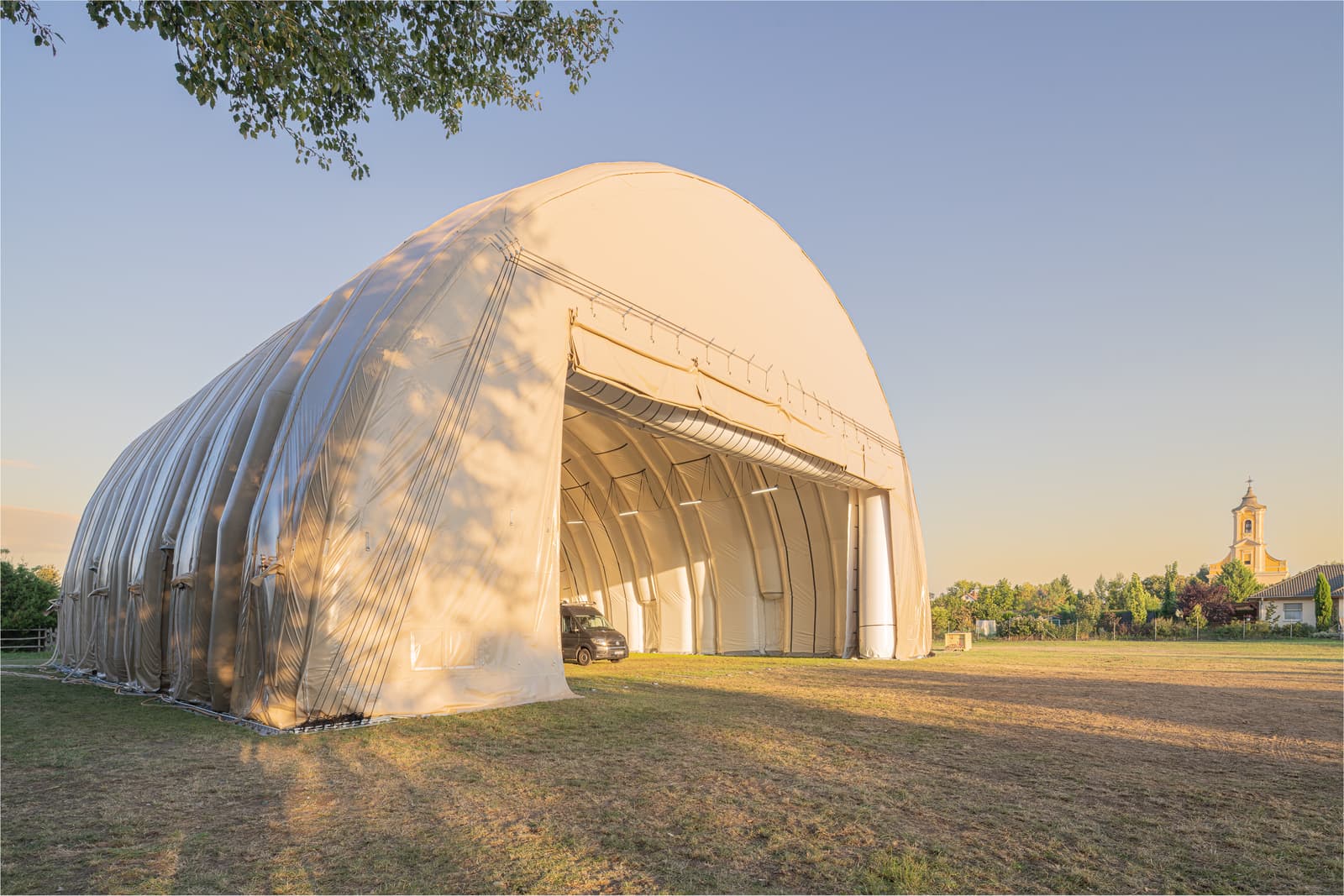
Inflatable Shelter
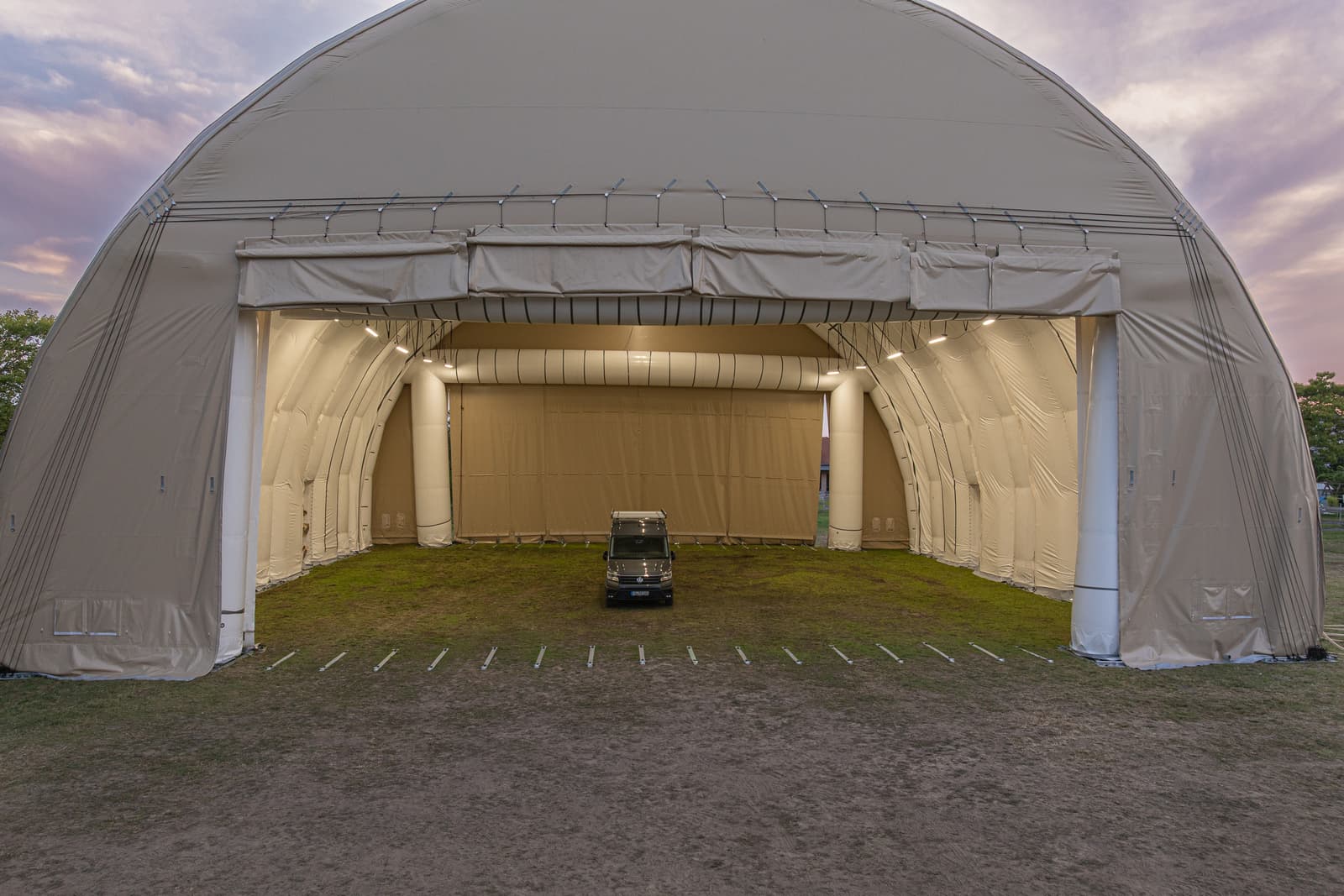
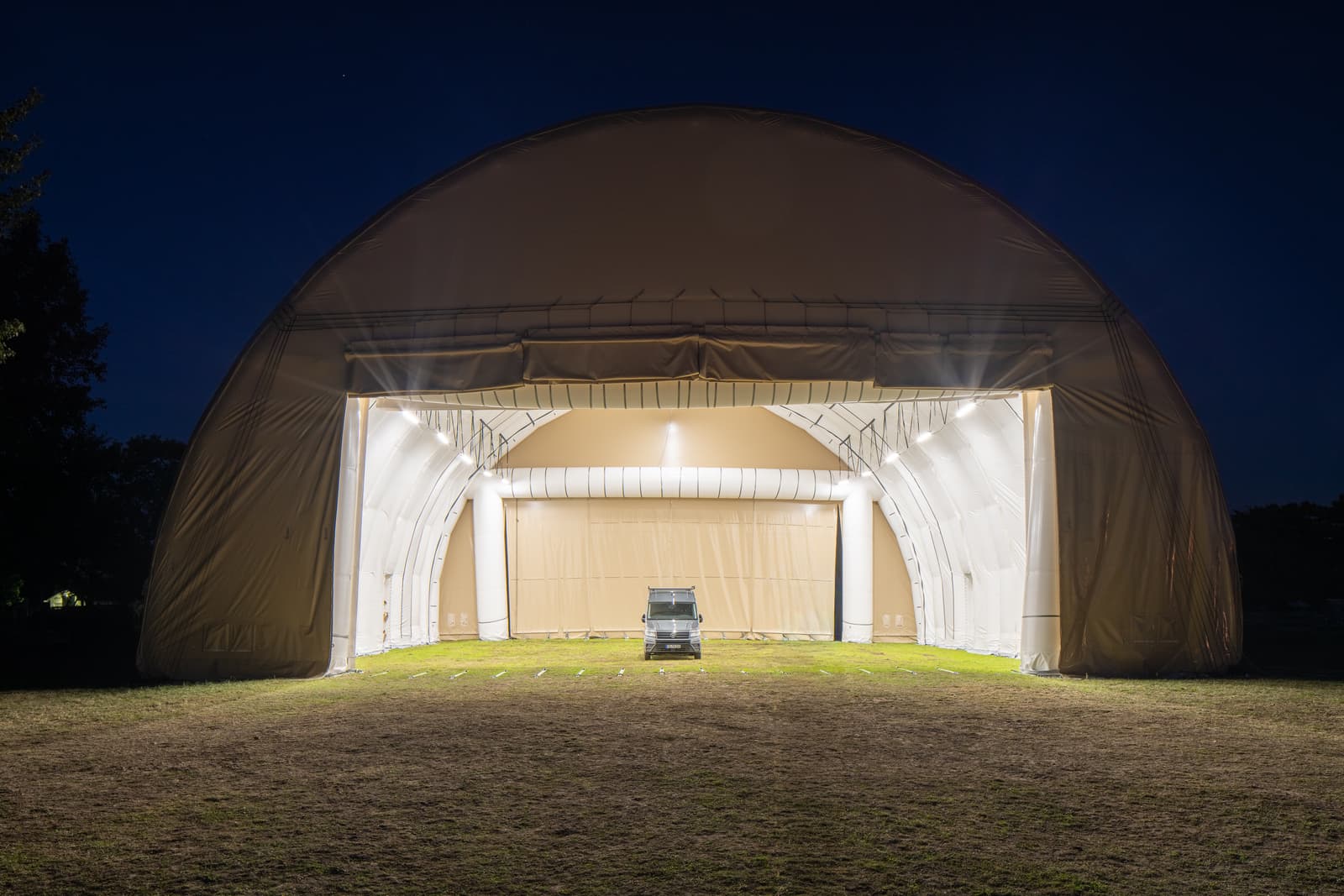
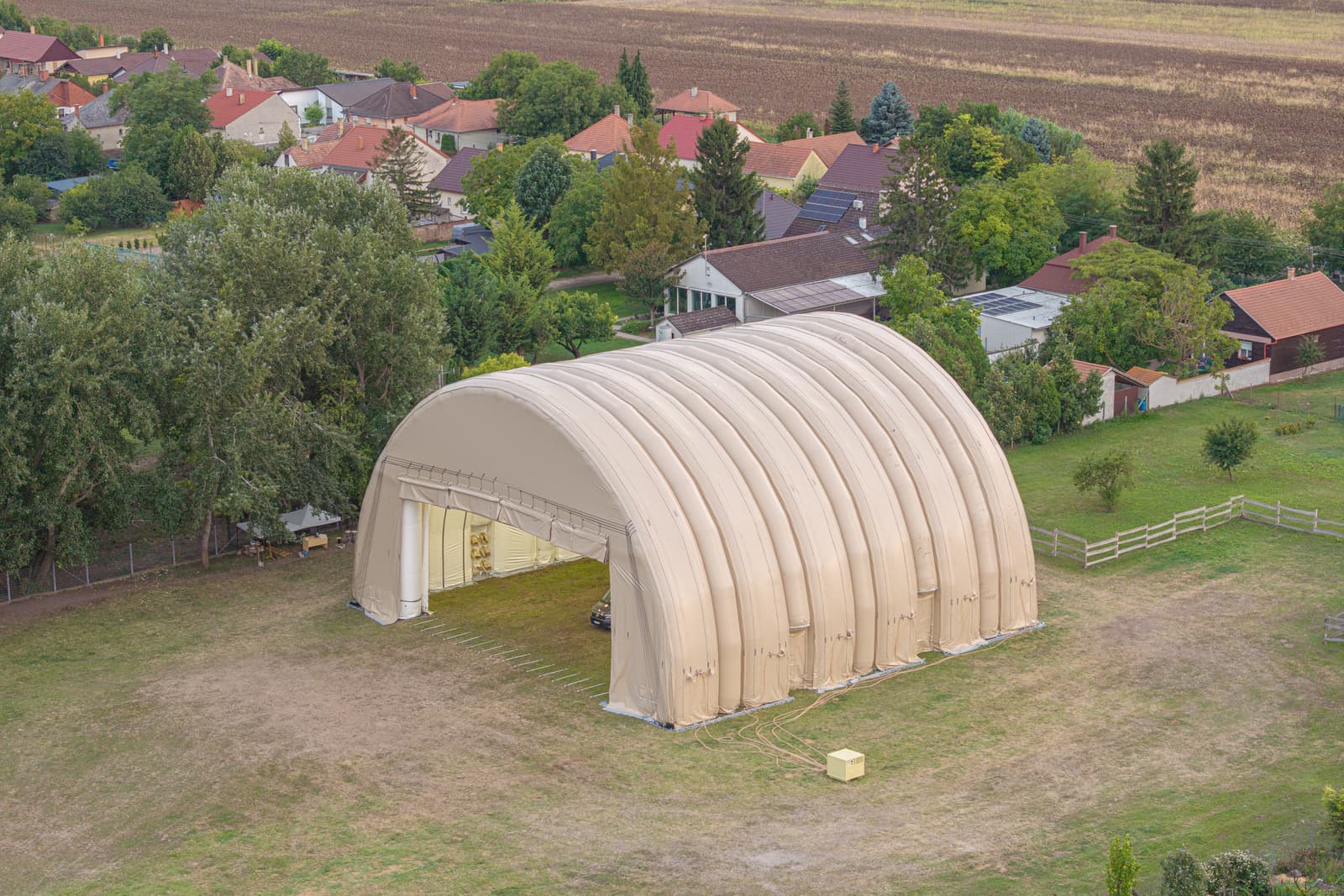
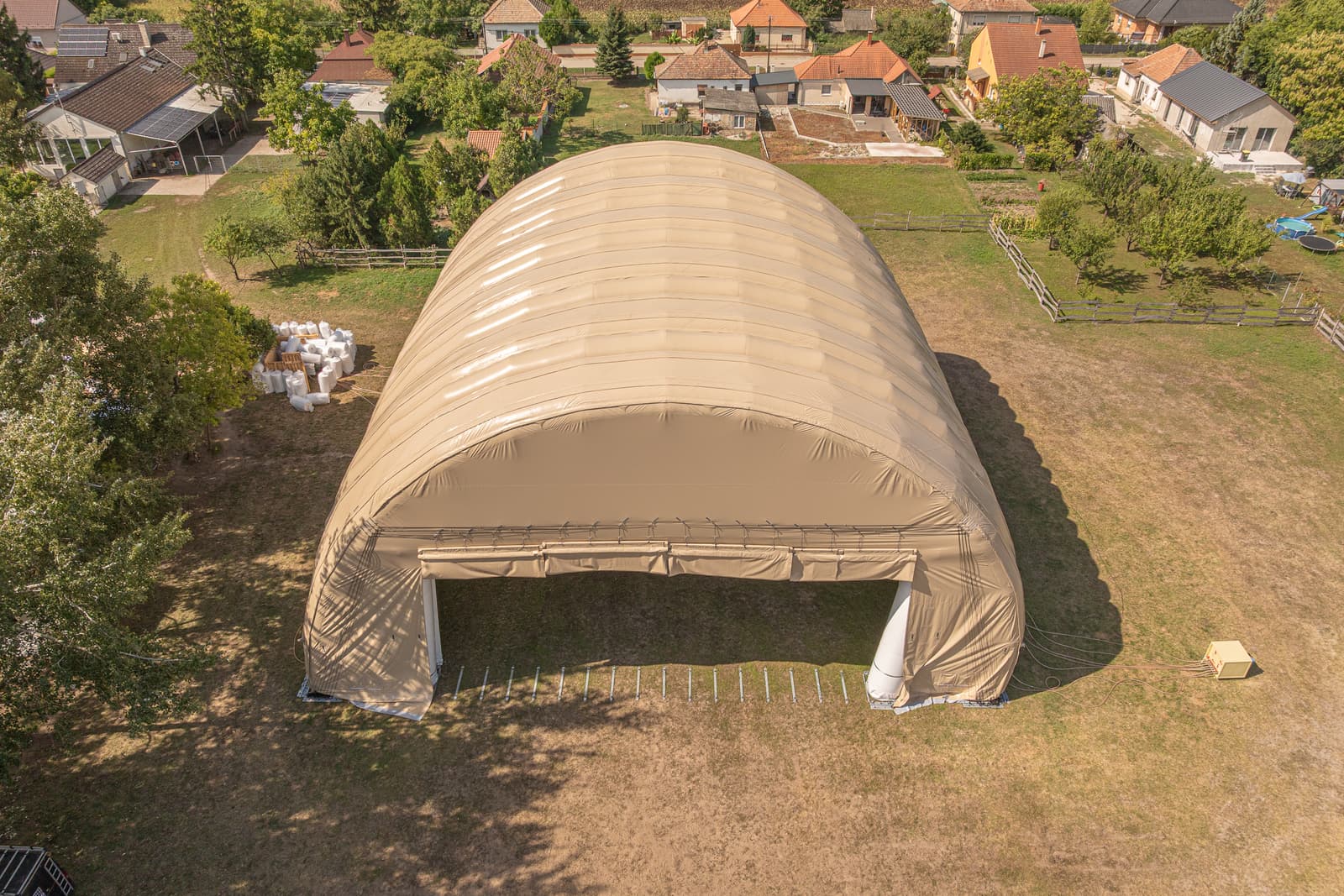
Inflatable shelters by HTS TENTIQ are air supported structures and pneumatic structures designed to meet the need for fast, flexible and large-scale space solutions. Thanks to the integrated air chamber system, spacious air inflated structures can be erected within a very short time – without conventional construction methods or lengthy building phases.
Ideal for military operations, humanitarian missions, the aviation industry and sporting applications, these inflatable structures offer maximum flexibility with minimal effort.
Temporary Inflatable Shelters: Key Advantages of Air-Supported Structures
Inflatable shelters by HTS TENTIQ offer many high impact advantages over conventional construction methods and traditional tent systems.
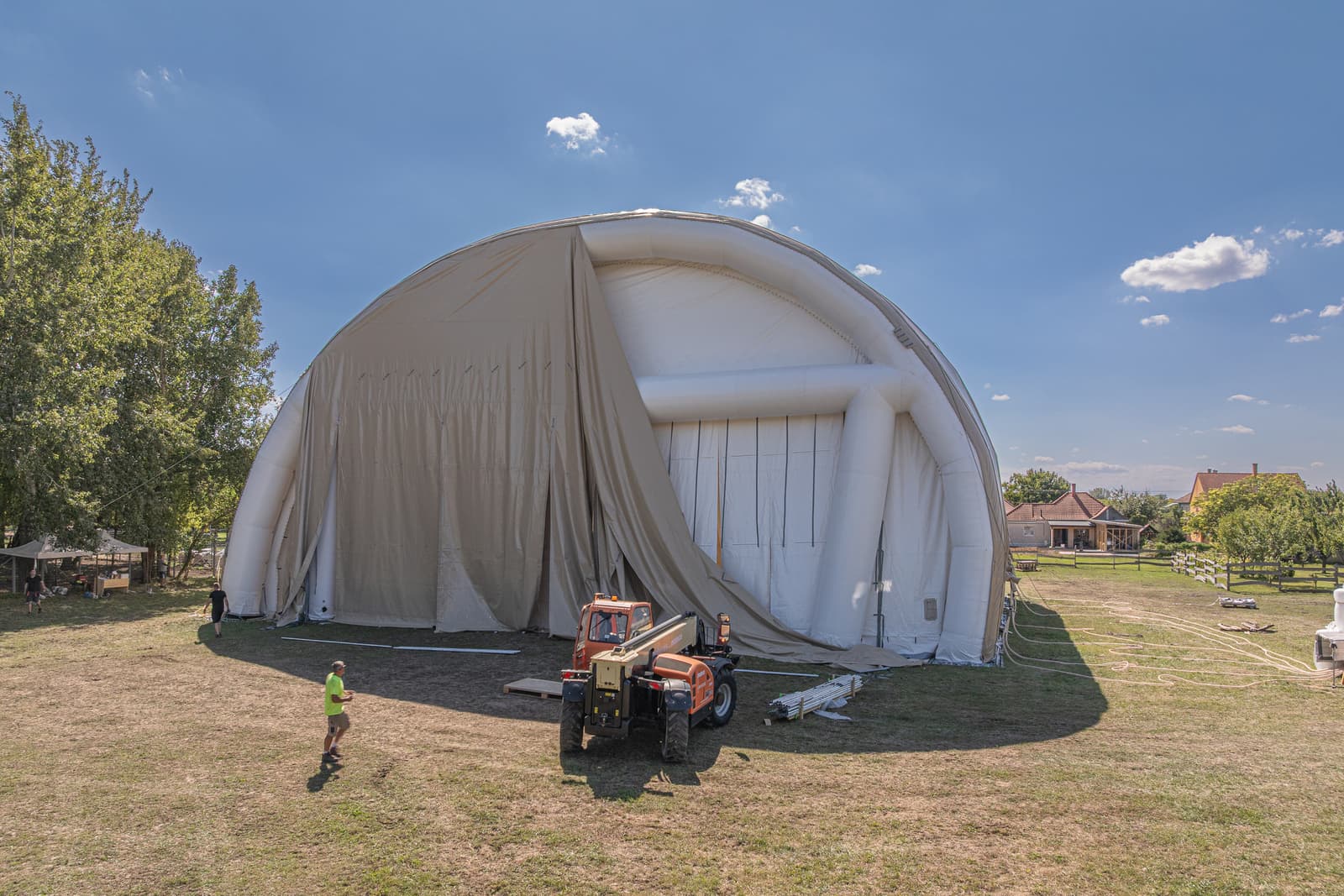
Rapid installation and dismantling
Energy-efficient
Weather-resistant
Certified temporary structure
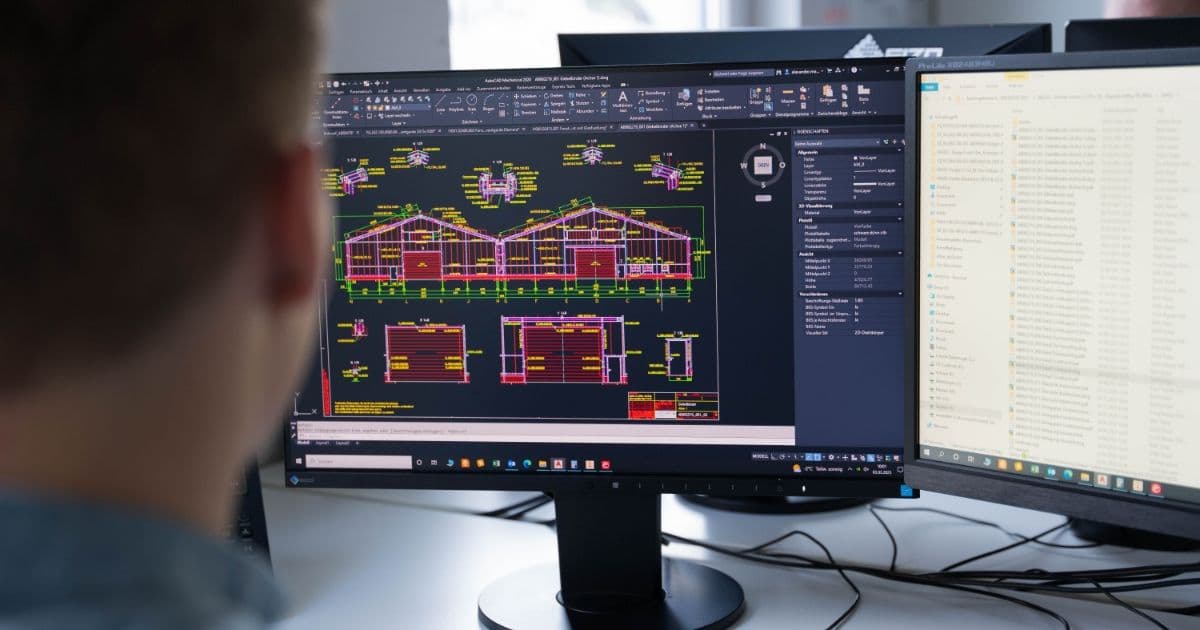
Quality – Made in Germany
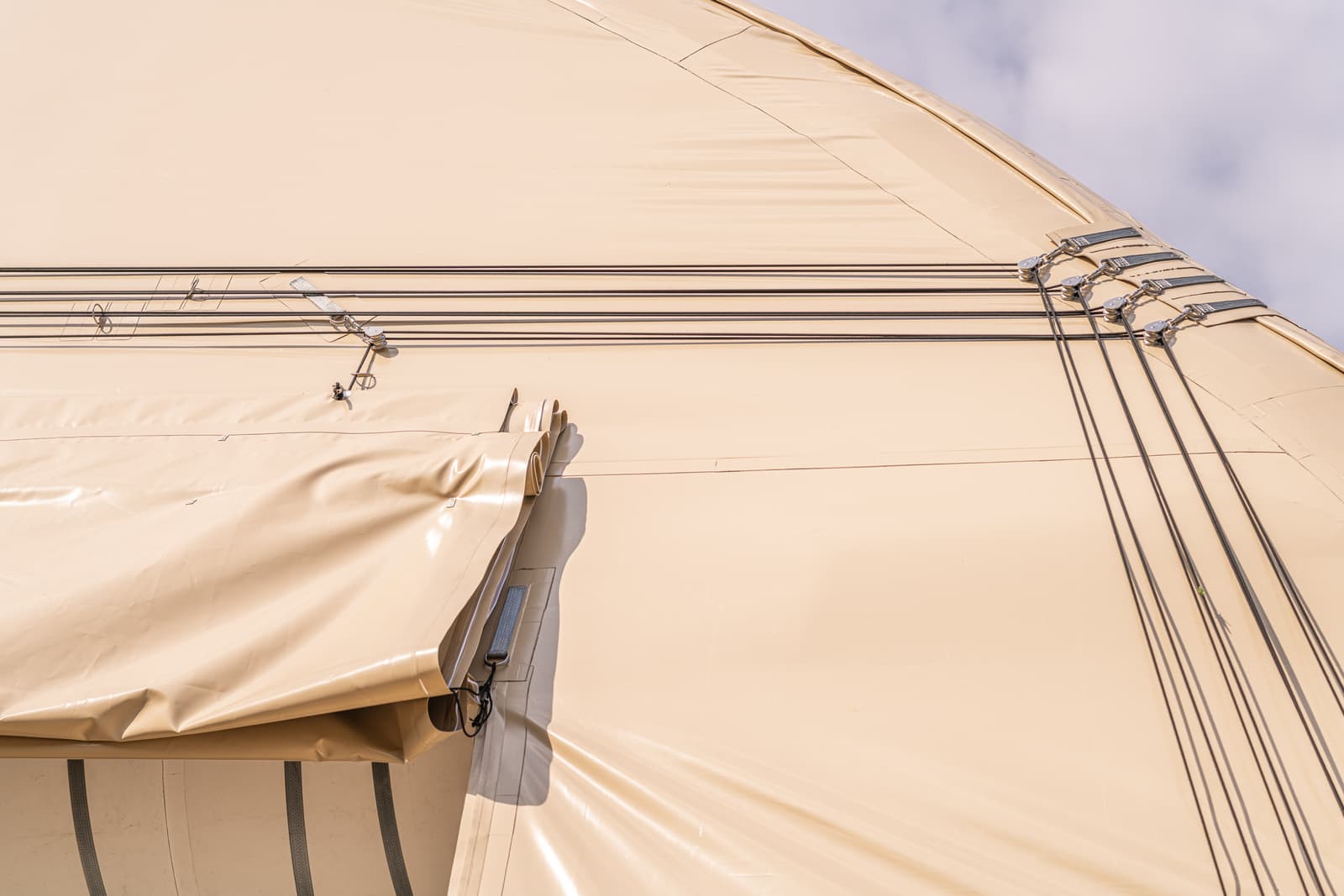
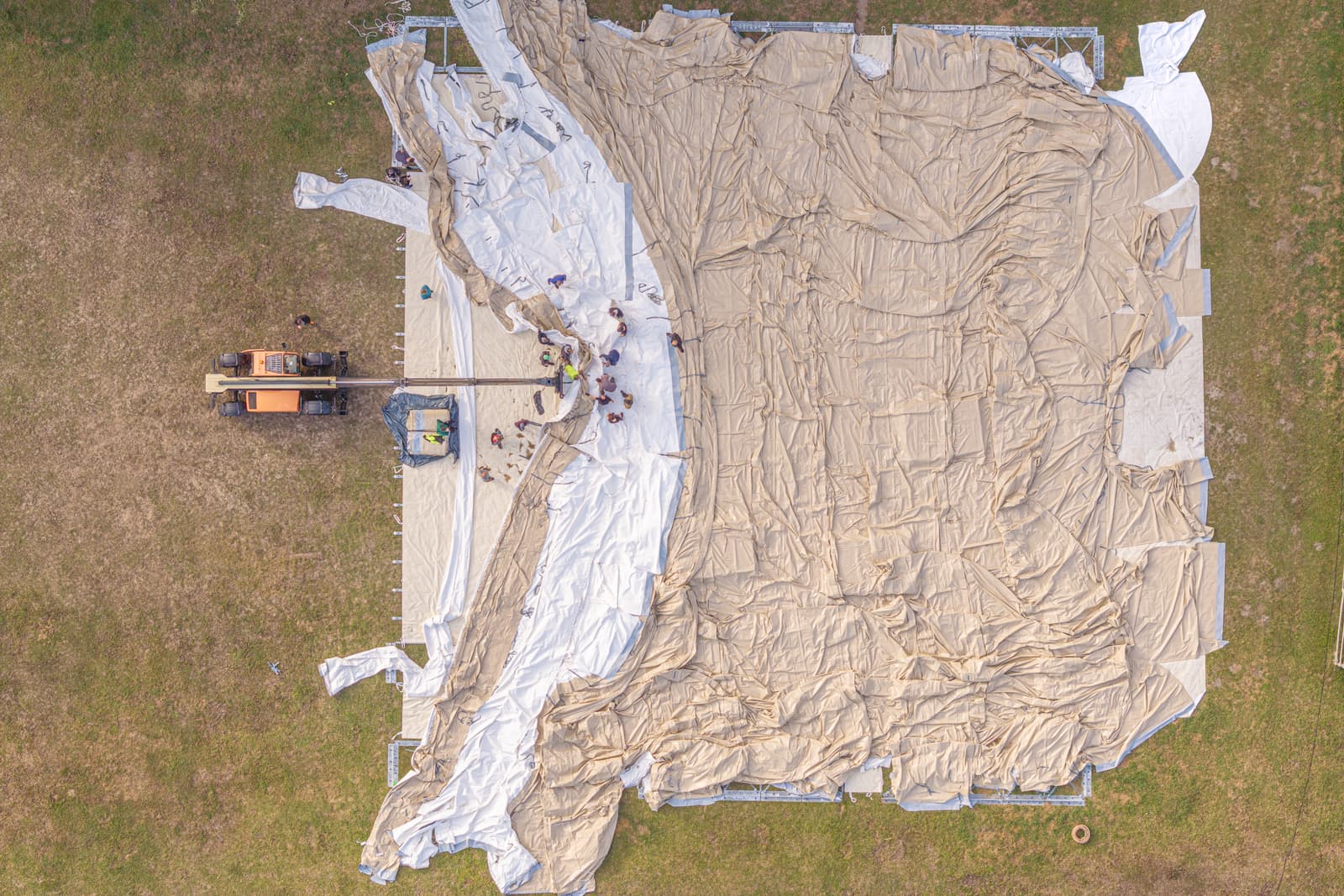
Installation in a few steps: The inflatable shelter in action
Optimal Use of Space in Inflatable Temporary Structures
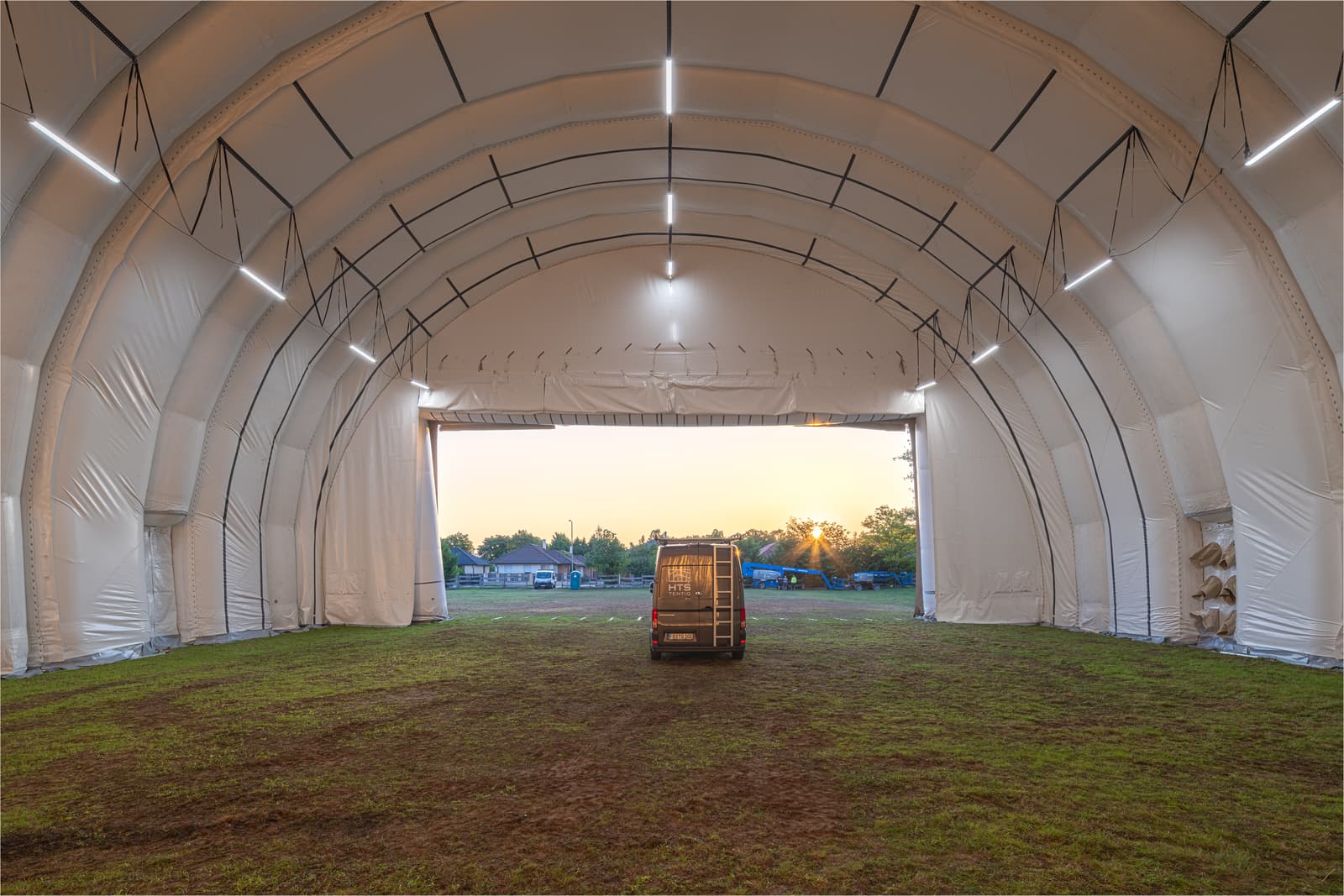
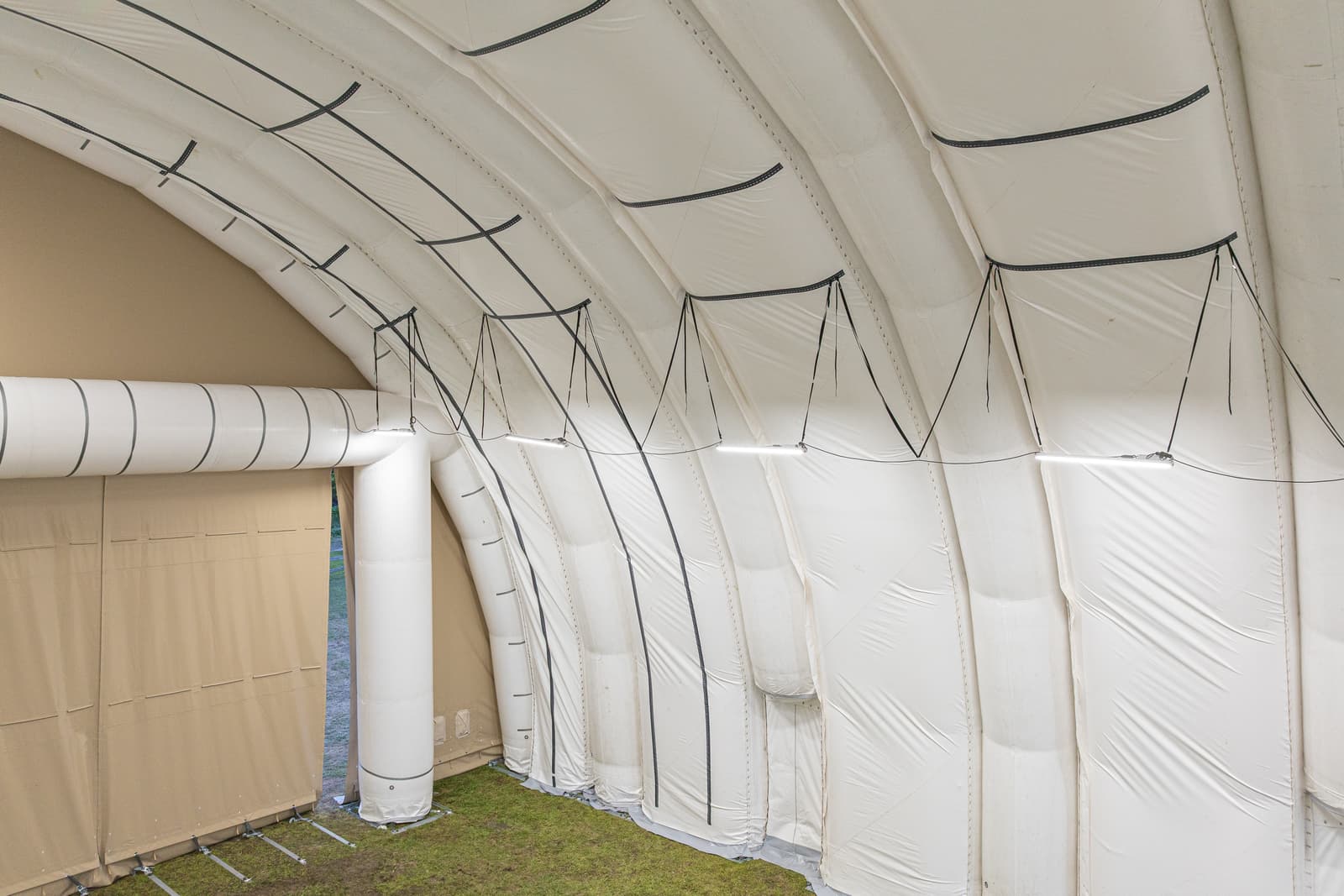
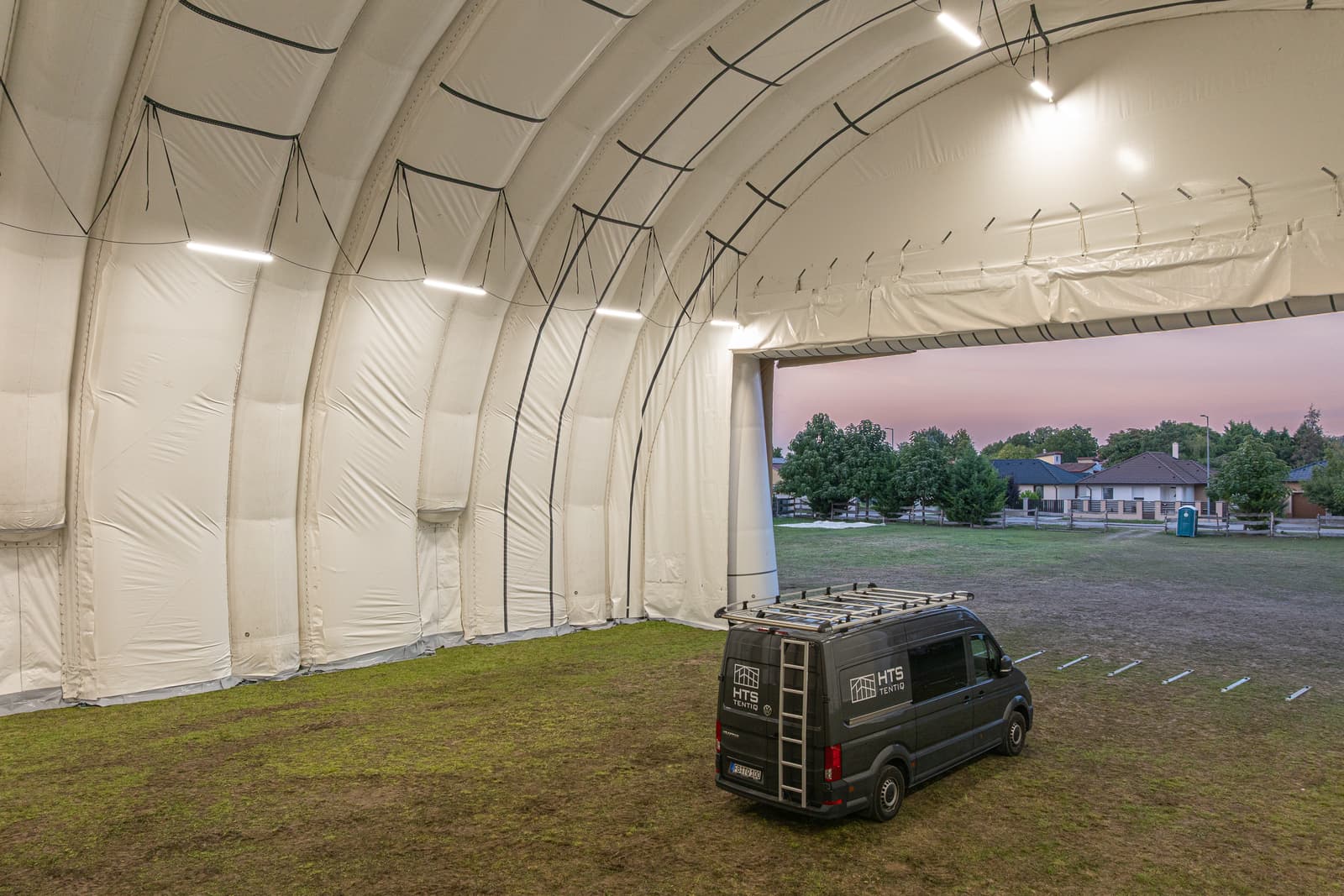
Our air supported structures offer impressive dimensions while maximising usable interior space. The modular design allows flexible configurations to suit a wide range of requirements.
Dimensions | Structural principle |
|---|---|
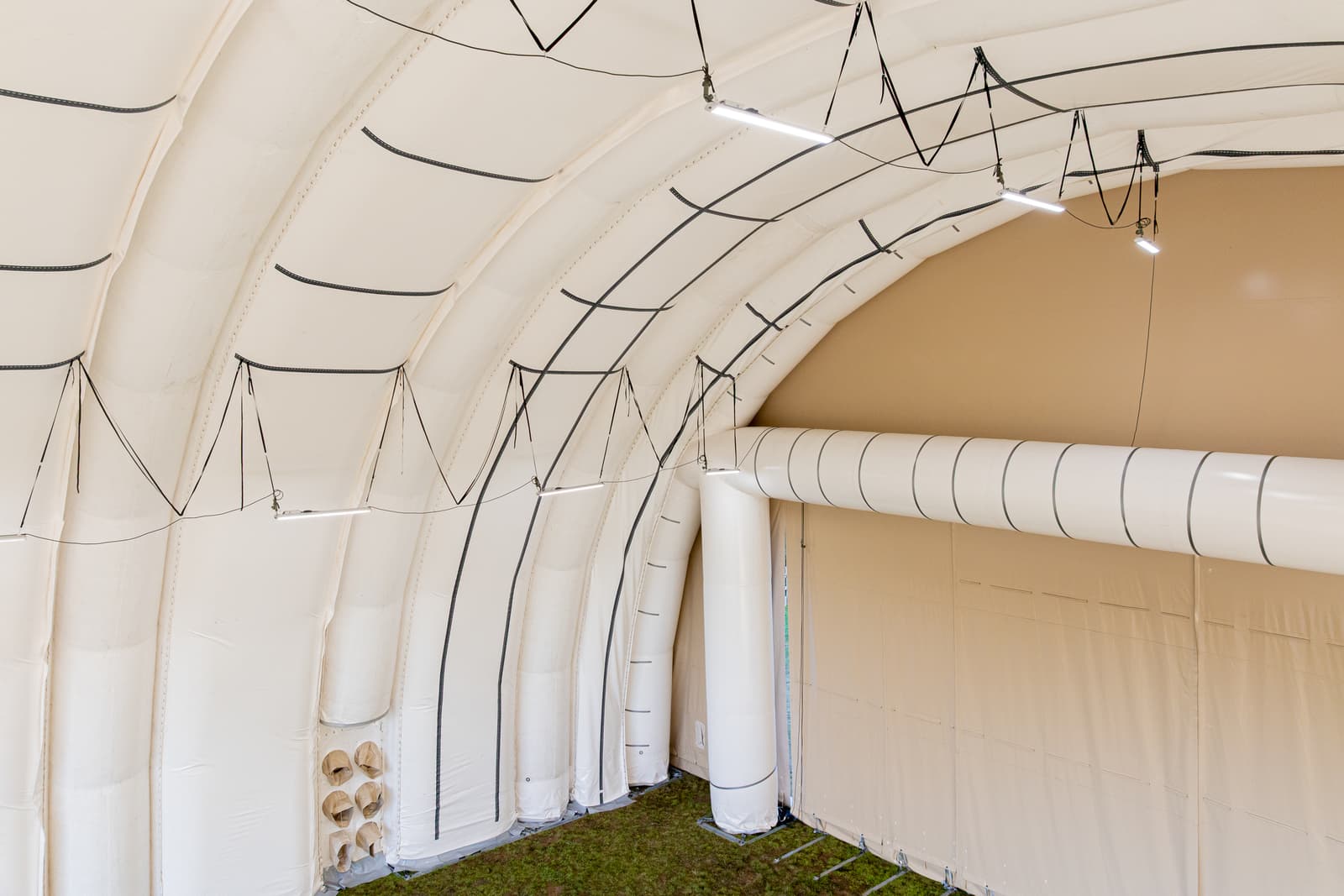
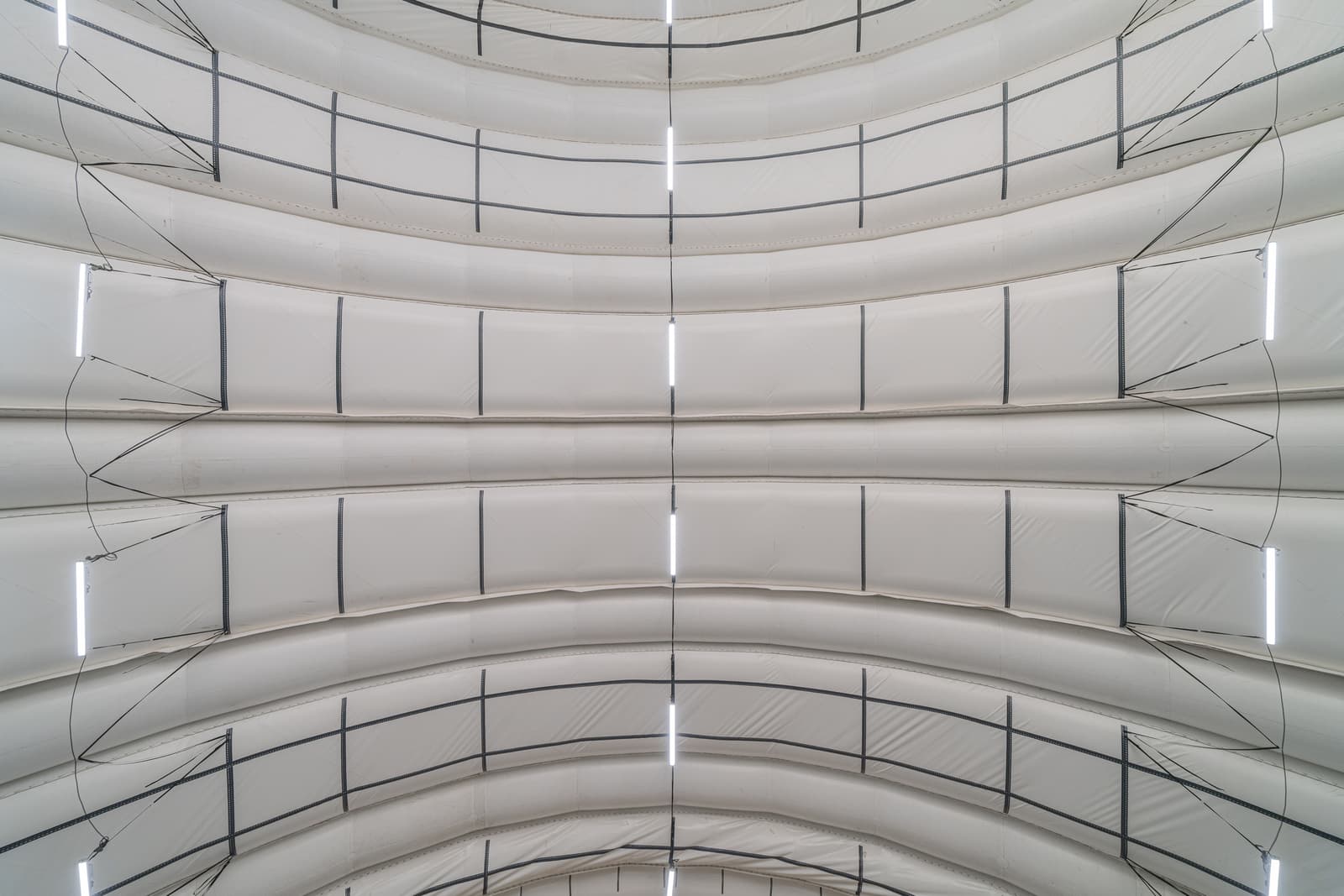
External dimensions: 29.60 m (width) × 27.00 m (length) | The structure consists of tubes with a diameter of approx. 1.60 m, with three tubes welded together at a time. This ensures maximum stability and optimal pressure distribution throughout. The generous internal dimensions allow ample space for large aircraft, helicopters and high-volume vehicles. |
Applications for Temporary Inflatable Shelters by HTS TENTIQ
The versatility of our inflatable structures makes them the ideal solution for demanding applications.
- Military: Rapid provision of mobile hangar space for aircraft, helicopters and military vehicles
- Aviation: Temporary or mobile maintenance and storage halls for aircraft
- Humanitarian aid: Disaster relief and humanitarian missions requiring fast deployment of protected spaces
- Sports: Weather-independent temporary sports halls
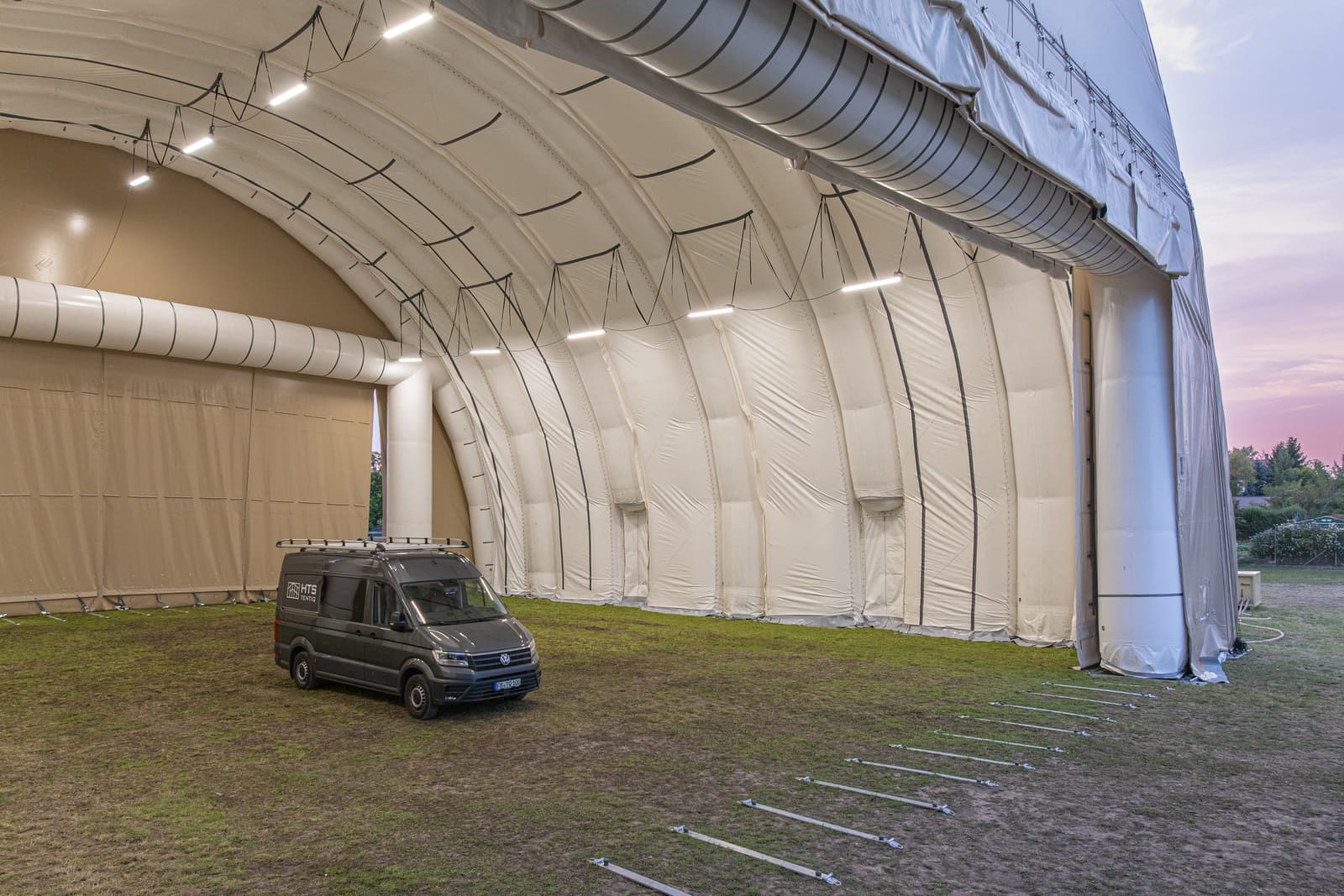
Air-Supported Shelters by HTS TENTIQ: Facts & Figures
Our air supported buildings combine our German engineering expertise with maximum functionality. All inflatable shelters are manufactured at our in-house production facility in Germany. They comply with all relevant European standards and stand out for their high mobility and short installation times.
- Delivery in four shipping containers (20ft)
- Compact packaging for worldwide transport
- Total assembly time with 12–16 trained personnel is approx. 4 days
- Inflation time (after preparation) is approx. 3 hours
- Preparation includes unpacking, positioning anchor plates, driving ground anchors and connecting the tent modules
- Complete inflatable shelter system including selected anchoring components (ground anchors for grass, heavy-duty anchors for concrete surfaces or ballast bags for anchor-free installation on asphalt)
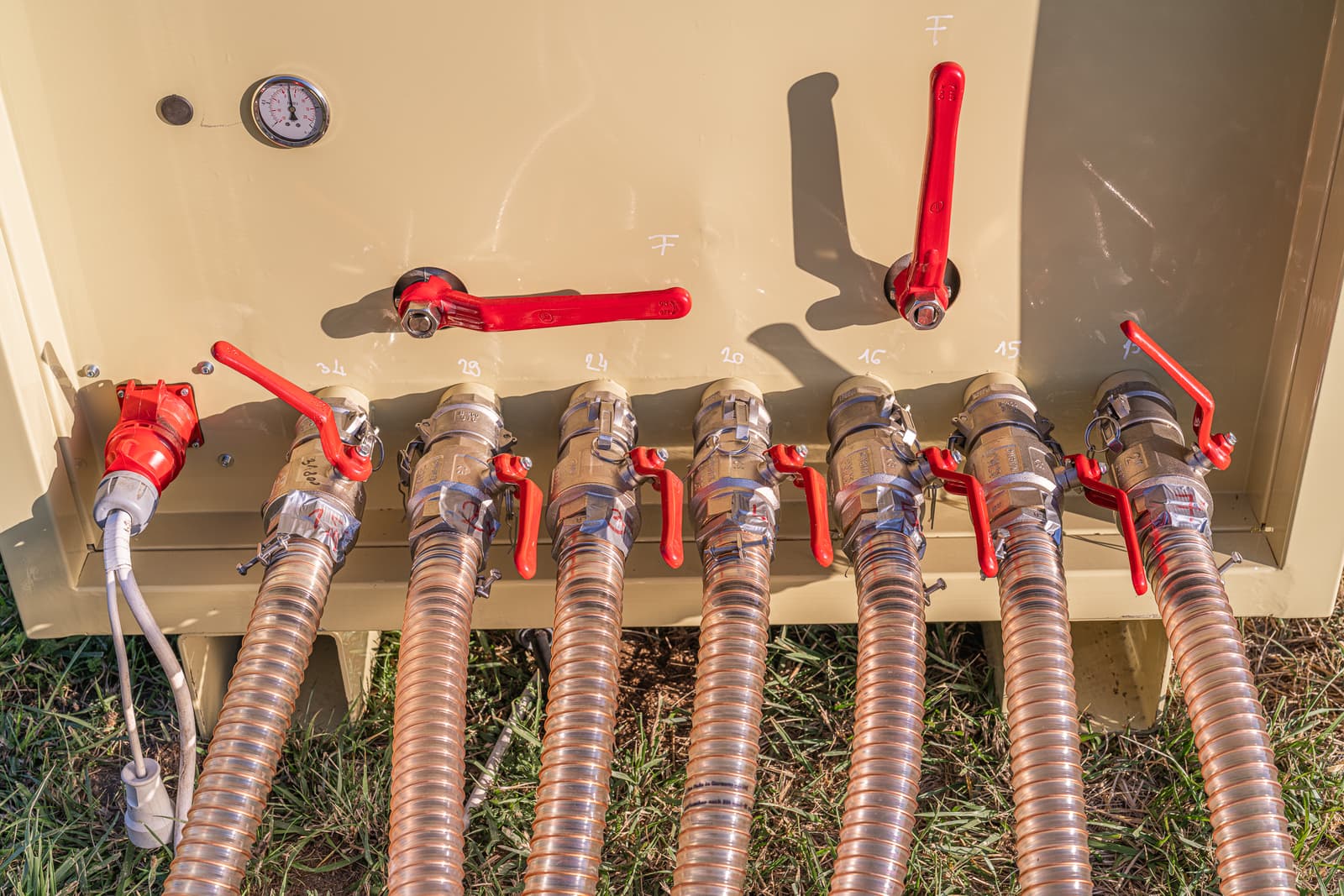
- Two inflating pump units
- Assembly and packing instructions included
- Flame-retardant according to DIN 4102: B1
- Compliant with current safety regulations (European standard)
- Minimal maintenance due to high-quality components
- Permanent power supply required: two units of 32 A / 7,500 W for assembly, dismantling and operations
- Operation completed via two inflating pump units
- Maximum power consumption per pump unit at full load: 7.5 kW
- Intelligent control with pressure sensors for automatic activation and deactivation in case of pressure loss
- Non-permanent operation: up to 4 hours of stand-by time without power supply
- Suitable for summer and winter use
- Weather-resistant and climate-adaptable
- Designed for short- and medium-term deployment
- Highly mobile system for flexible site changes
- Classified as a temporary structure according to DIN EN 13782
- Inspection log for the inflatable structure available on request
- Shelter system: PVC membrane with a weight of approx. 1,050 g/m²
- Anchoring system: anchor plates and ground anchors made of galvanised steel
- All materials used are highly durable and weather-resistant
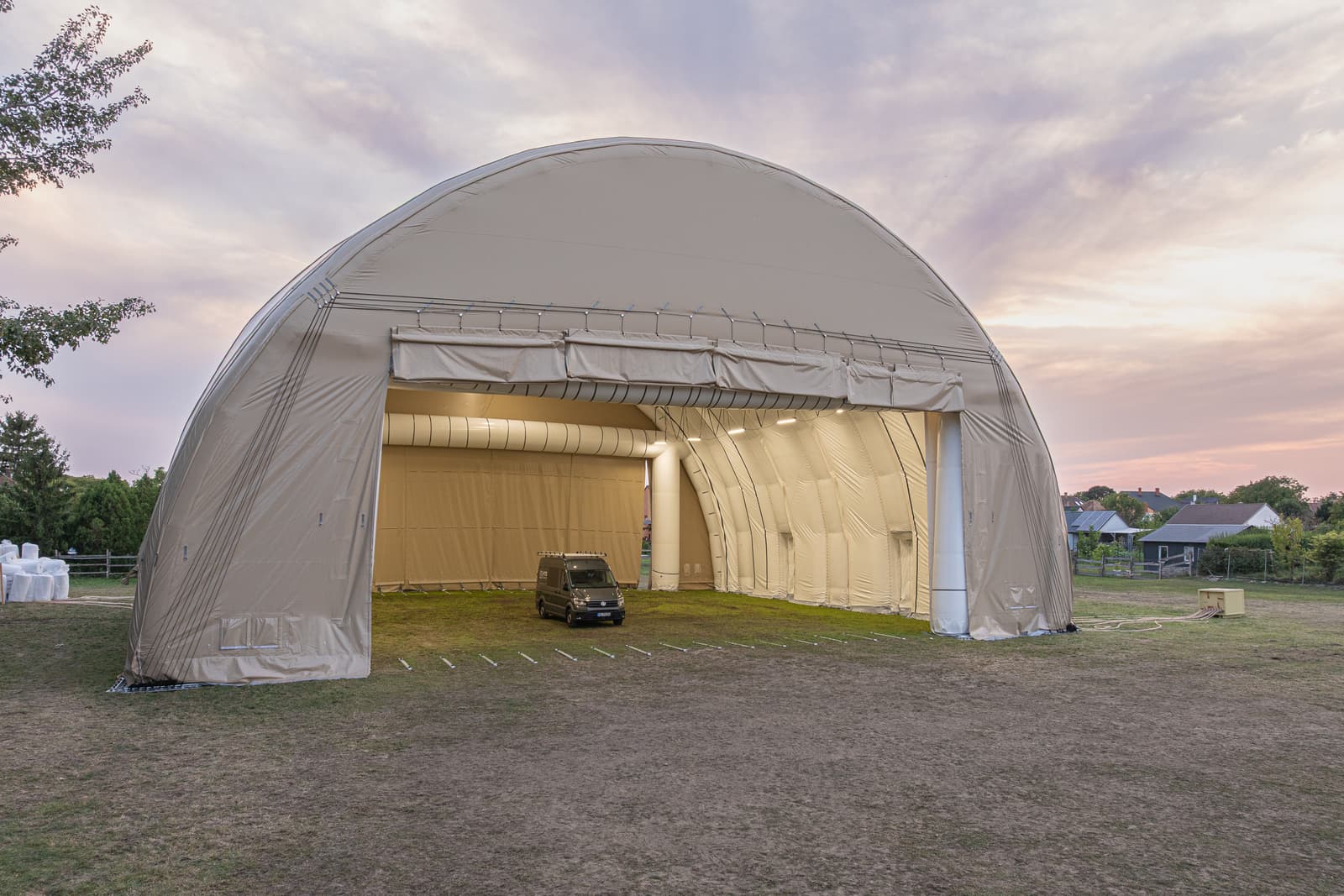
Fully Equipped: Accessories for Your Inflatable Shelter
Enhance your temporary inflatable shelter with custom accessories tailored to your requirements.
Available accessories:
- Lighting systems for optimal working conditions
- Heating and climate control systems for year-round comfort
- 20 ft shipping containers for storage and transport
- Mobile power generators for autonomous operation
Contact us to find the optimal configuration for your individual needs.
From Idea to Reality: Planning an Inflatable Shelter
Planning an air supported structure follows proven processes and takes into account all relevant requirements for safe and efficient operation.
How does the planning process work?
The planning process is comparable to that of an industrial hall constructed as a temporary structure in accordance with DIN EN 13782. From initial needs assessment and technical planning through to final implementation, we support you throughout all project phases.
Key aspects of planning
Two factors are particularly important when planning the use of an inflatable hall for 28+ consecutive days:
- Duration of use: The planned service life determines the technical requirements and approval procedures.
- Approval process: In Germany and the UK, approval by the local building authority is required. Internationally, approval procedures are usually much simpler and often require no special permits.
Planning priorities
Special attention is given to:
- Suitable substructure and surface
- Compliance with all applicable safety requirements
- Consideration of relevant regulations and standards
Frequently Asked Questions about Inflatable Shelters
An inflatable shelter is an air supported structure that maintains its shape and stability through internal air pressure. It consists of welded air chambers (tubes) supplied with air by inflating pump units. These mobile systems allow the rapid deployment of large unobstructed spaces without conventional load-bearing structures or foundations and are ideal for short- to medium-term temporary use.
Inflatable shelters are also known as air supported buildings, inflatable halls, air inflated structures, pneumatic structures or, depending on the application, air-supported hangar shelters.
The temporary structure consists of tubes with a diameter of approx. 1.60 m, welded together in groups of three. Two inflating pump units generate controlled internal pressure, providing structural stability. Intelligent pressure sensors continuously monitor air pressure and automatically activate or deactivate the blowers as required.
No. Inflatable shelters by HTS TENTIQ offer significantly better insulation than conventional tent systems thanks to their air chamber design. Suitable for year-round use, they can be equipped with heating and climate control systems like other HTS framed structures, for optimal indoor conditions.
- Rapid installation within days rather than months
- High mobility and easy relocation
- Lower investment costs compared to permanent buildings
- Energy-efficient operation with low running costs
- Excellent insulation properties
- Large clear-span interior space
- Weather-resistant and suitable for year-round use
- Flexible expansion and custom options available
HTS TENTIQ temporary inflatable shelters are made from high-quality PVC membrane with a weight of approx. 1,050 g/m², and are flame-retardant according to DIN 4102: B1. The anchoring system consists of galvanised steel anchor plates and ground anchors. Two intelligent inflating pump units ensure reliable operation.
The cost of a temporary inflatable shelter depends on factors such as size, equipment, anchoring system and customisation. Compared to permanent buildings, inflatable shelters offer significant cost reductions in terms of purchase, installation and operating expenses.
Operating costs are comparatively low. Each inflating pump unit consumes a maximum of 7.5 kW at full load. Thanks to intelligent pressure control, the units do not operate continuously but only when required to maintain air pressure.
In a 24-hour operation example with an electricity price of €0.29 per kWh, daily consumption is approx. 180 kWh, resulting in electricity costs of around €52.20 per day, plus minimal maintenance costs due to durable, high-quality components.
Want to get in touch with us? Simply use our contact form – this is the fastest way to contact one of our team of experts.