
Fire protection in building construction: effectively securing industrial buildings
Industrial buildings are not only workplaces, but also pose a number of fire risks. In an emergency, major material damage and personal injury can occur. The economic risk of a fire in an industrial building should also not be underestimated.
Effective fire protection is therefore crucial in building construction to protect employees, equipment and inventory.
Why effective fire protection in building construction is indispensable
In an industrial building, valuable machinery is often used or goods are stored. It may also serve as a workplace for many people. A fire in an industrial building can therefore have devastating consequences. Appropriate fire protection measures not only ensure safety but also protect against a range of potential hazards.
1. Minimising direct damage
Agricultural goods or machinery, products for retail, production facilities or other assets are optimally protected in temporary buildings against weather influences and theft. But what happens in the event of a fire? A fire in a temporary building can cause major damage to the entire inventory and the building, not to mention possible personal injury.
Industrial buildings are often particularly large in area and house a wide range of machinery, equipment and materials. In addition, they are frequently divided into different areas: production buildings, storage areas or offices are part of a complex industrial facility. This makes fire-fighting and the evacuation of people more difficult, which also increases the costs and effort in the event of a fire.
Good fire protection minimises the effects of a fire. This means that good fire protection minimises the effects of a fire. This means that direct damage is reduced and people as well as assets receive maximum protection in the event of a fire. This not only increases safety but also limits potential financial losses in the event of a fire. and people as well as assets receive maximum protection in the event of a fire. This not only increases safety but also limits potential financial losses in the event of a fire.
2. Avoidance of operational interruptions
A fire in an operational facility automatically leads to a shutdown of operations. Depending on the duration of the interruption, this can result in very high costs and loss of profit for a company. The company’s reputation can also be damaged as a result. Effective fire protection can prevent or at least shorten operational interruptions caused by fires. Fire protection is therefore also very relevant from an economic perspective.
3. Reduction of insurance premiums
Insurance companies also take the risk of fires into account when determining insurance premiums. Good fire protection in temporary buildings can help reduce the risk and therefore lead to lower insurance premiums.
4. Reduction of environmental impacts
Fires in industry can also have significant environmental impacts, especially when hazardous chemicals, gases or substances are released. The clean-up and remediation of the affected area after a fire can incur additional costs.
Causes of fires: how fires occur in industry and commerce
Industrial buildings are often very large buildings. It is therefore no surprise that, statistically, the largest fires and fire damage occur in industry. We have examined the causes of fires in more detail:
- Electrical defects: The most common cause of fires in industry and commerce is electricity. Every third fire can be attributed to this. Defects in machines or systems can lead to overheating and fires. Lack of maintenance, wear and tear or incorrect operation can increase the risk of fires caused by machine malfunctions. Outdated or faulty electrical installations as well as improper cable routing can also increase the risk of fires caused by short circuits.
- Human error: Negligence, carelessness or improper behaviour by employees can also lead to fires. And unfortunately, this is not uncommon. After all, 20% of all industrial or commercial fires are caused by human error. This can, for example, result from failing to observe safety regulations or improper disposal of flammable materials.
- Arson: The issue of arson can also never be ruled out. 12% of all fires in industry and commerce are caused by arson, which is more than one in ten fires.
- Chemicals and flammable substances: Industrial and commercial operations that work with chemicals have an increased risk of fires due to chemical reactions or improper storage of flammable substances. Improper handling of hazardous substances can lead to serious fires.
- Fire-risk activities: Activities such as welding, soldering or cutting with hot tools can create sparks that can easily trigger fires, especially when carried out near flammable materials.
Measures for fire protection: how to implement effective fire protection
There are many measures that contribute to the implementation of effective fire protection in temporary buildings. These measures can broadly be divided into defensive, also known as active, measures and preventive or passive measures.
Defensive measures aim to combat an existing fire. This includes all actions taken by individuals to extinguish a fire or minimise fire damage. This can be the evacuation of people as well as extinguishing the fire with a fire extinguisher. Alerting the fire brigade is also an active fire protection measure.
The aim of passive measures is to prevent the outbreak of a fire and its spread. This includes, for example, the installation of smoke detectors or fire protection training for employees. Passive measures are further divided into organisational, structural and system-related measures:
1. Organisational measures
Organisational fire protection describes all measures for planning, organising and preparing fire protection within a company.
Examples of organisational measures include:
- Creation of a fire protection concept: A comprehensive fire protection concept contains all relevant aspects of fire protection within the respective operation, including instructions on how to behave in the event of a fire.
- Training of employees: All employees should be regularly trained in fire protection measures so that they can respond correctly in an emergency.
- Creation of evacuation plans: Clear evacuation plans should be drawn up to enable the quick and safe evacuation of all persons in the event of a fire.
- Drills for evacuation and emergencies: These prepare employees for emergency situations.
- Appointment of fire protection officers: Fire protection officers are responsible for the implementation of fire protection measures.
- Regular inspection and maintenance: Regular inspection and maintenance of all fire protection-related facilities and systems is essential to ensure that they function properly.
2. System-related measures
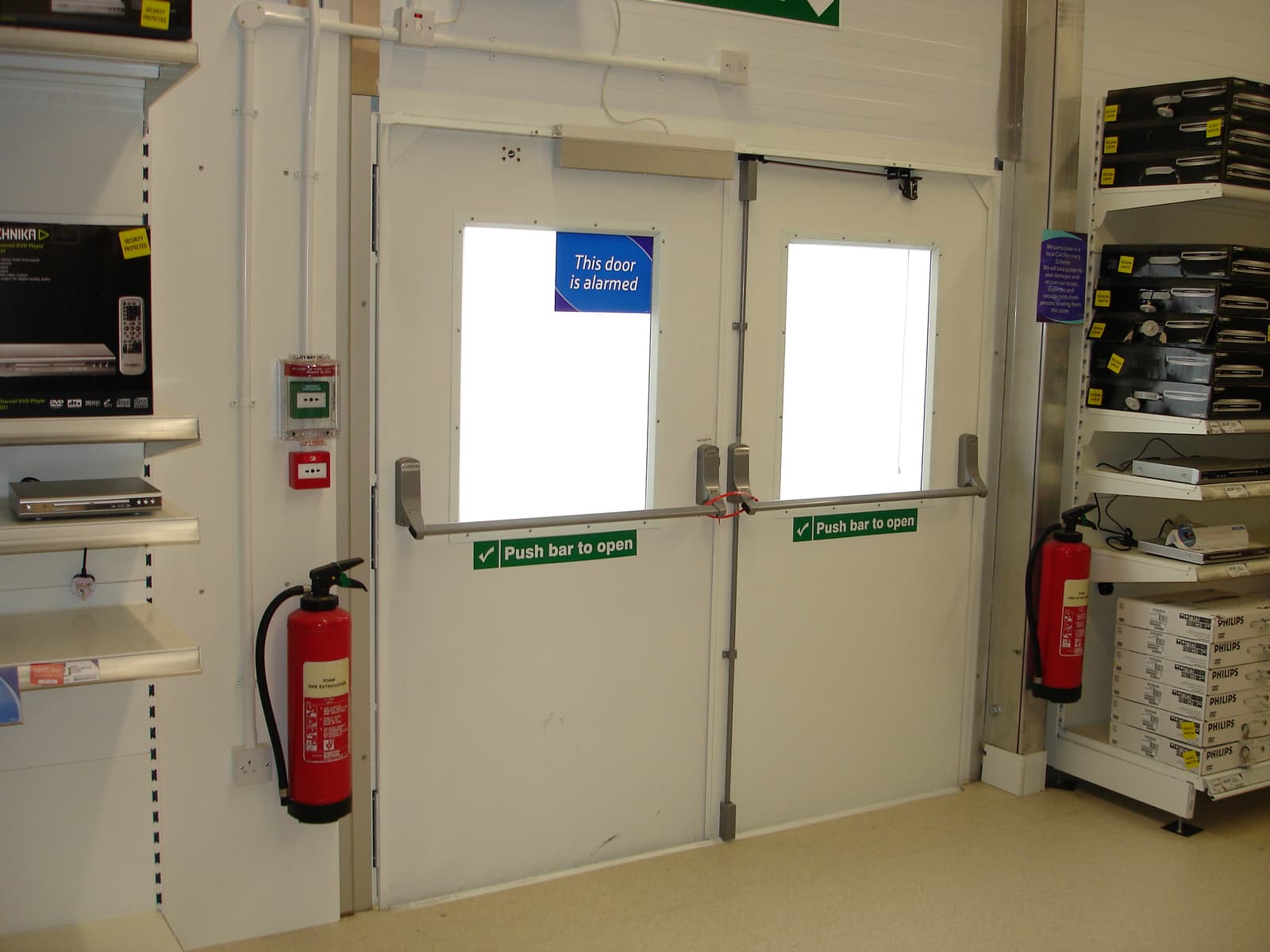
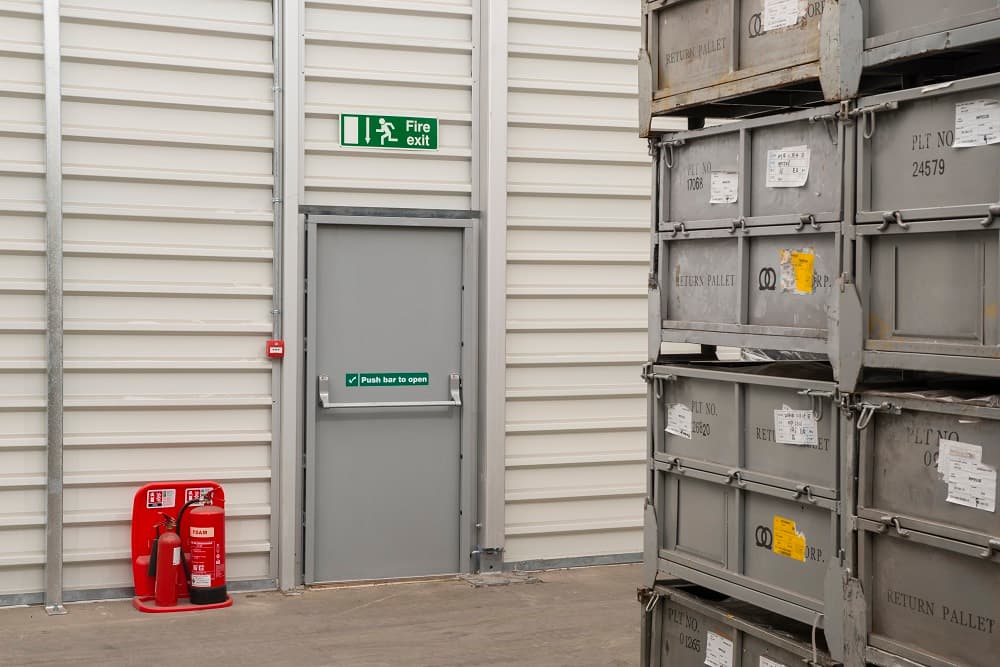
The placement of a building-specific number of fire extinguishers is mandatory in every industrial and commercial building. The type of extinguishing agent is also precisely defined. This is already an important system-related measure. In addition, the installation of certain technical systems may be mandatory in industrial and commercial buildings for fire protection reasons. This includes technical installations that prevent or combat fires, such as:
- Installation of smoke detectors and fire alarm systems: smoke detectors and fire alarm systems can detect fires at an early stage and trigger an alarm.
- Use of automatic extinguishing systems: sprinkler systems or other automatic extinguishing systems can help to combat fires quickly and limit their spread.
3. Structural measures
The third category of passive fire protection concerns the construction method and the materials of a temporary building.
- Use of flame-retardant materials: The construction materials of a temporary building should have appropriate fire resistance. The classification into different building classes and fire resistance classes is therefore a key aspect of fire protection when constructing an industrial building.
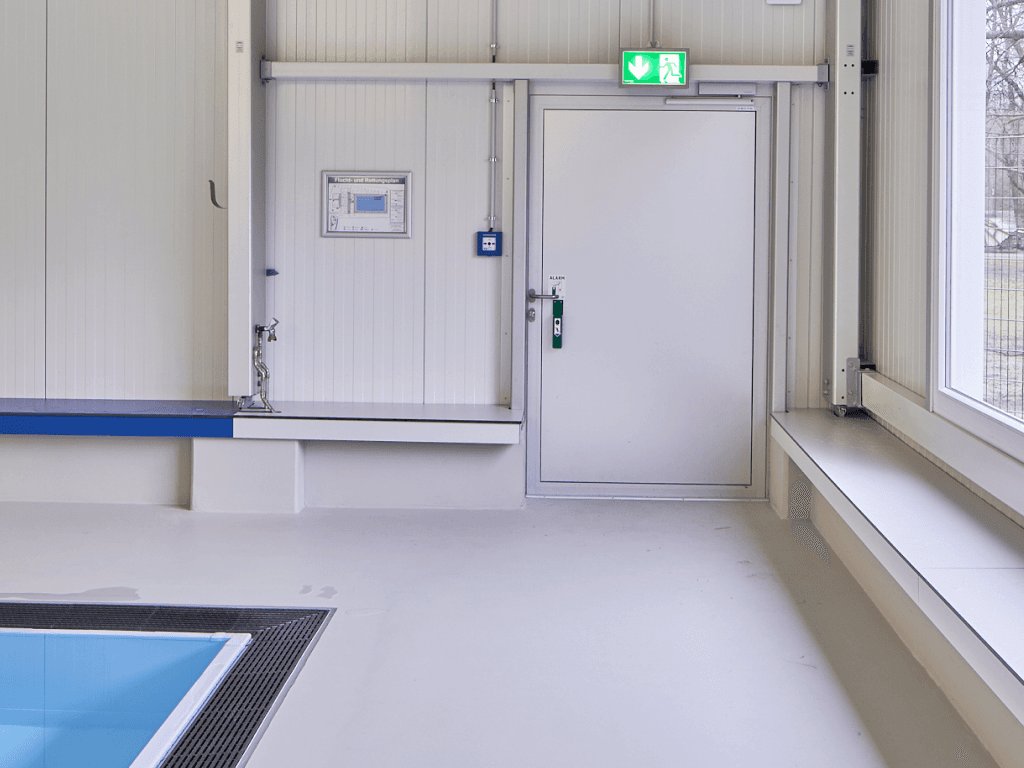
- Installation of escape routes, fire-resistant doors and walls: fire-resistant doors and walls can help to limit the spread of fire and smoke.
- Construction of fire protection walls: fire protection walls can separate specific areas and prevent the spread of fire.
Safe from the outset: taking fire protection into account during the planning and construction phase
In the planning phase of an industrial building, not only are dimensions, design and equipment determined; fire protection is also already part of the planning phase. The building materials used are just as important as the construction of the external walls and the roof. Only in this way can it be ensured that all legal regulations are met in the construction and manufacture of the building.
1. Fire-resistant building materials
According to the German standard DIN 4102-2 and the European standard DIN EN 13501-2, structures are classified into different building classes and building materials into different fire resistance classes. In the event of a fire, these are crucial for the safety of people and property.
Building materials are classified according to DIN 4102-2 or DIN EN 13501-2 into the following classes:
- Building material class A1 or A2: non-combustible
- Building material class B1: flame-retardant
- Building material class B2: normally combustible
- Building material class B3: highly combustible
The classification into the respective building class is carried out based on various criteria such as the use of the building, the height of the building and the number of storeys.
For the construction of temporary buildings, we at HTS TENTIQ use high-quality and corrosion-free aluminium, which belongs to building material class A1 and is therefore considered non-combustible.
The fire resistance class of a building material indicates how long the material can maintain its load-bearing capacity, limit the spread of fire and provide thermal insulation in the event of a fire. The higher the fire resistance class, the longer the material can withstand the effects of a fire.
These are the fire resistance classes according to DIN 4102-2:
- F30: fire resistance duration of 30 minutes (fire-retardant)
- F60: fire resistance duration of 60 minutes (highly fire-retardant)
- F90: fire resistance duration of 90 minutes (fire-resistant)
- F120: fire resistance duration of 120 minutes (highly fire-resistant)
- F180: fire resistance duration of 180 minutes (extremely fire-resistant)
The classification of fire resistance classes according to DIN EN 13501-2 is based on three criteria:
- Load-bearing capacity (R)
- Integrity (E)
- Thermal insulation (I)
In addition, each of these three criteria is assigned a performance duration of 15, 20, 30, 45, 60, 90, 120, 180, 240 or 360 minutes. For even more precise classifications, specifications such as limits on heat radiation or smoke permeability are also included.
2. Fire compartments and internal fire walls
If a fire occurs inside a temporary building, fire compartments and fire walls ensure that the fire cannot spread to other areas of the building.
However, fire compartments and fire walls are not mandatory in every industrial building. Only from a certain building size onwards must an industrial building be divided into different fire compartments. This is achieved by constructing internal fire walls by a specialist. They ensure that a building consists of structurally separated areas. These walls must meet specific requirements. If there are windows or doors in these walls, special fire protection regulations must also be complied with in these areas.
3. External walls and roof
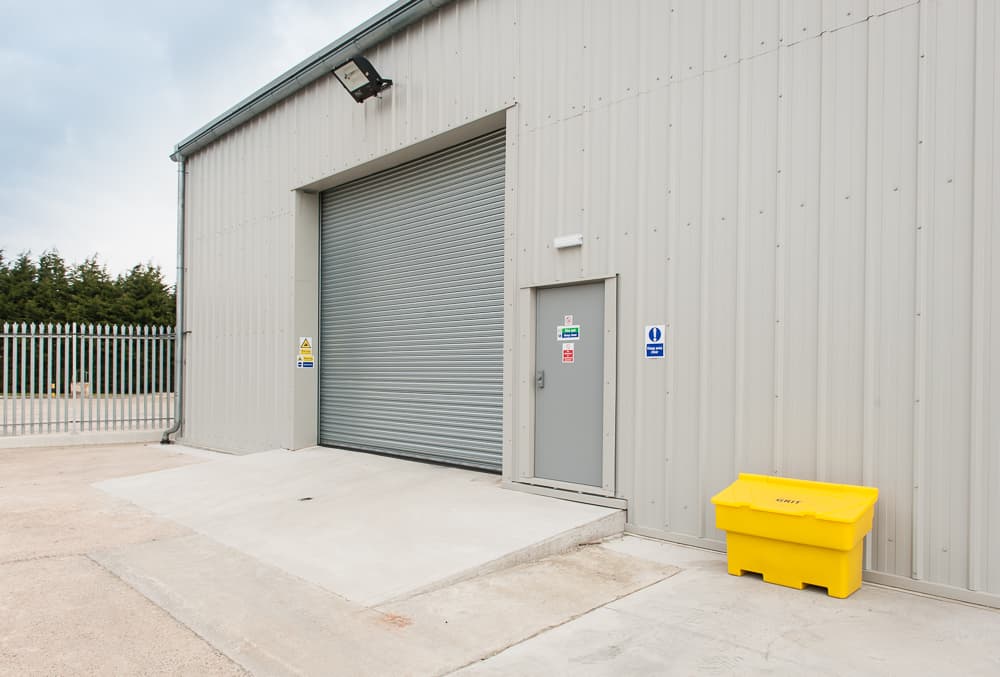
The external walls and roofing of a building play a dual role in fire protection: if a fire breaks out inside the building, the external walls and roof prevent the fire from spreading to the outside. However, fires also frequently occur outside buildings. This happens, for example, when the area around the building is used as a storage area. The construction of the external walls and the roof is therefore crucial in preventing fire from spreading into the interior of the building.
For the side and roof cladding of the aluminium structure of an industrial building from HTS TENTIQ, sandwich panels are therefore often used. These provide a higher level of fire protection than single-layer PVC or double-layer thermal roof membranes. Our sandwich panels feature insulation made of mineral wool boards, which correspond to building material class A1 and are therefore classified as non-combustible.
You can even design your own customised temporary building online. This is easy to do with our free 3D building configurator. Depending on your individual space requirements, you simply enter the desired dimensions. You can also choose the side cladding and roof shape, and equip your temporary building with windows, doors and gates. If your requirements differ from our modular dimensions or designs, let us know in the comments. We will be happy to provide you with a tailored quotation.
Important documents explained: fire protection certificate and fire protection concept
For industrial buildings, fire safety certificates and often also fire protection concepts are required. The terms are frequently used synonymously, but they describe different aspects of buildings that require planning permission.
The fire safety certificate is an officially required document that demonstrates compliance with the legal requirements for structural fire protection. In Germany, it is a fixed component of any building application requiring approval. It is therefore required not only for the construction of new buildings, but also for larger alterations. The fire safety certificate is also required for less complex construction projects.
It forms the basis for building approval and is reviewed by the building authorities. The fire safety certificate ensures that:
- the outbreak and spread of a fire, as well as the spread of smoke, are prevented,
- firefighting operations, evacuation, and the rescue of people and animals are enabled, and
- the safety of fire brigade and emergency response personnel is ensured.
The fire safety certificate includes all required fire protection measures, including calculations, evidence and plans, demonstrating that the building complies with applicable fire protection regulations and standards.
Depending on the complexity and size of the industrial or commercial building, a comprehensive fire protection concept may also be required. The fire protection concept is a holistic plan to ensure fire safety within a building or facility. The fire safety certificate is therefore part of this concept. It includes organisational measures, technical systems and structural measures aimed at preventing fires, detecting them early and limiting their effects. A fire protection concept also includes measures for the evacuation of people in the event of a fire as well as training for employees on fire protection-related topics. It is also regularly reviewed and updated.
Responsibility for and preparation of a fire protection concept lies with the building owner. However, a fire protection concept is a very complex subject that should only be prepared by experts with in-depth knowledge in the field of fire protection. These include:
- Certified fire protection planner: fire protection planners are experts who specialise in the creation of fire protection concepts. They take all relevant regulations, standards and guidelines into account. Fire protection planners work closely with architects and engineers.
- Fire protection expert: fire protection experts are independent specialists who inspect and assess fire protection. They can prepare the fire protection concept, review fire protection measures and recommend adjustments where necessary.
- Engineers and architects: engineers and architects can also prepare fire protection concepts.
The costs for preparing a fire safety certificate or a fire protection concept depend on the size and characteristics of the respective industrial building. The fee is calculated based on the official fee schedule for engineers and architects.
Important: The regulations regarding fire protection concepts and fire safety certificates in Germany vary significantly from federal state to federal state. Therefore, when it comes to fire protection as well as all other building regulations, the relevant state building regulations must always be observed. The building regulations also specify who is authorised to prepare a fire safety certificate or a fire protection concept.
Fire protection in building construction: an overview of fire protection standards and regulations
To ensure the safety of industrial or commercial buildings, business owners are fortunately not left on their own. Fire protection in Germany and throughout Europe is based on statutory regulations and standards. We provide an overview of which regulations and standards exist:
Statutory regulations and guidance on fire protection:
- Model Building Code of the Federal Government:
The Model Building Code (MBO) is not a law and is therefore not legally binding. However, it serves as guidance for the construction and use of buildings. It contains standard and minimum provisions for various areas of construction such as fire protection, building approval, sound insulation and structural stability. - State Building Regulations (LBO) of the respective state:
Building law is a matter for the federal states. It is therefore advisable, when constructing an industrial building, to always contact the responsible building authority and review the respective requirements of the building regulations. - Model Industrial Building Directive of the Federal Government (M-IndBauRL):
If a building is classified as an industrial building under legal definition, it must comply with special fire protection regulations. All rules and minimum requirements for structural fire protection are set out in the Industrial Buildings Directive.
Standards and certifications
In addition to statutory regulations, there are also a number of standards in building construction that are important in terms of fire protection. These include, for example, the already mentioned German DIN 4102-2 and the European standard DIN EN 13501-2.
With regard to safety requirements and building approval, DIN EN 13782 is relevant for temporary buildings and DIN 1991 for permanent structures. The products of HTS TENTIQ are certified according to these standards.
When choosing a building construction company, make sure to check carefully which standards are met. Whether and which standards a building manufacturer complies with can be identified through the corresponding certifications.
Nevertheless, fire protection remains a highly complex topic that is likely only fully understood by construction safety expertise. The planning experts at HTS TENTIQ are therefore available at any time to provide advice for your building construction project.
Conclusion: Maximising safety through optimal fire protection in building construction
In an emergency, comprehensive fire protection in building construction can save lives. Even though one does not wish to assume such a scenario, fire protection measures must nevertheless be taken into account during the planning and construction of an industrial building. After all, large-scale fires occur mainly in industrial settings.
Well-designed fire protection safeguards against many risks: it protects human life and minimises damage to machinery, goods and other assets. A fire also always leads to operational interruption. Fire protection measures therefore also serve to reduce economic risk. Depending on the extent of fire damage, these costs can be very high. Fire protection is therefore a central issue in building construction. It minimises potential risks, ensures long-term safety and guarantees the value retention of the building.
The good news is that fire protection is based on statutory regulations. If these are already taken into account during the planning of an industrial building, important steps towards a safe structure are already achieved. Fire protection is also closely linked to the materials and construction materials used. When constructing an industrial or commercial building, it is therefore important to have a building construction company at your side that places value on quality and safety. The industrial buildings of HTS TENTIQ are made from a durable aluminium frame. According to DIN 4102-2, aluminium belongs to building material class A1 and is considered non-combustible. A temporary building made of aluminium therefore not only meets all important fire protection regulations but also impresses with a very long service life and the ability to be precisely adapted to your application.