PVC Marquee Covers: Tips for Repairs, Storage and Maintenance
Are your PVC roof or wall covers damaged? Here are a few practical tips on how to repair tears, holes and defective eyelets in PVC covers. Additionally, here’s how to clean and care for your covers to extend their lifespan and maintain functionality.
The Key Features of PVC Covers
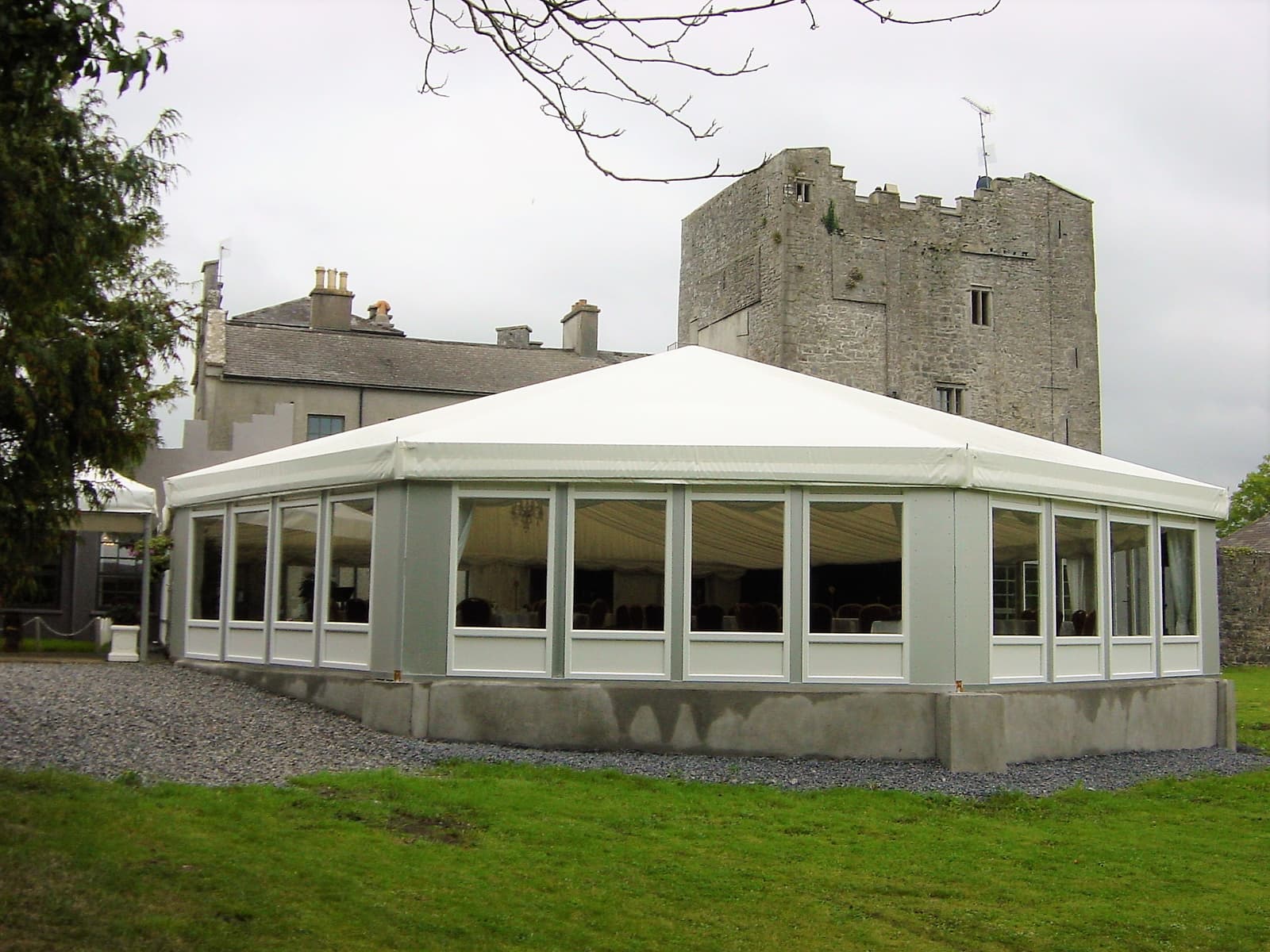
PVC covers, also known as PVC tarpaulin/tarp, are used in marquee, tent and temporary building production to cover walls and roofs. PVC (polyvinyl chloride) is a very robust type of plastic, offering a very high level of weather protection and is flame retardant. Features that make PVC the ideal material for use in marquees and temporary event structures.
Our PVC covers comply with international standards. They are of very high quality, ensuring durability and long-term use. Whether you want to use a party tent in summer, winter or all year round, with high-quality PVC coverings anything is possible.
Repairing a PVC Roof or Wall: What Are Your Options?
Small cuts and holes in PVC roof or wall coverings are relatively easy to repair. It is important to react as fast as possible as the smaller the damage, the easier the repair.
There are different options on how best to repair holes and cuts in a PVC cover. No matter which method you choose, make sure to clean the damaged area first and place the PVC on even ground before starting the repair process.
Methods for your marquee repair include:
1. Glue
Small tears and holes in your PVC cover can be repaired using a patch and plastic glue suitable for outdoor use. To do so, cut out a piece of PVC material that overlaps the damage by approximately 5 cm. Apply the glue using the integrated brush to the PVC around the tear or hole and to the PVC patch. Let the glue dry for a few minutes, as directed by the product’s instructions. Afterwards, press the PVC patch to the damaged part of your marquee covering, without moving the PVC section until the glue has completely dried and fused.
2. Adhesive PVC tapes
The easiest way to repair holes or tears in your marquee is to use a special Repair & Fixing Set. HTS TENTIQ developed this repair kit especially for our tents and marquees. Therefore, the self-adhesive patch is perfect for use on our PVC covers.
You cut out a piece of adhesive PVC tape in the right size, overlapping the damage by approximately 3 cm. This is to make sure that the damaged area is covered well. Remove the protective film from one side of the self-adhesive patch. Attach it to the outer side of the PVC covering and press firmly. The perfect temperature for this repair method is between 5 and 15 degrees Celsius. Oftentimes, when repairing PVC roofs and walls, too much or too little glue is used, or it has not had sufficient time to dry. The advantage of this method is that you do not have to use any glue, as the patches are self-adhesive.
3. Sewing
Small tears in your PVC covers can be repaired by sewing them. Using a special type of thread suitable for plastic materials, the needle must be very strong as the PVC is very thick plastic. You will need to measure the damaged section precisely and cut out a sufficient PVC patch to cover the affected area. Place the patch on the tear or damaged area and sew along the patch’s edge with straight stitches. Make sure that the seam is even and locked in to ensure that it cannot come loose at the beginning or end.
You can also sew directly over the rip. In this case, we recommend coating the seam with plastic glue for extra stability once sewn.
4. Welding
To carry out a welding repair, you need a PVC patch in the right size to cover the affected area and a heat gun. Place the PVC patch over the tear or cut on the inside of your PVC cover. Move the heat gun – on a low to medium level – slowly from one side to the other over the patch, by making sure to not overheat the PVC. By doing so, the patch will bond to your marquee covering securely. Once the patch is in place, let it cool fully.
Repairing Damaged Eyelets on a PVC Wall Cover
To repair damaged eyelets, or grommets on a PVC wall, you have to replace them. This repair is easy to carry out providing you have the right tools: no-sew eyelets in the right size, an eyelet punch and a hammer. A bench press can also be used.
Before the repair, clean the affected area where the eyelet is attached. Then, punch a hole in the PVC using the eyelet punch and hammer. Place the firing pin underneath the material and beneath the punched hole. The rivet, which is the part of the eyelet with the barrel, is placed underneath the PVC cover. Then, pull the fabric over the barrel. Place the second part of the eyelet, the washer, and also the setting pin on top. Hit the hammer onto the setting pin to connect the rivet and washer. Check the eyelet to make sure that the rivet and the washer are firmly attached.
Repeat the process for each eyelet requiring repair.
*Please note:
Marquees and tent structures manufactured by HTS TENTIQ are available for purchase only to commercial clients, venues, and marquee hire companies.
HTS TENTIQ does not offer a rental service for individual events and weddings.
Would you prefer to consult with our experts before repairing your tent cover? Do you have further questions regarding the repair process of your PVC wall or roof?
We are happy to help! The quickest way to reach us is via our contact form or by email to salesUK@hts-tentiq.com.
Please be sure to quote your order number or customer number. Alternatively, we will be happy to recommend a specialists company to undertake the repairs for you.
How to Properly Maintain and Store PVC Covers
A high-quality marquee has a lifespan of various decades. The maintenance and storage of PVC roofs and walls will affect the service life of the tent immensely. Here are a few tips on how to extend the lifespan of your tent:
- Clean the PVC while the tent is still upright using mild soap and water. Gently scrub with a soft sponge to remove dirt. Avoid aggressive detergents, as they may damage your covers. To remove oil or grease residue you can use customary spirit.
- Let the PVC covers dry completely before folding and storing it. Make sure that no liquid remains in the folds, as this could cause mould.
- Depending on the size of the structure, it is best to store the PVC coverings in specially designed packing bags or storage boxes. These protect your PVC covers from dirt and moisture.
- Make sure to store your PVC covers in a dry and clean environment.
Conclusion: Repairing Damage and Extending PVC Lifespan
PVC is a very durable and resilient type of plastic, perfectly suited for tents and temporary buildings. At HTS-TENTIQ we exclusively use high-quality PVC for our structures. Whether for industry and commerce, events, humanitarian purposes or military operations, HTS-TENTIQ structures are suitable for almost any occasion.
To provide optimum protection for HTS-TENTIQ tents, they should be maintained regularly. Despite ideal care and cleaning, damage to your PVC may occur. Usually, this is no problem; you can repair small cuts and holes as well as replacing eyelets yourself. The easiest way to do so is by using our Repair & Fixing Set, which we developed for use on our PVC marquee covers.
A quick repair, regular care and appropriate storage of your PVC covers will extend the service life of your event structure and ensure its efficient functionality.
.jpg&w=1600&q=75)