Humanitarian aid: accommodation tents for humanitarian deployments
When people are displaced from their homes due to natural disasters, conflicts or other crises, they urgently need protection and safety. Accommodation tents are an important part of humanitarian aid, as they provide those affected with protection and a place to sleep.
The requirements for tents for humanitarian purposes are very high and diverse. They must be robust, lightweight, quick to assemble and dismantle, reusable and cost-effective. HTS TENTIQ has therefore developed various tents and buildings that meet the specific requirements of humanitarian deployments.
Definition: What is humanitarian aid?
Humanitarian aid is the support of people who are in an emergency situation – for example due to war, natural disasters, diseases or other life-threatening crises. The aim of this assistance is to save lives, alleviate suffering, protect rights and preserve human dignity.
The principles of humanitarian aid
The work and actions of humanitarian aid are based internationally on the following four principles:
Humanity
This principle expresses that the aim of every humanitarian deployment is to prevent human suffering and to save lives. In doing so, the dignity and rights of those affected are protected and respected.
Impartiality
Humanitarian aid is guided by people’s needs and is provided without any discrimination based on characteristics such as nationality, ethnic origin, gender, language, disability, sexual orientation, gender identity, or religious, political or other beliefs.
Neutrality
Every humanitarian deployment is carried out neutrally; no side is taken. Humanitarian actors distance themselves from political, religious, economic or ideological interests.
Independence
Humanitarian aid is guided solely by the purpose of saving lives and alleviating suffering. All action is carried out autonomously and completely independently of political, military and economic motivations.
Areas of humanitarian aid: How are people on the ground helped?
Humanitarian aid encompasses various areas in which rapid emergency assistance is essential. In addition to short-term support measures, humanitarian aid also makes an important contribution to opening up long-term and sustainable development opportunities for those affected.
The areas of humanitarian aid include:
Nutrition
In many regions, access to nutritious, safe and affordable food is very limited. This can even be life-threatening for many people, as acute malnutrition can develop. Through humanitarian aid, food, nutritional supplements and therapeutic nutrition are provided for people who are at risk of or affected by hunger, malnutrition or undernourishment. Therapeutic nutrition refers to special forms of diet that are specifically developed to treat or prevent nutrition-related illnesses. This form of nutrition ensures that those affected receive the necessary nutrients in sufficient quantities in order to improve their health and minimise the long-term consequences of malnutrition.
Water and Hygiene
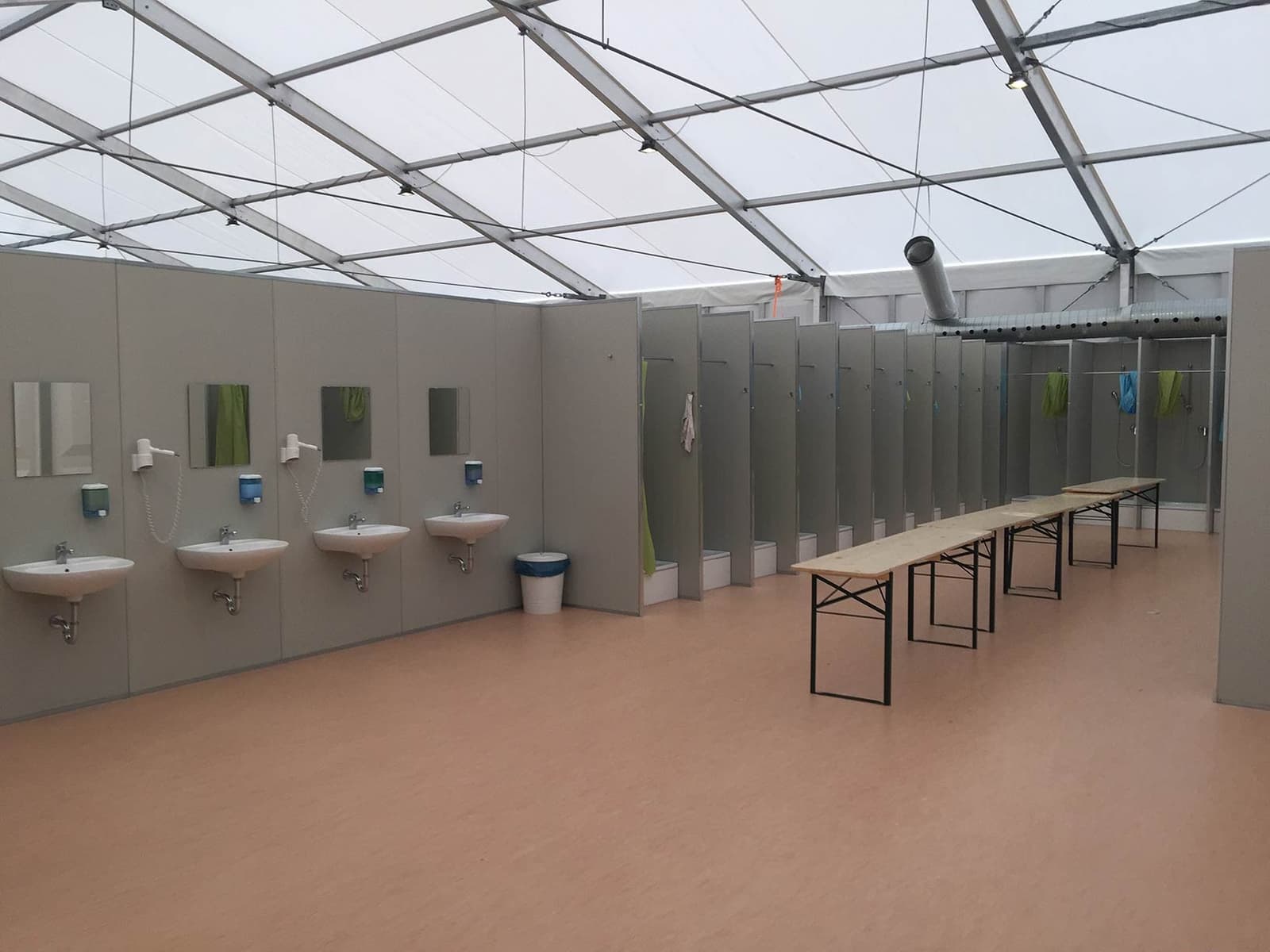
A daily water supply and access to hygiene are not a matter of course in many parts of the world. Through humanitarian aid, clean drinking water, sanitation facilities and hygiene products are provided for people who are at risk of or affected by water scarcity, contamination or disease. The long-term goal is to protect the health and well-being of those affected.
Emergency shelters
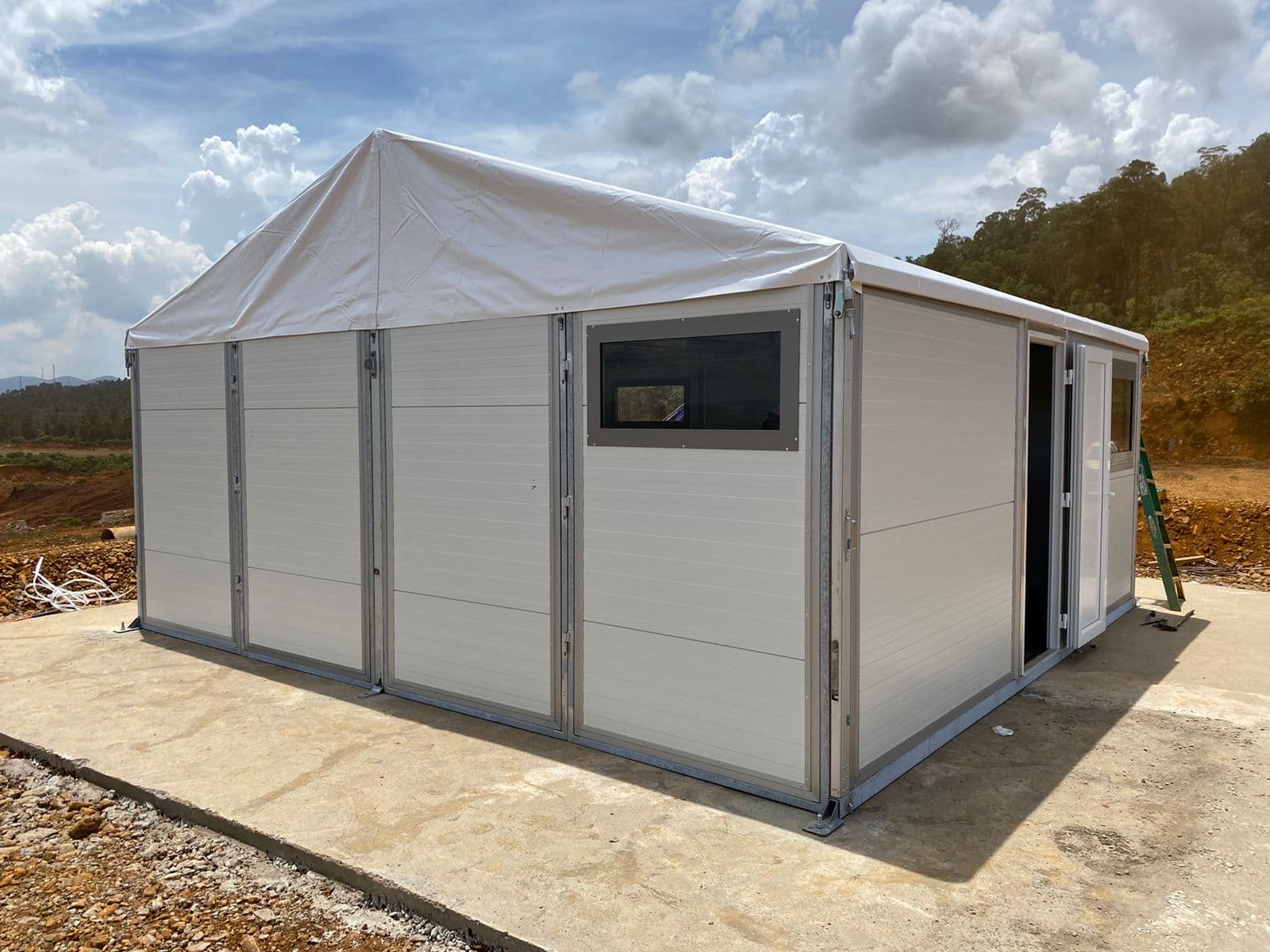
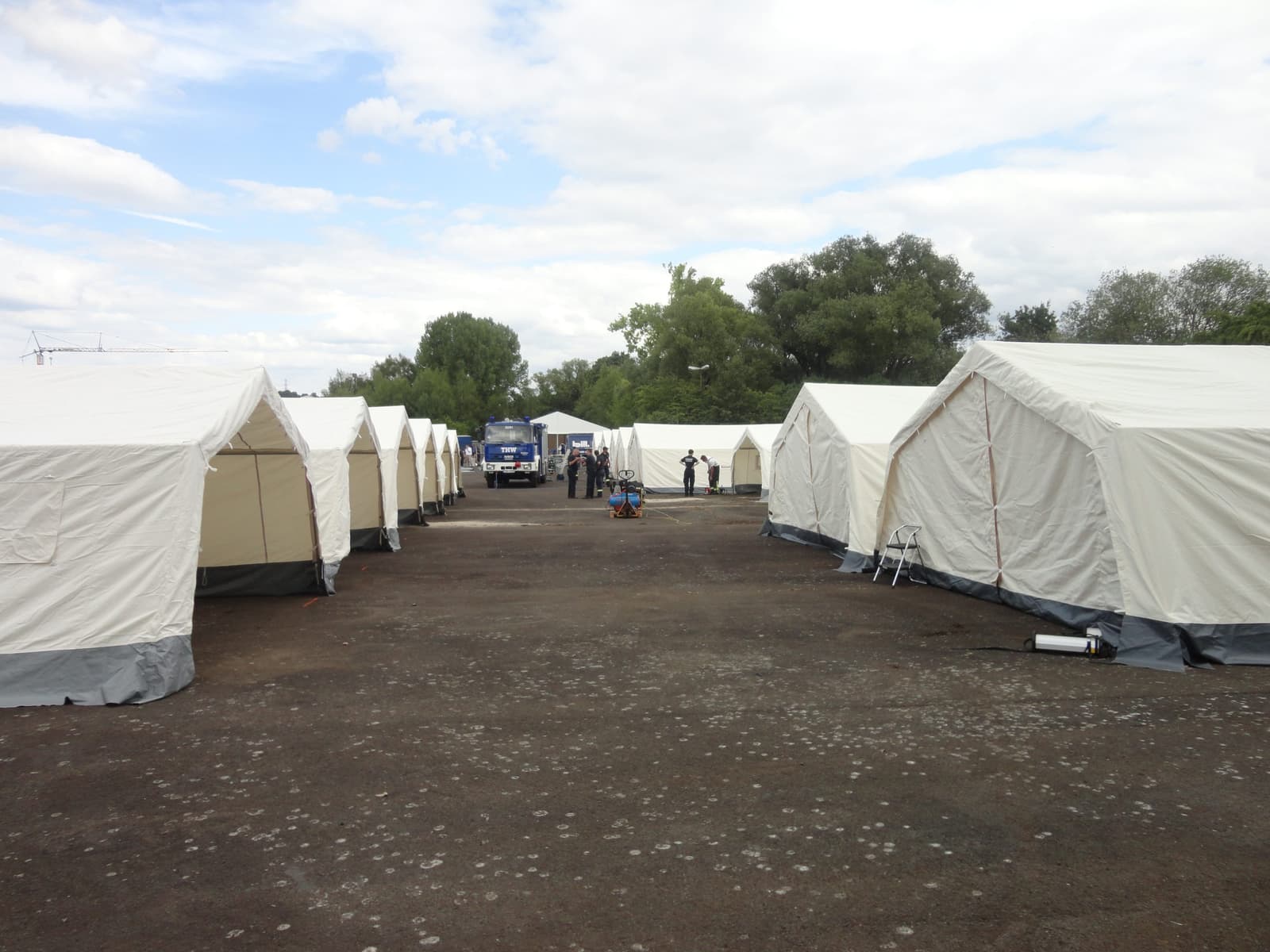
People who are threatened by or affected by displacement, flight, illness, homelessness or natural disasters require rapid and safe emergency accommodation. For this purpose, specially designed tents for humanitarian purposes are used, which can be configured depending on requirements, for example as accommodation tents, sanitation tents or storage units. With these tents, entire refugee camps or settlements can be established. In addition, those affected are provided with blankets, beds or mattresses, tarpaulins and hygiene products.
Health and safety
This area encompasses all protective measures for people who are threatened by or affected by injuries, illnesses, violence or human rights violations. This includes the provision of medicines, vaccinations, psychosocial support as well as other necessary protective measures.
Humanitarian aid for long-term development opportunities
In addition to immediate emergency assistance, humanitarian aid focuses on the development of sustainable progress. This area therefore includes support for people affected by prolonged or recurring humanitarian crises. It can cover various topics such as the restoration or improvement of livelihoods, education or income. The aim is to help those affected break out of the cycle of dependency on humanitarian aid and to develop ways of making use of their own development opportunities.
Are you interested in a temporary building or an accommodation tent for humanitarian deployments? Then simply use our contact form – this is the fastest way to reach our experts.
Accommodation tents for humanitarian deployments: HTS TENTIQ’s contribution to humanitarian aid
An important component of humanitarian aid is the provision of robust and rapidly deployable tents for accommodation or working space. These tents fulfil a key function: they offer protection and safety to people in distress and give them a small degree of privacy and normality in the midst of an exceptional situation. Accommodation tents are therefore subject to high requirements.
Accommodation tents for every need
In humanitarian crises, accommodation tents serve as temporary living or working spaces. They provide protection from cold, heat and hazards. Size, shape, material and equipment can be adapted to the needs, the region and the situation.
Accommodation tents are used as:
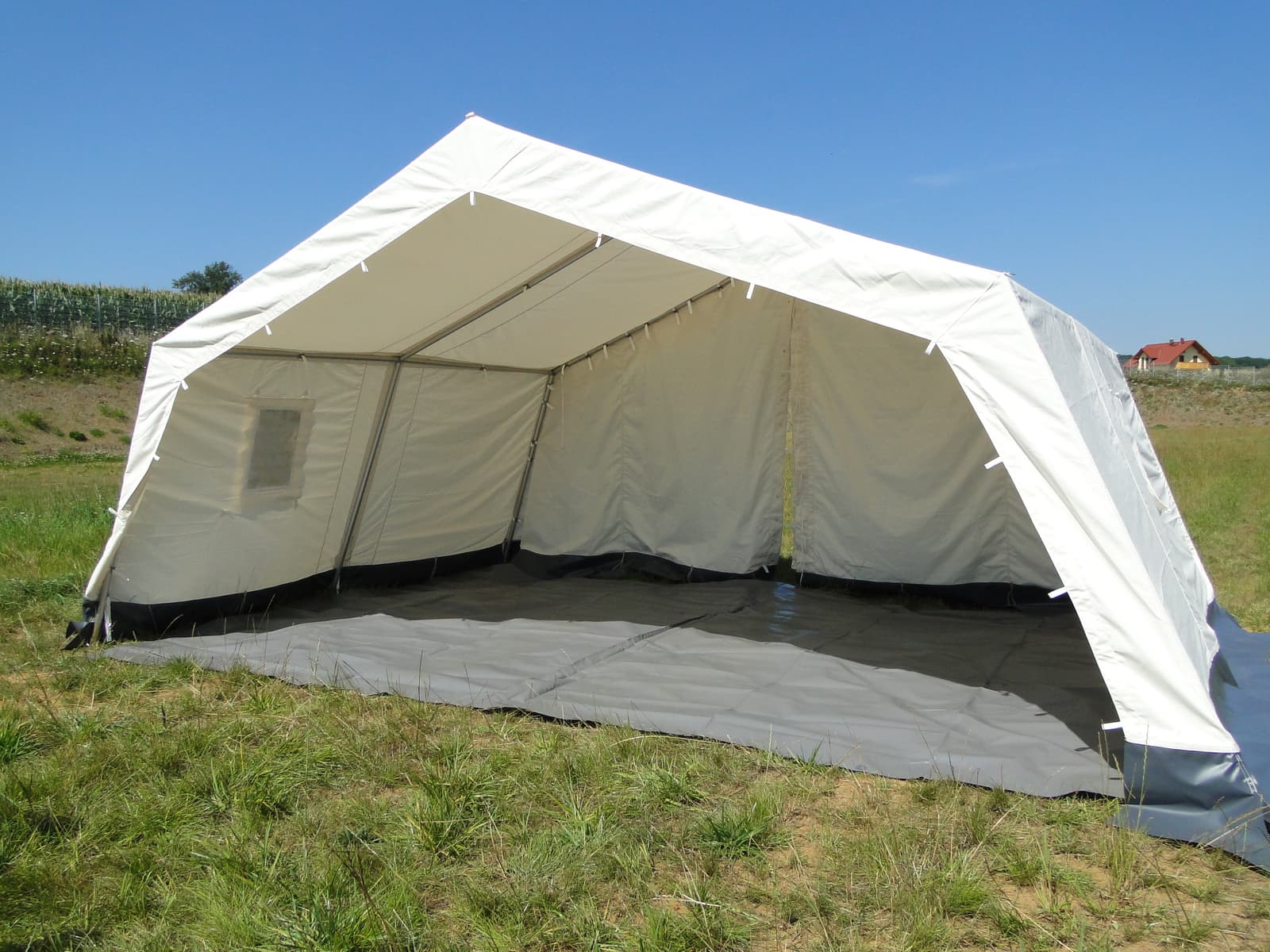
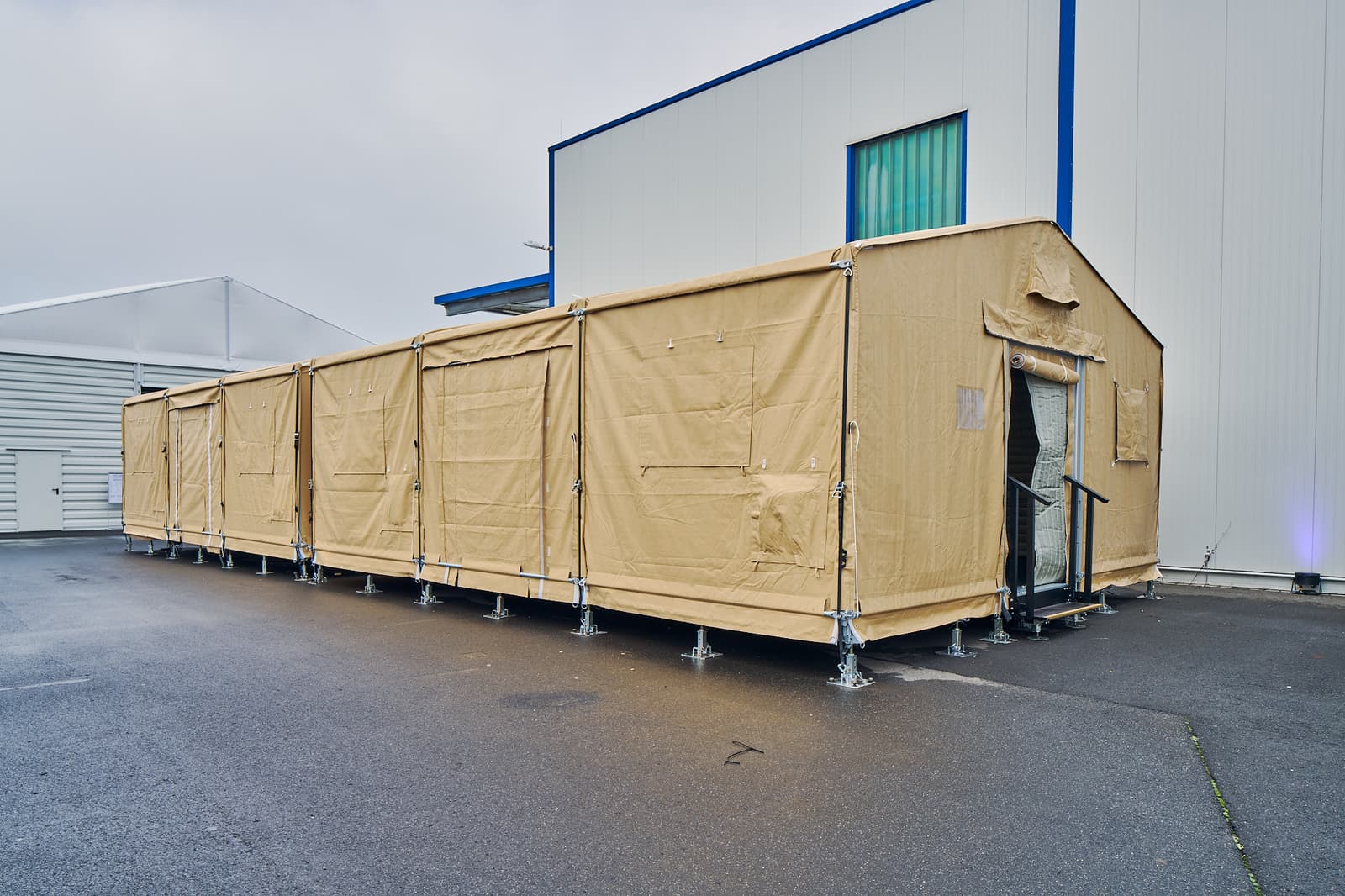
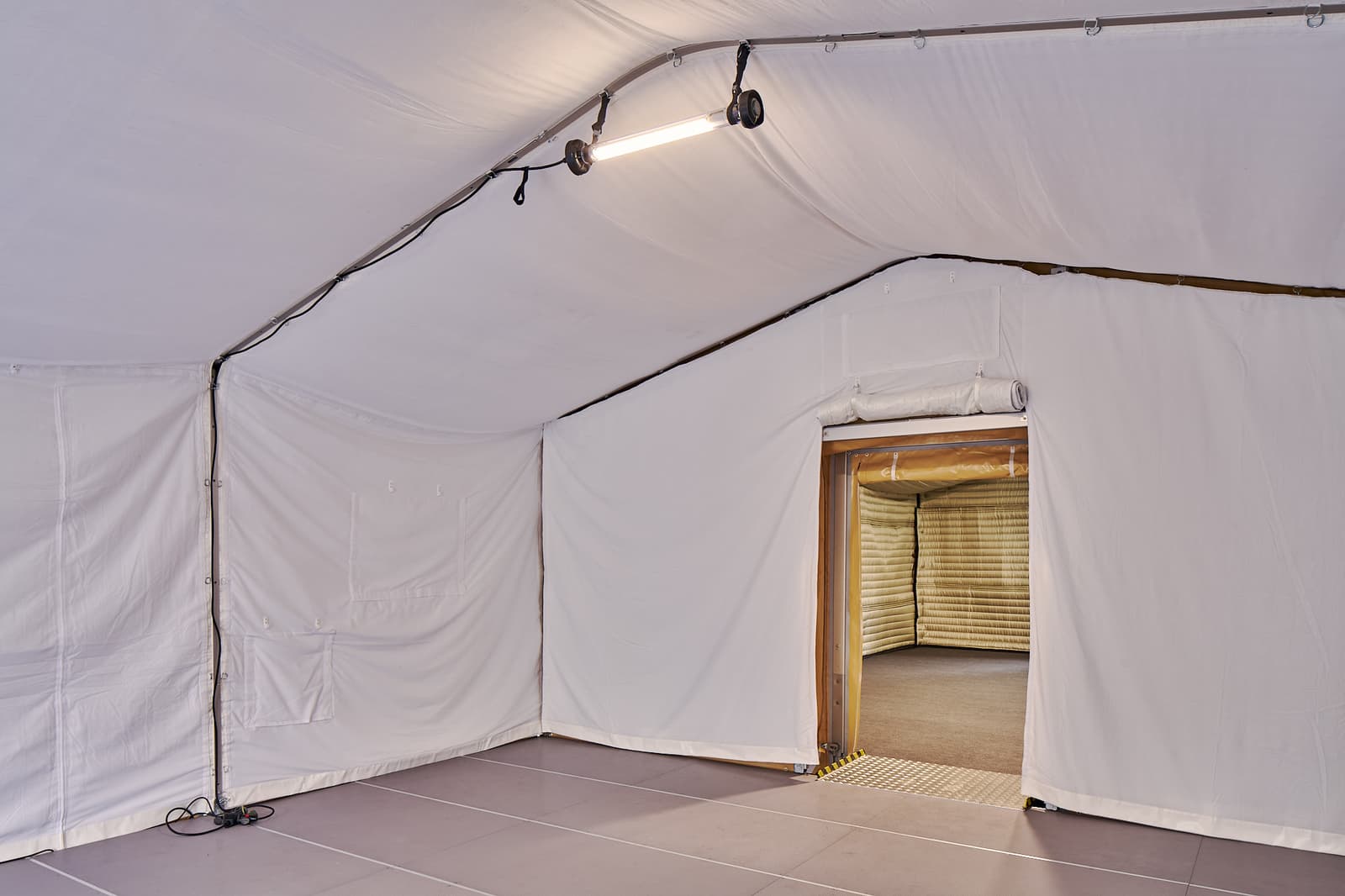
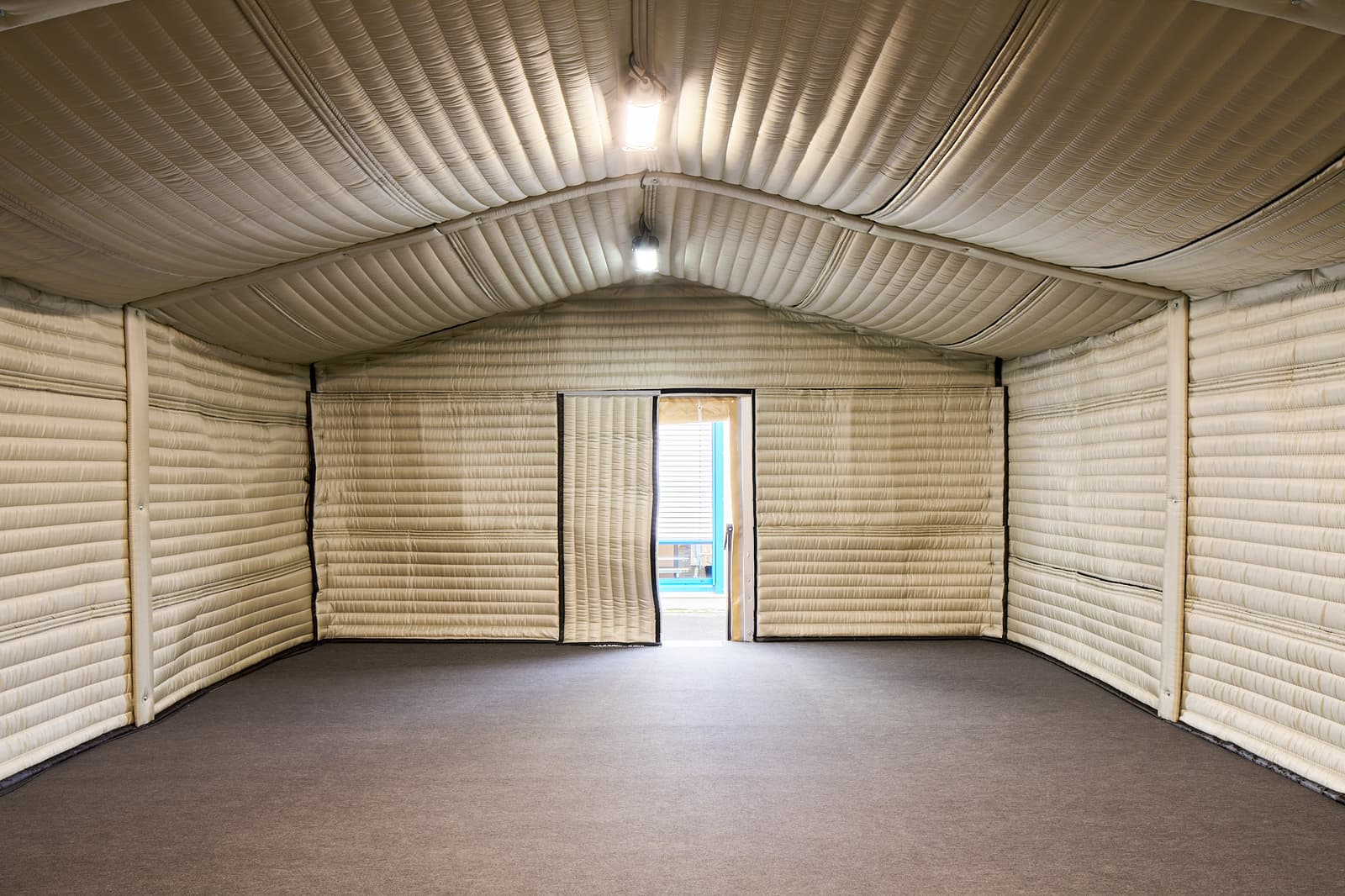
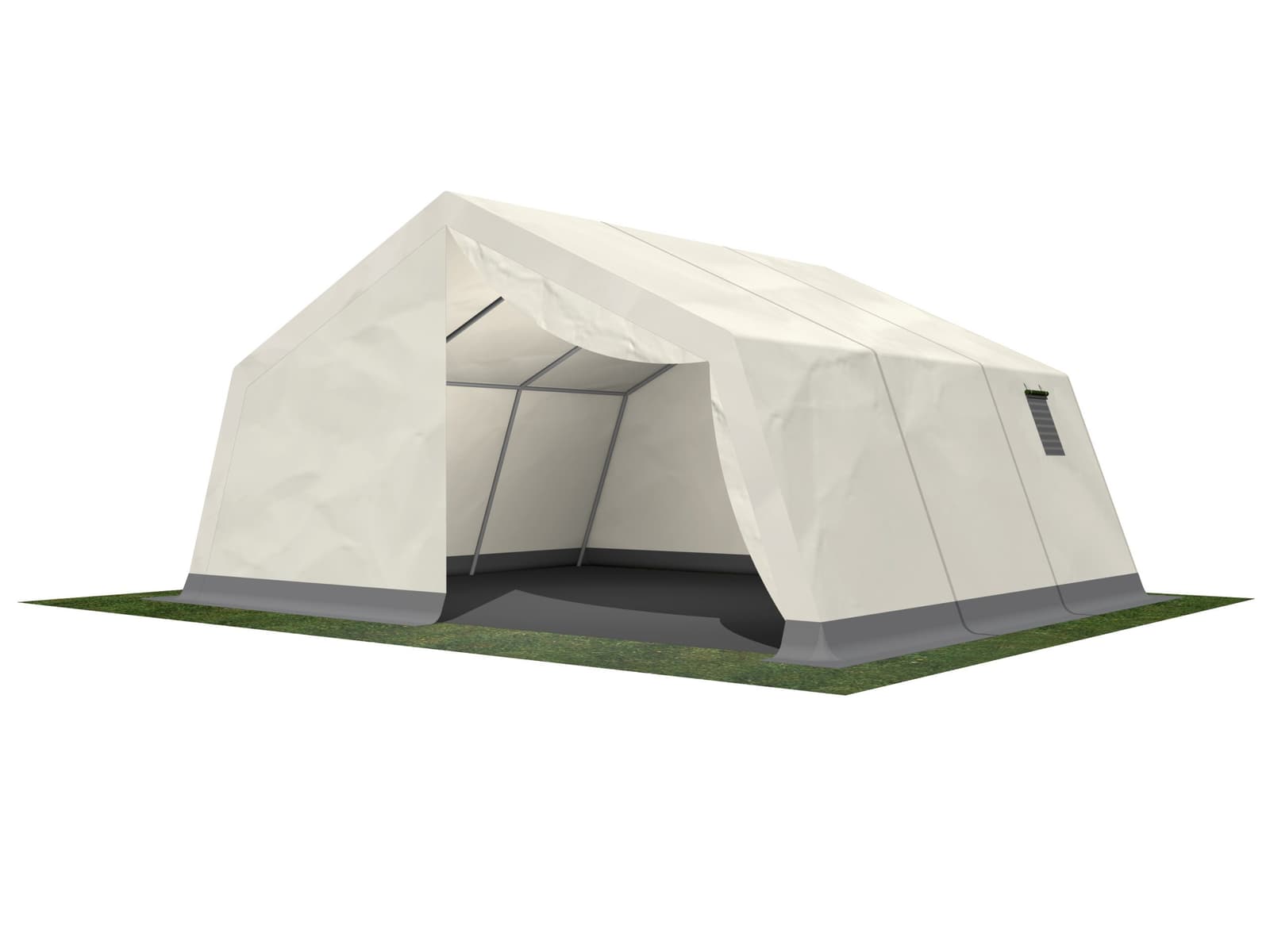
- Troop tents: These lightweight aluminium tents are highly robust and can be assembled and dismantled quickly. They are also multifunctionally usable and offer numerous equipment options such as insulated wall and roof linings. They can also be connected to other tents or containers. Of course, secure worldwide transport is ensured, whether by lorry, sea freight in containers or air freight in urgent cases. The troop tents can be packed on pallets, in transport racks or in standard containers (20-foot or 40-foot).
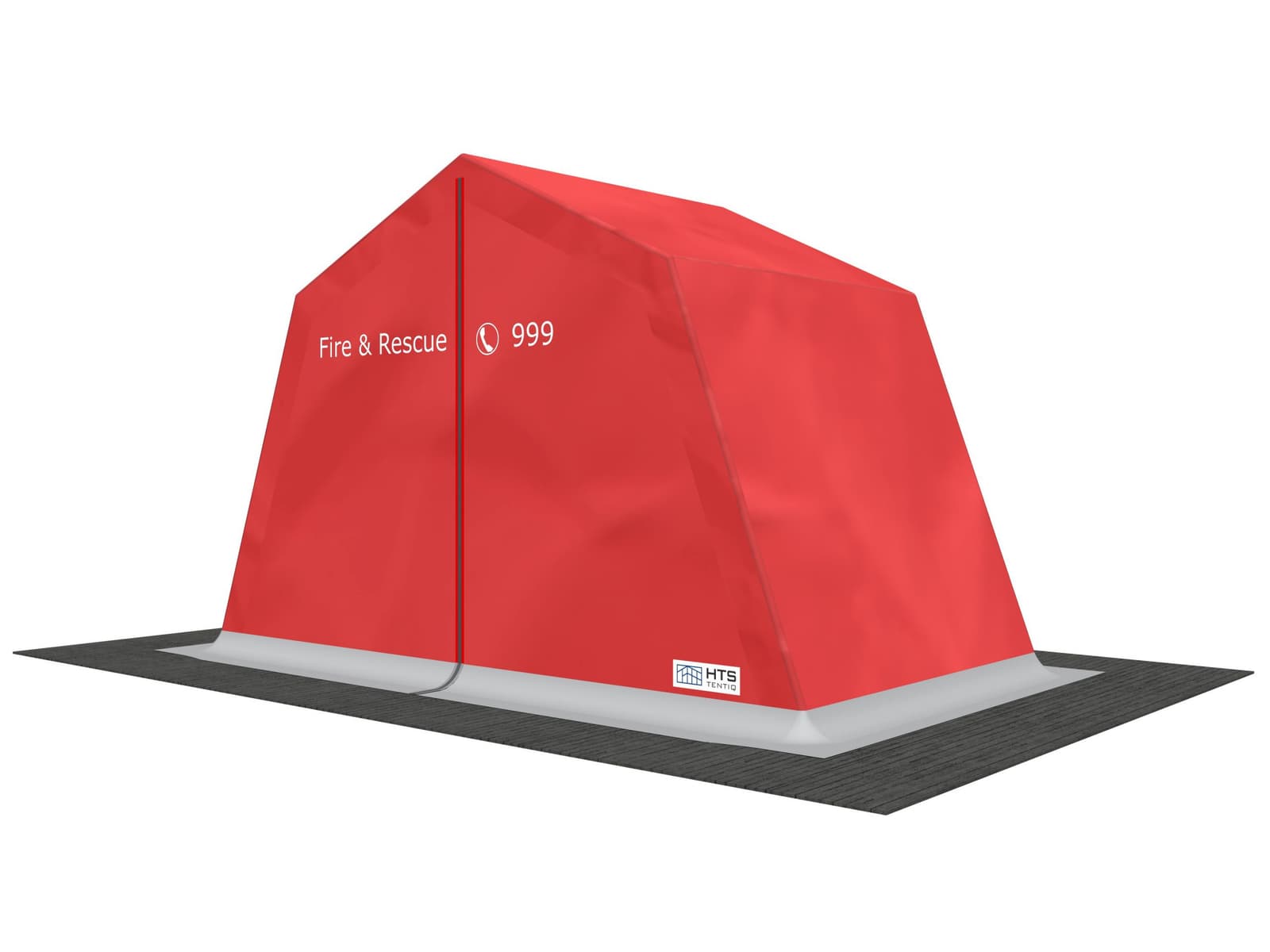
- Changing tents: These tents enable safe and sheltered changing directly at the deployment site. Quick assembly is ensured by a simple plug-in system that requires no additional tools. These small tents have a span of 3.41 m, a ridge height of 2.19 m and a length of 1.79 m. The low weight of these tents is achieved by using anodised aluminium tubes for the frame and aluminium die-cast connectors for the joints.
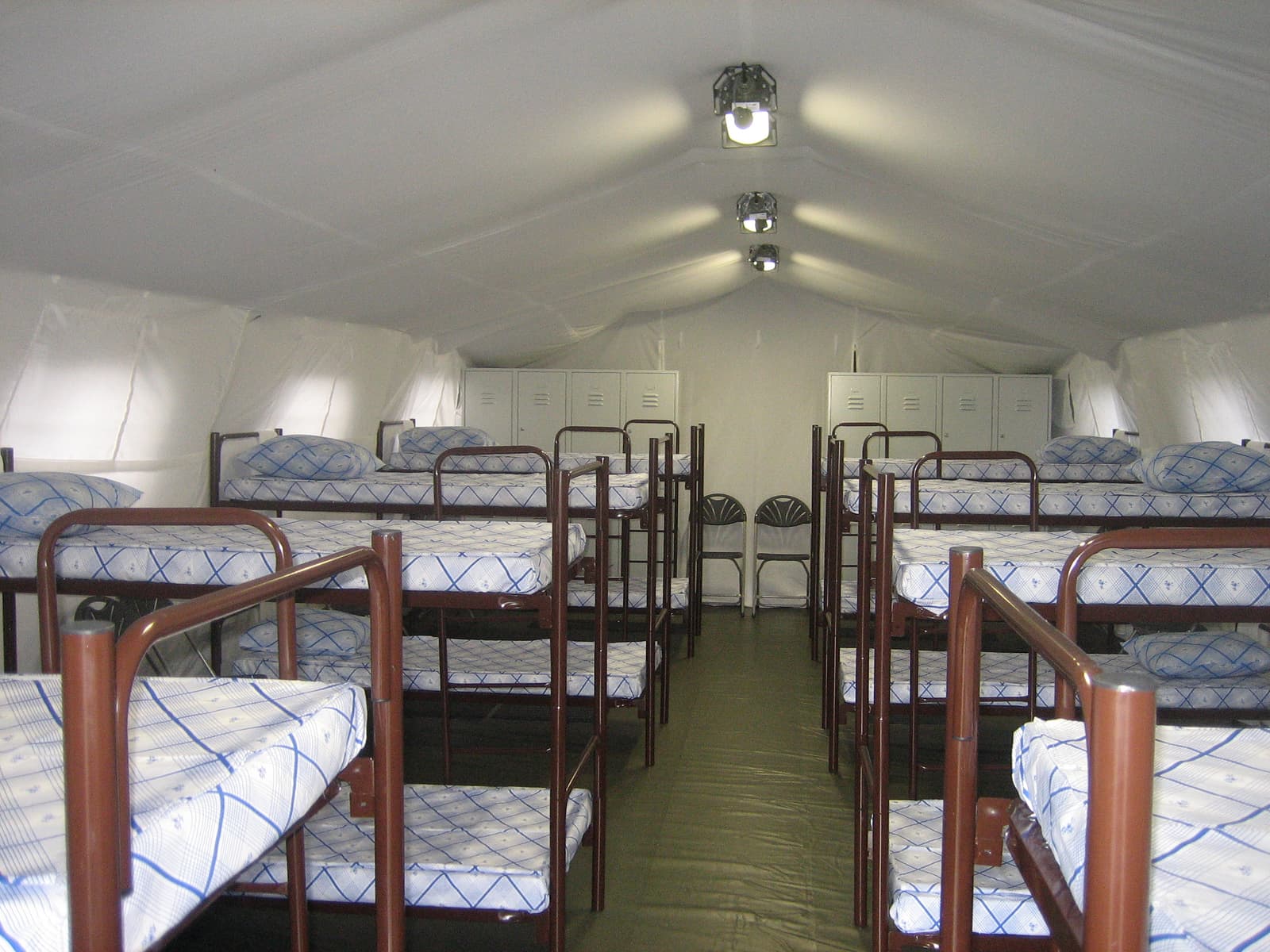
- Accommodation and personnel tents: These lightweight and robust tents are ideally designed to accommodate smaller groups or larger teams. Depending on requirements, they can be equipped with various accessories such as flooring, partition walls or connecting corridors. They can also be adapted to different weather conditions. The advantage of these tents lies in their multifunctionality. In addition to humanitarian use, they are also widely used by associations as tents for events or camping.
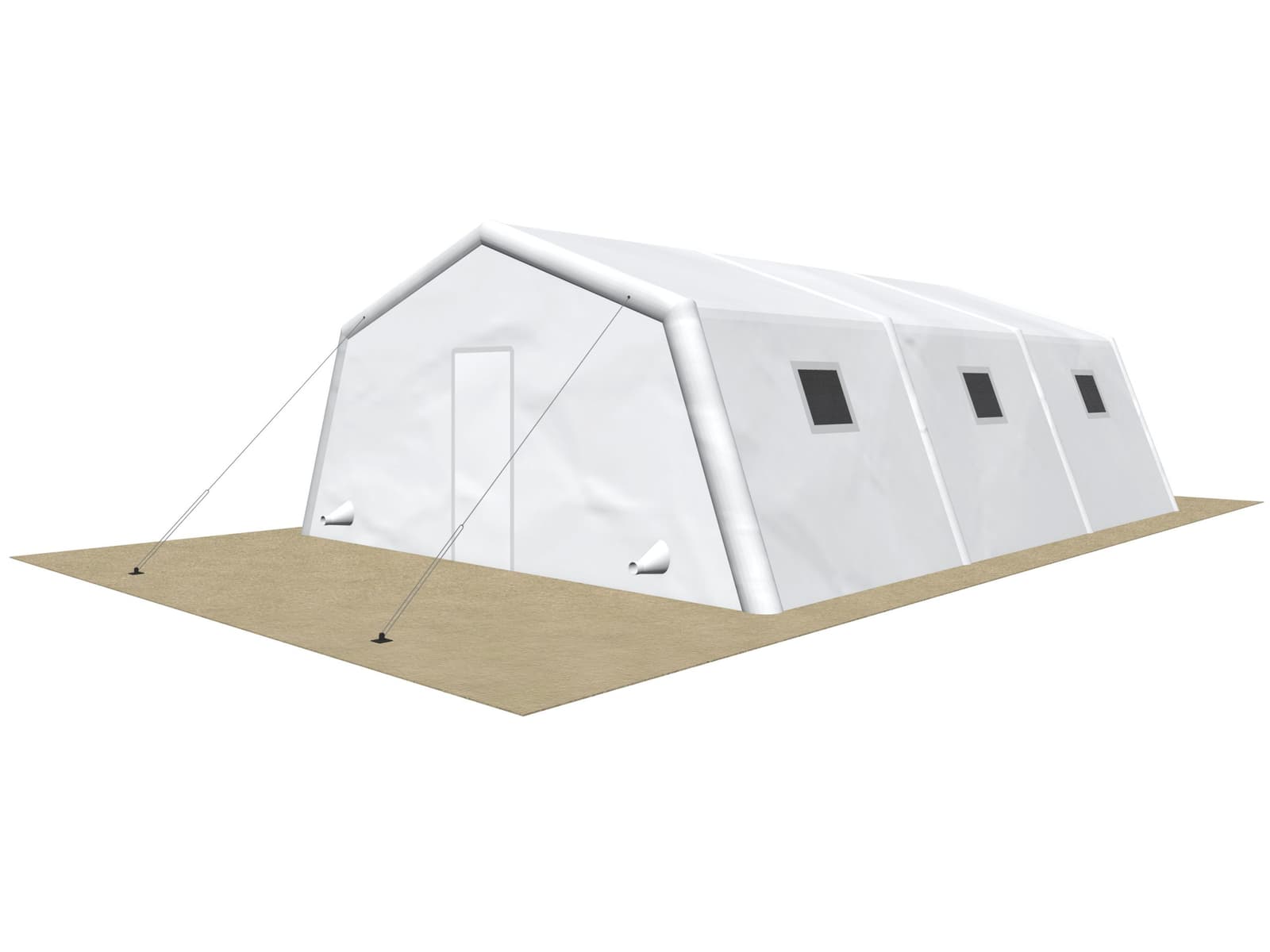
- Inflatable tents: This innovative tent system ensures particularly rapid deployment; it is filled with air and is suitable for short-term humanitarian operations worldwide. The inflatable tents are available in four different sizes: the smallest tent has a length of 5.28 m and the largest a length of 13.20 m. The standard span is 5.65 m. The transport volume of these tents is so small that they can be transported on a pallet. Various additional features such as windows, doors or partition walls can also be integrated into this type of tent.
- Folding tents: These tents consist of a foldable aluminium structure made up of a main segment and individual plug-in poles. Thanks to this special design, they can be erected within just a few minutes. The floor system is also foldable.
Deployment tents for catering and sanitation
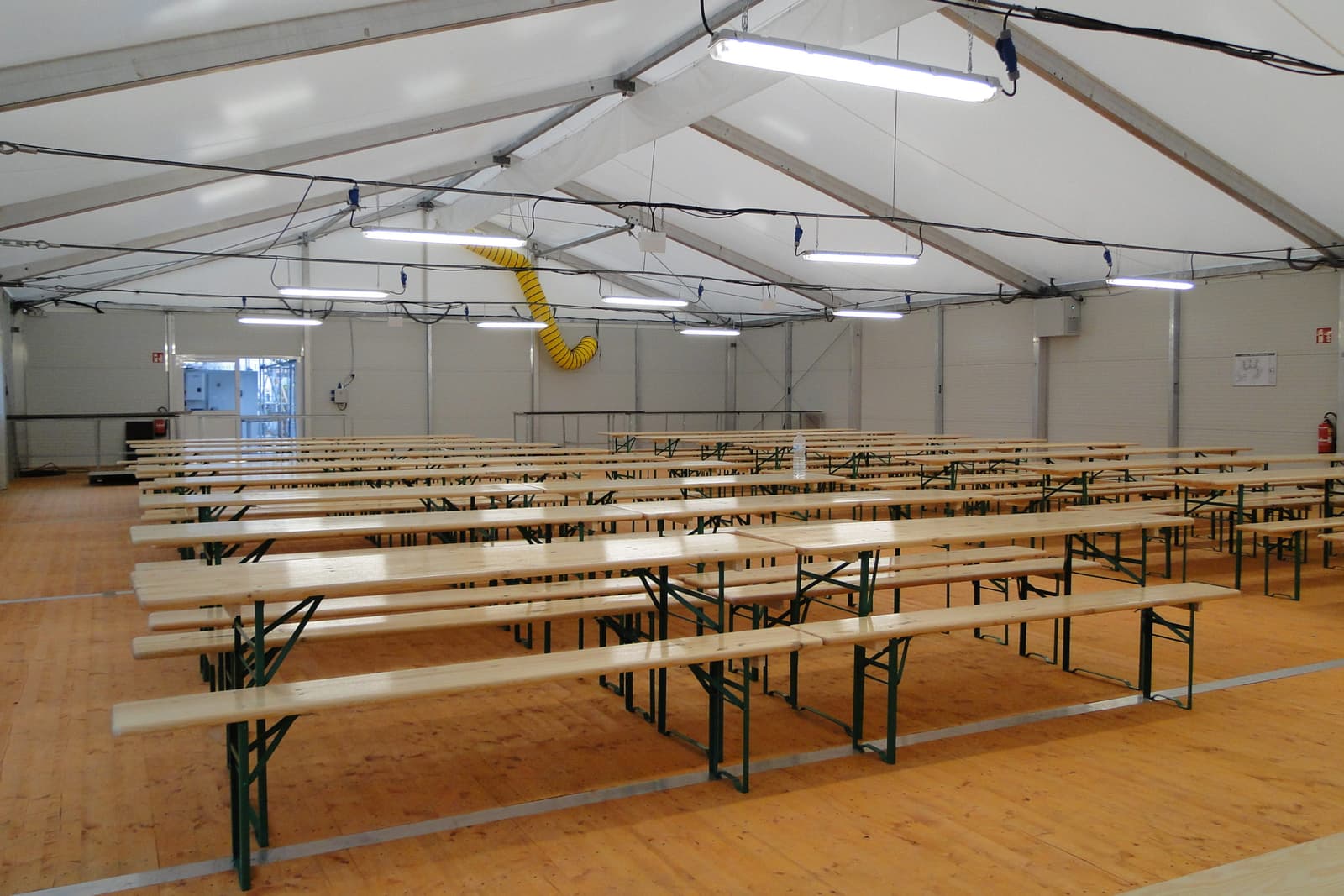
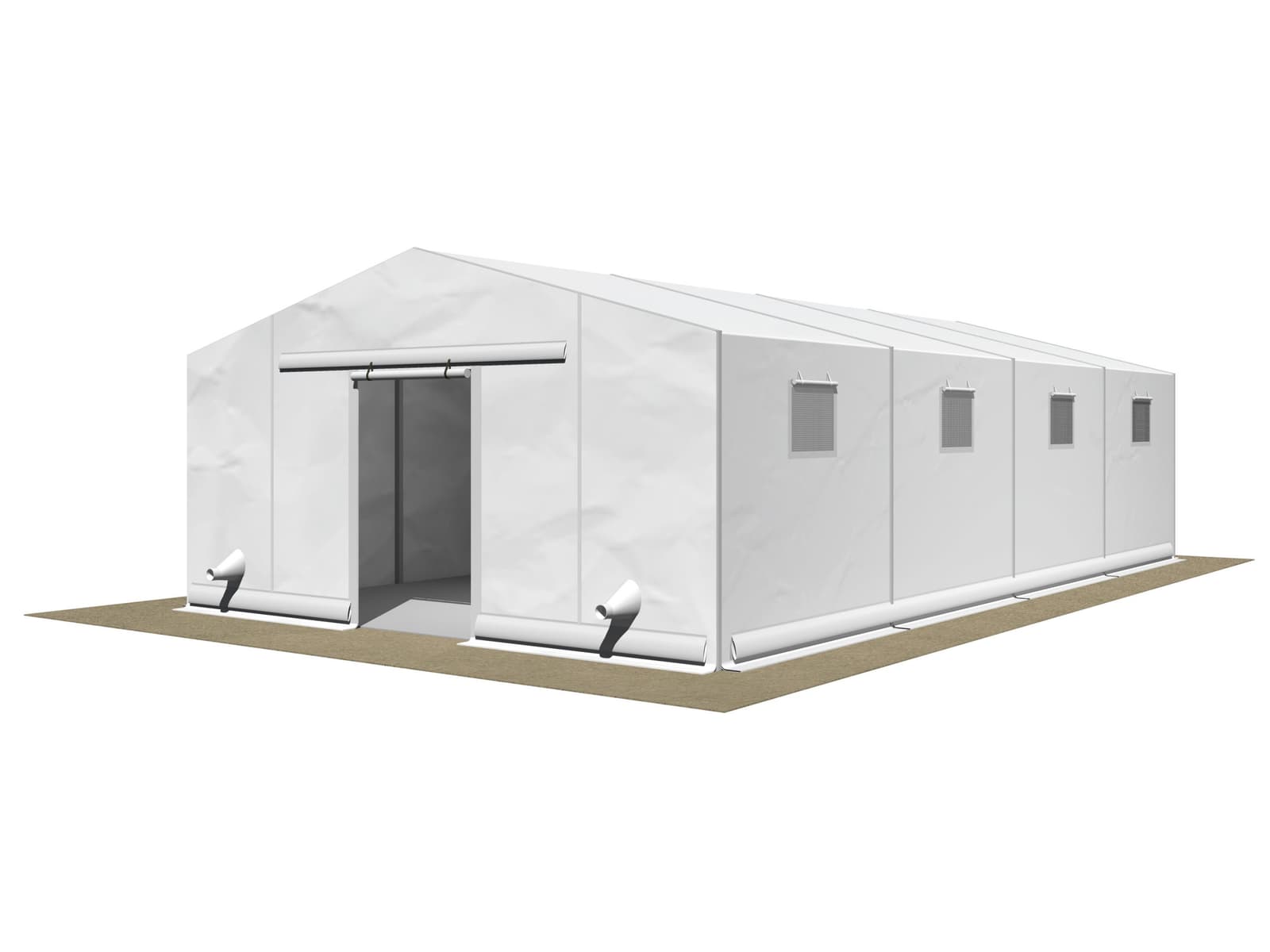
To create temporary spaces for care and hygiene for people in need, deployment tents for catering and sanitation are set up. They can be used as kitchens, dining halls, toilets, showers or washing stations.
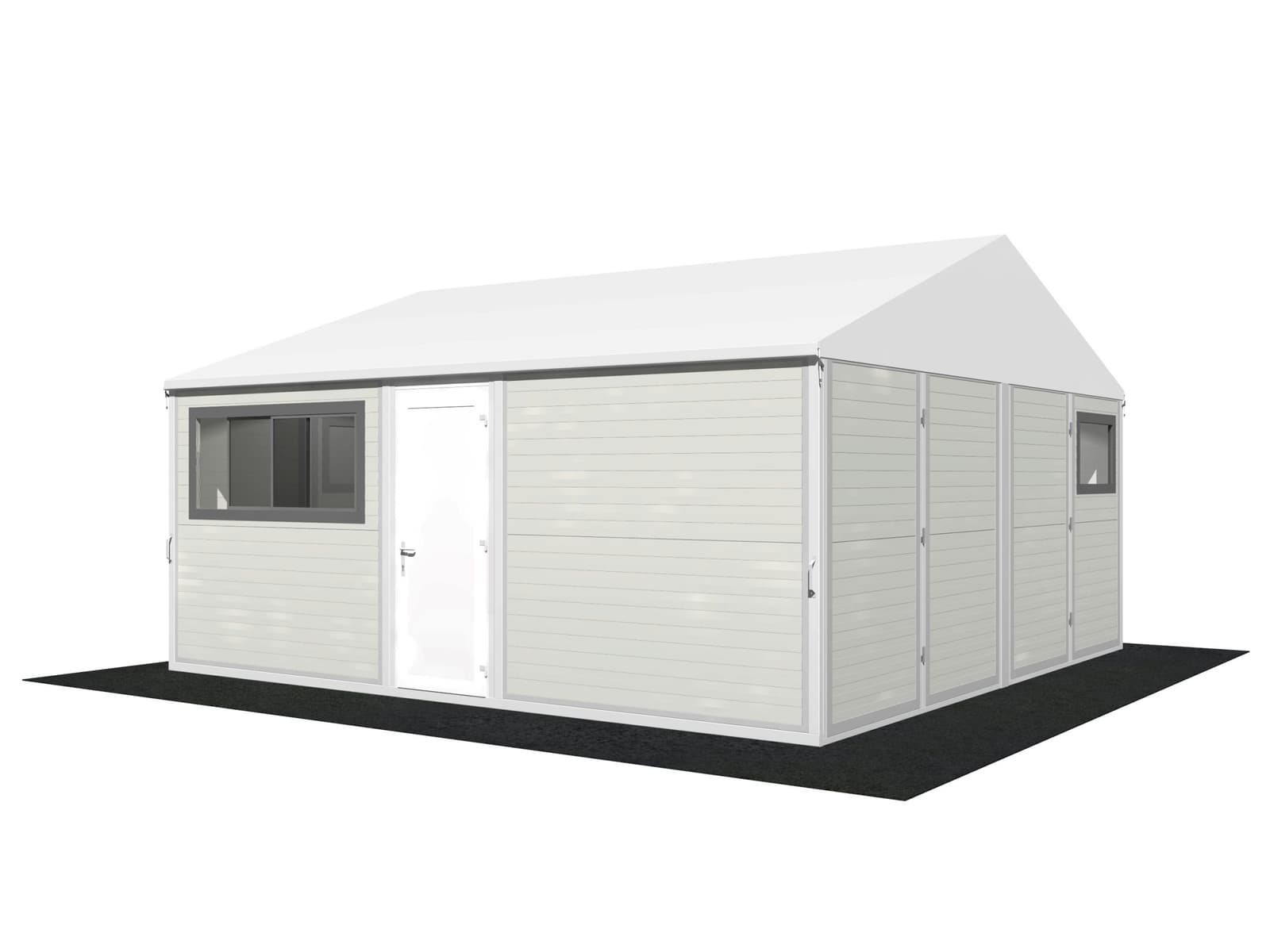
For larger areas such as dining halls or rest areas during any humanitarian deployment, our large tents are used. The frame is made of extruded aluminium and can withstand high snow and wind loads. The tent size can be flexibly adapted to requirements and can be extended without limitation. For wall and roof cladding, numerous options are available, ranging from simple PVC sheeting to sandwich panels for particularly effective insulation. They can be equipped with accessories such as flooring, partition walls or connecting corridors.
Tents for logistics and maintenance
In humanitarian emergency situations, materials and vehicles must be stored, and vehicles, equipment, tanks and aircraft must be maintained and repaired. For this purpose, tents for logistics and maintenance are used.
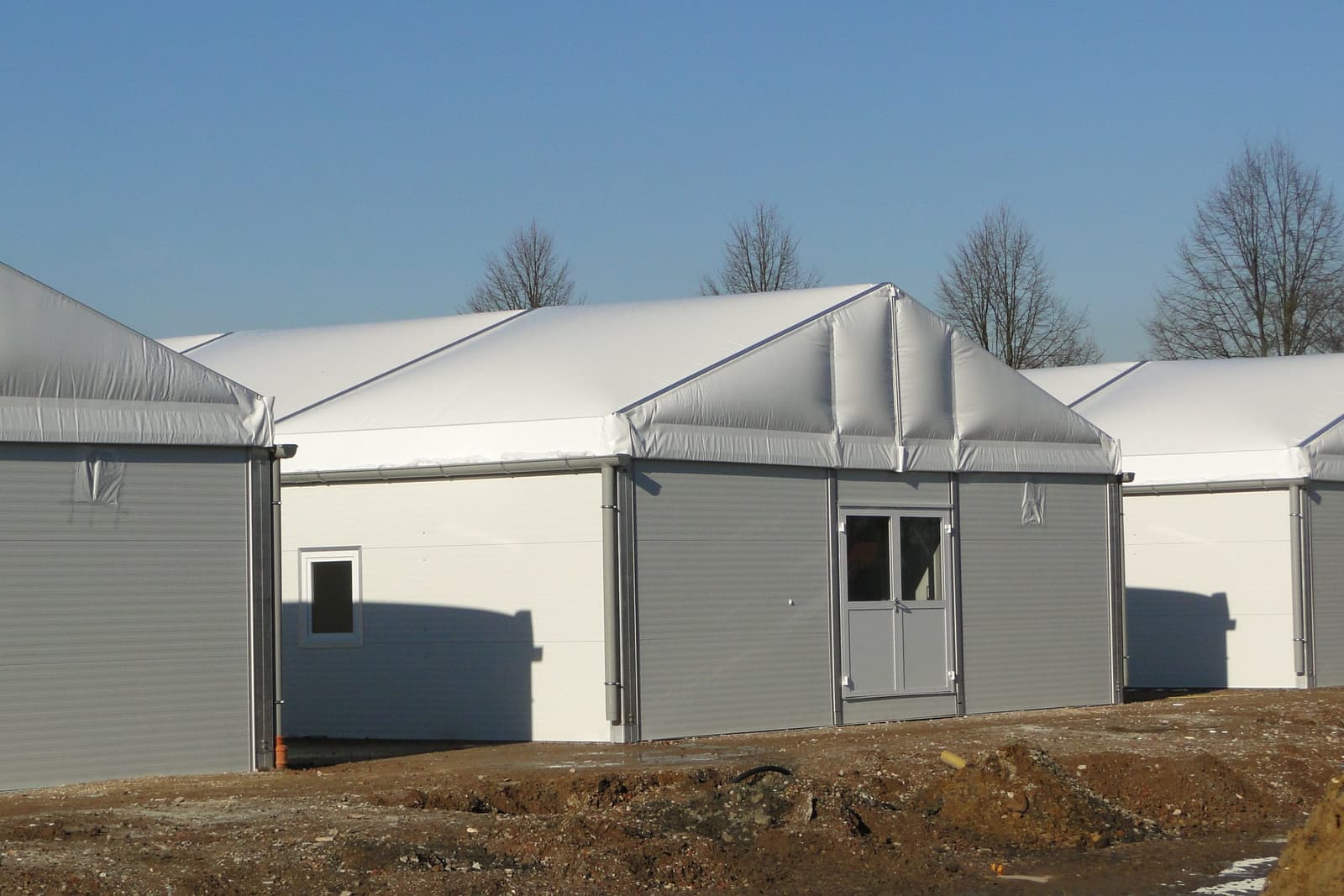
Smooth logistical operations are a central element of every humanitarian deployment. In many cases, large quantities of relief supplies such as medicines or food must be stored safely and securely and distributed quickly to those affected. With our temporary buildings for humanitarian purposes, we create ideal storage and working conditions for humanitarian deployments. Thanks to various equipment options, we can provide uninsulated buildings for non-sensitive goods as well as insulated buildings to ensure an ideal environment for temperature-sensitive goods, products and activities.
Our buildings are highly adaptable to the respective humanitarian purpose thanks to their flexible dimensions and shapes. We offer freestanding widths from 5.00 m to 30.00 m, with side heights between 4.20 m and 6.20 m. In length, our humanitarian temporary buildings can be extended without limitation in 5.00 m modules.
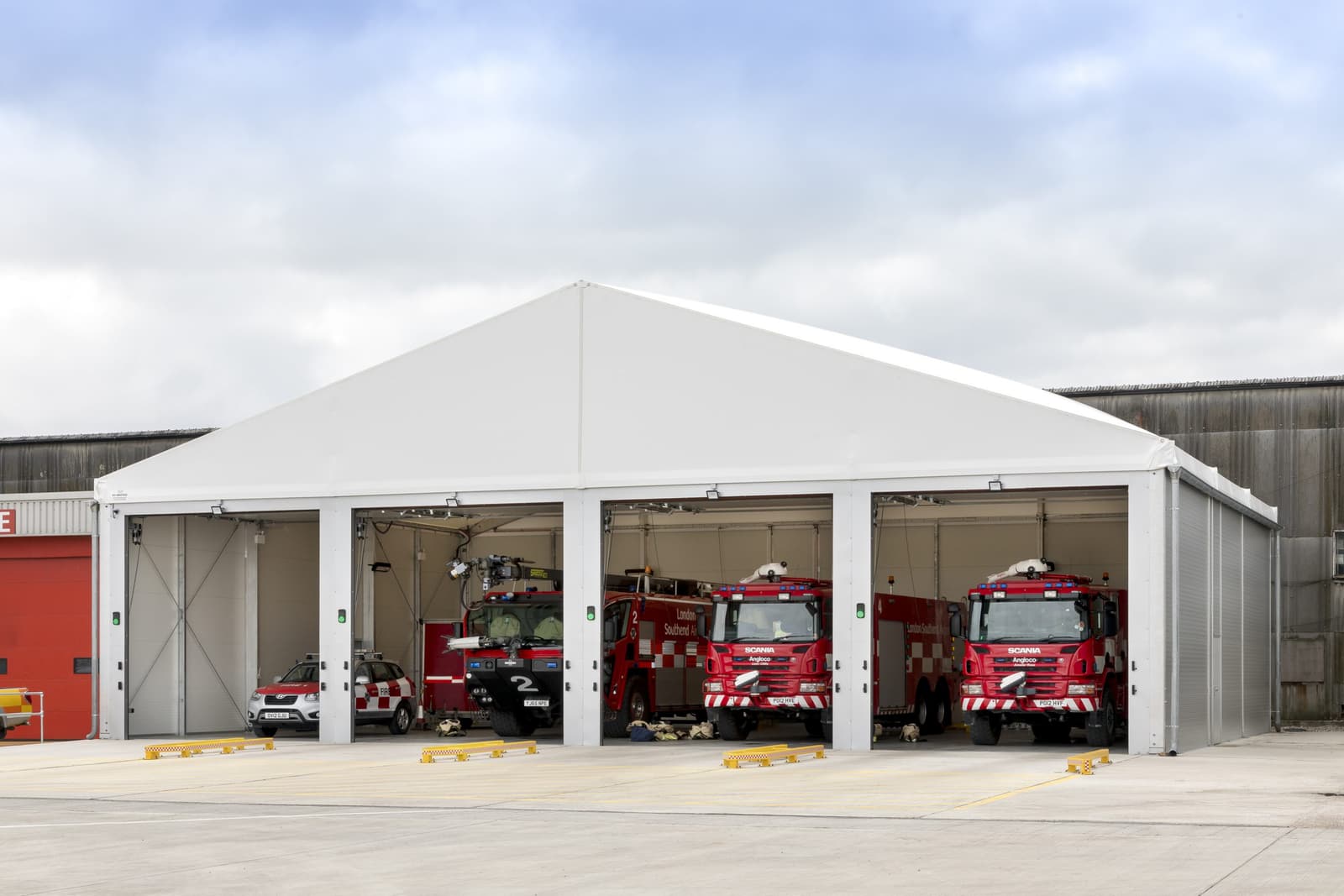
In many humanitarian deployments, aircraft hangars are required. For these purposes, our aircraft hangars are fully demountable and relocatable. They can also usually be erected on existing ground, meaning no foundation is required. Our aircraft hangars are also ideally suited as storage units or workshop halls. The size can be fully adapted to the deployment: widths can range from 5.00 to 70.00 m, eaves height up to 6.20 m, and length can be extended without limitation.
Conclusion: HTS TENTIQ as a reliable partner for tents for humanitarian deployments
To provide comprehensive assistance to people in extreme situations such as a pandemic, drought, famine or war, aid organisations require stable, resilient and safe tents for a wide range of purposes – whether for storing essential relief supplies, protecting people in need such as in refugee camps, or serving as accommodation for humanitarian actors. This requires a reliable partner who understands what high-quality tents are and what requirements apply to tents for humanitarian deployments.
HTS TENTIQ produces rapidly deployable tent systems suitable for various purposes, situations and climate conditions. The humanitarian tents from HTS TENTIQ are characterised by high quality and innovation, ensuring maximum functionality and durability. Thanks to flexible dimensions and shapes, each tent can be adapted to local conditions and requirements. In humanitarian deployments, rapid availability is essential, which can also be guaranteed through our state-of-the-art production facilities, achieving a weekly production capacity of up to 60,000 m² of finished tents and buildings.