Indoor climate in a party tent: how to achieve optimal humidity
The event is perfectly organised, the party tent is set up and the guests are gradually arriving. But has the initially good atmosphere quickly disappeared? The reason for this is often a lack of or insufficient ventilation in the tent. If there is poor indoor air in the party tent, an event can quickly become a flop.
We will show you how to ensure a good indoor climate and optimal humidity in a party tent.
Indoor climate and party tent: these are the advantages and disadvantages
If sufficient fresh air enters the party tent, guests are continuously supplied with oxygen-rich air. Good indoor air increases the well-being of the guests and is therefore a very important feature in a party tent that must be taken into account.
We will show you what conditions are required for a good indoor climate and what consequences poor indoor air in a party tent can have:
Requirements for a good indoor climate | Consequences of a poor indoor climate |
|---|---|
Regular air exchange between the party tent and the outdoor area | Indoor air is not enriched with fresh air from outside |
Oxygen-rich air in the tent | Dry, warm and stale air in the tent |
Even temperature distribution in the tent | Uneven temperature distribution |
Viruses, bacteria, gases and other pollutants are carried outside through regular air exchange | Pathogens and pollutants remain in the tent |
Optimal humidity to prevent mould growth during longer periods of use | High humidity develops and, during longer periods of use, can lead to mould growth. |
High level of comfort for guests | Guests can become tired more quickly due to the stuffy air |
Poor indoor climate: causes & consequences
When it comes to a party tent, the focus is usually on water and weather resistance. After all, the tent must remain watertight even in heavy rain. Less often considered are the indoor climate and the ideal humidity in a party tent. However, if these conditions inside the tent are not optimal, this can have unpleasant consequences.
Causes of poor humidity levels
When rooms are kept closed, there is no air exchange with the outdoor environment. The result is very stuffy, dry, oxygen-poor air. Since the air does not circulate when there is insufficient air exchange, the warm, stale air rises while the cooler, oxygen-rich air sinks to the bottom.
When many guests are present in the tent, the humidity can become very high in poorly ventilated tents.
Consequences of poor humidity levels
Used air and poor humidity in a tent can quickly spoil the good atmosphere of even the best organised event. Stuffy air leads to fatigue and reduced concentration. Nausea can also be a consequence. After some time, guests will tend to move outside and are less likely to remain in the tent.
While guests feel increasingly uncomfortable in poor indoor air conditions, warm, stale air also provides an ideal breeding ground for pathogens such as viruses and bacteria. Poor indoor climate and high humidity can therefore negatively affect the guests’ health. As the recent example of the COVID-19 pandemic shows, proper ventilation of indoor spaces is of the utmost importance in order to minimise potential infections as effectively as possible. Poor ventilation also has implications for guest safety, as gases and other pollutants cannot escape.
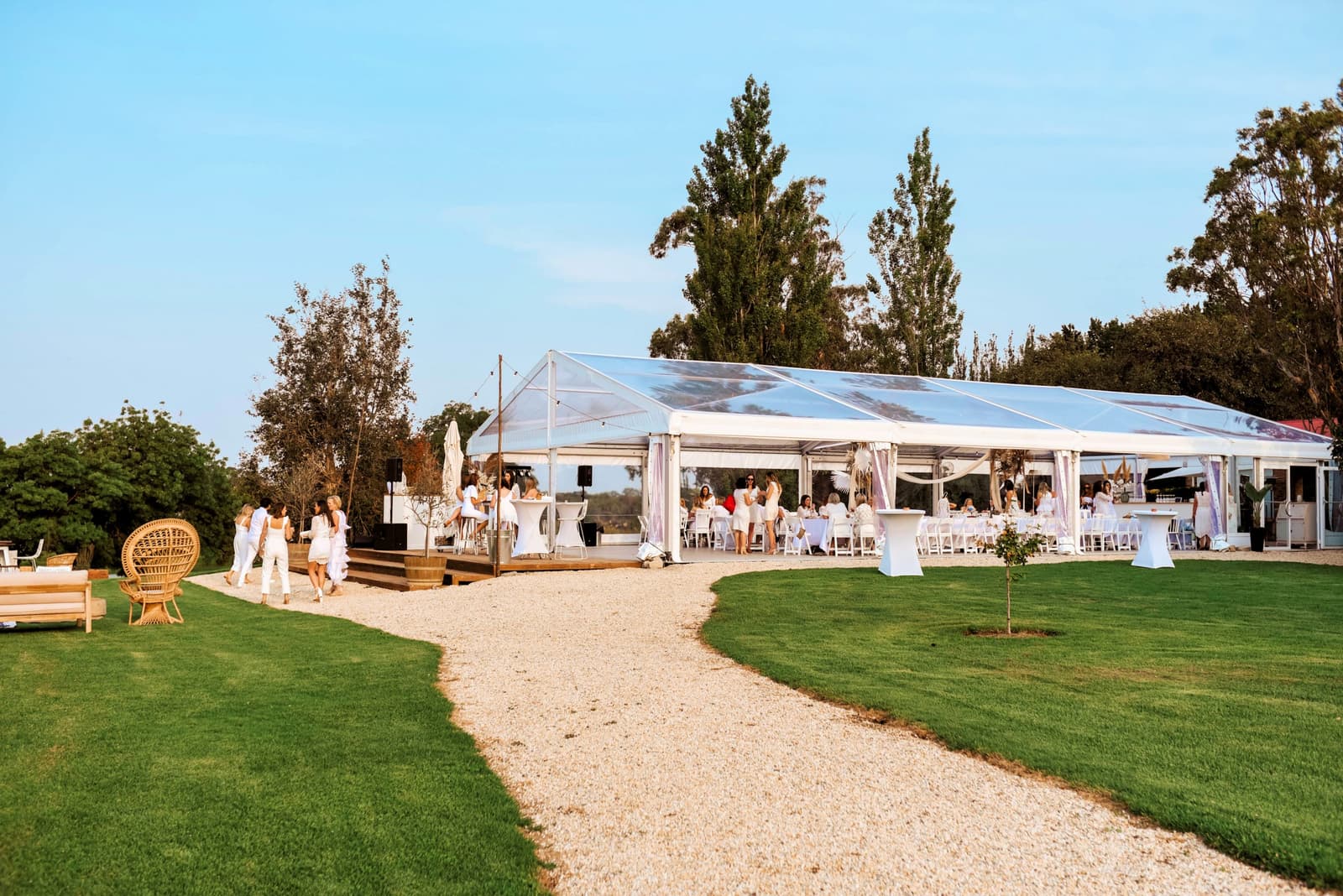
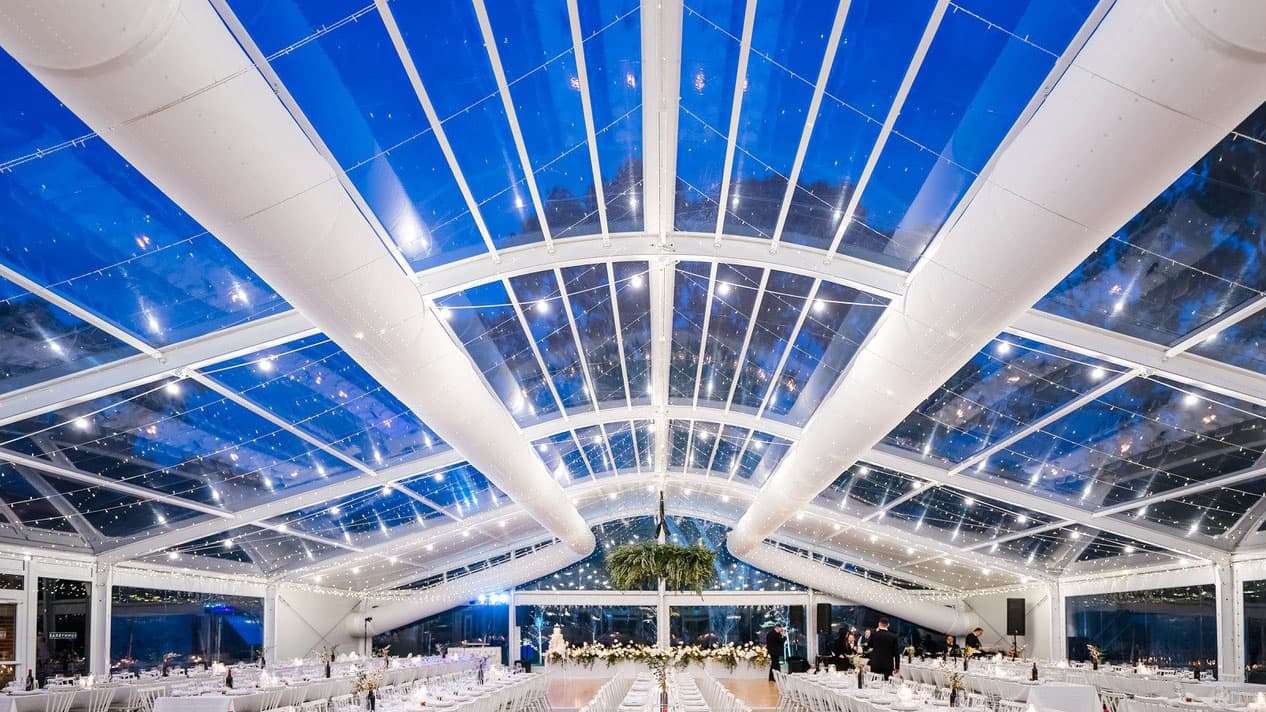
Optimal indoor climate: how the tent should be ventilated
In a party tent, an ideal indoor climate should be maintained regardless of the weather. But how can this be achieved? The answer is relatively simple: high-quality party tents are designed in such a way that optimal indoor air conditions are ensured. We show you in detail how this works:
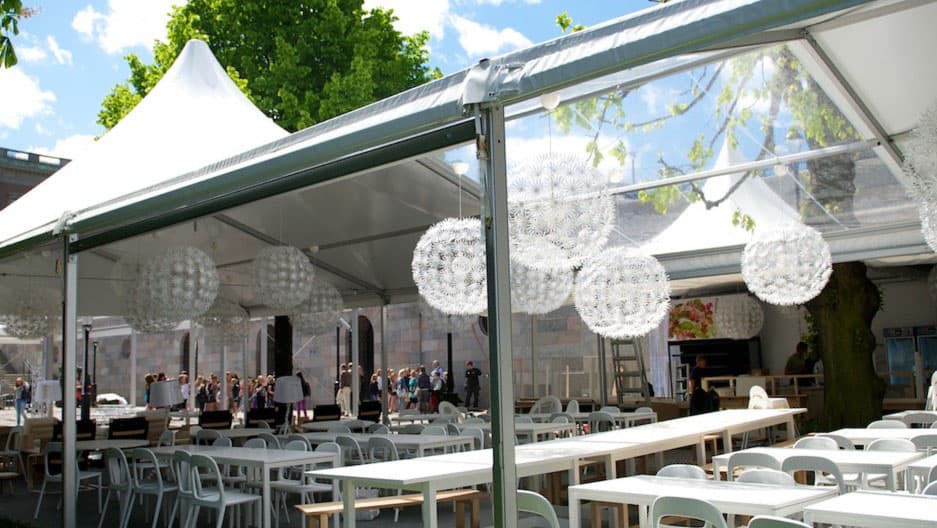
If all side panels of a tent are connected to each other using hook-and-loop fasteners, sufficient air exchange between the interior and exterior cannot take place. For this reason, in high-quality tents each side awning is standardly attached to the frame using toggle fasteners and loops. Each of these side awnings is split in the middle and fitted with a loop and an eyelet. This allows the awning to be pulled to the side and secured like a curtain. This simple solution enables optimal air exchange.
All of these are possible features of high-quality party tents that promote an ideal indoor climate with optimal humidity.
Tent heating: heating the tent to improve indoor air quality
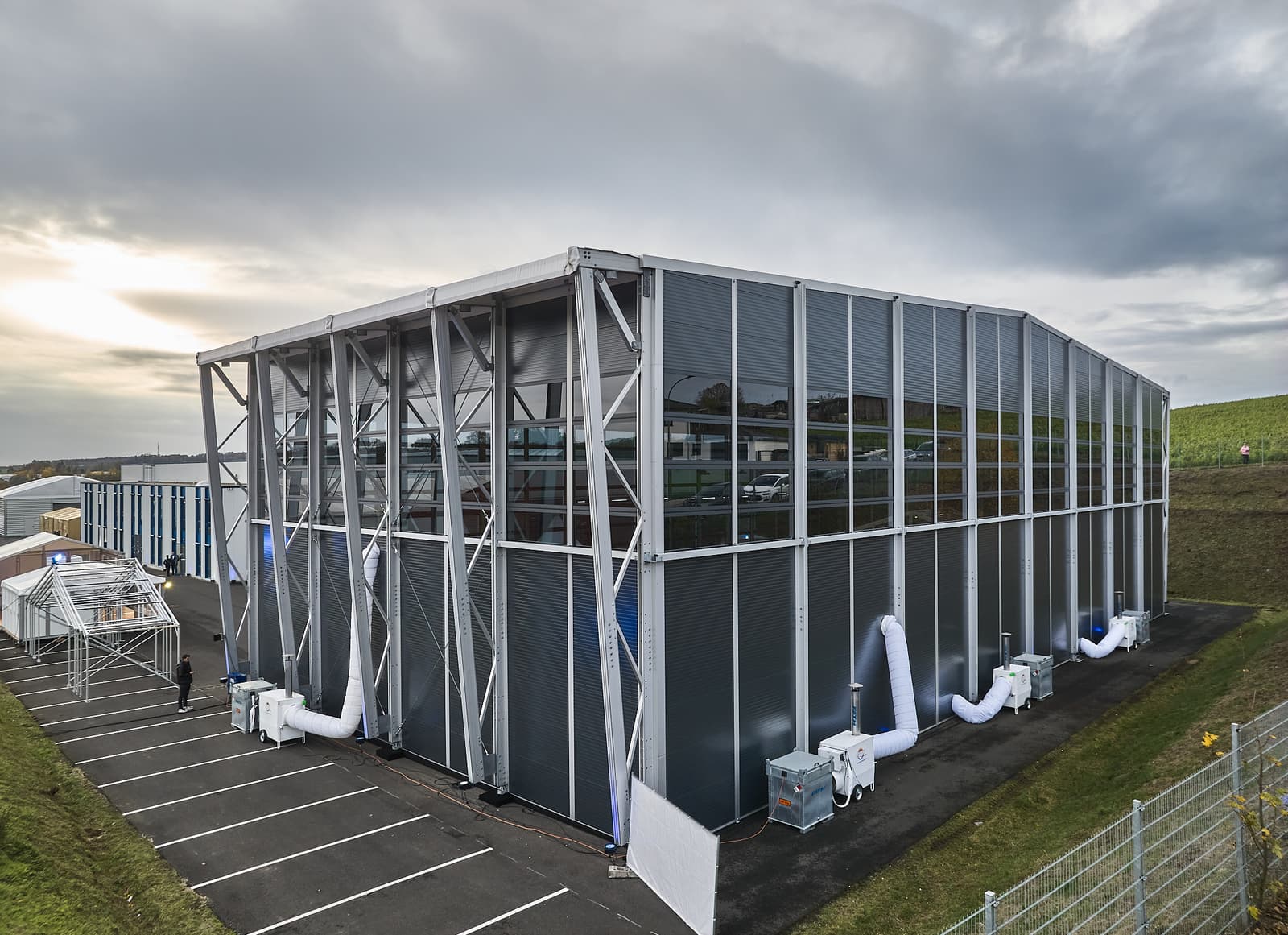
At low temperatures, suitable tent heating ensures an ideal indoor climate in the party tent. The options are varied: oil-, gas- or electrically powered heating devices are available and can be used either as fixed or mobile units inside the party tent. With electrically powered devices, the indoor temperature can be increased very quickly. Heating systems using gas or oil, on the other hand, provide a pleasant, even distribution of heat throughout the space, although appropriate fuel tanks must be installed.
Regardless of which type of heating you choose, professional suppliers of tent heating always match the heating output precisely to the tent design and observe all safety measures. This ensures a good indoor climate and optimal humidity in the tent.
Tent cooling: how to keep the tent cool
On hot summer days, the air inside a party tent can become unpleasantly stuffy. However, this does not have to be the case if the party tent is properly equipped: fans keep the air moving, which automatically makes it feel cooler. Removable side panels not only prevent stale air but also give the party tent a very special atmosphere. The party tent becomes part of the surrounding outdoor area and feels open. In addition, an air-conditioning system in closed tents can provide the desired temperature and keep the tent cool. The output of mobile or fixed units can be adjusted to the size of the tent.
Would you like to contact us? If so, please use our contact form – this is the quickest way to reach our experts.
How to control the humidity in your party tent
Excessively high humidity can lead to stuffy air in indoor spaces, and this also applies to party tents. A key component of a good indoor climate is therefore optimal humidity levels. But what is the ideal value? In the colder season, a humidity level of around 40 per cent should be maintained in a party tent, while at moderate temperatures around 50 per cent humidity is ideal. In summer, it can also be slightly below 60 per cent.
In order to regulate humidity in a party tent, it is important to understand which factors contribute to high humidity levels:
- Large temperature difference between indoors and outdoors
- Breathing, perspiration and body heat from guests
- High temperatures, as warm air can absorb more moisture than cold air
- Grass as the ground surface
The more guests there are in a tent and the higher the outdoor temperatures, the higher the humidity inside the party tent becomes. If the party tent is set up on a grass surface, additional moisture is released into the space. When dismantling the tent, it is important to ensure that all tent parts are free from dew or condensation. Storing the tent in a dry condition prevents mould from forming while it is not in use.
Our tip: If the party tent is to remain in one location for a longer period of time, a hygrometer can be used to measure humidity levels. If the tent is equipped with the appropriate components for an optimal indoor climate, humidity levels can also be regulated. In addition, dehumidifiers can be used if necessary. Electric heating systems also help to reduce humidity.
Ventilation systems in party tents
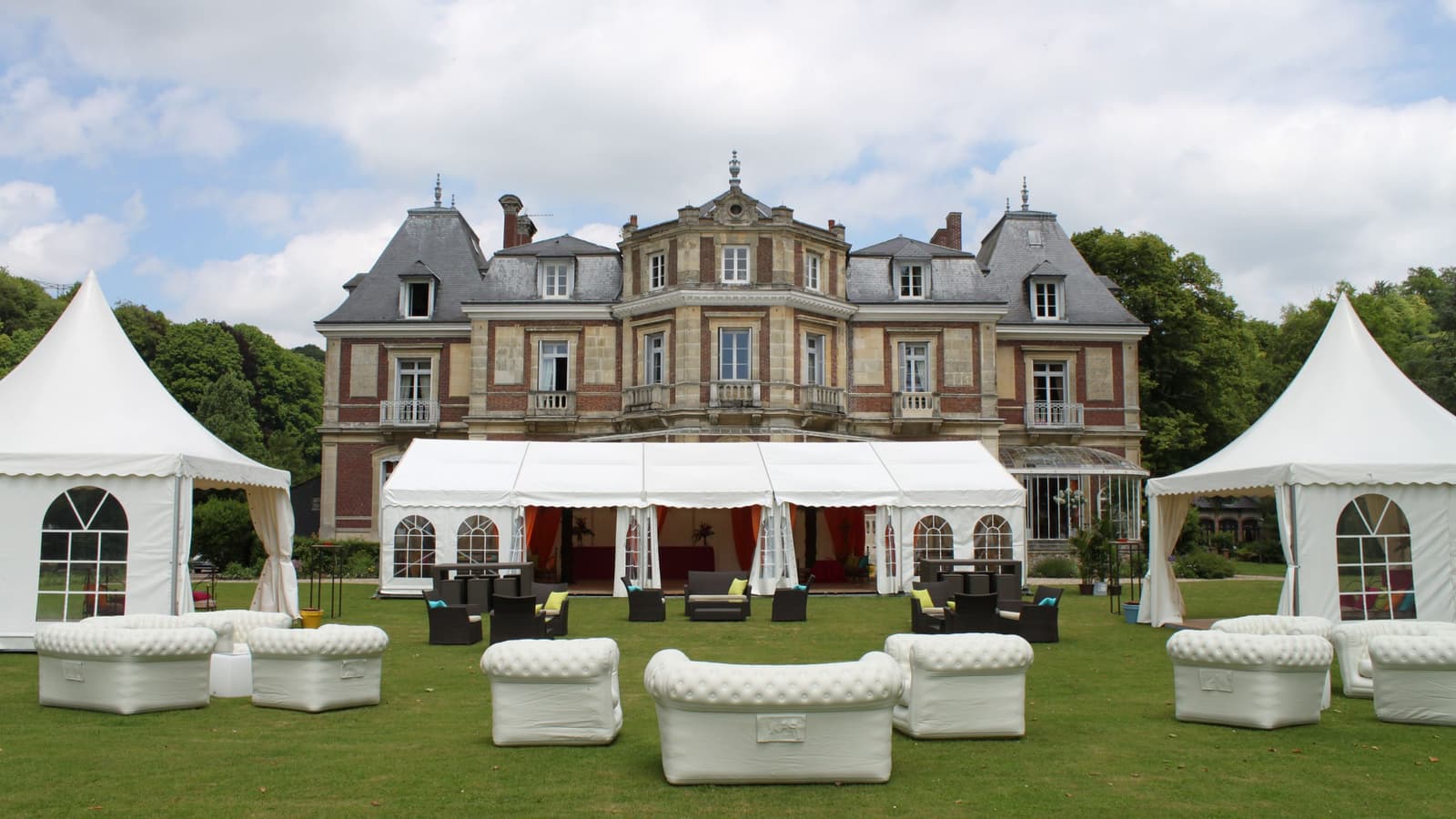
High-quality party tents feature a design that ensures ideal humidity and good indoor air quality inside the tent. The party tents from HTS TENTIQ are equipped with suitable ventilation systems to supply guests with sufficient fresh air without creating draughts. Depending on tent size, number of guests and many other factors, we combine the respective elements to achieve an indoor climate with optimal humidity levels. To improve the indoor climate in party tents and maintain good humidity, we rely on practical side awnings that can be opened in the middle or, if required, removed completely.
Conclusion: good humidity levels are essential in a party tent
A party tent may be impressive, but if there is no ideal indoor climate, guests will not feel comfortable and the event can quickly become a failure. With an experienced expert for party tents at your side, this will not happen.
At HTS TENTIQ, we know exactly how to create an optimal indoor climate and ideal humidity levels depending on the tent design. With the appropriate ventilation system, stale, oxygen-poor air is expelled and replaced with fresh air. This ensures nothing stands in the way of the perfect event.
.jpeg&w=1600&q=75)