.jpeg&w=1600&q=75)
Approval for Temporary Buildings: What you need to consider for event and party tents
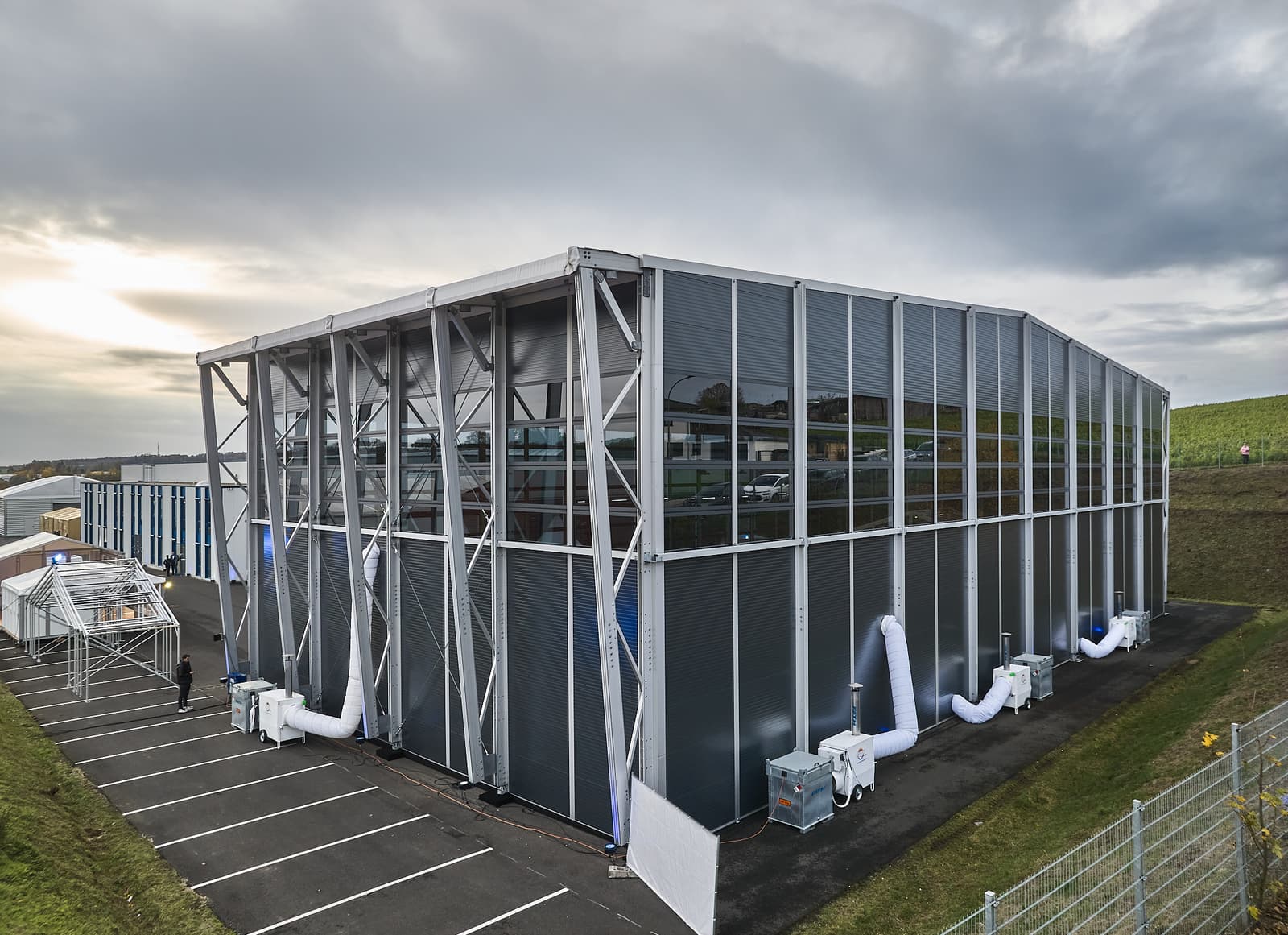
Event tents are used wherever flexible use of space is required. These temporary structures are classified as so-called “temporary buildings”. Unlike permanently constructed buildings, event tents are subject to specific legal requirements.
This article explains when a test booklet is required for a tent and what you must pay attention to in order to ensure that erection – for example at events – is legally compliant and carried out in accordance with the regulations.
When is approval required for an event tent?
Event tents generally fall under the category of temporary buildings. These are temporary structures specifically designed to be repeatedly erected and dismantled. However, once certain threshold values are exceeded, special regulations apply.
Whether a test booklet and a corresponding approval for execution are required for a temporary building such as a tent depends on several factors:
Ground area and height of the tent: If a tent with a floor area of more than 75 m² (in some federal states also more than 100 m²) or a height exceeding 5 metres is erected, a test booklet with approval for execution is usually required. Based on this, inspection by the TÜV takes place after erection.
Duration of installation: Event tents are often erected at one location for one or more days of events. If the tent remains in one place for longer than three months, special regulations apply.
Use: Tents used for public events or commercial purposes are often subject to stricter regulations.
Location: During TÜV inspection for a tent, the location also plays a major role, as the approval requirement depends on the local building regulations. There are also restrictions for non-freestanding tents, meaning tents that are connected to other buildings.
Important: While these regulations are broadly similar throughout the DACH region, there may be variations from federal state to federal state or canton to canton. Before erecting a tent, it is advisable to consult the building authority at an early stage regarding the rules for event tent building approval.
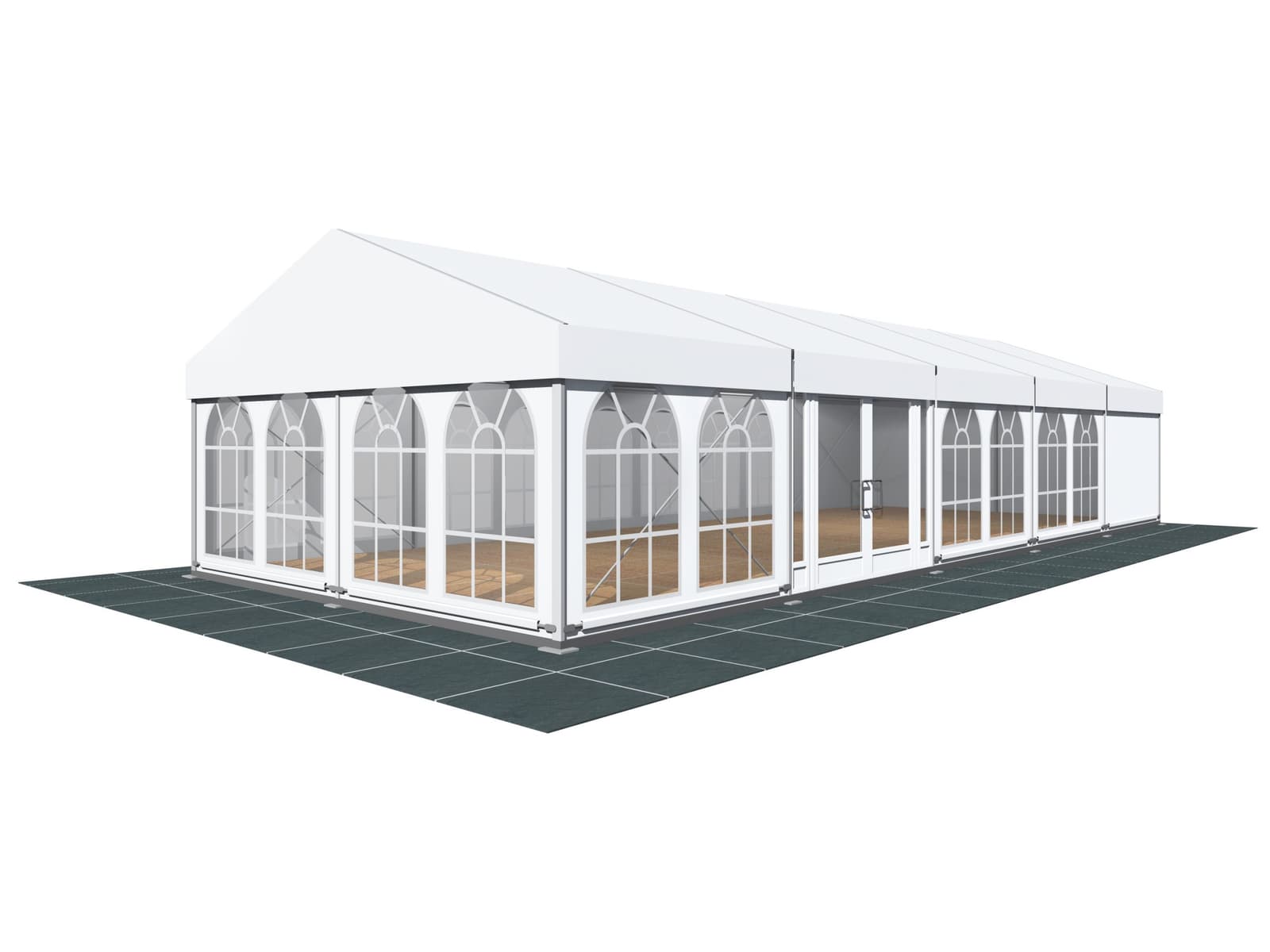
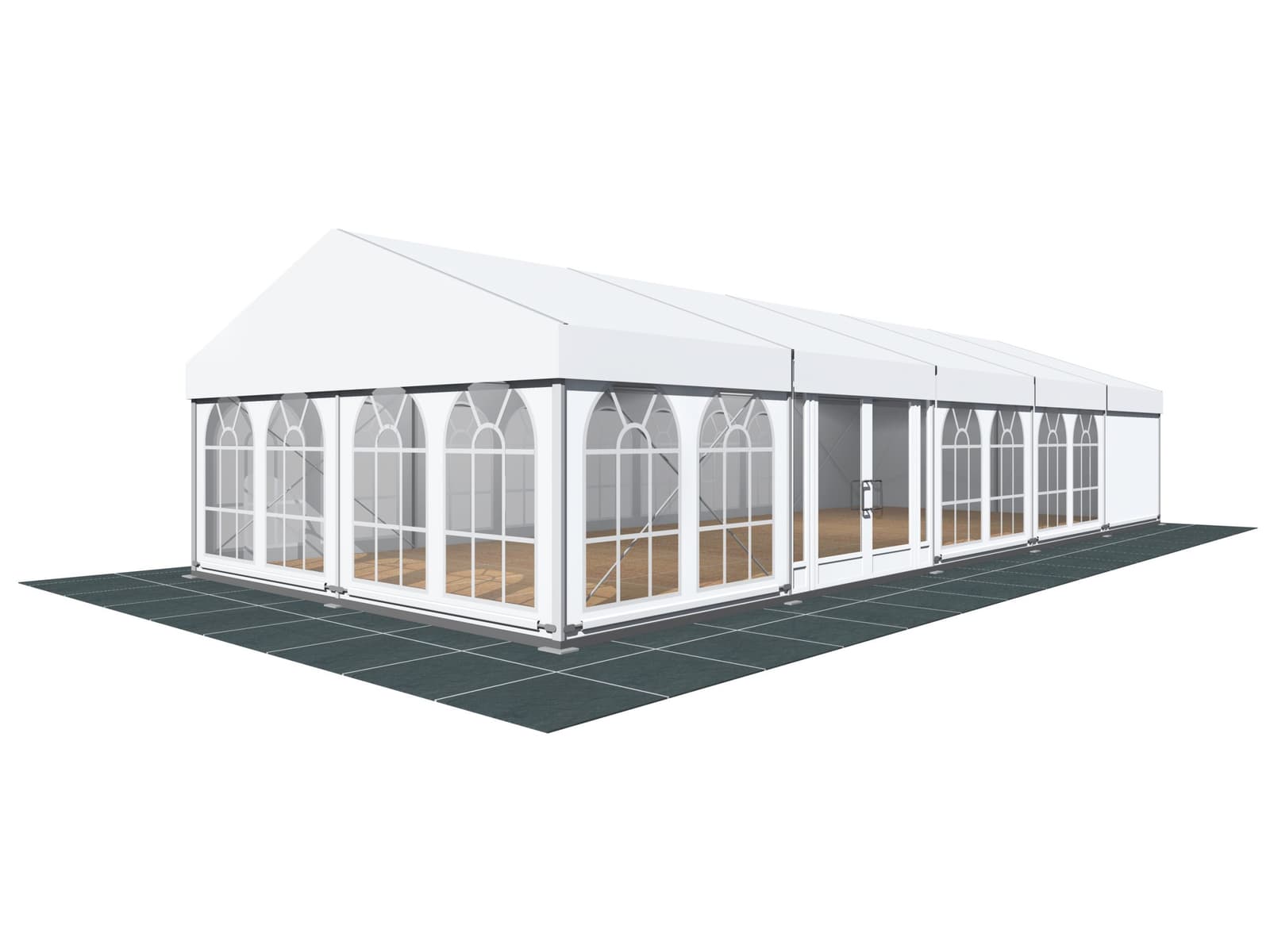
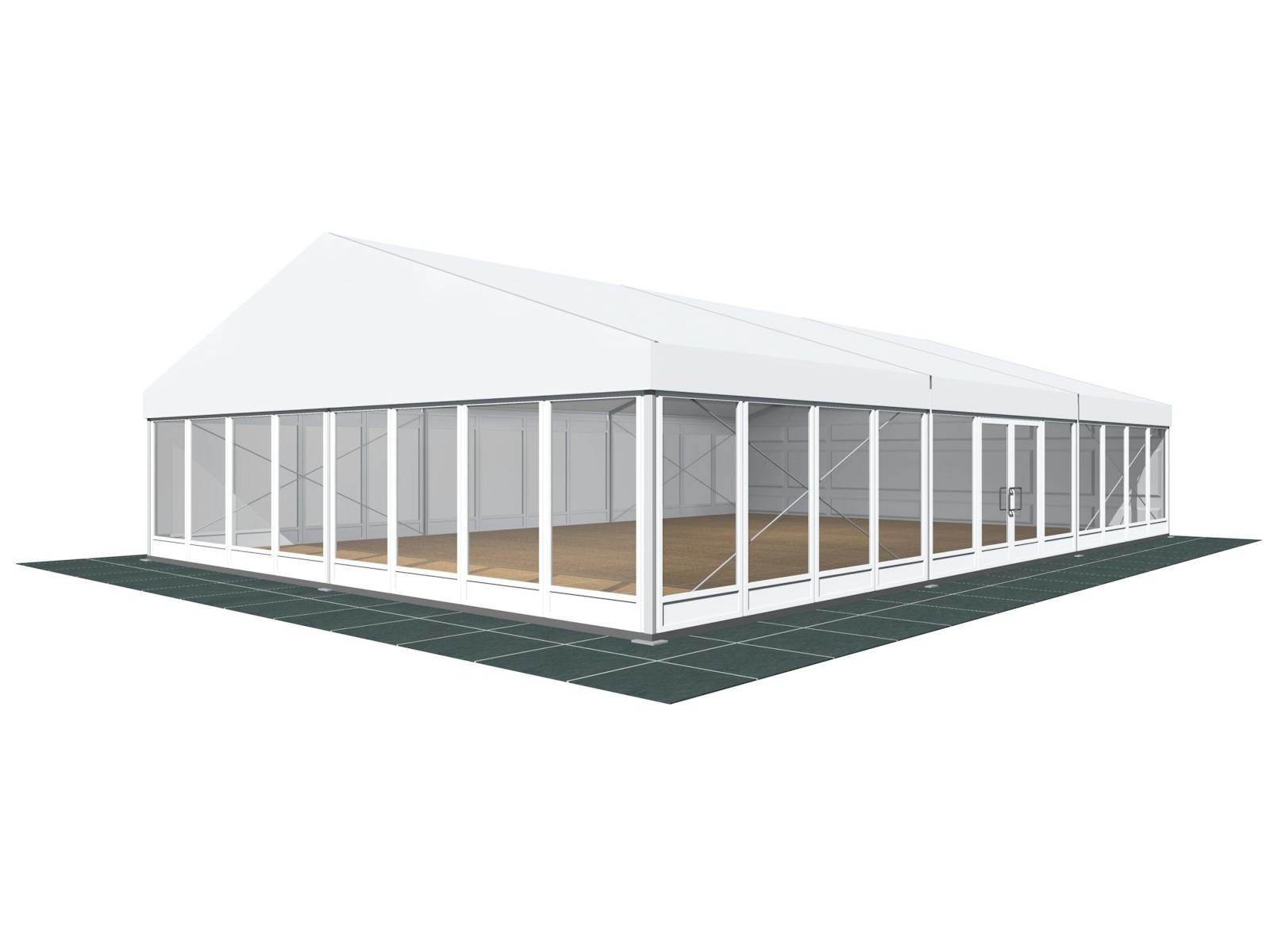
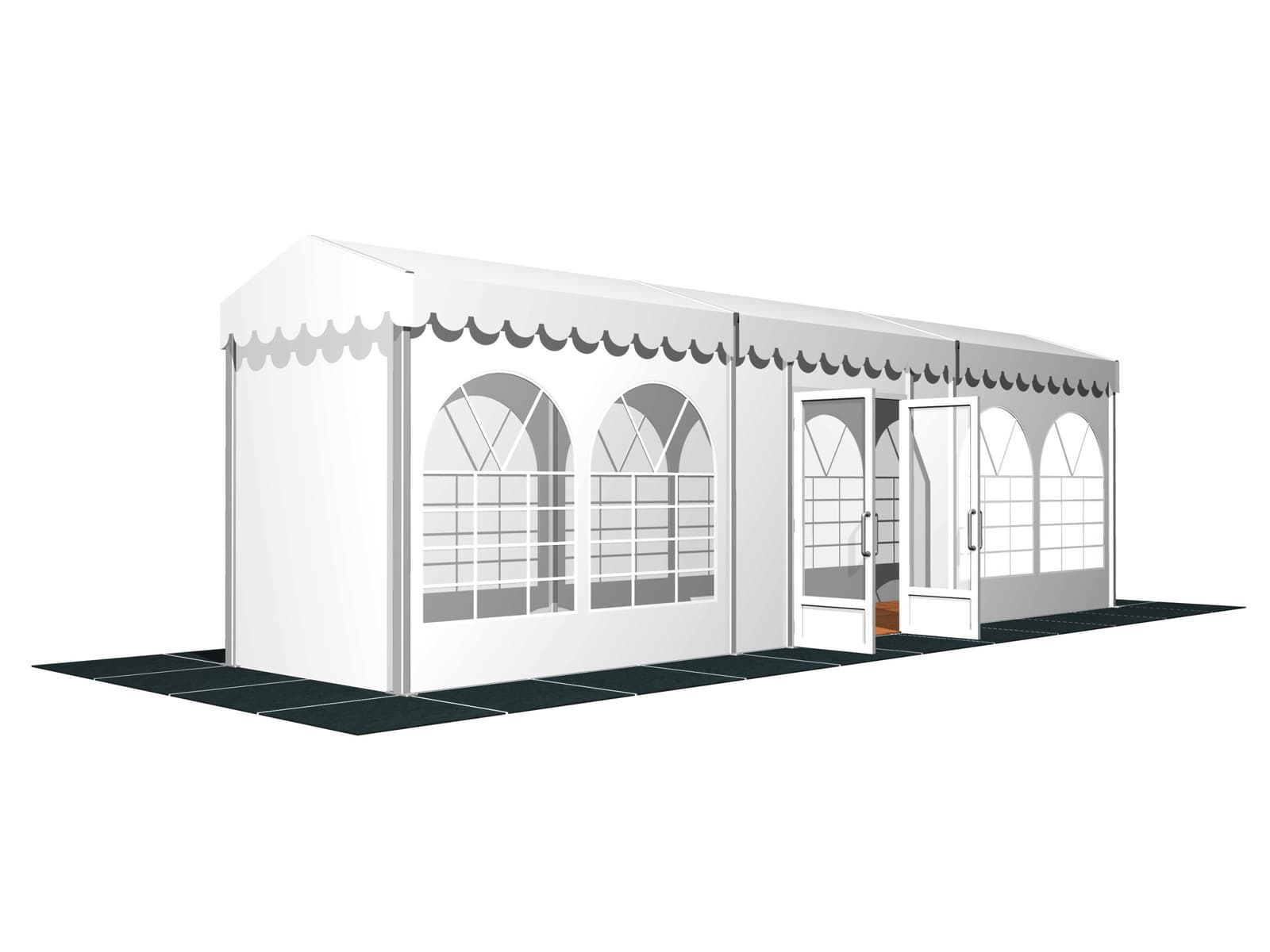
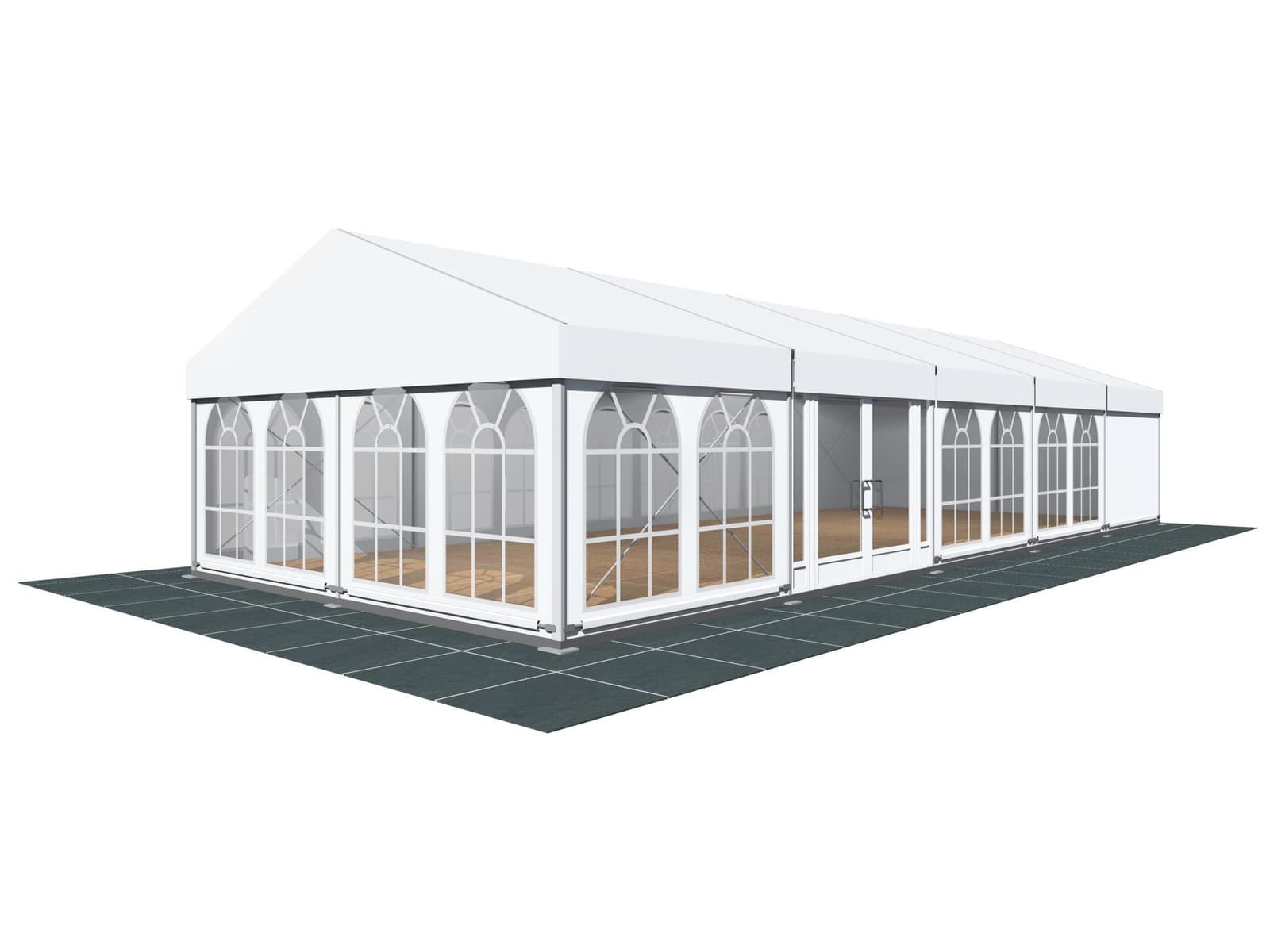
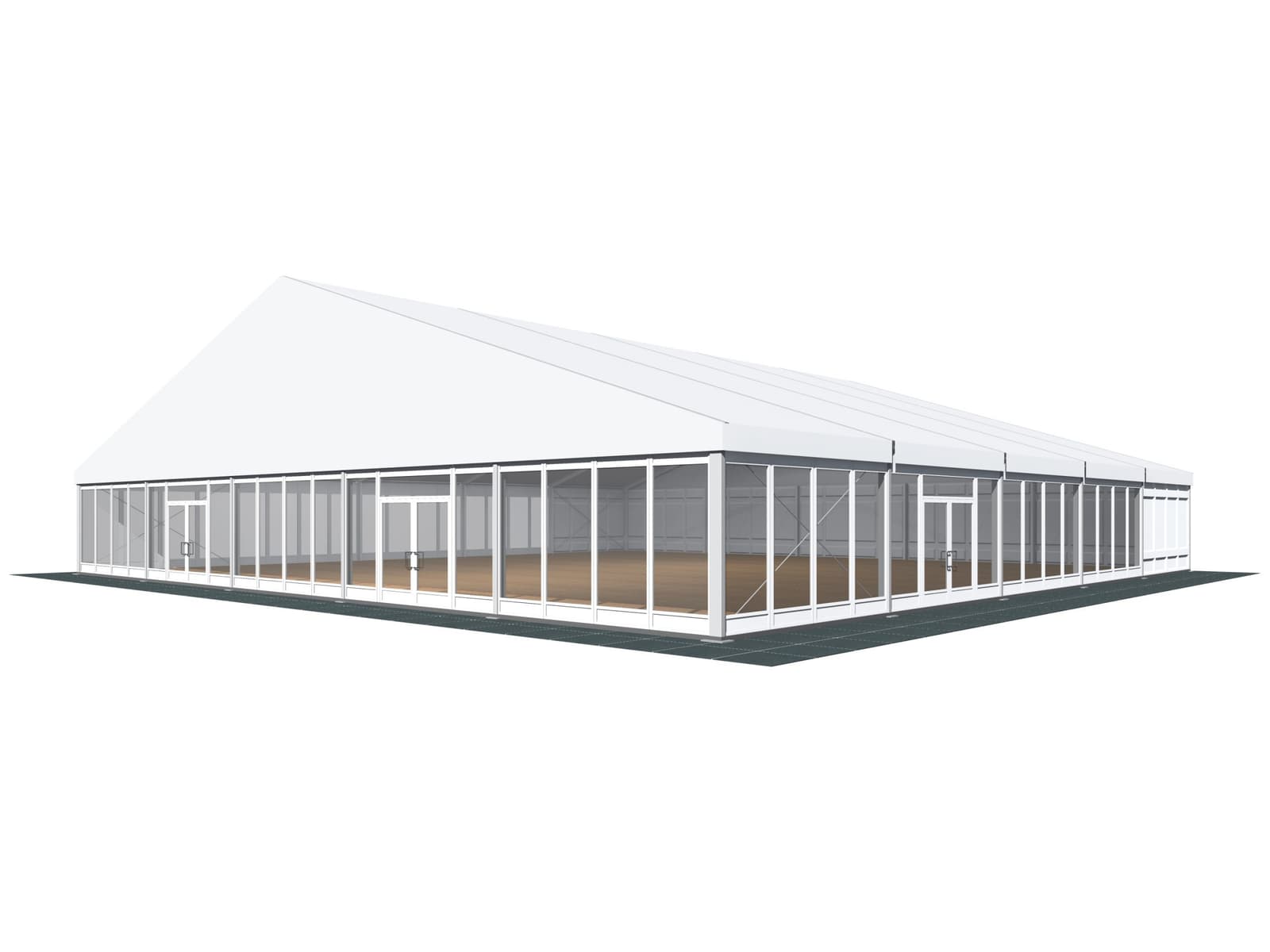
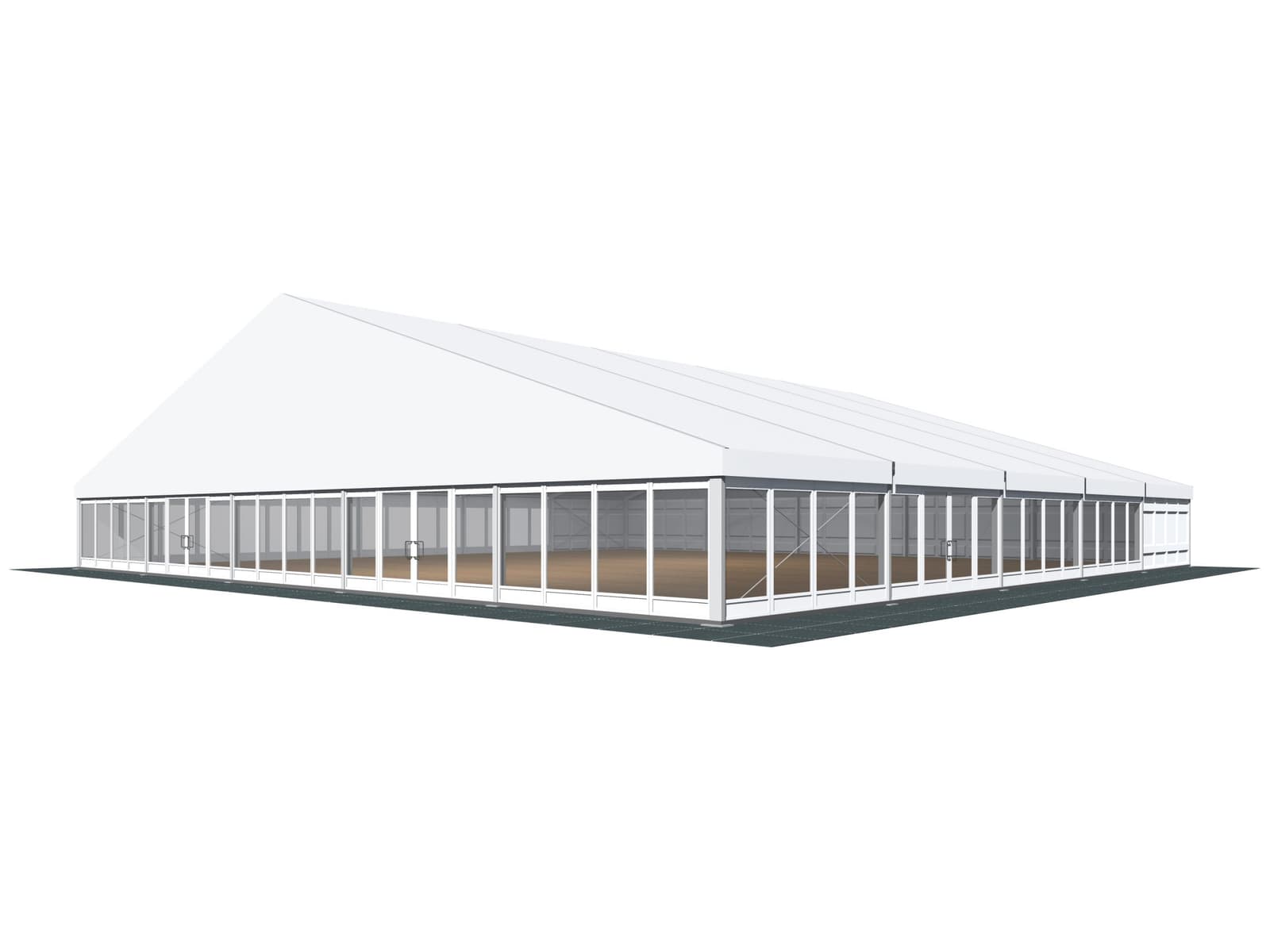
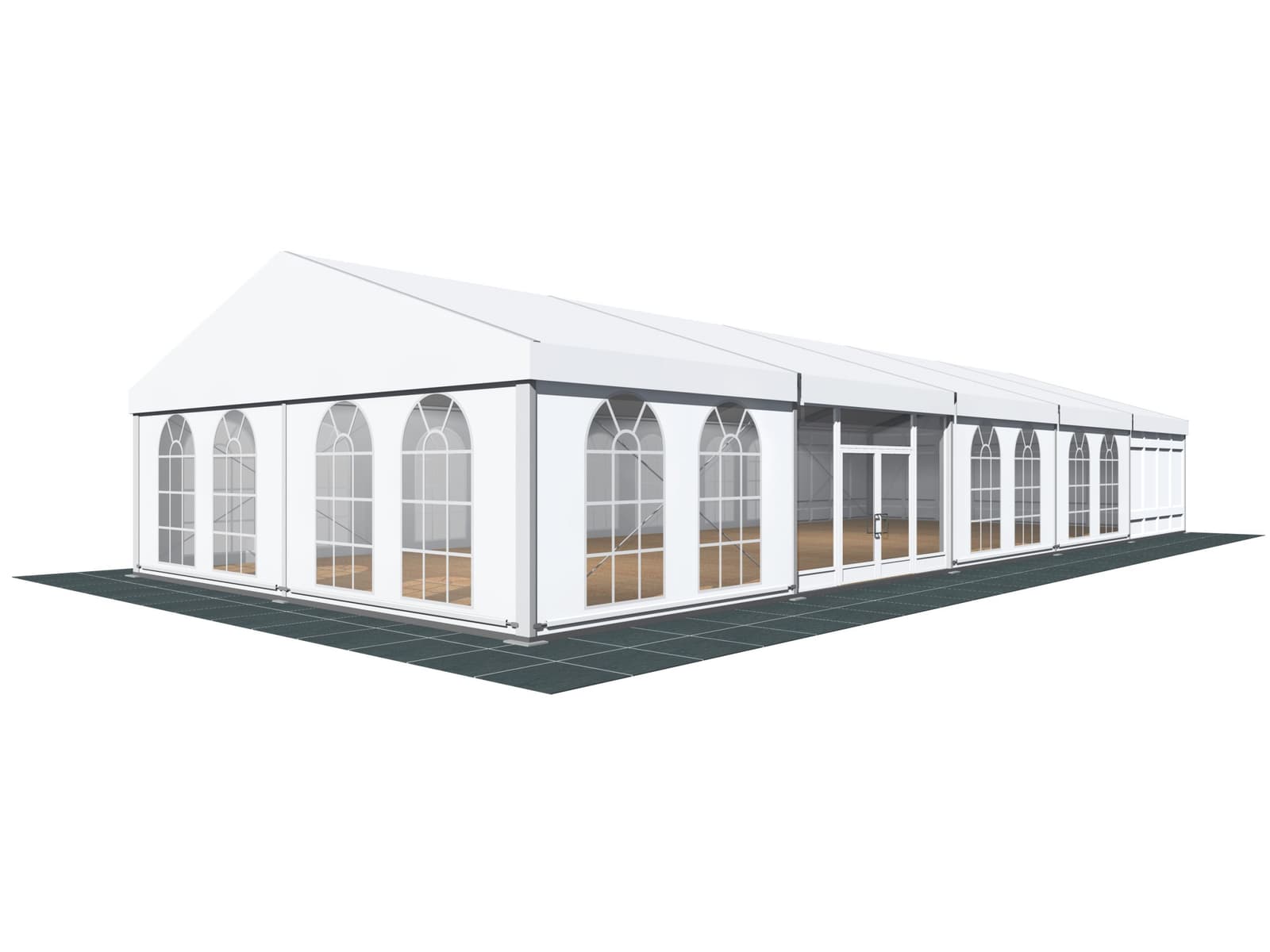
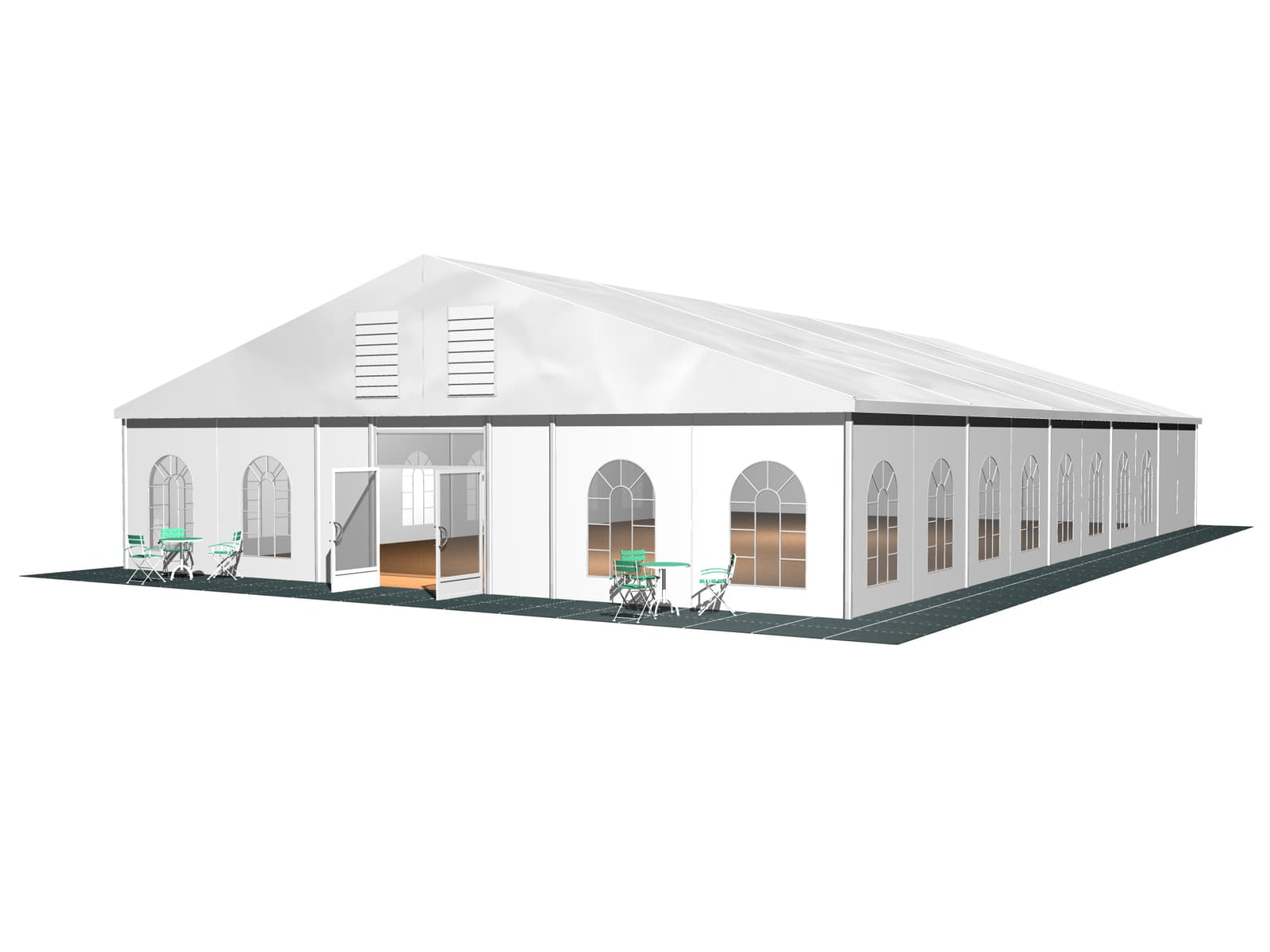
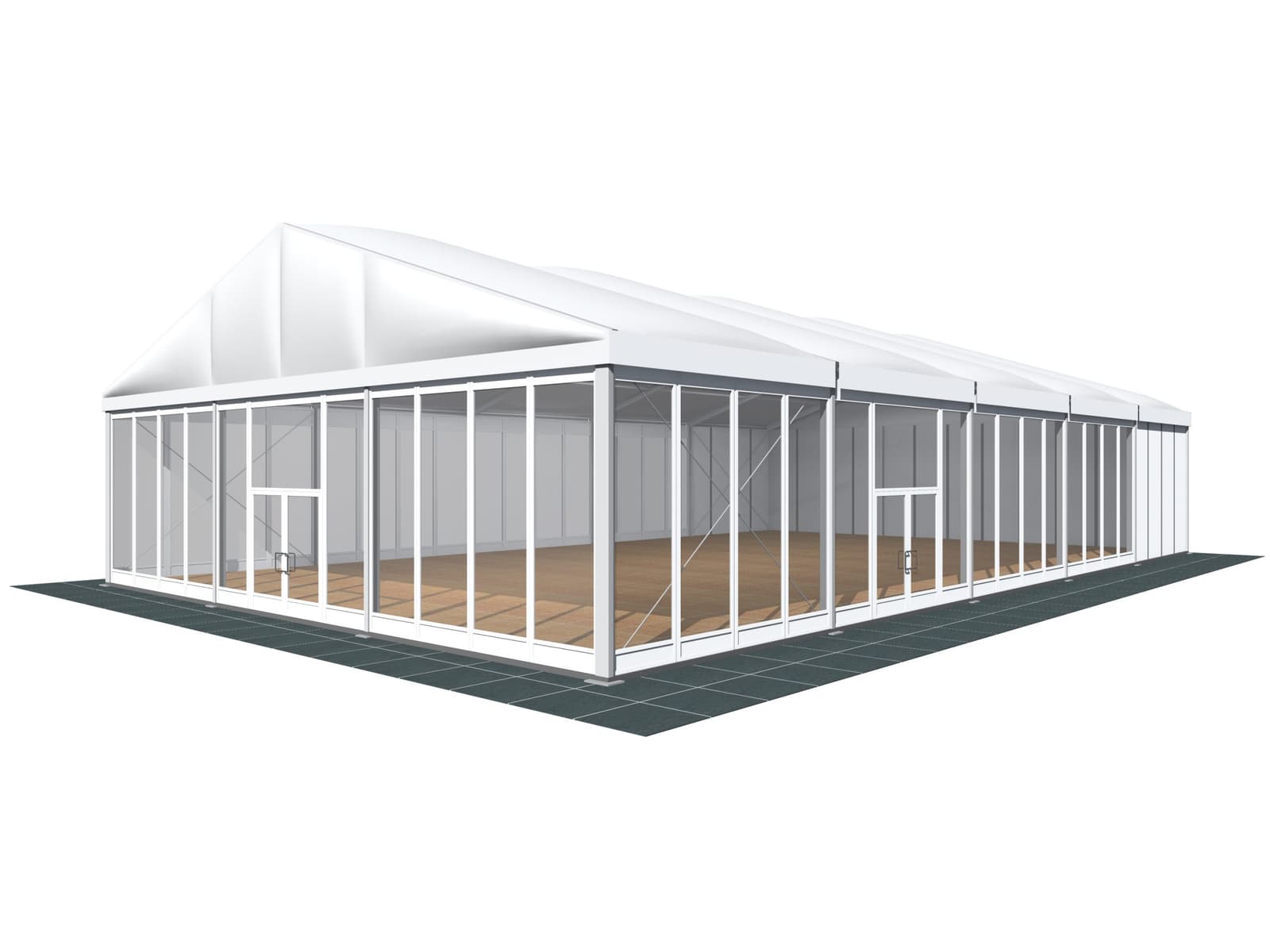
What temporary buildings are, what examples exist, and how they differ from temporary buildings is explained in detail in our expertise on temporary buildings.
Tents not requiring approval: what is permitted without an application?
Anyone who uses an event tent only for a short period and on a small scale may, under certain circumstances, erect the tent without approval. The building regulations of the individual federal states specify what is permitted without approval.
Checklist for your event tent: what may be erected without a building permit?
- Temporary use for a maximum of 3 months at the same location
- Tent area under 75 m², in some federal states also up to 100 m² (single tent or a structure made up of several individual tents)
- Freestanding use and compliance with required distances
Important: Even tents that do not require approval may still be subject to a notification requirement to the competent building authority, even if they are smaller than 75 m². If the tent exceeds this area, a test booklet with approval for execution must be presented. No test booklet is issued for tents under 75 m². In case of doubt, you should contact the local building supervisory authority directly regarding the applicable obligations and regulations.
Temporary building approval: applying – procedure, documents & safety requirements
Erecting an event tent permanently – at first glance, this sounds straightforward. As soon as the tent remains at a fixed location for a longer period, approval is also required for temporary buildings. This involves a special approval procedure. A standard building application and thus a building permit for permanent buildings is not required for temporary buildings. What this means in practice is explained in detail below:
From planning to approval
The path to building approval for tents follows clear steps: from planning to official authorisation. The process at a glance:
Step 1: Planning
After selecting the appropriate event tent, all technical requirements are clarified. Project-specific drawings are then prepared, which are subsequently submitted to the client for approval.
Step 2: Technical requirements and structural stability
For temporary buildings such as event tents, structural calculations are carried out in accordance with DIN EN 13782. The specific location is not taken into account. Instead, standard structural calculations are based on a general snow load of 75 kg/m² and a wind load zone up to WLZ 2. On the basis of these structural specifications, test booklets are issued. If a tent is to be designed for higher wind or snow loads, an individual main structural calculation is required, which must be separately commissioned and calculated.
Step 3: Test booklet
Based on the certified structural analysis, a test booklet is issued by a recognised body (e.g. TÜV). This is valid exclusively for the approved type structural analysis of the respective tent construction and is certified by the responsible expert. Responsibility for the validity and timely renewal of the test booklet lies with the tent owner. As a rule, the test booklet is valid for five years and must be renewed in good time.
Important: If renewal is missed, a new test booklet can only be issued on the basis of current structural requirements. These may have changed over time, meaning that older test booklets may lose their validity. In such cases, it is often no longer possible to obtain a new test booklet for the existing tent. Retrofitting or upgrading older tents is usually not economically viable, so in many cases only purchasing a new tent is an option.
Step 4: Notification of the planned erection
For temporary buildings that require approval, there is a notification obligation before each erection at a new location. The erection of the tent must therefore be reported to the competent building supervisory authority in good time.
Step 5: Approval for execution
In order for a test booklet to be issued, a current main structural analysis must be available. Changes to the construction are only permitted within the scope of the existing test booklet or type structural analysis. Any changes beyond this require a complete recalculation of the structural analysis or an amendment to the existing structural analysis. During these calculations, it may become apparent that the planned changes are not possible at all. If everything is in order, the technical inspection is carried out by a state-approved expert and includes the inspection of:
- Structural stability: calculation of load-bearing structures, wind loads, snow loads
- Fire protection: materials, escape routes, fire extinguishers, smoke extraction
- Safety measures: access security, emergency exits, limitations on the number of persons
.jpg&w=1600&q=75)
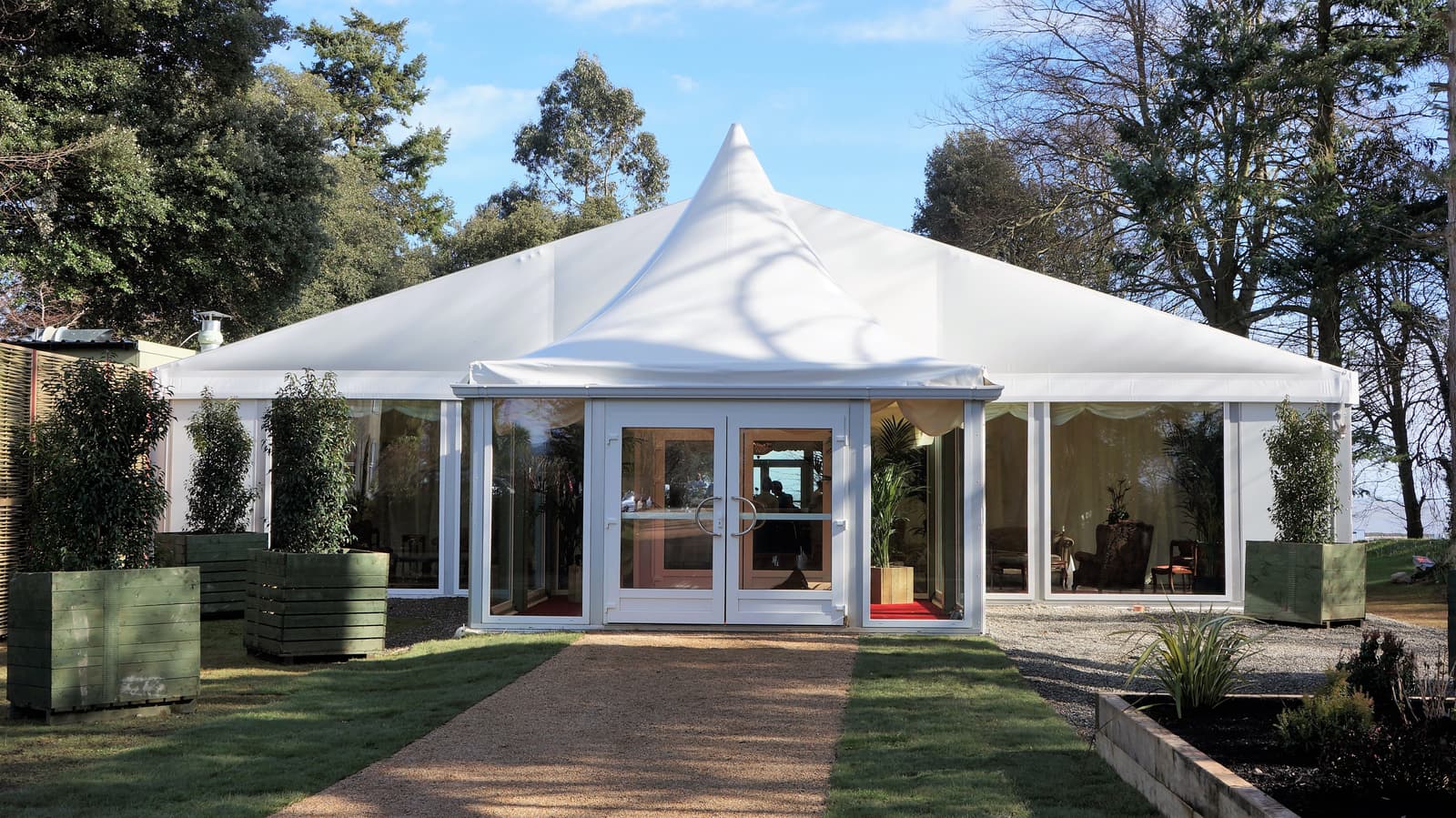
Applying for approval: these documents are required
For approval for execution of a temporary building, you do not require as extensive documentation as for a building permit for permanent structures. Nevertheless, it is advisable to contact the competent approval authority as early as possible. It can provide precise information on which documents must be submitted with your application in your specific case.
As a rule, the following documents must be attached to the application for approval for execution:
- Construction drawings including ballast, guying systems and details of their fixings
- Construction description including information on structure, assembly and operation
- structural engineering documentation and test booklet
The construction documents must be submitted to the competent approval authority in duplicate and in German language.
Fire protection for event tents
When using a tent as an event venue, the safety of visitors and staff is the top priority. Fire protection is therefore a central component of the approval of temporary buildings. Accordingly, the requirements for construction, fire protection and escape routes are strict:
Construction materials:
The materials used must be classified as at least “hardly flammable”. This property must be proven and, if required, submitted to the authority. The tarpaulins used by HTS TENTIQ are manufactured from high-quality PVC, which is classified as a hardly flammable construction material (construction material class B1) and complies with international standards such as DIN 4102 B1 and BS 5438 / 7837.
Technical equipment:
- Fire extinguishers in sufficient numbers, clearly visible and easily accessible
- Smoke detectors or, where required, automatic fire alarm systems
- Emergency power supply (emergency lighting), especially in areas with escape routes or during night-time operation
- Gas detection systems if gas appliances (e.g. patio heaters, cookers) are operated in the tent
Escape and rescue routes:
- Emergency exits must be freely accessible
- The width and number of exits depend on the size of the tent and the maximum permitted number of visitors
- Escape routes must be illuminated
Distance to other buildings:
In order to prevent a fire from spreading, the event tent must maintain a minimum distance from neighbouring buildings and property boundaries. This depends on the building classification and usage and is generally at least 5 metres.
Fire safety concept:
Fire protection measures are generally defined as part of a coordinated concept. This depends on the intended use, local requirements and, in particular, the permitted number of persons. Early coordination with the competent authority or fire service is therefore recommended.
Possible violations and consequences
Safety is the top priority when using tents and other structures. The reason is clear: if safety precautions and fire protection requirements are not complied with, significant risks to people and infrastructure can arise. Failure to comply with legal requirements can therefore have serious consequences:
- Fines
- Event prohibition or termination by the authority
- Order to dismantle unauthorised tents
- Liability risks in the event of damage (e.g. in case of accidents or fires)
- Loss of insurance coverage if the requirements have not been met
Would you like to contact us? Then please use our contact form – this is the quickest way to reach our experts.
Conclusion: how to successfully erect an event tent with building approval
Permanent use of an event tent requires careful planning. We support our customers with our expertise as an experienced tent and temporary building manufacturer. It is essential to define all relevant criteria precisely, such as size, duration of erection, type of use and location, and to compile the necessary documents. A key component of the approval documentation is the test booklet: it already contains all relevant structural calculations and construction drawings for the respective tent structure. These documents form the basis for a smooth application process and the eventual granting of building approval for event tents.
Another crucial factor is early contact with the competent approval authority. This allows you to clarify all building regulations and specific requirements and helps avoid delays or costly retrofitting later on.
Frequently asked questions about building approval for event tents
Whether a tent requires approval depends on its size, duration of use and location. Temporary, smaller tents are often exempt from approval requirements.
The size exemption for tents varies depending on the federal state. In most cases, tents of up to 75 m² (in a few cases up to 100 m²) are permitted without approval. The applicable regulations can be found in the respective state building regulations.
Yes, tents are generally classified as “temporary buildings”, for which special legal, structural and construction requirements apply. Temporary buildings may be erected at one location for a maximum of three months and must not exceed a tent area of 75 m² and a height of 5 m. If these thresholds are exceeded, approval for execution is required.