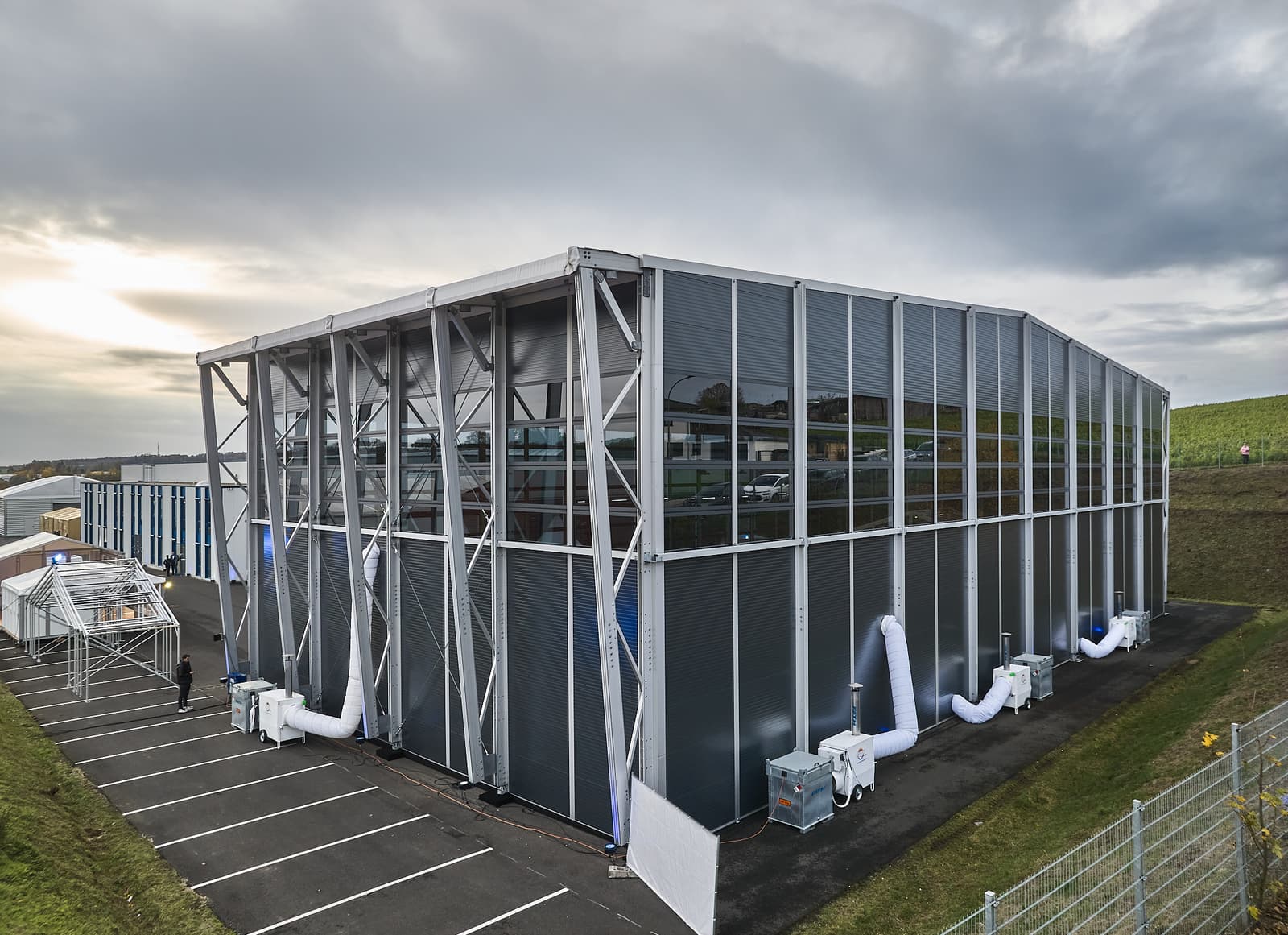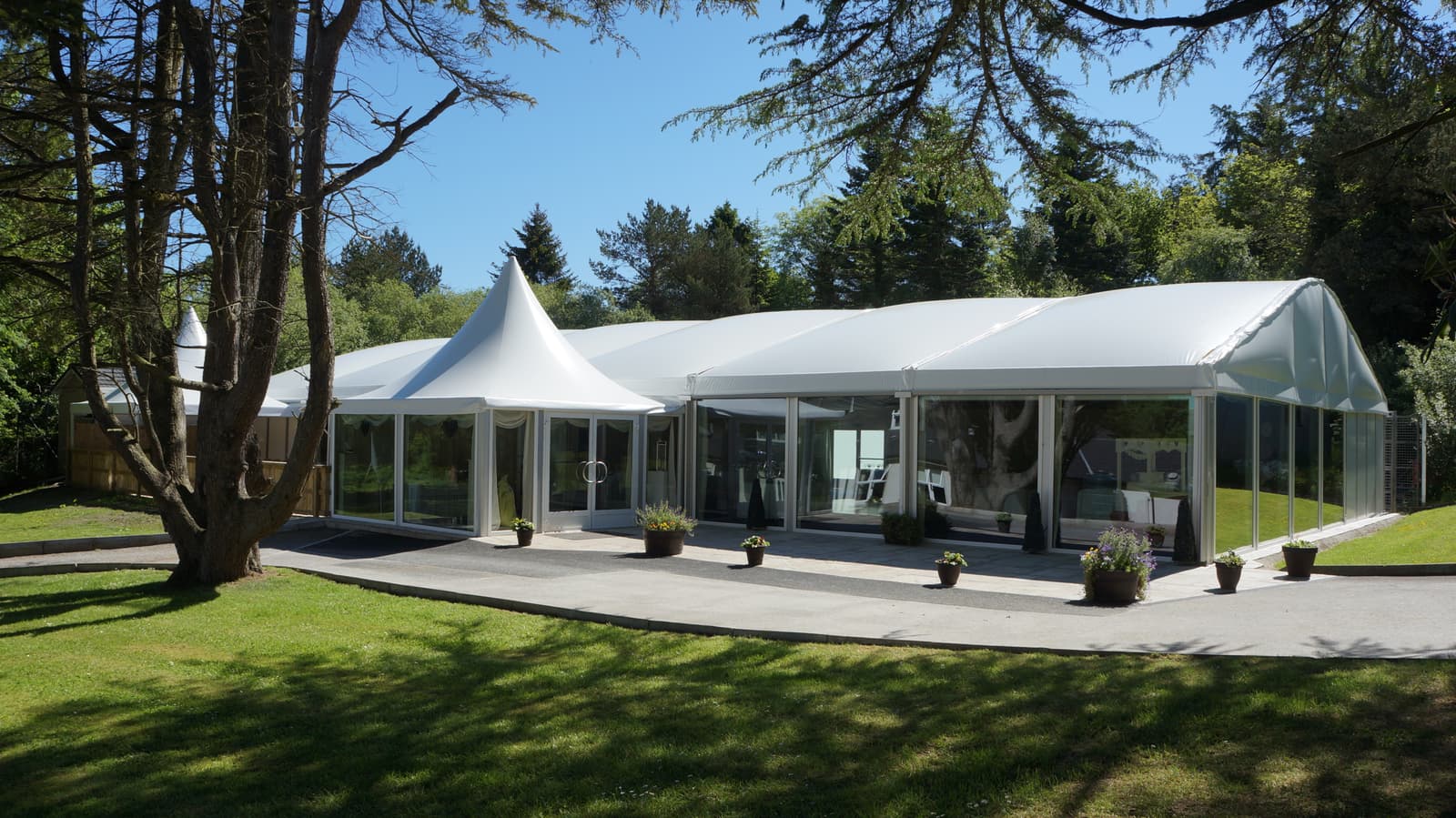
Tent extension: connecting party buildings and marquees
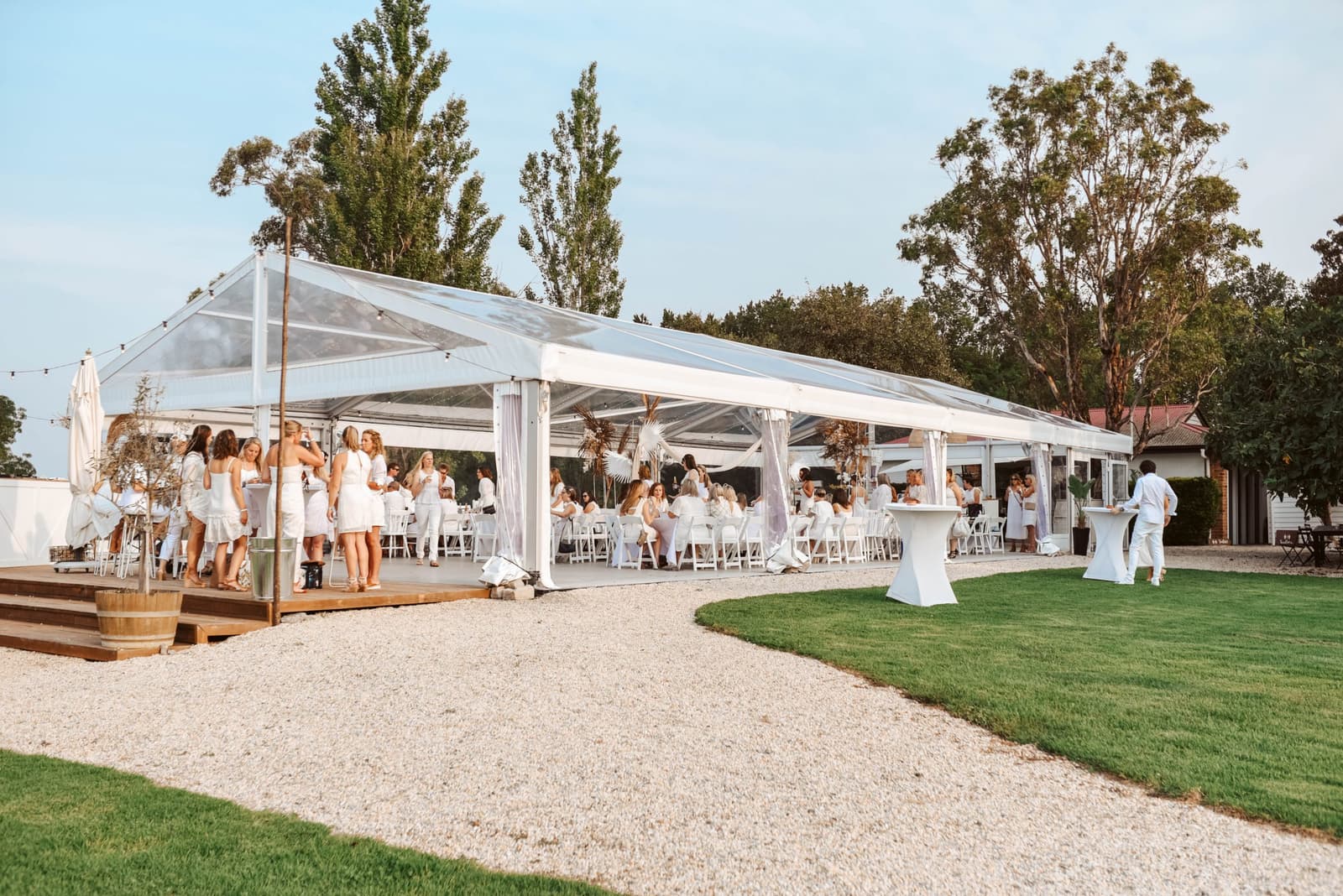
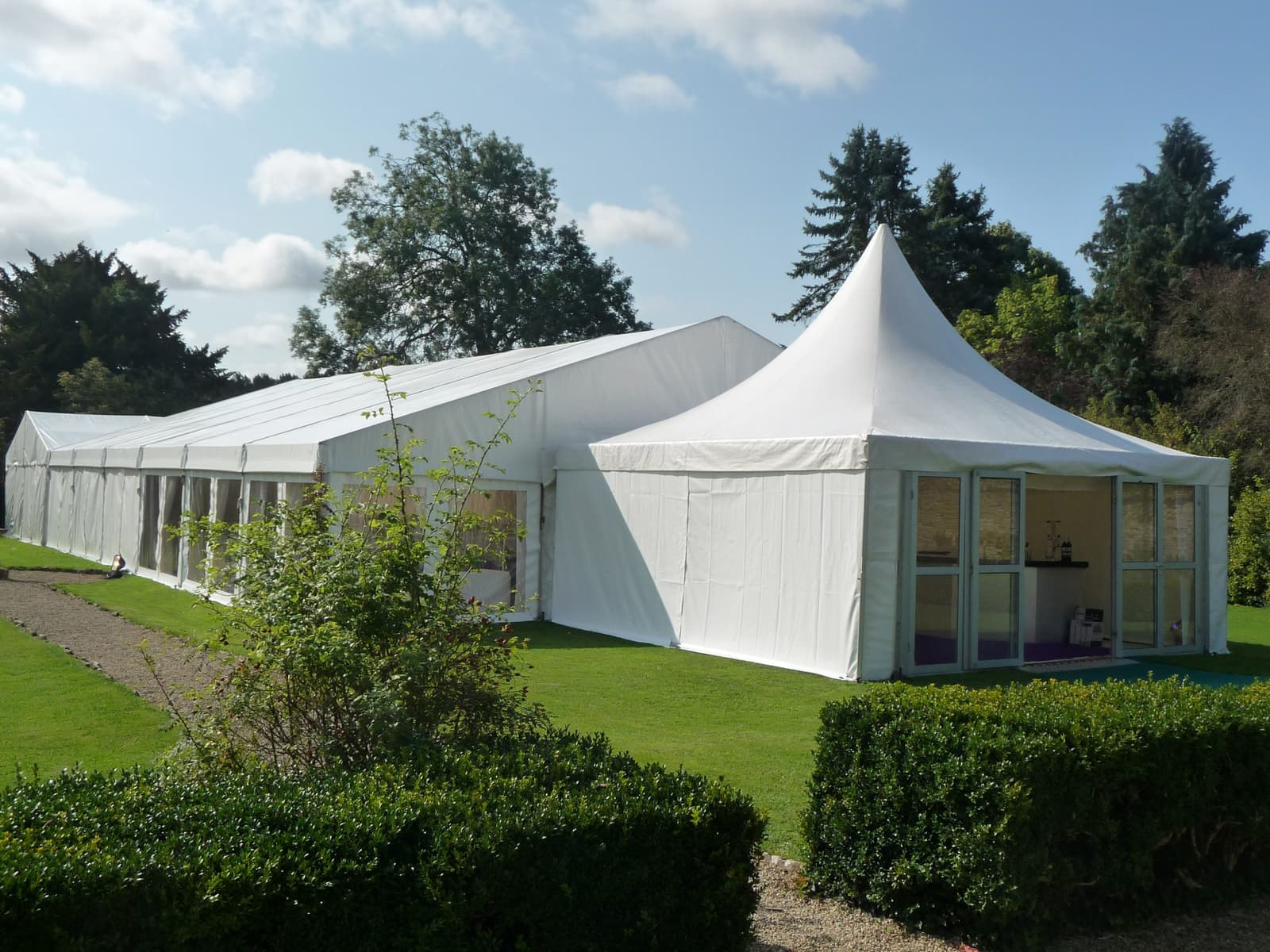
Are you planning a celebration with more guests than your current party or event tent can accommodate? For professional providers of tent systems, this is not a problem at all and can be easily solved with a tent extension. An increase in tent size provides a cost-effective and quick way to connect two or more tents together in a watertight manner.
Extend an old party tent or buy a new marquee: which is better?
If your own party tent is simply too small, you have two options: either you purchase a new, larger tent or you extend your existing one. With a tent extension, you can use simple accessories to connect two party tents together. You can mount two identical tents with the same side height along the eaves side and connect them with a gutter tarp, so that the gap is closed and protected from rainwater. A tent can be extended at any time without any problems on the gable side.
Expanding a party tent or marquee: these are the advantages
If a party tent is not large enough, many people first think about buying a new, larger tent. However, extending a tent has many advantages. We show you exactly what these are:
- Cost-effective: When increasing the size of a tent, you avoid purchasing a large, new single tent. In most cases, buying a second small tent in addition to the existing tent is more cost-effective.
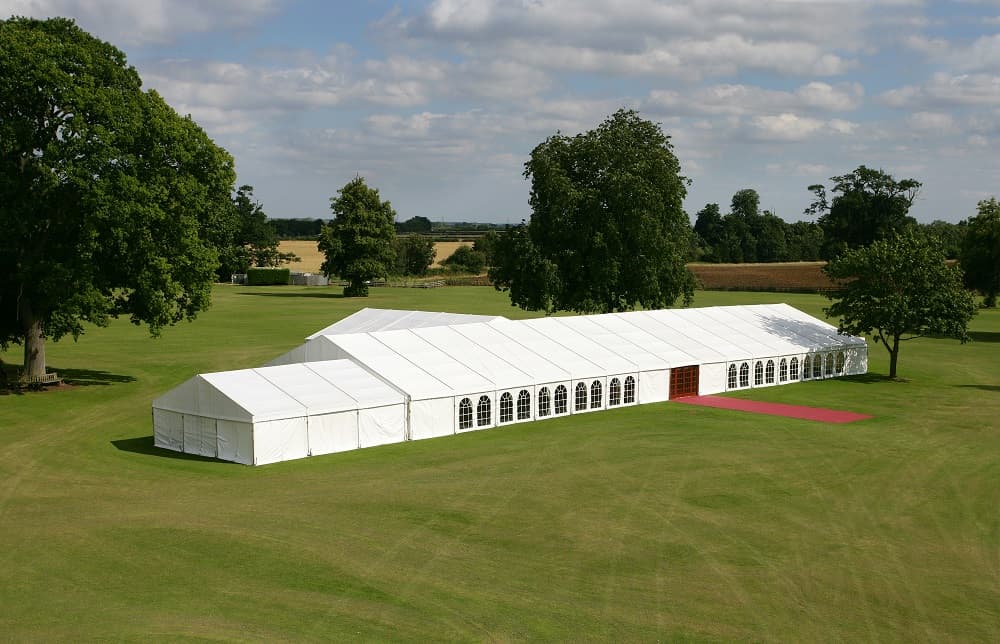
- Quick and simple solution: Expanding with an additional tent is a very straightforward and effective solution for increasing an existing party tent to the desired dimensions. The tents are connected along the long side with a gutter tarp and provide protection from rain. However, extension at the gable side is also possible.
- High flexibility: By extending the tent, you have two separate tents that you can also use independently for future events. Even during a celebration, depending on requirements, one tent can be set up separately from the other or different areas can be created. This allows for much greater flexibility in use.
Extending a tent: this is how party tents are connected
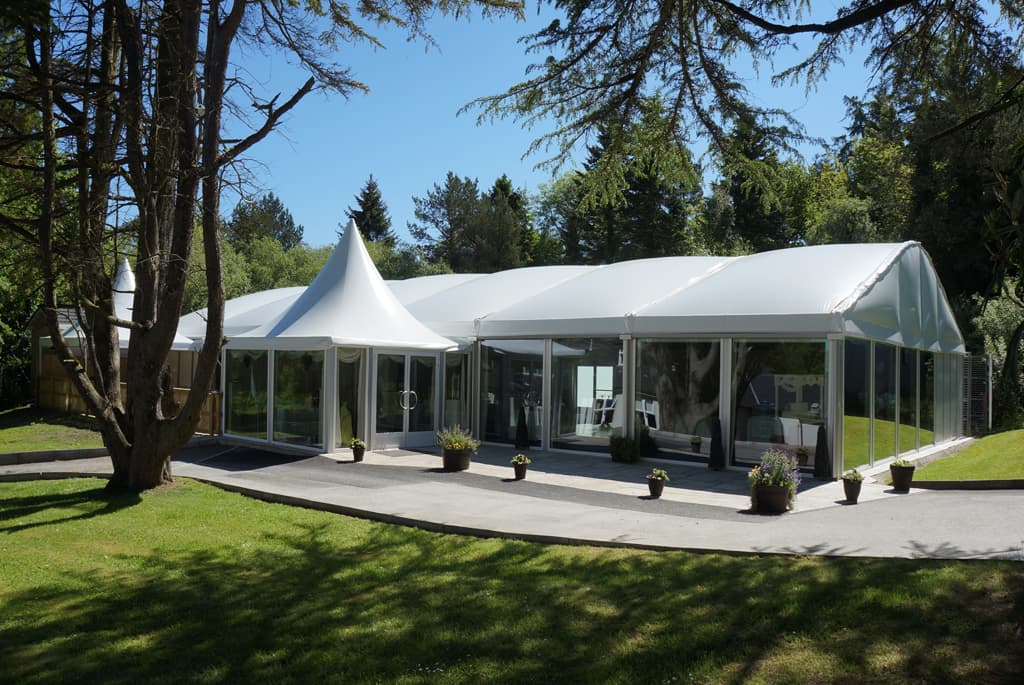
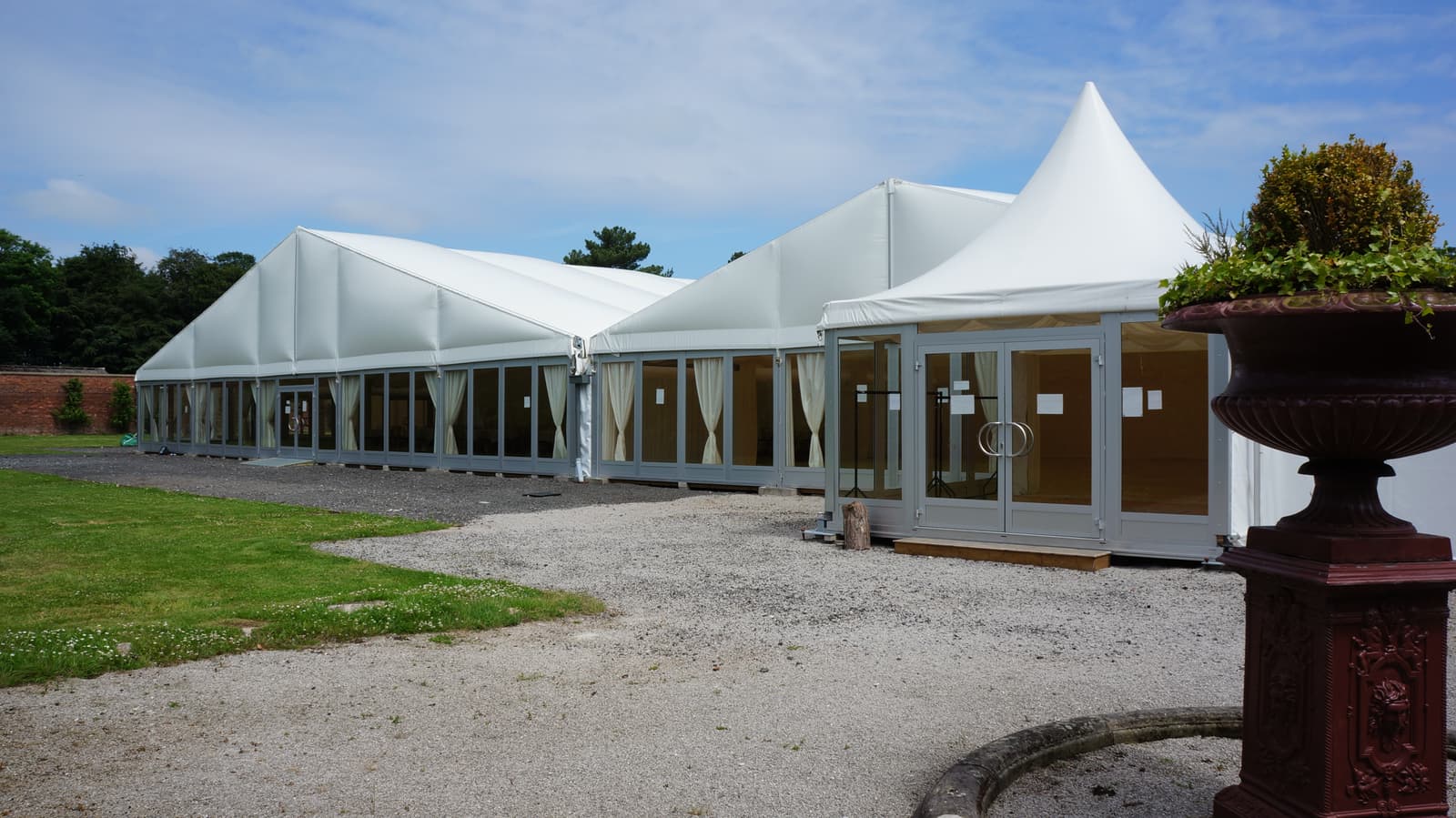
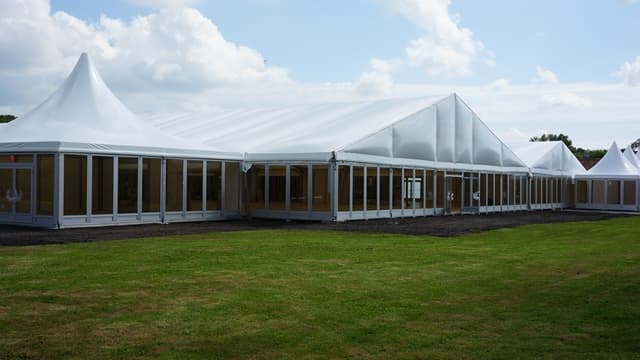
When two tents are connected, a gutter is installed at the eaves between the two tents to protect against rain. In order for two tents to also look like a single unit from the side, a fascia panel is mounted at the front and rear end. For this purpose, the two tents are set up as individual tents next to each other along the eaves side. This creates a small gap at the side, which can, however, be easily closed with the appropriate connecting piece.
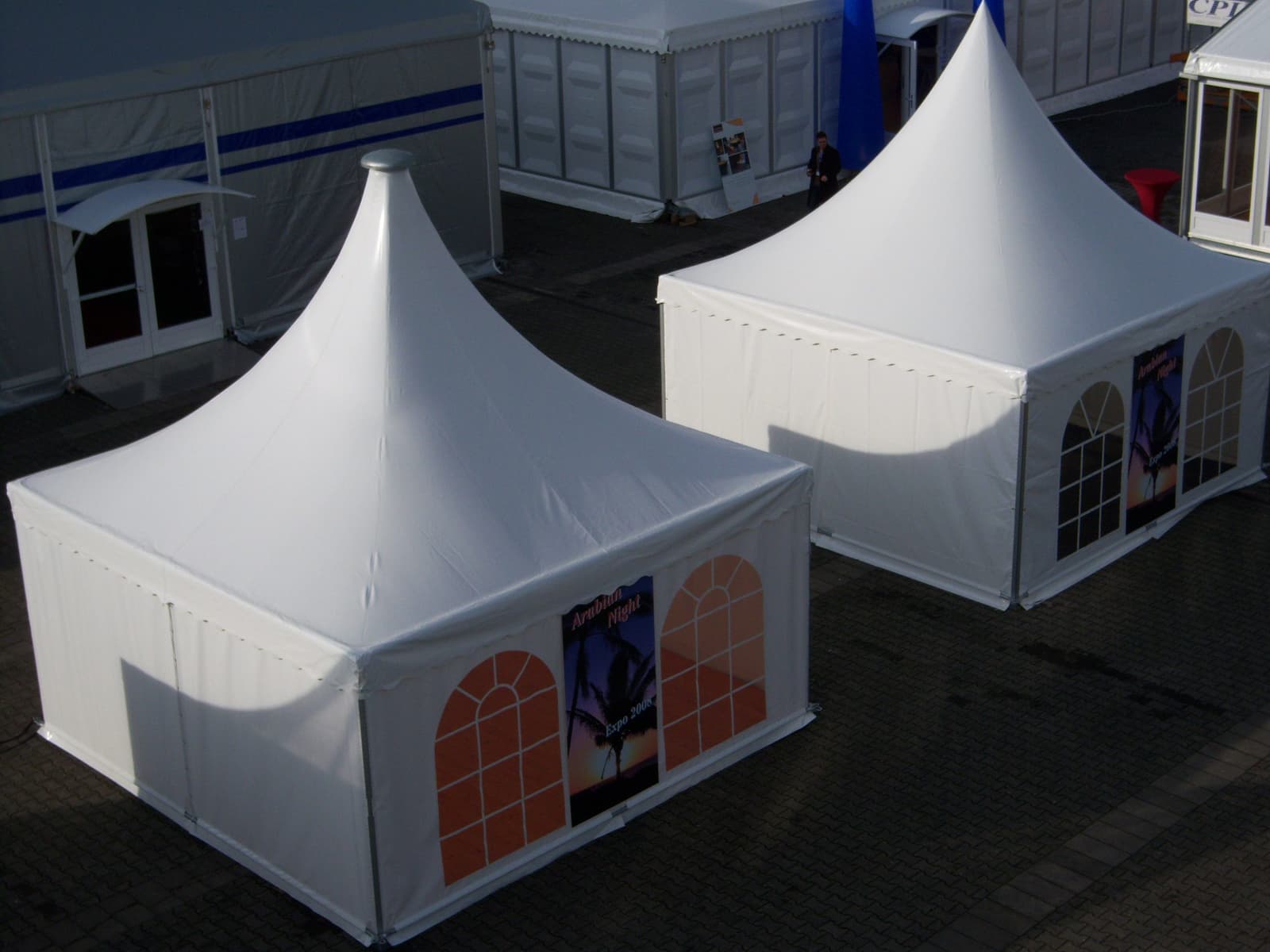
But which tent size is suitable for connecting your tent? The greatest variety of assembly options is achieved by purchasing a second tent of the same size. If you have a square tent such as a pagoda, you can, depending on requirements and the desired appearance, place the tent lengthwise or widthwise one behind the other.
However, connecting tents with different widths and lengths is also possible. We show how this works using an example:
Party tent with dimensions of 4 m x 8 m
If, depending on requirements, you want to extend a tent either in length or width, a second tent should have exactly the same dimensions. The eaves height in particular is important. If you want the option of combining the tents both on the width and on the long side, you will need different connecting parts depending on the type of setup. A tent extension on the gable side is easily achievable thanks to the modular building system. If you also want to connect the tent on the long side, a 8 m gutter tarp is required.
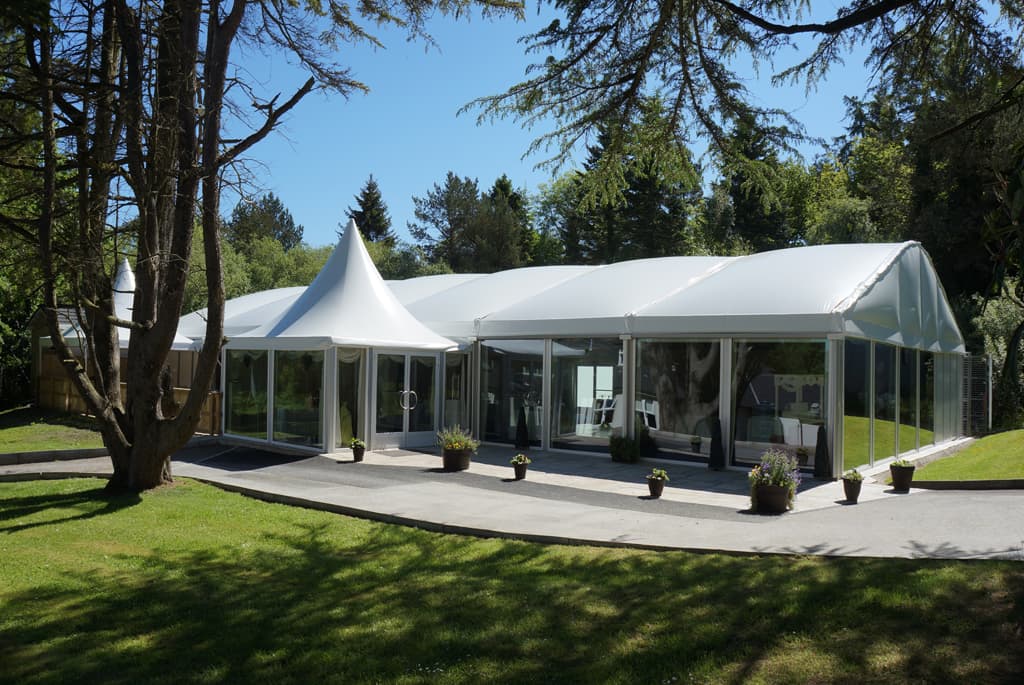
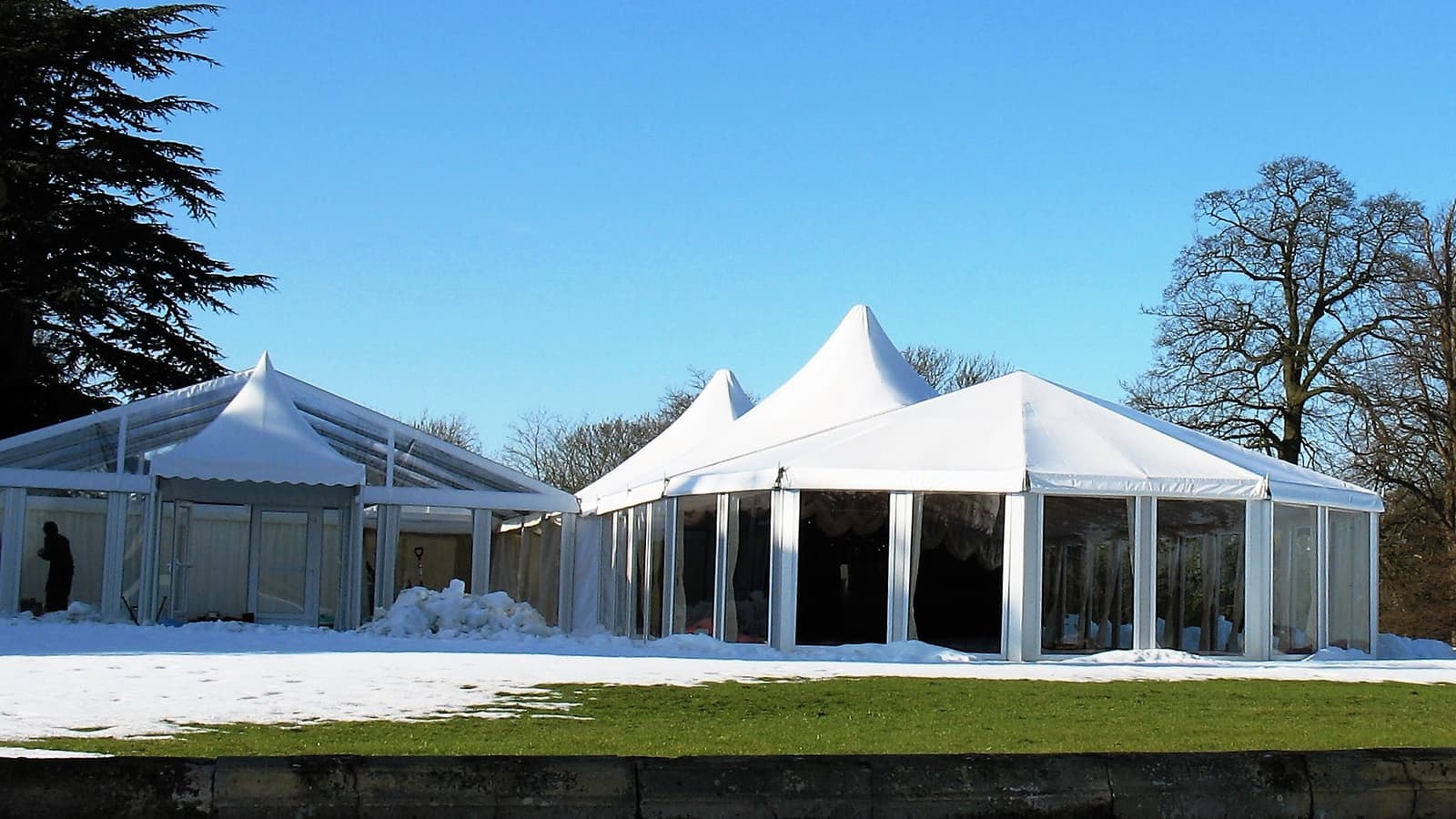
The right accessories for extending party tents
You would like to extend your party tent? We show you exactly which accessories you need for this:
Gutter tarps: rain gutters for party tents
Our rain gutters provide a reliable connection between two tents and thus allow unlimited usable space. The seamless connection is weatherproof and therefore protects guests from the elements. Installation is very simple using a kedar strip, which is threaded into the eaves purlins of both tents.
Scaffolding system is modular so that it can be extended repeatedly.
We know from experience that space requirements can change continuously. For this reason, the party tents from HTS TENTIQ are designed so that they can be extended or shortened in length at any time, even retrospectively. This is made possible by our modular building system, which allows maximum flexibility. With the help of additional parts such as side cladding for the gables, gable supports and cross beams, modular party tents can be altered in size as required.
The party tents from HTS TENTIQ are available from a span width of 3 m, up to a width of 10 m, and can be extended indefinitely in 3 m increments. This means your party tent can be fully tailored to your needs.
How large your party tent needs to be for your individual use depends primarily on the following factors:
- available free space
- maximum number of people
- desired seating arrangement
Once these factors have been clarified, the appropriate tent size can be easily calculated:
- The least space is required when using standing tables. In this case, 0.5 m² of space is needed per standing person.
- For rows of chairs, a space requirement of 0.7 m² per person is calculated.
- For beer tent sets, 1 m² per person is assumed.
- The most space is required for tent setups with tables and chairs. In this case, a space requirement of 1.5–2 m² per person should be calculated. With round tables, accordingly more space needs to be planned.
To calculate the optimal tent size, simply use the following formula:
Maximum number of people × space requirement in m² = tent size in m²
Example:
You would like to host a celebration for 100 people. Rectangular tables with chairs are chosen as seating. In this case, you will need a tent with at least 150 m² (100 × 1.5 m² = 150 m²).
With the same number of people and the use of standing tables, the required size is significantly reduced. In this case, a party tent with 50 m² is sufficient (100 × 0.5 m² = 50 m²).
Robust & durable: HTS TENTIQ quality tents directly from the manufacturer
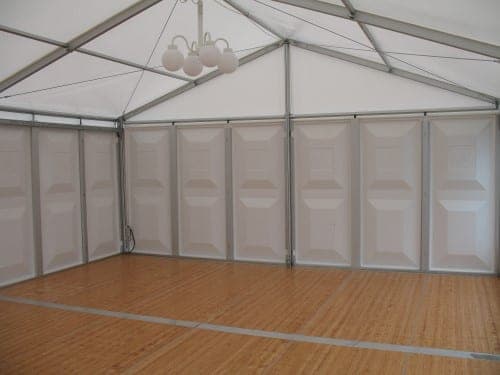
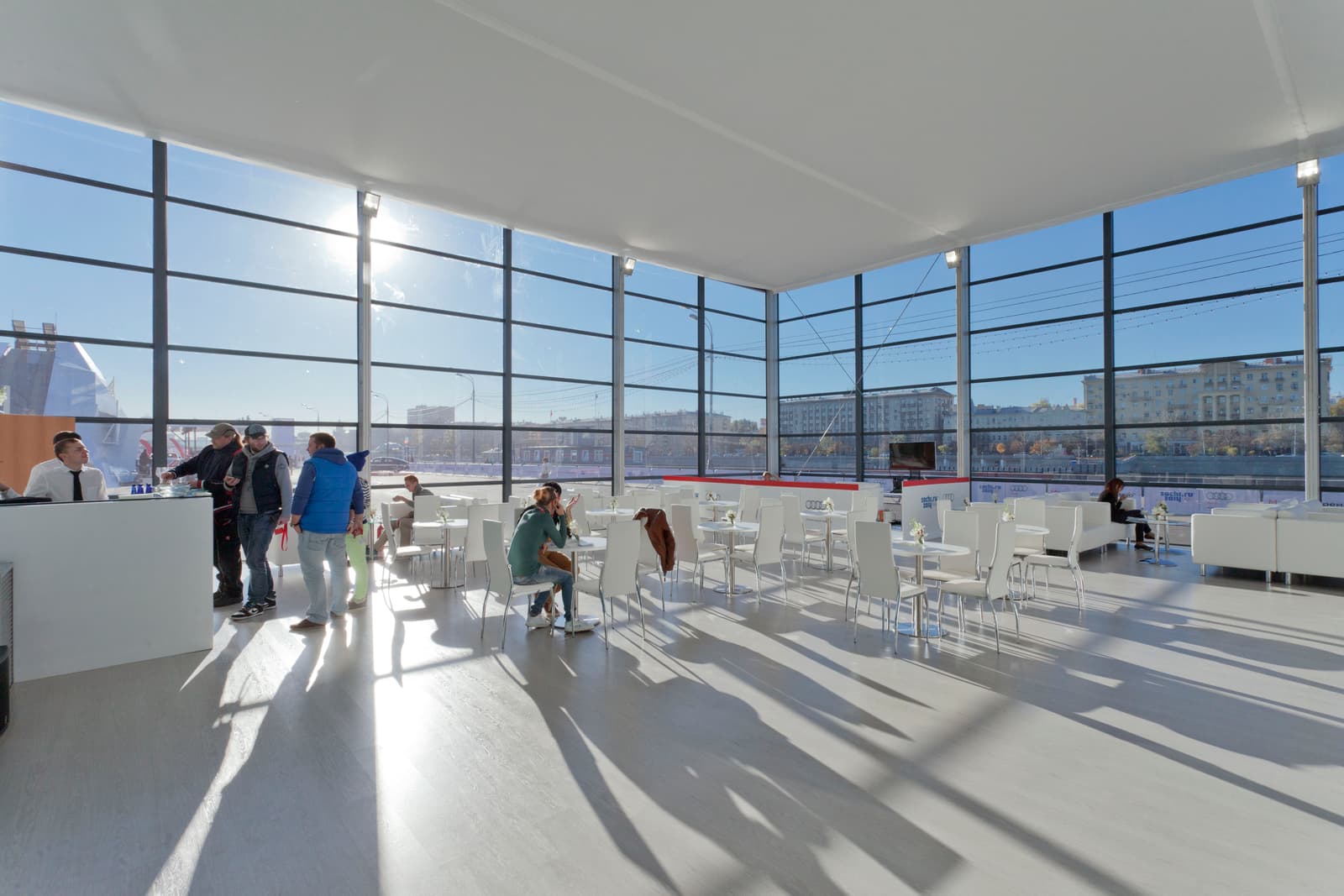
All HTS TENTIQ tent systems are manufactured from high-quality materials that guarantee the durability of your professional tent. Water resistance at 100%, high UV protection as well as wind resistance and dimensional stability characterise our tent systems. For the frame, we use extruded and corrosion-free aluminium, which is classified as a non-combustible building material. The connecting parts and inserts are made from hot-dip galvanised steel. Single-skin PVC sheeting is used as roofing. For side cladding, you can choose between PVC awnings, plastic panels, glass façades and insulated panels. Both roof covering and side cladding are available in various colours. Please contact us.
But it is not only in the materials that we focus on high quality; in terms of design and manufacturing we also know that premium quality is essential. Our tent systems are therefore flexibly assembled using a modular building system. All materials are manufactured in Europe. We carefully monitor all production processes to deliver the highest quality from raw material to finished tent.
Would you like to contact us? Then simply use our contact form – this is the fastest way to reach our experts.
Conclusion: Connecting two tents
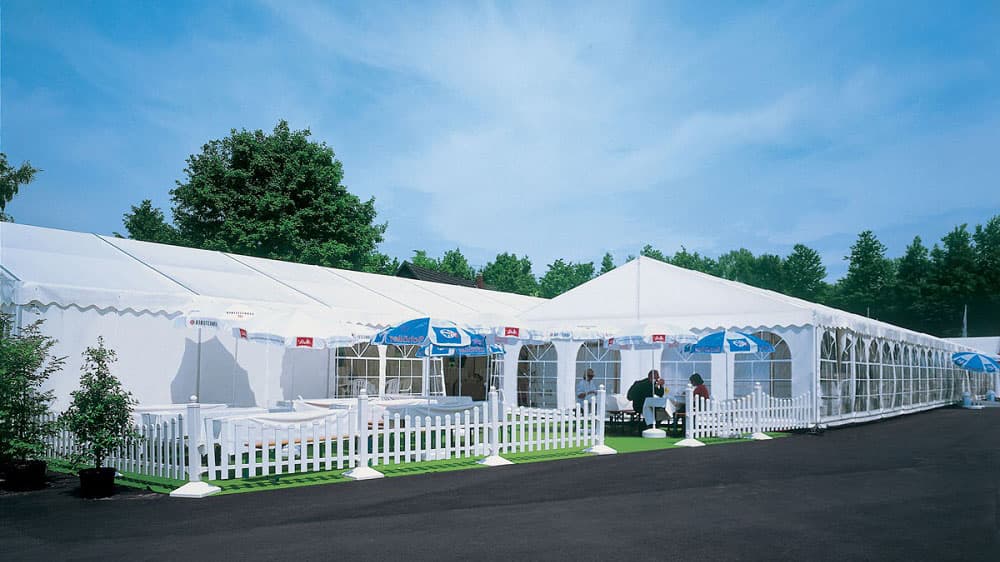
If the existing party tent is too small, there is no need to immediately buy a larger tent. The fact is that extending a tent is very easily possible, and the key factor is the right accessories. With rain gutters, you can quickly and easily connect two tents along the long side. Several tents can also be connected in this way without any problems to form a single unit. This ensures that your guests are optimally protected from rain and that the tents appear visually as one unit.
Another option is the flexible extension of your existing tent thanks to the modular building system. Here too, if required, you can set up either one large tent or two separate smaller tents. This requires additional side cladding for the gables, gable supports, and cross beams.
In addition, extending a tent is generally much more cost-effective than investing in a large, new single tent. Also not to be forgotten is the flexible usability of two interconnected tents. Whether as a separate buffet, cloakroom or entrance area: with two tents you have a great deal of design flexibility and can easily create different areas.
.jpeg&w=1600&q=75)