
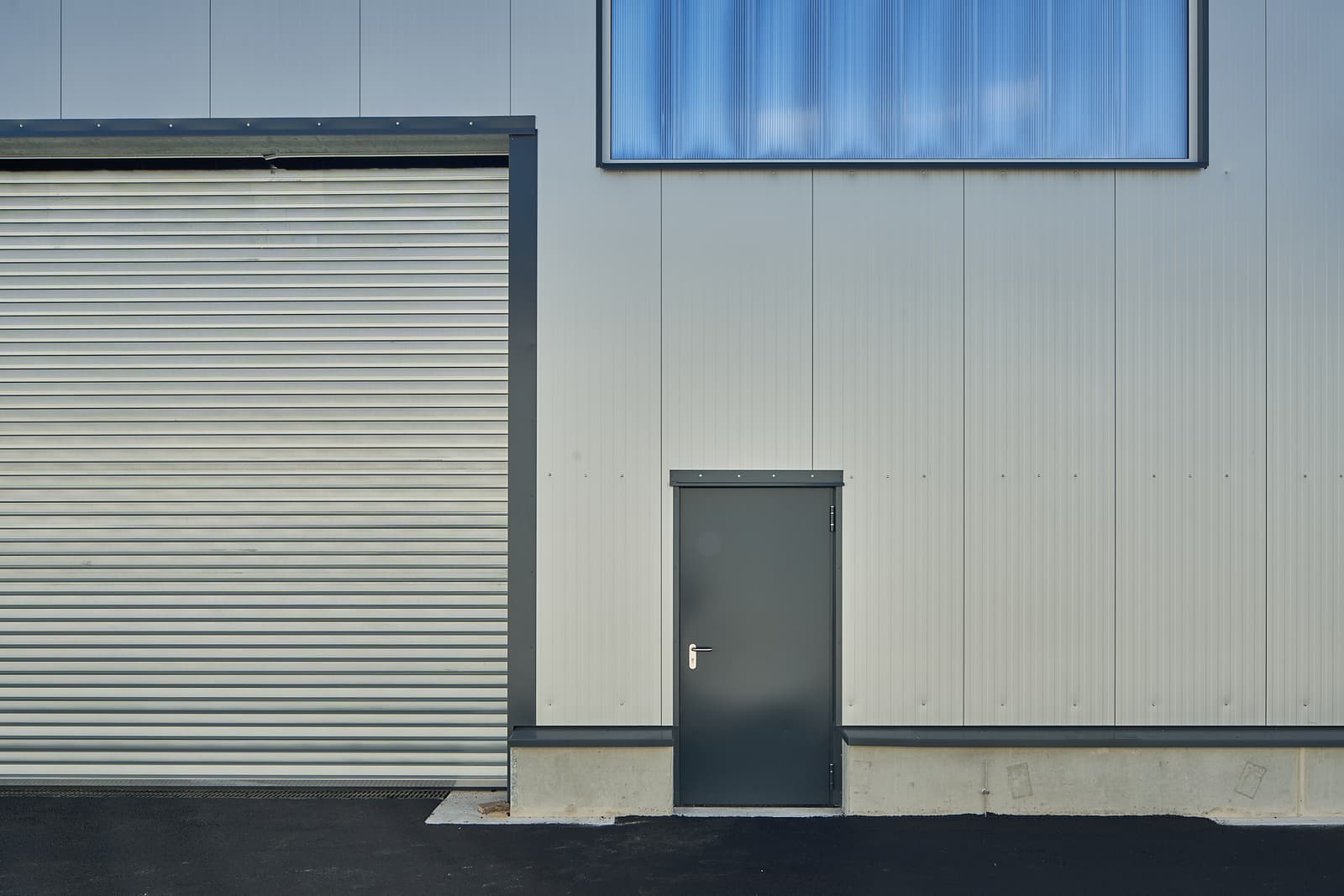
Industrial Building Cladding: Which option is right for your space?
A well-thought-out and carefully planned building envelope plays a crucial role in industrial building construction. It not only influences the energy efficiency, weather protection, safety, and durability of the building, but also its appearance. Whether it’s robust steel sheet walling, insulated sandwich panels, or translucent glass facades—each roof and wall cladding option has its advantages and disadvantages.
Discover what type of cladding is suitable for your requirement and what you should consider when making the cladding choice for your modular building.
Important cladding considerations
A building envelope majorly affects the functionality, running cost, energy-consumption, and safety of the space. Therefore, roof and wall cladding should always be tailored to the specific use case as each requirement needing different internal environments. When making this strategic decision, you should consider the following aspects:
- Insulation Properties & Energy Efficiency: Insulated cladding ensures a stable indoor climate and helps minimise heating and cooling costs. Industrial buildings used year-round or those storing sensitive goods, good thermal insulation will help to save energy.
- Weather Resistance & Longevity: Industrial buildings are exposed to various weather conditions—be it rain, snow, wind, or strong UV radiation. The cladding needs to be exceptionally durable and resistant to environmental influences specific to your site location.
- Fire Protection: Complying with legal fire protection regulations is essential. Depending on how the building is used, certain building materials may be necessary to meet these regulations and ensure safety.
- Cost & Maintenance: The overall cost of roof and wall cladding isn’t just about the initial purchase price, but also long-term maintenance required. Robust, low-maintenance materials reduce this effort and help lower operating costs. However, screws, wind bracing, and similar components should be checked regularly to ensure the building’s continued safety and durability.
- Aesthetics & Corporate Image: A well-designed building can positively influence a company’s image. Adversely, a poorly thought through structure can damage a business‘s reputation. A high-quality appearance underlines the brand identity, its values and leaves a professional impression on customers and business partners.
Types of cladding suitable for industrial buildings
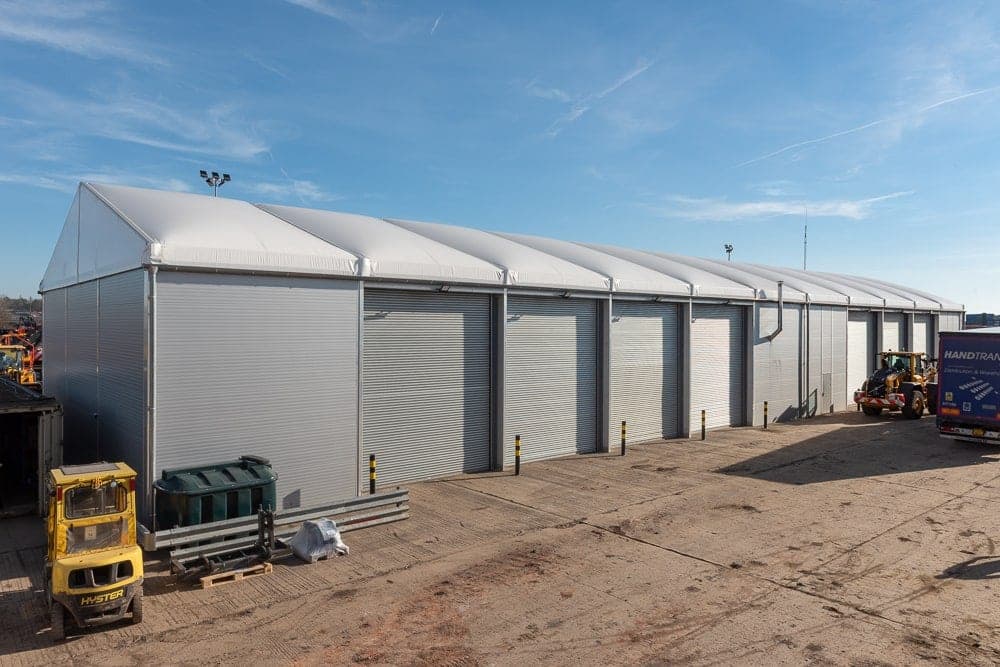
Temporary Buildings from HTS-TENTIQ can be precisely tailored to specific customer requirements using various wall and roof claddings. Further equipment options allow temporary buildings to be made even more functional and individual. Let’s take a closer look at the different types of cladding:
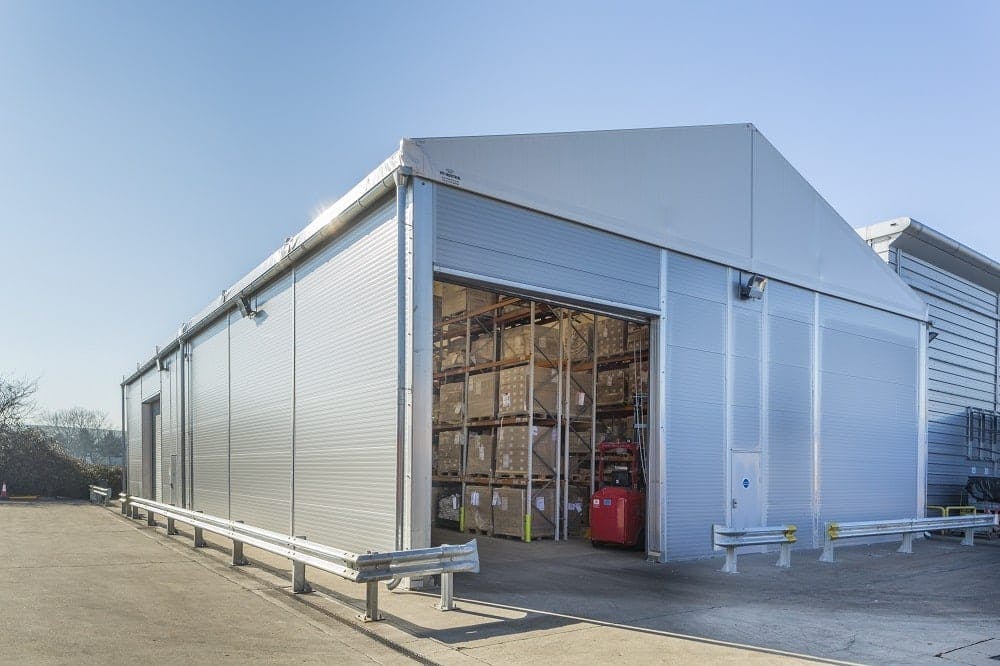
Sandwich Panels: Efficient Insulation for Walls and Roofs
Sandwich panels are among the highest quality cladding options for walls and roofs. Particularly suitable for high demands on thermal insulation and energy efficiency, they are also available in a walkable version, which enables the installation of PV systems on the building’s roof.
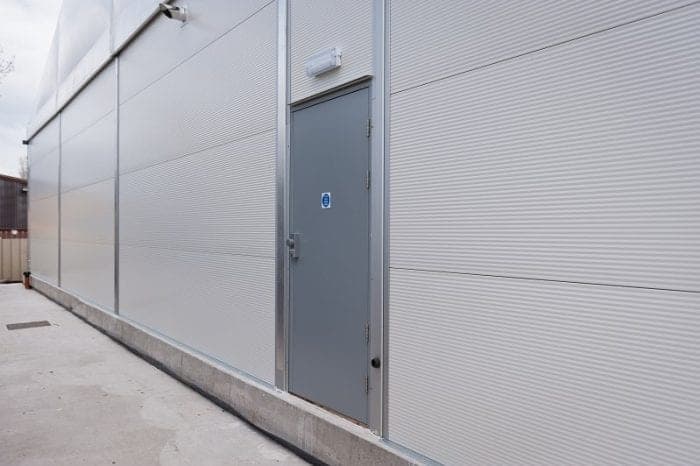
Sandwich panels consist of two robust steel layers with a high-performance insulation core of rigid foam. An additional outer coating increases protection against weather influences such as moisture and UV radiation. Sandwich panels are available with different core thicknesses to meet various requirements for thermal insulation and static load capacity. They are suitable for both roof and wall installation and offer flexible applications in building construction.
Advantages:
- Excellent thermal insulation
- Stable, durable and highly weather-resistant
- Very good sound insulation
- Suitable surface for mounting PV systems
- High-quality appearance
- Resistant to mould and fungi
- Non-combustible (Building Material Class A1)
- Various colour options available
Disadvantages:
- Higher initial costs compared to other materials
- Less flexible for later modifications
- Heavier than other types of cladding
Areas of Application:
In building construction, sandwich panels are particularly suitable for when a constant temperature is required, such as in production facilities, warehouses, or exhibition halls. The food processing, chemical and pharmaceutical industries require precise climatic conditions to prevent damage to products and raw materials. In plastics and metal processing, the temperature must also remain stable to ensure uniform material processing. Accurate temperature control is also required in many warehouses for goods such as food, medicines, or sensitive electronic components. The goods must be protected from temperature fluctuations.
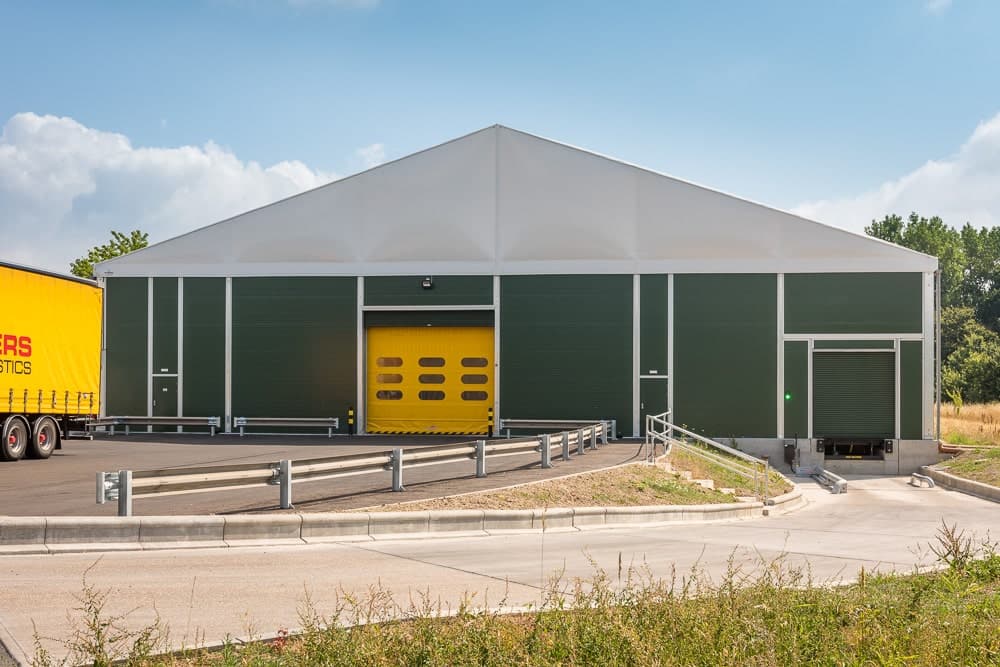
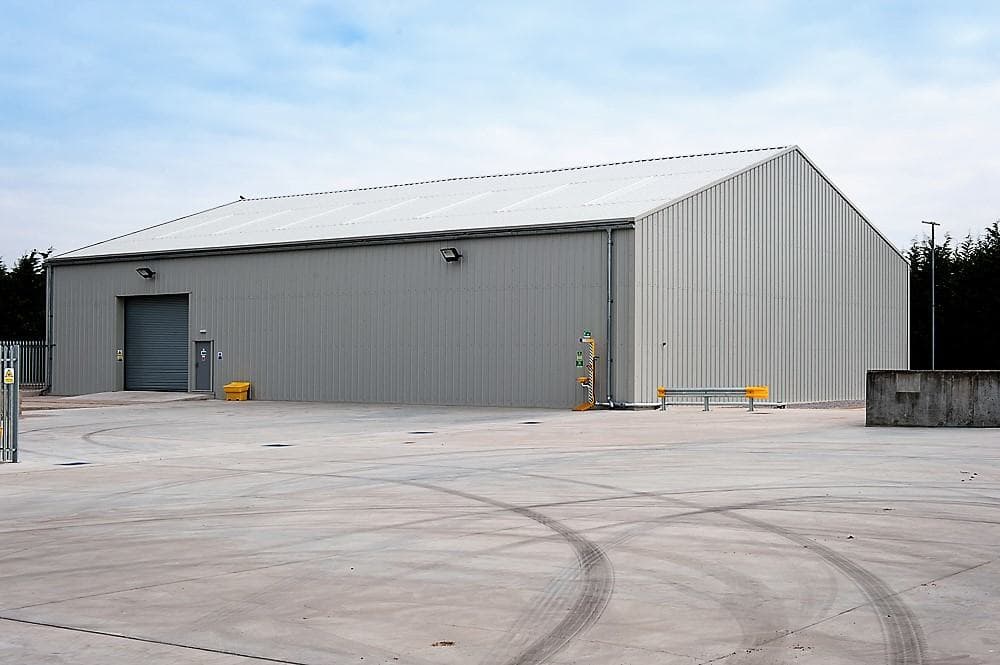
Corrugate Steel Sheet Walling: A Robust and Economical Solution
Corrugated steel sheet walling is a popular and cost-effective solution for cladding, offering high stability and resistance properties.
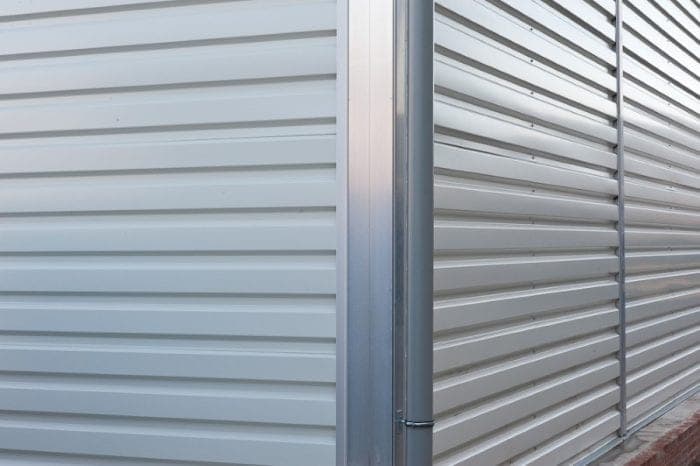
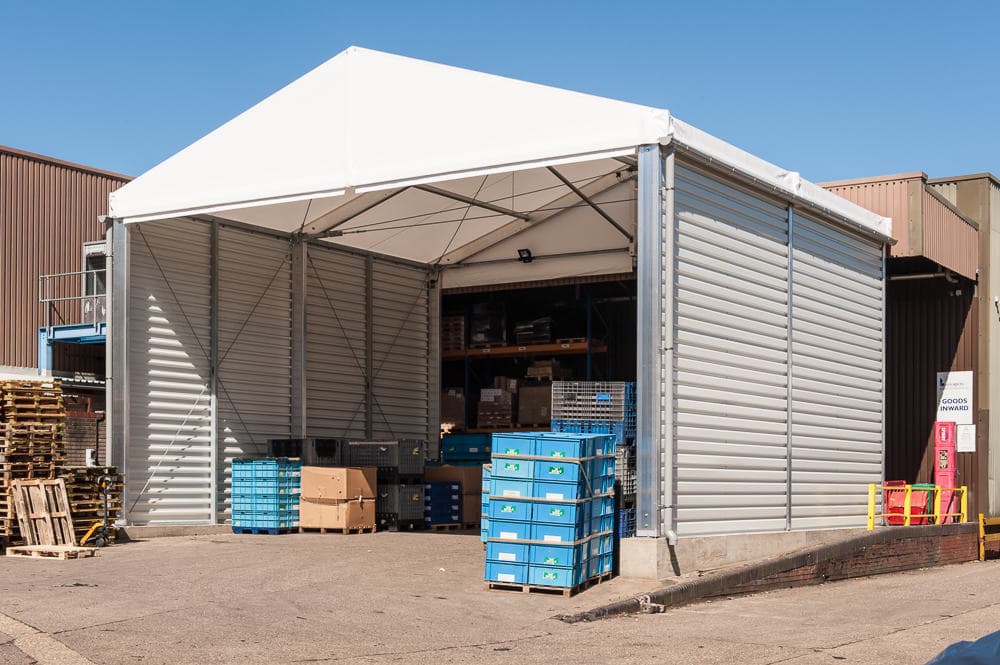
Depending on your needs, it can be coated or uncoated and used for either wall or roof cladding. This type of cladding is recognisable by its characteristic trapezoidal profile, which provides additional stability and resistance against external influences like wind, rain, and snow. Corrugated steel sheets are also corrosion-resistant and maintenance-free throughout an extended period of time. For custom adaptation to your corporate design, HTS TENTIQ’s sheet metal cladding for walls and roofs is available in various colour options.
Advantages:
- Cost-effective and economical cladding solution
- Very robust and durable
- Long lifespan
- Weather-resistant and maintenance-free
- Quick and easy to install
- High stability
- Burglary protection
- Non-combustible (Building Material Class A1)
- Various colour options available
Disadvantages:
- No integrated thermal insulation
- Limited sound insulation properties
Areas of Application:
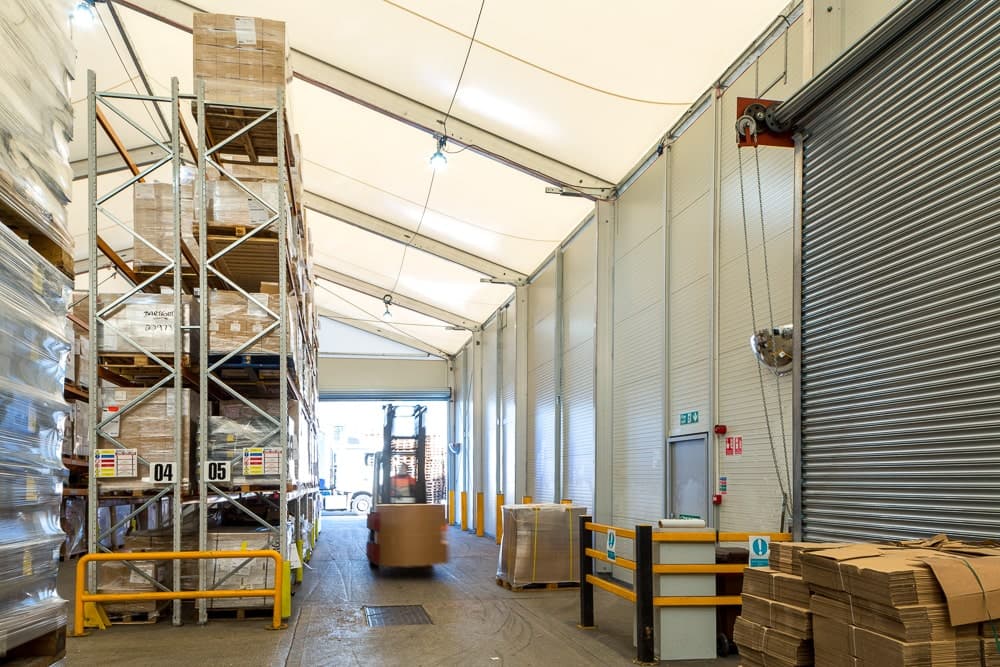
Corrugated steel sheet cladding is often used for storage facilities and logistics buildings. It reliably protects goods from the weather and allows for fast construction. It is commonly used to clad machinery and equipment halls, where it safely houses agricultural or industrial machinery as well as for trucks, buses, and other vehicles requiring maintenance without the need for a highly insulated environment.
In the recycling and waste management sector, cladding made of sheet metal provides weather-resistant and corrosion-free buildings suitable for the storage and processing of materials. Workshops and production facilities that don’t require specific temperature control also benefit from this durable and nearly maintenance-free cladding option.
PVC Covers: A Flexible and Low-Cost Alternative
PVC wall and roof covers offer a fast, simple, and flexible option for wall cladding on industrial modular buildings. They are the ideal shorter-term solution, especially for temporary or often-relocated solutions within the construction and agricultural sector.
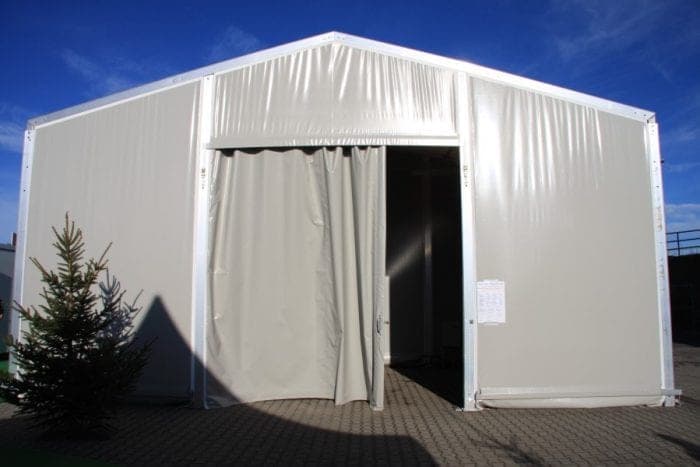
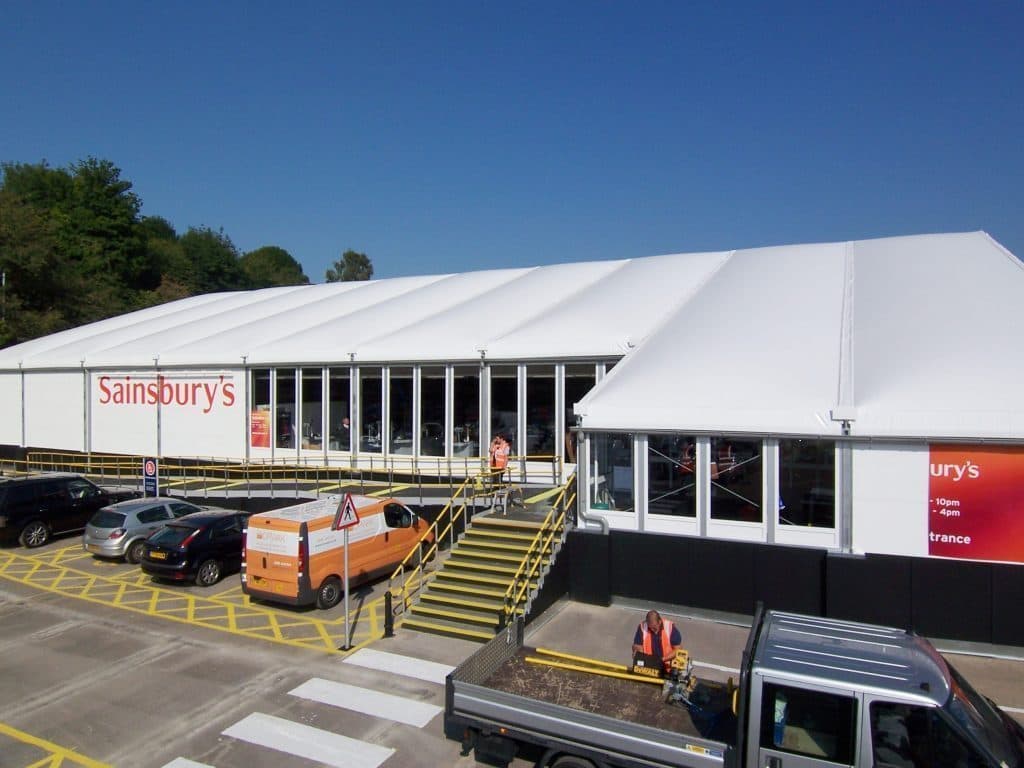
Cost-effective PVC building envelopes consists of high-quality industrial-grade polyvinyl chloride (PVC), which is weatherproof and durable. The covers are particularly lightweight and can be quickly installed, dismantled, stored, or replaced. They are manufactured in a translucent white -as standard- to maximise natural lighting and limit the use of elecrical lighting. Due to their UV resistance and mould-resistant properties, they also ensure a longer lifespan. Additionally, they comply with international fire protection regulations, making them a safe option.
One of the most significant advantages of PVC tarpaulins is their low price relative to other cladding options. They are easy to install and can be quickly replaced or expanded as needed. To improve their limited insulation properties, twin-skinned thermal roof covers can be chosen. This is known as a thermo-roof covering.
Advantages:
- Cost-effective
- Easy to install, maintain, replace and expand
- Very tear-resistant
- Translucent material to allow natural lighting
- Moisture-repellent and mould-resistant
- Flame-retardant (Building Material Class B1)
- Can be repaired in case of tears or holes to covers
Disadvantages:
- Low thermal insulation as standard (air-filled or fleece stuffed thermal roof covers are available for improved insulation properties)
- No sound insulation
- No burglary protection
- Not suitable for temperature-sensitive goods and products
Would you like to insulate your temporary building even more efficiently? Find out more about thermal roof tarpaulins with additional insulation in our flyer here.
Areas of Application:
PVC wall and roof covers are often used for storage buildings, especially when goods are only stored for a short time and constant temperature control is not required. PVC covers are also used for canopies, as they offer protection from rain and wind while being quick to install and replace. In the agricultural and industrial sector, they are primarily used for mobile shelters for machinery, vehicles, or livestock. Another important area of application is within the temporary exhibitions, weddings and other events sector.
Glass Walls: Modern Aesthetics with Natural Light
Glass walls are the ideal solution for buildings that want to combine modern design with natural lighting. Manufactured in-house at our German facility, all HTS TENTIQ glass walls are made from high-quality laminated safety glass, which is particularly durable. Other options, such as double glazing or insulated glass, are also available for added safety and energy-efficiency.
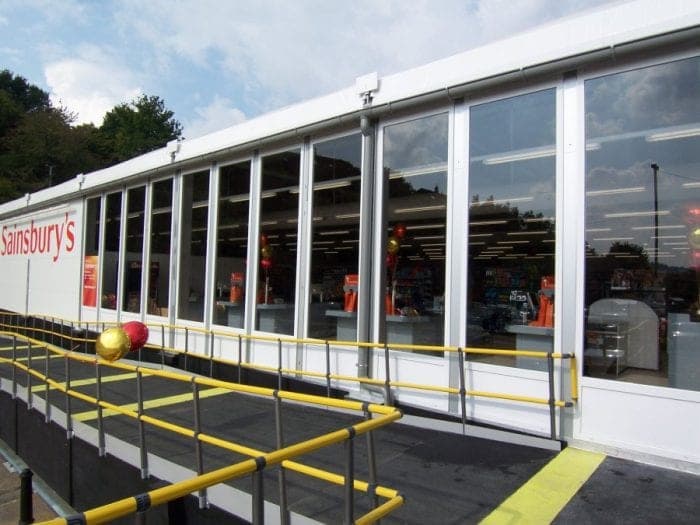
Depending on the desired effect, the glass can be clear, frosted, or tinted and the frame can be made of aluminium or plastic, depending on the customer’s wishes. Fully adapted to the usage concept, glass walls can be installed at any desired position in the building. They can also be combined with single and double doors, offering a very flexible design capability for any application.
Advantages:
- Modern and high-quality appearance
- Maximum natural light exposure
- Range of compatible accessories to suit
- Useful for medium to long-term aplications
- Various design options, including clear, frosted, or tinted versions
Disadvantages:
- Higher costs for material and installation
- Requires regular maintenance
- More involved installation process
- Structure becomes less relocatable
Areas of Application:
Glass walls are particularly suitable for applications where modern architecture and aesthetics are the goal. Modular office areas within industrial buildings can be fitted with glass walls to create a modern working environment with plenty of daylight. In exhibition halls, showrooms, or temporary exhibition spaces, glass walls are integrated to create an open and inviting atmosphere.
Wall Light Panels: Natural Lighting for Energy-Efficient Buildings
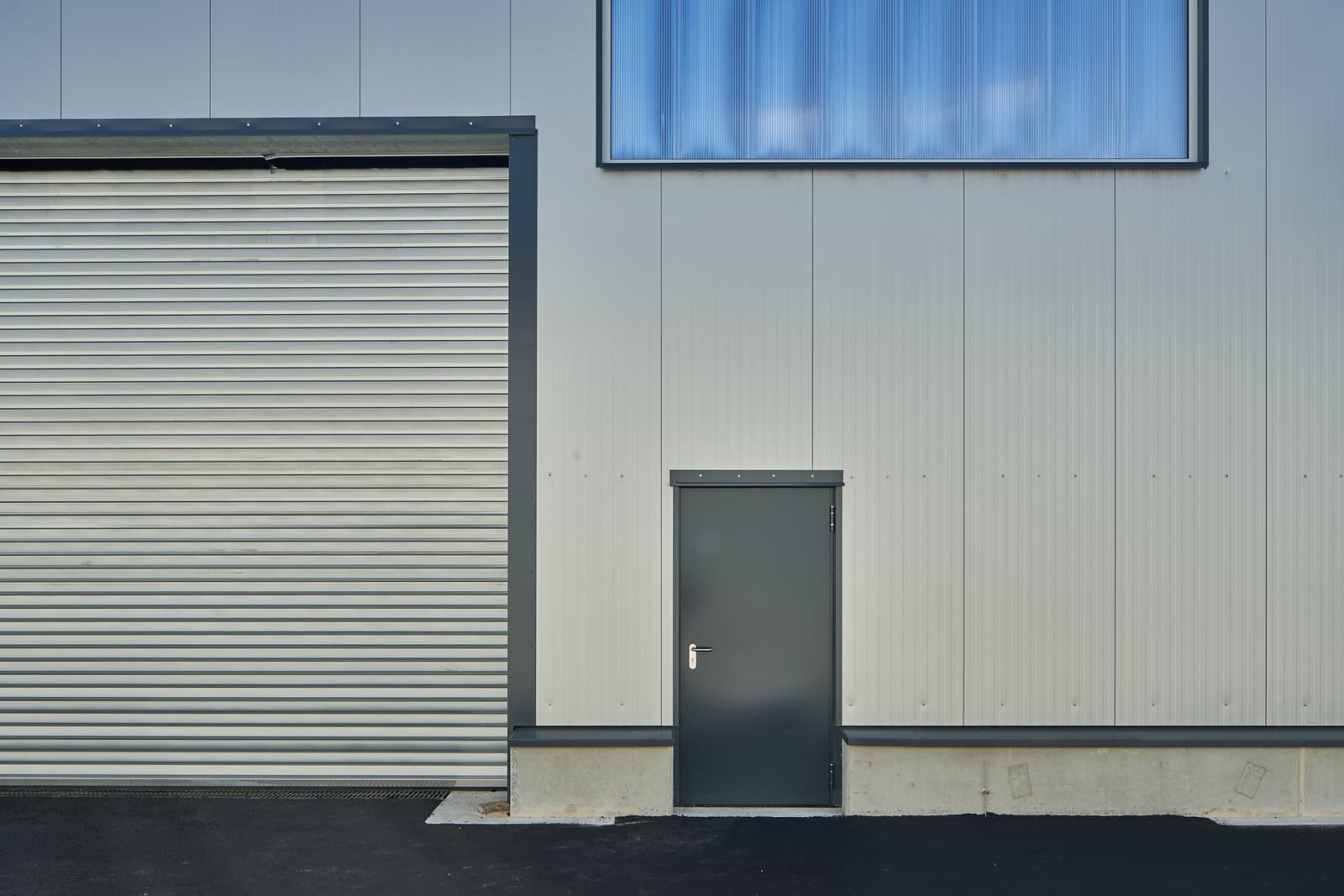
Wall light panels are transparent elements for wall cladding with the same profile as our corrugated steel sheet walling, allowing them to be easily installed in combinations needed.
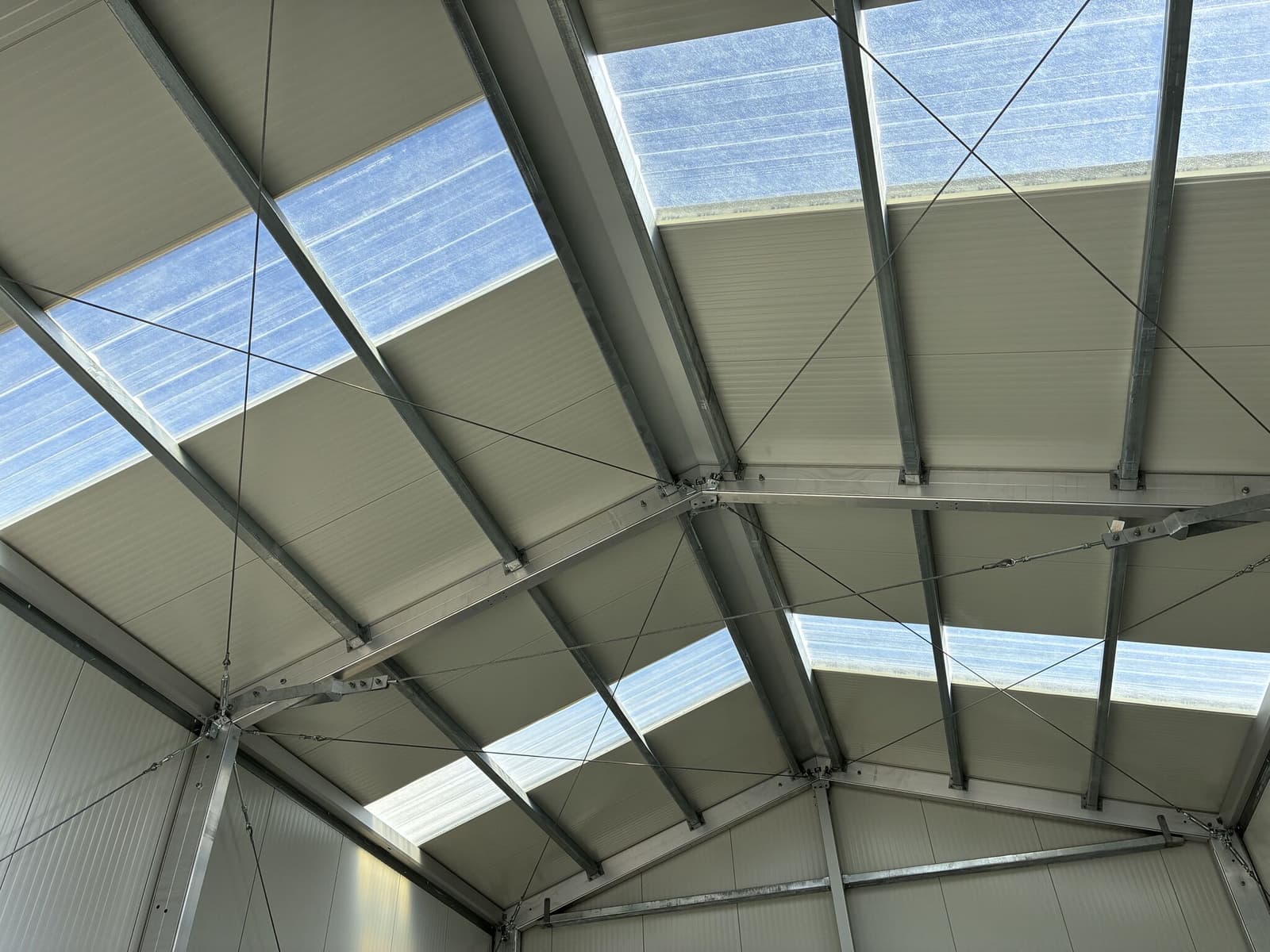
With high levels of light permeability, they ensure a high amount of natural light is brought in, reducing the need for artificial lighting during daylight hours.
Advantages:
- Promotes the use of natural daylight
- Reduces costs for artificial lighting
- Creates a bright working environment
- Cost-effective alternative to glass facades
- Quick and flexible installation
Disadvantages:
- Less stable than solid wall claddings
- Limited sound insulation
- Can lose transparency over time
Areas of Application:
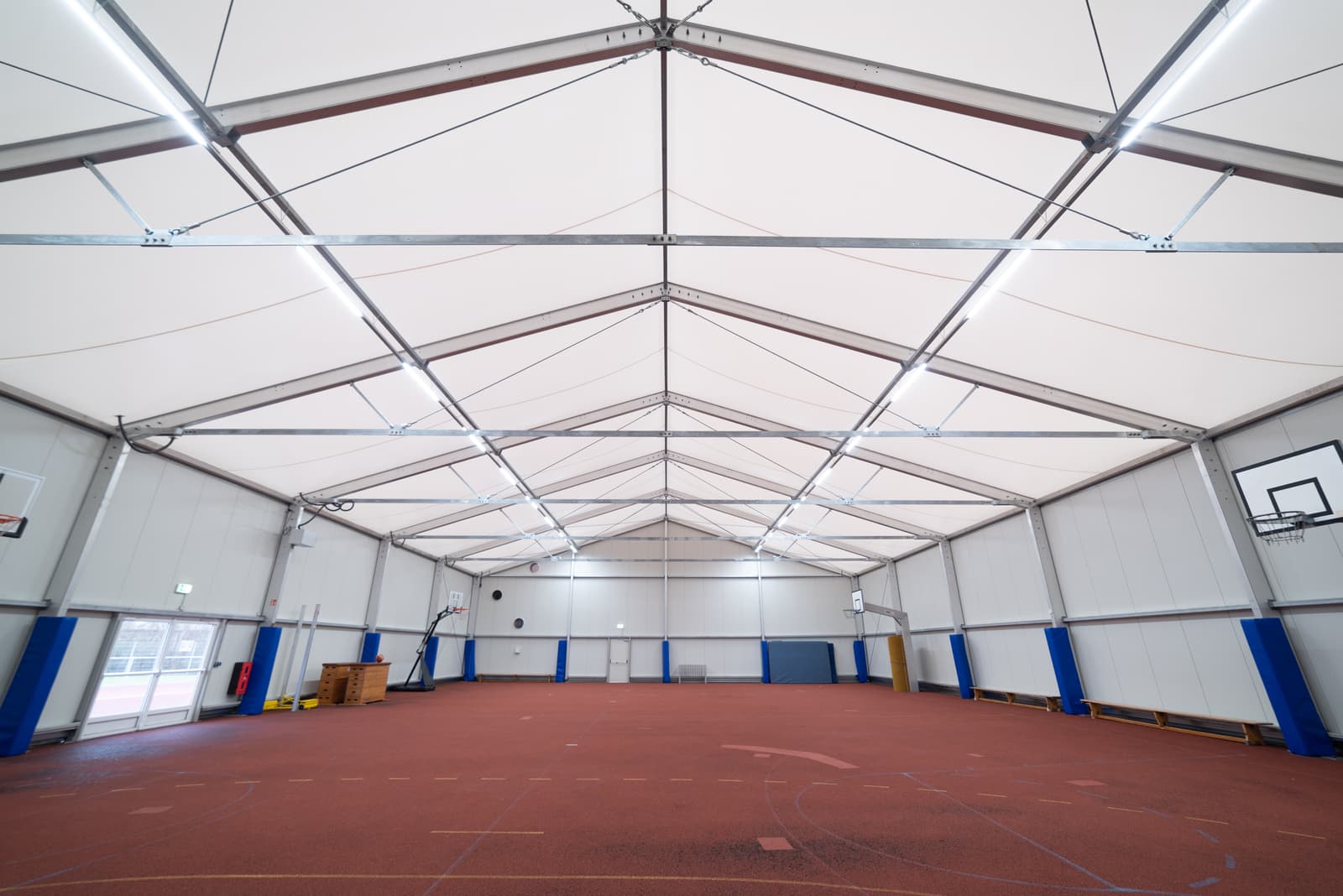
In production buildings, logistics centres, and workshops, wall light panels create a bright environment and a pleasant working atmosphere. In sports and multi-purpose halls, they ensure a friendly atmosphere without the need for costly safety glass or additional lighting.
Conclusion: Which Building Cladding Suits Your Needs?
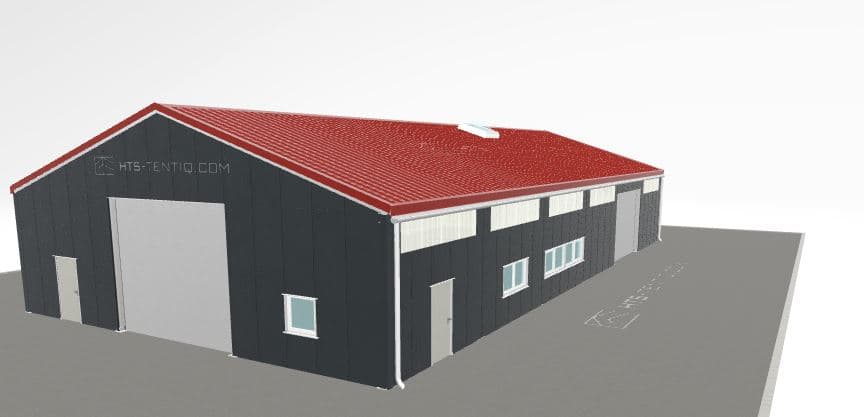
Choosing the right building cladding depends heavily on what the new industrial building will be used for. Other factors like thermal insulation, sound protection, weather resistance, and aesthetics also play a decisive role. Lastly, the building’s location must also be factored into the planning, as climatic conditions and legal regulations can influence the choice of material.
With industrial cladding made of sandwich panels, your modular building benefits from thermal insulation and high energy efficiency but with a higher initial investment. Corrugated steel sheet walling for roofs and walls is an economical and stable solution that is corrosion-resistant and maintenance-free but offers no integrated insulation.
For shorter-term or mobile solutions, PVC covers are an ideal type of cladding. They are low-cost, fast to install and weather-resistant, but offer no thermal insulation.
Our Cladding Recommendations for Certain Applications:
- Production and warehouse buildings with precise temperature requirements should opt for sandwich panels, as they offer the best insulation and reduce energy costs for high traffic structures.
- Logistics and transshipment centres that need a robust, maintenance-free solution are best advised to use corrugated steel sheet walling for roofs and walls. They guarantee long-term stability and low maintenance costs.
- Showrooms and exhibition spaces benefit from glass walls, which create a high-quality, light-filled environment perfect for hosting.
- Shorter-term or mobile solutions like industrial tents regularly employ cost-effective PVC covers for quick installation relocation and replacement.
- Modular industrial buildings for storage, logistics, or workshops with a focus on natural lighting can integrate wall light panels to reduce energy costs and create a pleasant work environment for operatives.
For individual cladding advice tailored to your specific use case or about industrial modular buildings in general, contact the experts at HTS-TENTIQ.
Our Expertise
FAQs: We Answer Your Questions About Industrial Building Cladding
A building’s cladding significantly impacts it’s energy efficiency, as good insulation reduces heating and cooling costs. It also determines durability by providing protection against the weather as well as wear and tear. In the long term, the right choice of industrial cladding heavily influences the building’s overall operating costs.
The best type of cladding depends on the planned use of the industrial building. Additionally, the location and climate are factored into the choice to tailor weather protection and insulation accordingly. Legal requirements like fire protection must also be considered. The budget is another important factor to include in the selection process.
Sandwich panels provide excellent thermal insulation, as their insulating core effectively minimises heat loss. When equipped with a mineral wool core, they also meet UK and Eurpoean fire protection requirements. Corrugated steel sheet walling is stable and durable but offers no integrated insulation. It is non-combustible (Building Material Class A1). Simple PVC covers offer little insulation and are classified as flame-retardant building materials (Building Material Class B1).
For office spaces, production halls, or sales showrooms, creating an optimal working environment is crucial. Sandwich panels offer the best cladding solution, as their excellent insulation reduces temperature fluctuations and increases energy efficiency. This creates a pleasant indoor climate and a comfortable working environment for employees and guests.
For an attractive building aesthetic, high-quality cladding materials and individual design options are essential. Glass walls and sandwich panels also offer premium aesthetics and improved thermal efficiency but with higher initial investment required. Wall light panels improve natural lighting and energy efficiency offering a cost-effective alternative to glass walls. Additionally, the professional and stylish look of the building is enhanced by various colour options across cladding types with custom-made solutions.
For temperature-controlled warehouses, sandwich panel cladding provides the most suitable internal environment. With an extensive range of panel thicknesses on offer, their high insulation performance reduces heat loss and ensures a constant indoor temperature. The higher the core thickness, the lower the U-value. This allows for maximum energy efficiency and temperature control. Additionally, sandwich panels protect against condensation and weathering, improving it’s durability and shielding the stored goods and machinery inside.
Burglary protection for your modular building starts with robust and solid materials, particularly across the building envelope and entrances. Sandwich panels and corrugated steel sheet walling offer reliable protection against unauthorised access due to their stable construction. PVC tarpaulins are less secure as they can be easily damaged to gain entry. You can ensure additional security with accessories like reinforced doors or window grills to limit unauthorised access further.