
Sustainable Temporary Buildings Are Winning Over Environmentally Conscious Companies: But What Are They?
Sustainability in the construction of temporary buildings is more than just the use of environmentally friendly materials. It is about a holistic concept that combines ecological, economic and social factors together.
From resource-saving planning and energy-efficient material use to its ultimate dismantling at the end of the life cycle. In this article, we will show you what sustainable temporary building construction really means and what benefits it brings to businesses.
What is Sustainable Construction?
Sustainable construction combines ecological responsibility, economic efficiency and social compatibility. Its aim is to reduce the impact of buildings on the environment and society over its entire life cycle. Sustainability in temporary buildings is not just about how they are built, but also about materials, recyclability and energy use over time.
Sustainable construction encompasses many aspects including, but not limited to:
- Resource-efficient use of materials
- Energy-efficient planning and utilisation
- Minimisation of emissions and waste
- Durability of structures and recyclability of the materials used
- Flexibility of buildings
Temporary buildings can be the most sustainable way to create space in many different sectors such as production, logistics and warehousing without negatively impacting your locality.
Sustainability in Industry: Challenges, Pressures and Opportunities
Sustainability has become a central factor in the built environment industry. Legal requirements such as Environmental, Social and Governance (ESG) reporting now set clear framework conditions for sustainable construction.
Industrial companies in particular bearing a great presssure for achieving climate targets and meeting consumer sustainability expectations. Consequently, many businesses today face the task of engineering construction projects that are not only functional, but also environmentally friendly, resource-efficient and future-proof.
When it comes to sustainable construction, the main challenges to overcome include:
- Investment costs: Switching to sustainable materials and technologies often require higher initial investment but pay off in the long term.
- Planning effort: Sustainable construction requires holistic planning that takes ecological, economic and social aspects into account, furthering planning complexities.
- Certifications & evidence: Environmental certificates are often very complex, but important for transparency and credibility. ESG reporting and carbon reduction targets can pose a challenge at first but are an important part of future-proof construction.
However, sustainability in industry offers companies a number of apealing opportunities:
- Cost efficiency: Energy savings, durable materials and modular construction methods may reduce operating and maintenance costs in the long term.
- Flexibility: Sustainable temporary buildings such as those from HTS TENTIQ can be quickly adapted to new requirements – without costly conversions to keep up with growing needs.
- Recycling & reuse: Over 80% of the materials used by HTS TENTIQ are recyclable. This reduces waste and conserves resources when a building has reached th end of its usable life.
- Eligibility for subsidies: Sustainable construction projects are often eligible for subsidies – a financial advantage for companies. It may be worth looking into in your region.
The Role of Temporary Buildings in Sustainable Development
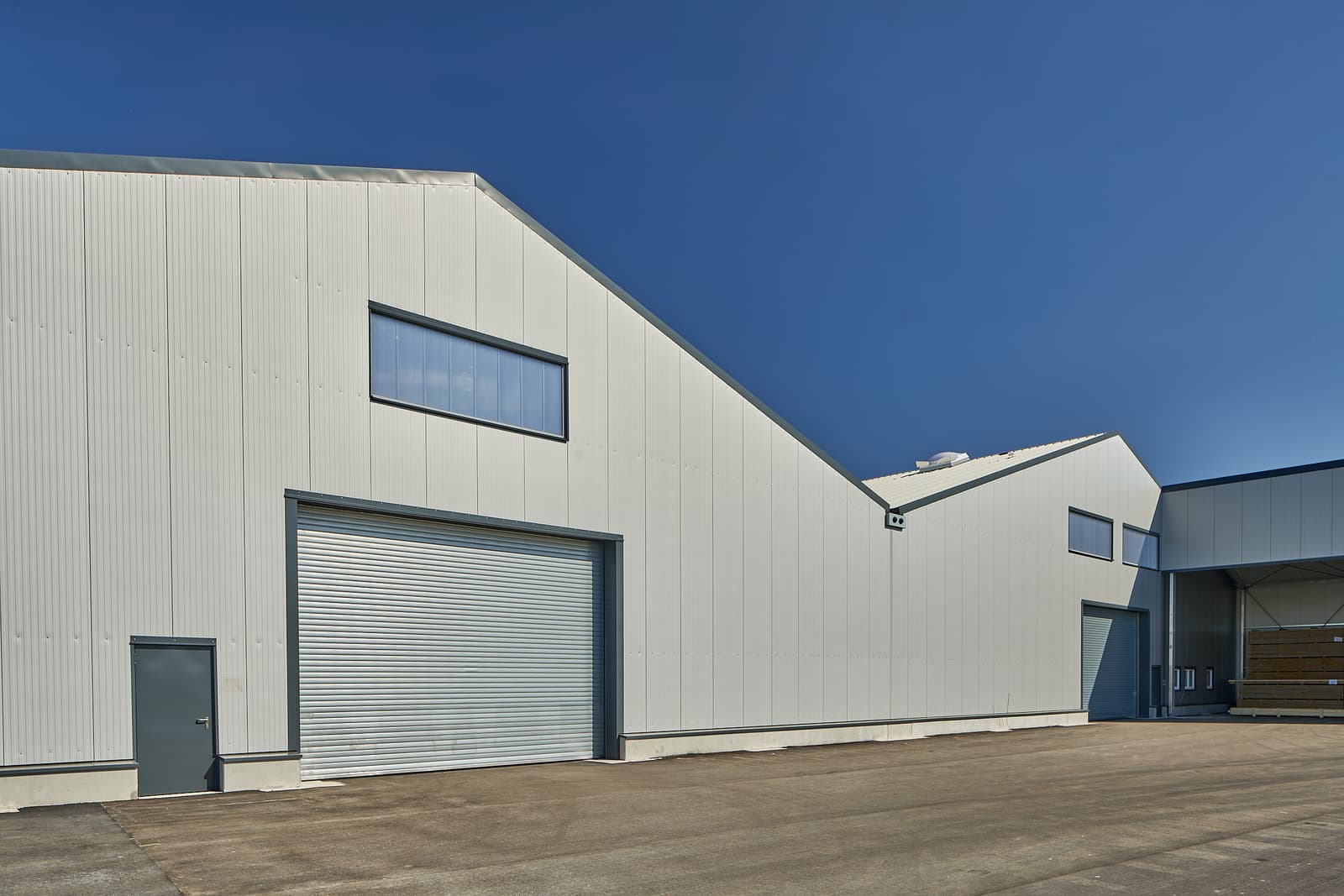
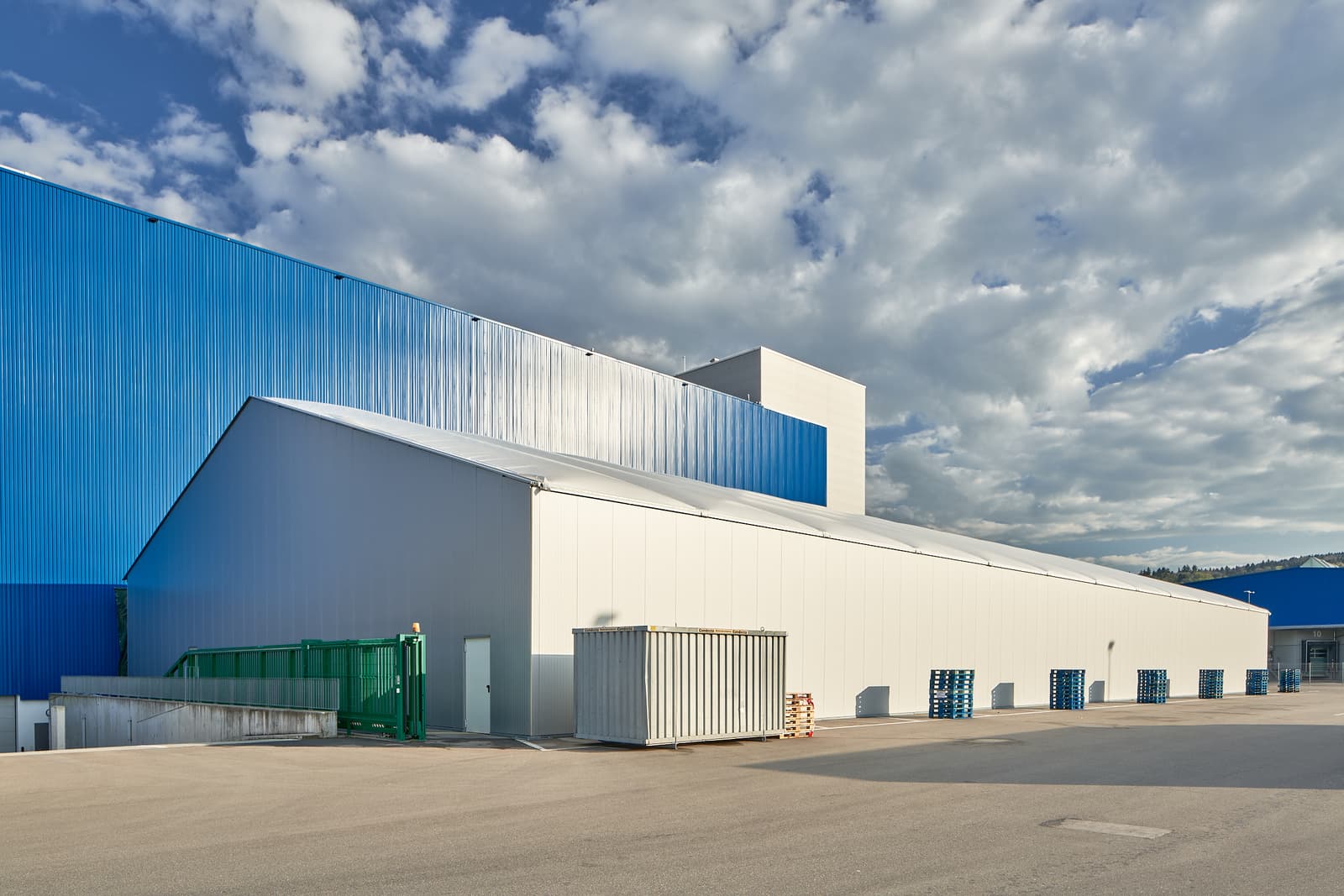
As many industries face growing concerns about emissions, land and energy use, sustainability standards matter more than ever. Whereas in conventional construction applying ecological standards may be costly, for temporary buildings, it come with flexibility. From material choice to easy set-up and energy-efficient features, modular buildings offer many ways to be more sustainable than their alternatives.
Temporary buildings are much more than a stopgap, they are a strategic asset. One which can be expanded, relocated or even removed altogether whenever necessary.
They are the perfect fit for green-minded companies, as they can be planned and built according to ESG factors. At the same time, their sturdy construction is designed to withstand long-term usage and are equipped with modern technology for improved energy consumption and production. As a company’s requirements tend to change over time, a modular temporary building can adapt to this change in production, logistics or need for storage.
What Makes Temporary Buildings a Sustainable Option?
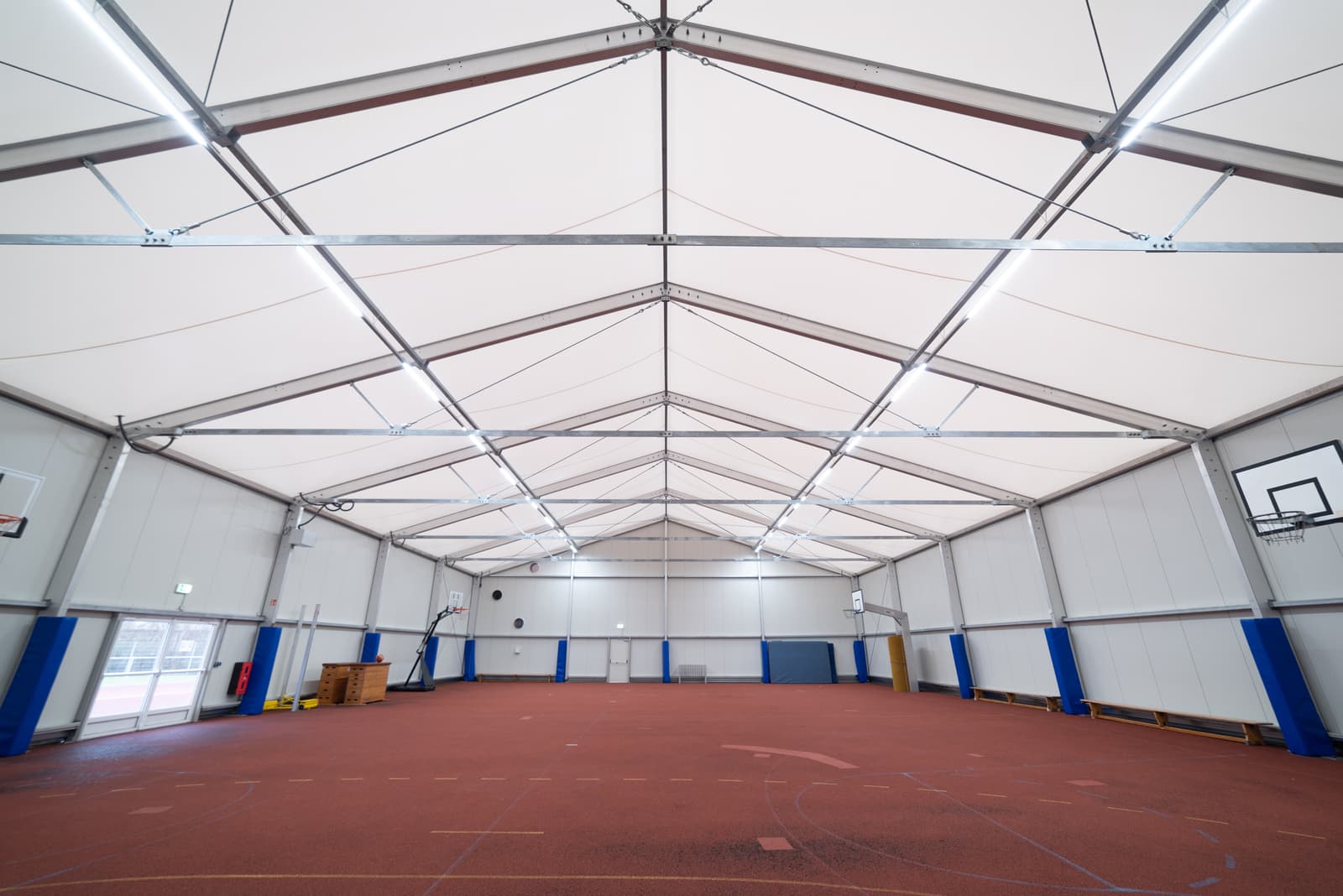
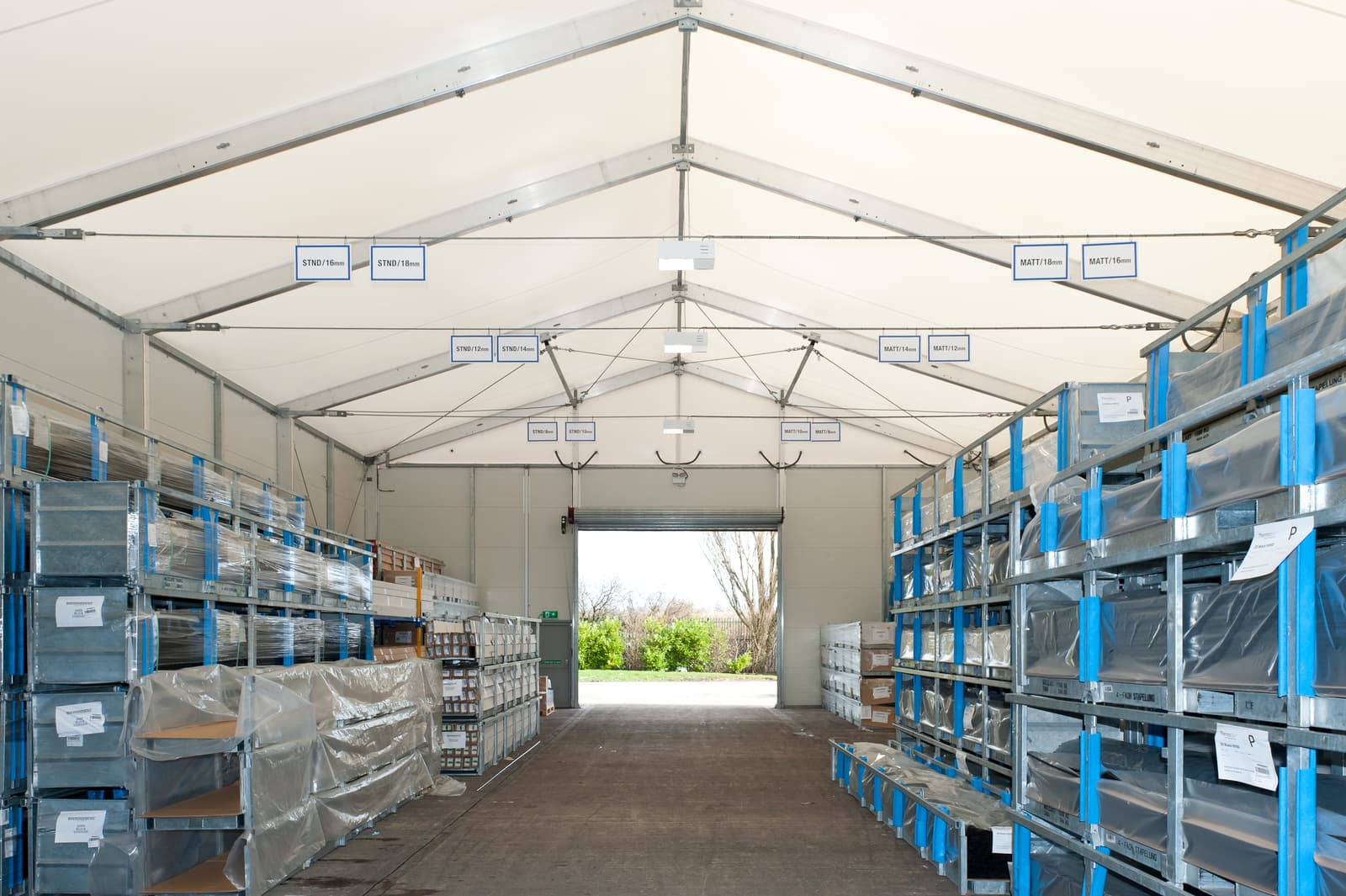
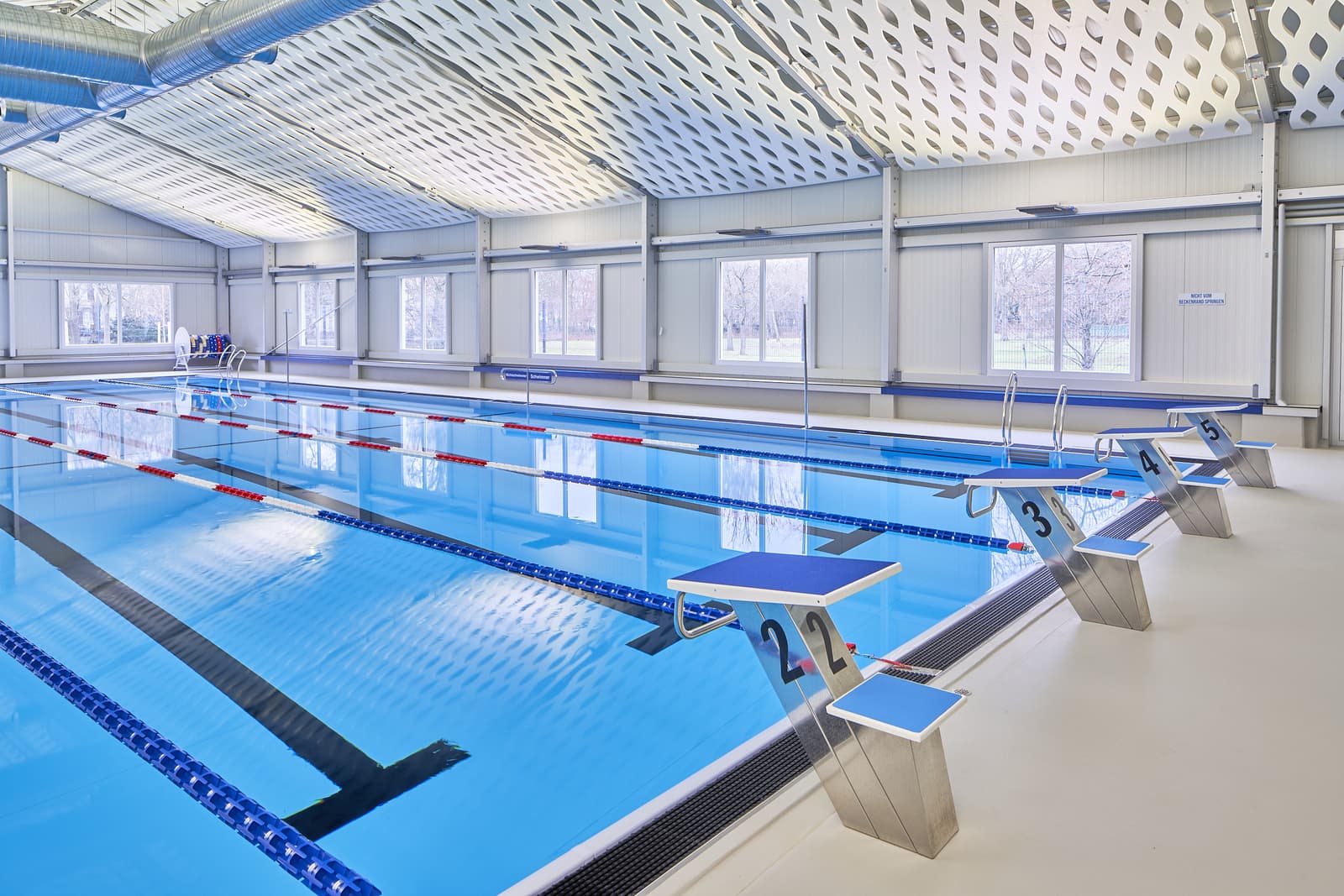
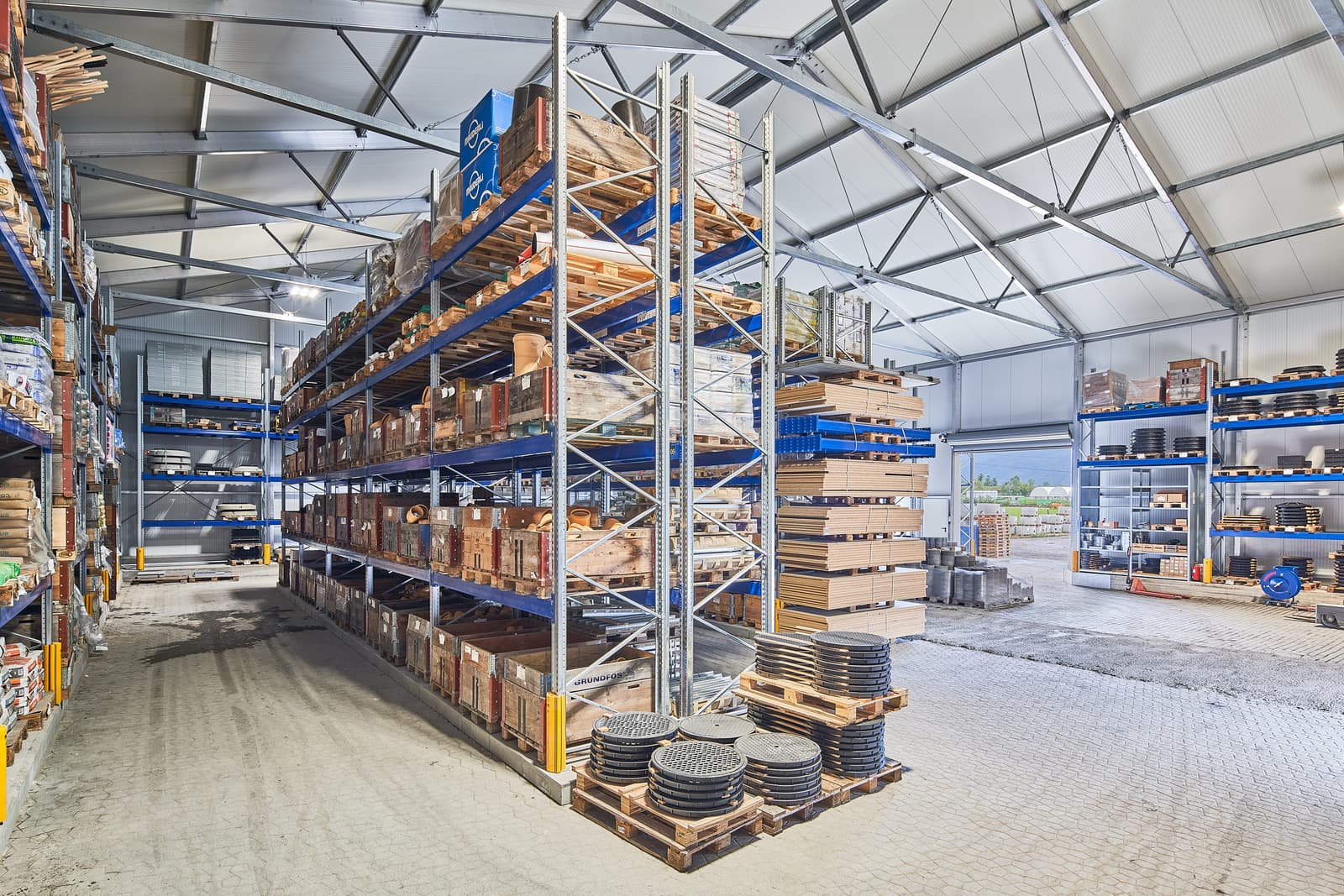
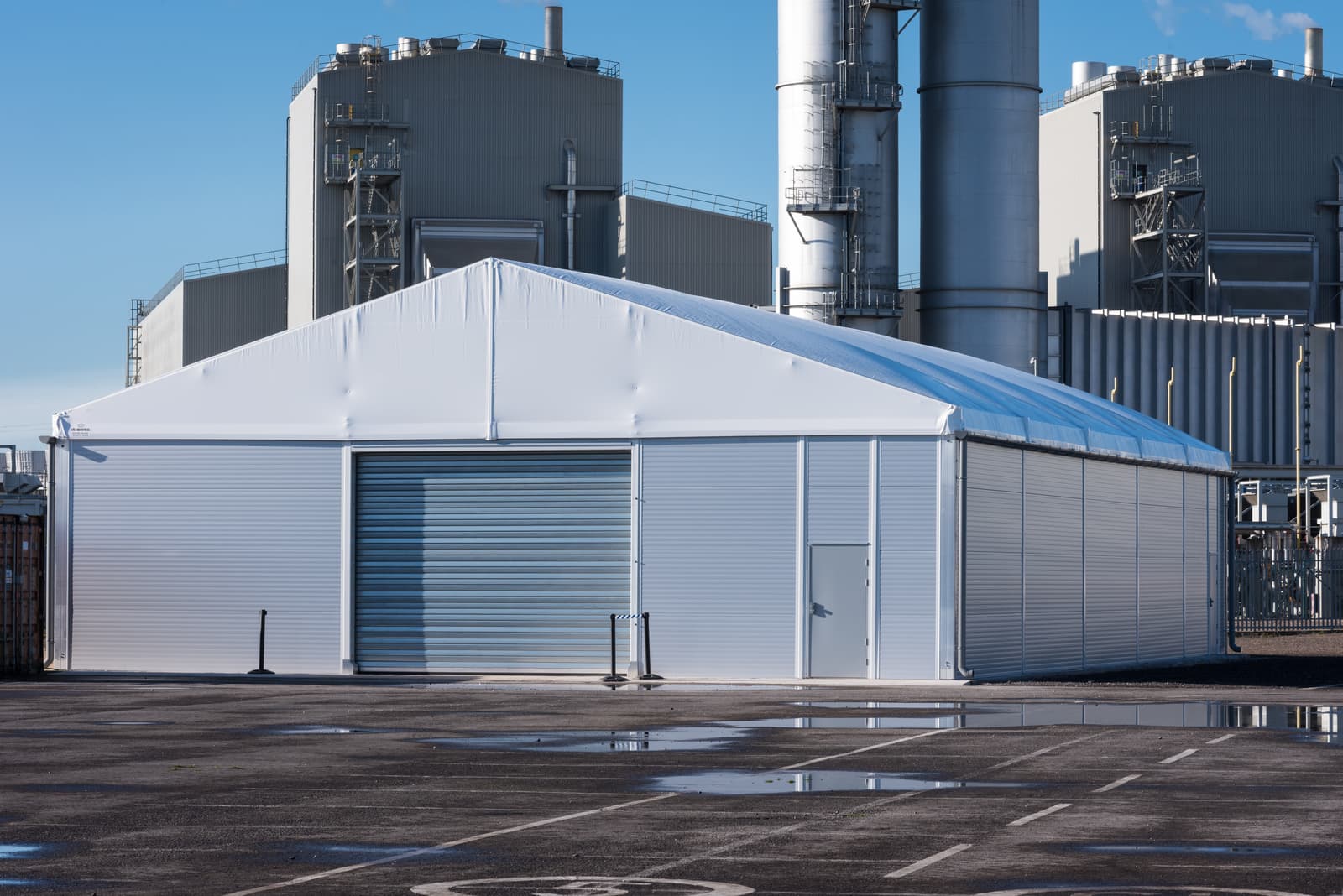
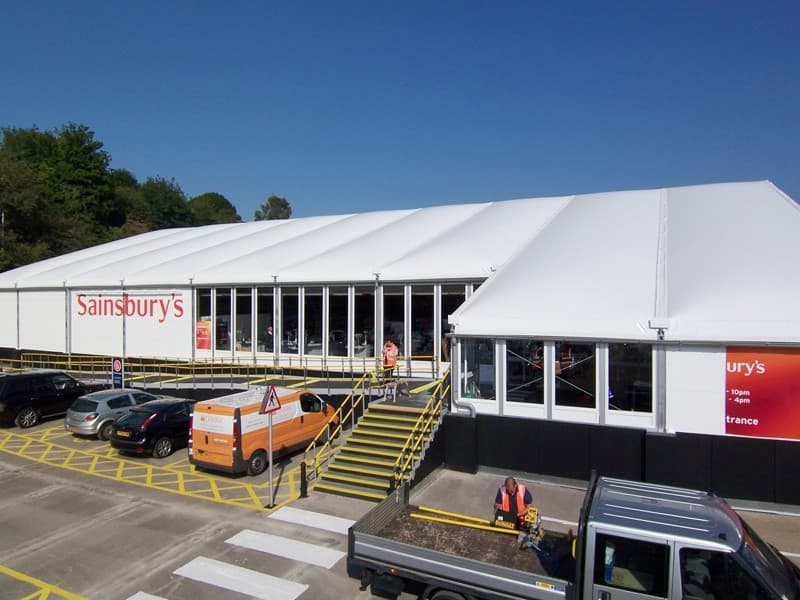
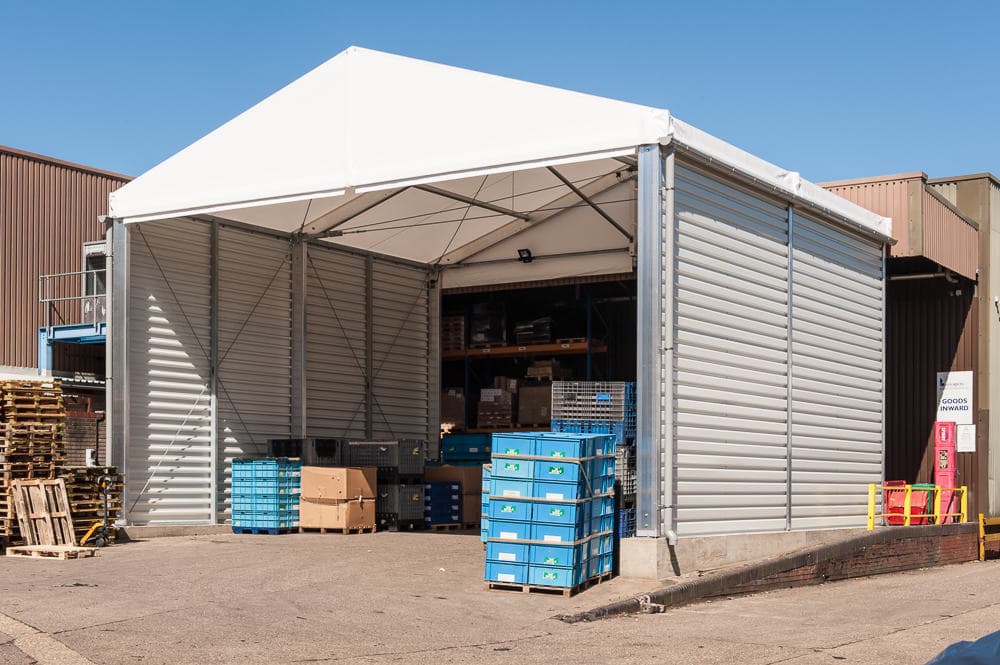
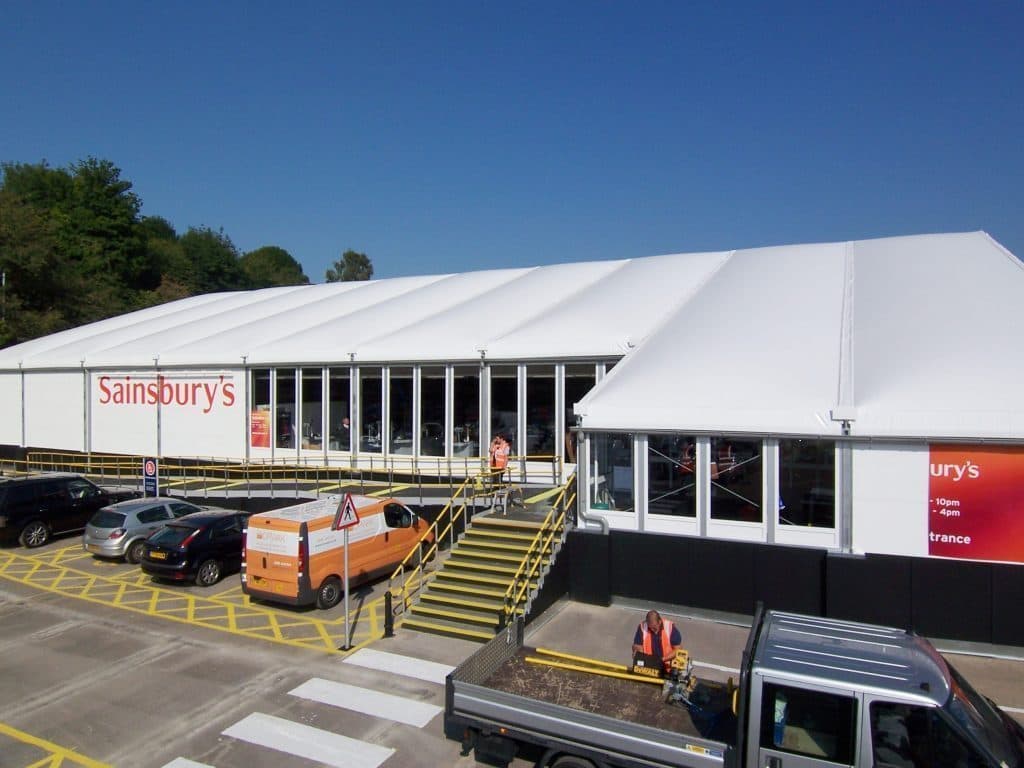
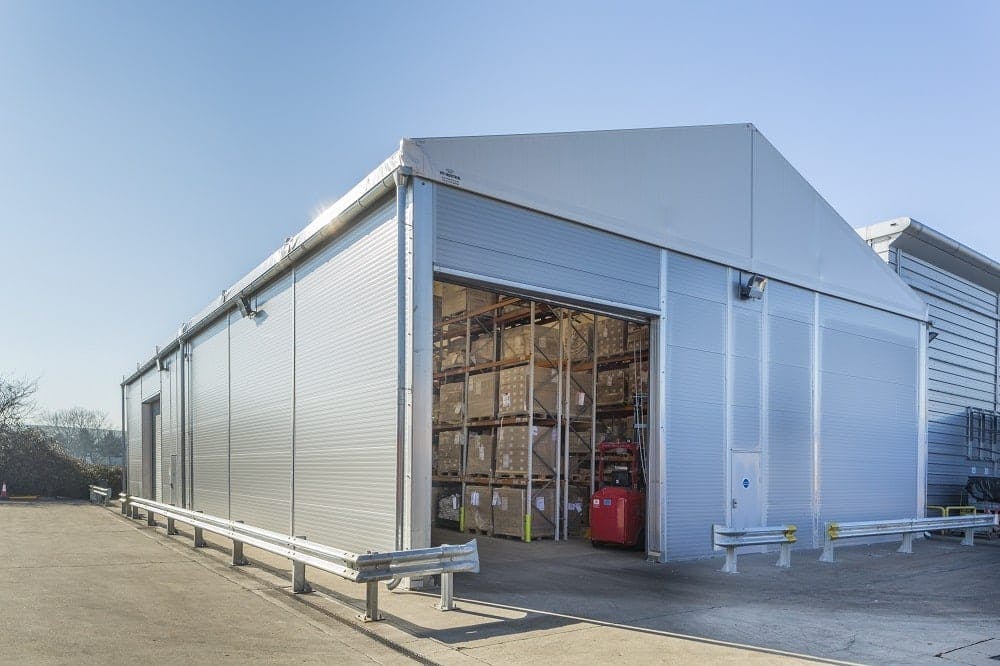
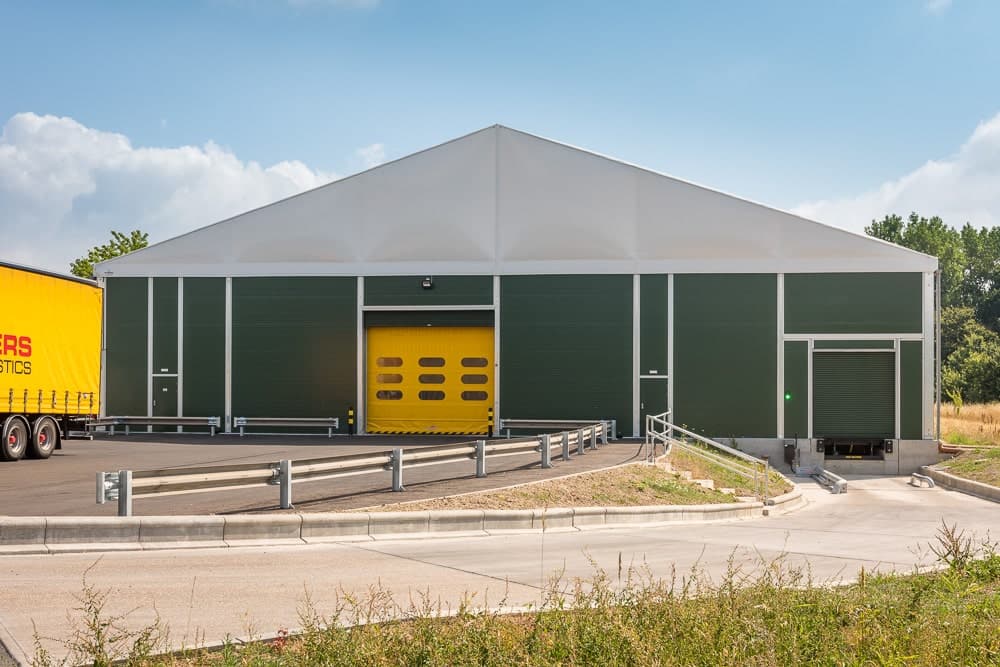
Temporary or lightweight structures are an integral part of industry and commerce – whether as warehouses, distribution centres, production facilities, temporary sports halls or on mid-long term infrastructure projects– their versatility is impressive. But what exactly makes temporary buildings sustainable? We took a closer look at the various aspects:
Durable and recyclable building materials
Temporary buildings are often made of aluminium, steel or wood. HTS TENTIQ use extruded and anodised aluminium for the framework and hot-dip galvanised steel for the connecting elements. These materials are not only very durable and lightweight, but also easily recyclable.
Modular construction
Temporary buildings consist of prefabricated elements that can be expanded, reduced in size or even dismantled and rebuilt at another location as required. This modular construction method allows temporary buildings to be optimally adapted to a business’s changing requirement and can be used multiple times, significantly increasing their service life and lowering their environmental impact.
Short construction times
Thanks to prefabricated components and simple assembly, temporary industrial buildings are ready for use in just a matter of days, not months! This not only saves costs and energy during the install phases, but also reduces their lifetime carbon footprint, especially when compared to traditionally-built industrial buildings.
Lower environmental impact
Their temporary construction method allows for fastening of the structures with ground anchors, provided that the ground is suitable. In many cases, this mitigates he need for concrete foundations. Additionally, temporary building can also be dismantled without leaving any residue.
Reversibility
A key feature of a temporary structure is their reversibility; the buildings are designed so that they can be dismantled without leaving any trace at the end of their service life. The individual components can be separated and either recycled or repurposed at a different location.
Energy efficiency through insulation
HTS TENTIQ temporary buildings can be designed to high energy-efficient levels. They can be equipped with double-shell thermo-PVC roof material or sandwich panels with a high U-value. These insulation options enable effective air conditioning and reduce condensation.
For even better energy efficiency, solar PV systems can be installed on the roof. Insulated sandwich panels in various thicknesses and double-walled glass panels are available for the side walls, minimising heat loss and reducing heating costs.
Environmental Benefits of Modular and Temporary Buildings
Choosing a modular temporary building to fulfil your business needs makes sense on many different levels; they are practical, flexible, sturdy and are suitable for many purposes. The main environmental benefits of temporary buildings are:
Sustainable Materials and Certifications
Our temporary buildings consist of a frame manufactured from a combination of high-grade anodised aluminium and corrosive resistant galvanised steel for the connecting parts. We use FSC-certified timber and sustainable insulation. Overall, more than 80% of the materials utilised for our temporary structures are recyclable or repurposed.
The best way to illustrate the sustainability of our temporary buildings is to comply with relevant certifications. They build trust, provide guidance and are often a requirement for subsidies or public tenders. The most important certifications in terms of environmental and quality management in temporary building construction are:
- ISO 9001 certification for quality management and customer focus
- ISO 14001 certification for environmental responsibility
- CE Marking signaling that a construction product meets EU safety, health and performance standards
Conclusion: A Future-Ready Solution for Sustainable Companies
Modular temporary buildings contribute to a greener world. Less sealed land, less materials used, less waste – the reasons are diverse. They combine ecological responsibility, economic efficiency and flexibility. Our modular temporary structures are the ideal solution for your sustainable business building. Their parts are manufactured in our production facility and assembled on site. The modular system ensures that the building meets your needs, in terms of space and usage, reducing the risk of overbuilding.
We use largely recyclable, top-quality materials for our prefabricated temporary buildings. They are assembled on site quickly, reducing noise, waste and dust during construction. Our modular temporary buildings come with the flexibility of growing and changing with your business, embodying sustainability due to their reusability.
Choose an HTS TENTIQ temporary construction if you are a future-ready company with clear sustainability goals and dynamic space requirements.
Our expertise
Frequently Asked Questions about Temporary Buildings and Sustainability
Sustainability in industry means treating the environment responsibly by using recyclable materials, optimising land use, eliminating the waste of resources and implementing energy efficiency measures.
Sustainable construction encompasses the whole process from planning to construction and operation of an industrial building, focusing on minimising its environmental impact over the course of its usable life. Temporary buildings perfectly fit sustainable construction measures, as they are flexible, adaptable, reusable and less resource-dependent.
Compared to conventional buildings, temporary buildings offer many options to fairly easily implement sustainability. Recyclable materials, shorter construction times, adjustable size, portability, energy efficiency – just to name a few advantages of temporary buildings.
Carbon emission reduction starts during the manufacturing process of HTS temporary buildings. The materials and methods HTS TENTIQ use create less carbon emissions than conventional construction. Also, because our buildings are prefabricated, they need less time and machinery to assemble, which reduces carbon emissions during construction.
Portability plays a crucial role, as it prolongs a temporary building’s lifespan and, therefore, reduces its environmental impact overall. The ability to deconstruct and rebuild the same building elsewhere allows businesses to grow and adapt more efficiently.
Yes. Temporary buildings adapt as your needs change. They offer a long-term solution using recyclable materials and energy-efficient technology.
HTS TENTIQ uses more than 80% recyclable materials. Among them are high-grade anodised aluminium, corrosive resistant galvanised steel, FSC-certified timber and sustainable insulation products.
At HTS TENTIQ we focus on sustainable building materials with low environmental impact. Our frames are made of high-grade anodised aluminium and corrosive resistant galvanised steel. We also use FSC-certified timber and sustainable insulation products.
Temporary buildings are very durable. With their sturdy aluminium and steel frame, along with the high-quality panelling, the structures are built to last for decades. Many HTS clients have benefited from structures built in the early 2000’s still to this day!
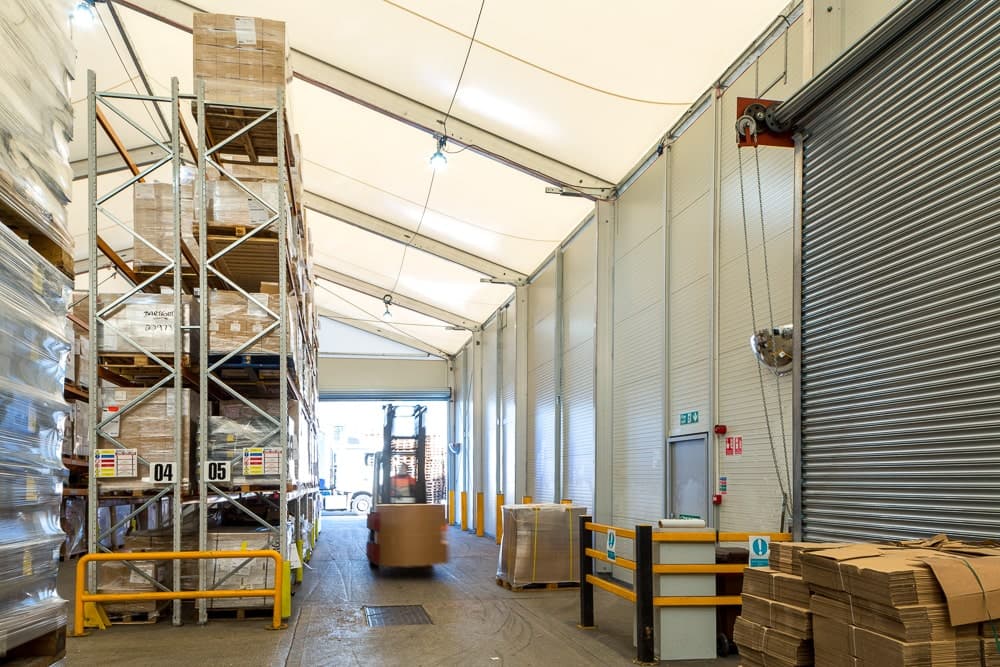
Sustainable modular buildings are ideal for industrial use. They consist of recyclable materials, implement energy efficiency measures and are designed to optimise business operations and workflows in ample clear-span, unobstructed spaces.