8 Ways in Which Temporary Warehouse Buildings Can Help Manufacturing Companies
Since time immemorial, manufacturing companies have been confronted with numerous challenges. This is more true today than ever: changes such as the GDPR; uncertainties due to Brexit; a highly fluctuating consumer demand.
Problems caused by a shortage of skilled labour and inefficient, outdated systems.
In addition, of course, there is environmental protection. Manufacturing companies are closely monitored in order to minimise waste and optimise recycling rates. As the use of fossil fuels represents the most carbon-intensive industrial activity of the 21st century, manufacturing companies must ensure that they significantly reduce or even eliminate CO2 emissions and other greenhouse gases in order to safeguard the future of their business and the planet.
There are no quick solutions to address these challenges. Temporary buildings, however, can make their contribution in supporting manufacturing companies during these difficult times.
Based on research and feedback, we have compiled a list of 8 ways in which mobile warehouse buildings can help manufacturing companies:
1. Everything under one roof:
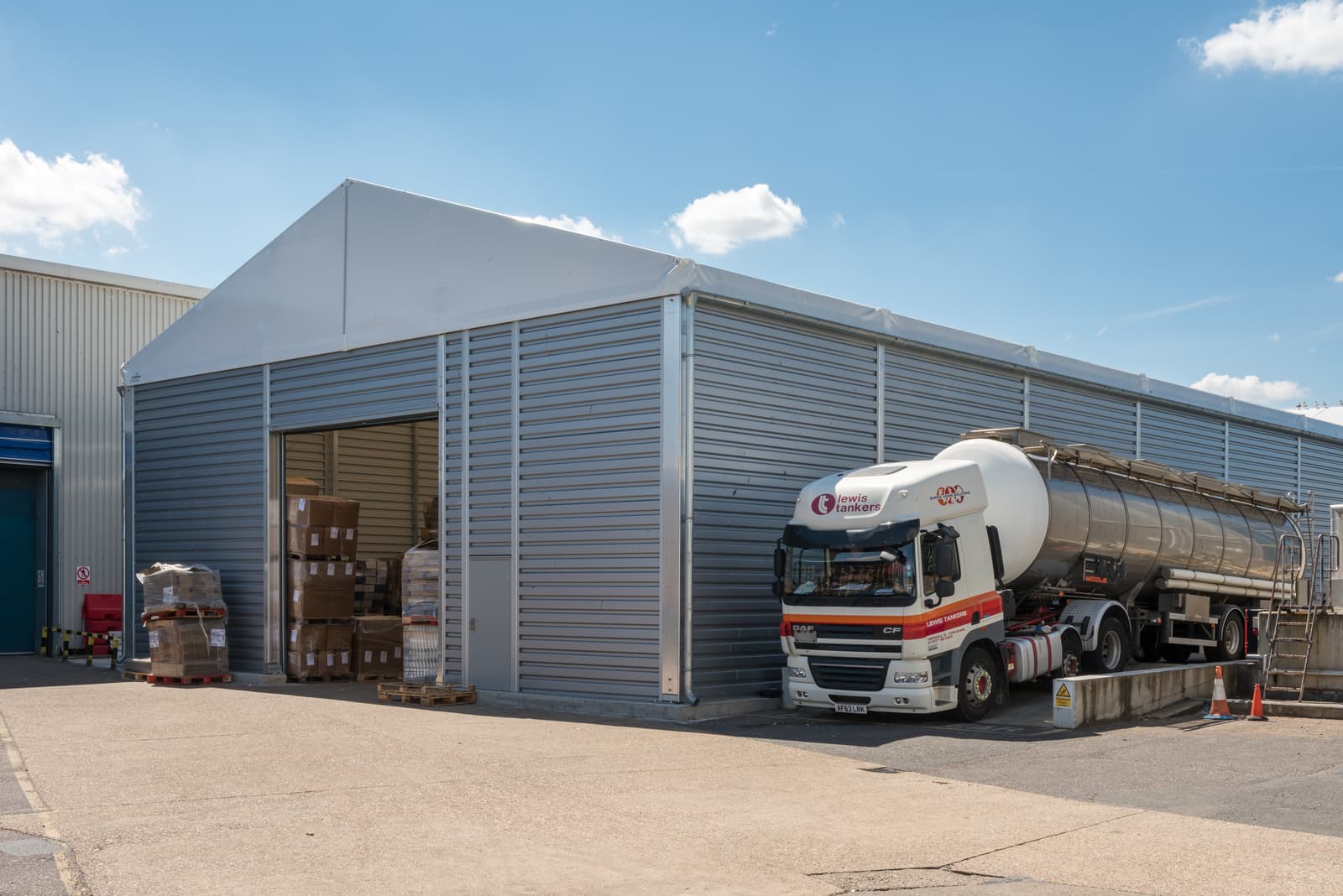
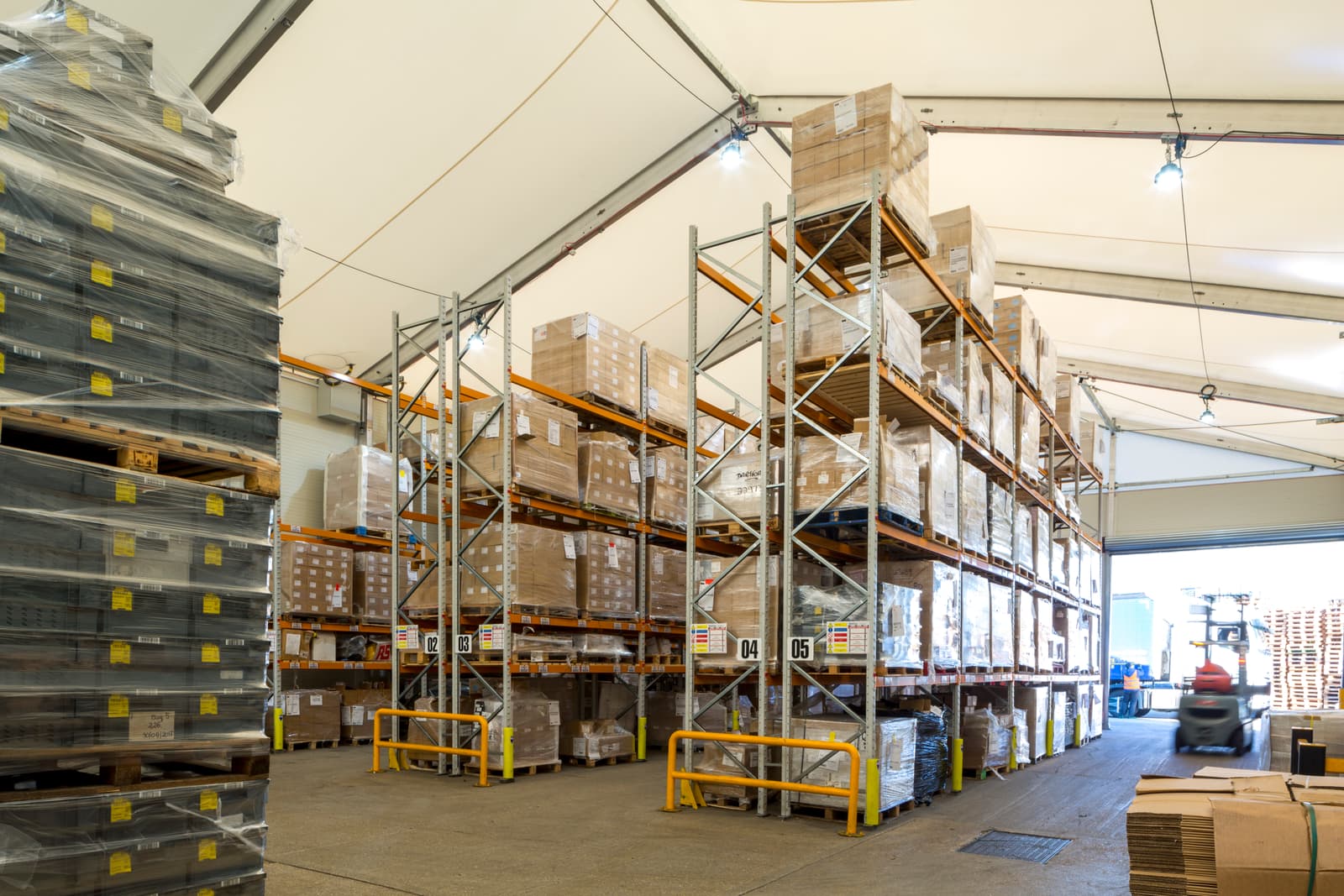
With temporary warehouse buildings, companies can bring off-site storage back to their own premises or ensure that additional required storage capacity is provided on-site.
This can reduce time requirements and fuel costs, while also helping to avoid harmful emissions caused by additional transport routes. Storing everything under one roof also simplifies inventory control and traceability.
Extensive long-term investments in permanent warehouse buildings, whose profitability depends on long-term, sustainable growth, are becoming increasingly risky due to political uncertainties such as Brexit, the conflict in Ukraine, or the introduction of strict regulations such as the GDPR.
System buildings give companies the flexibility to adjust their space requirements and the associated costs to business growth, consumer demand, and other external influencing factors.
3. Cost savings:
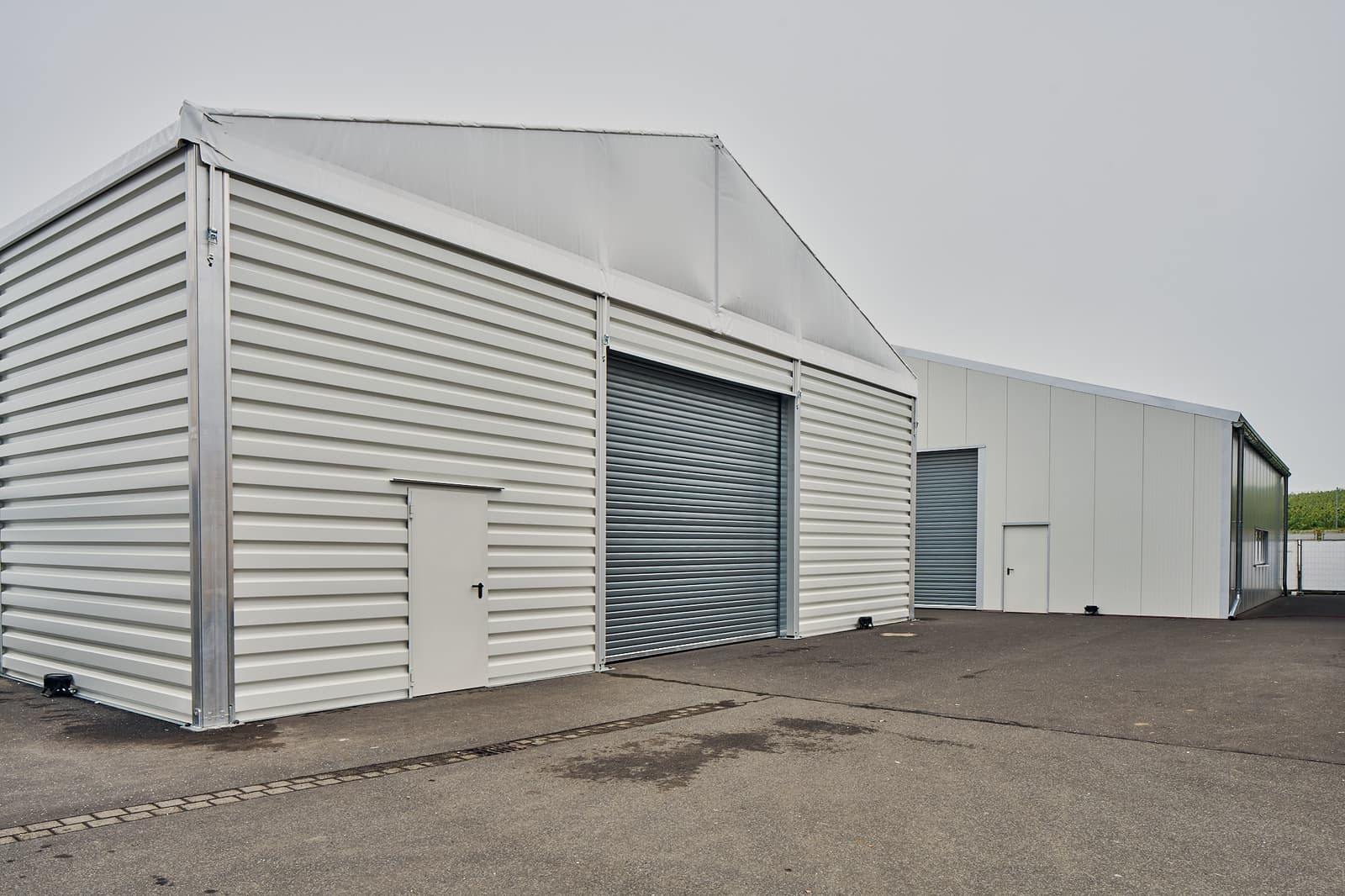
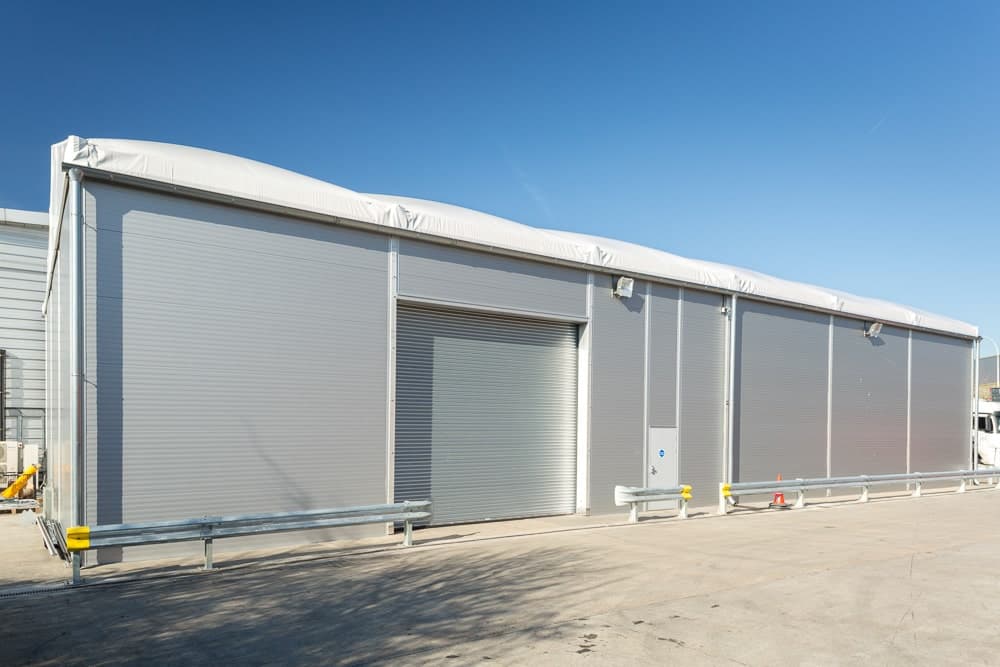
System buildings cost only a fraction of a permanent warehouse building. Savings arise in various areas without affecting functionality or durability.
The modular construction method reduces costs, as no high fees for architects are incurred; groundworks are eliminated because buildings are anchored on existing concrete surfaces; additional costs for labour and equipment due to the quick and simple assembly are drastically reduced.
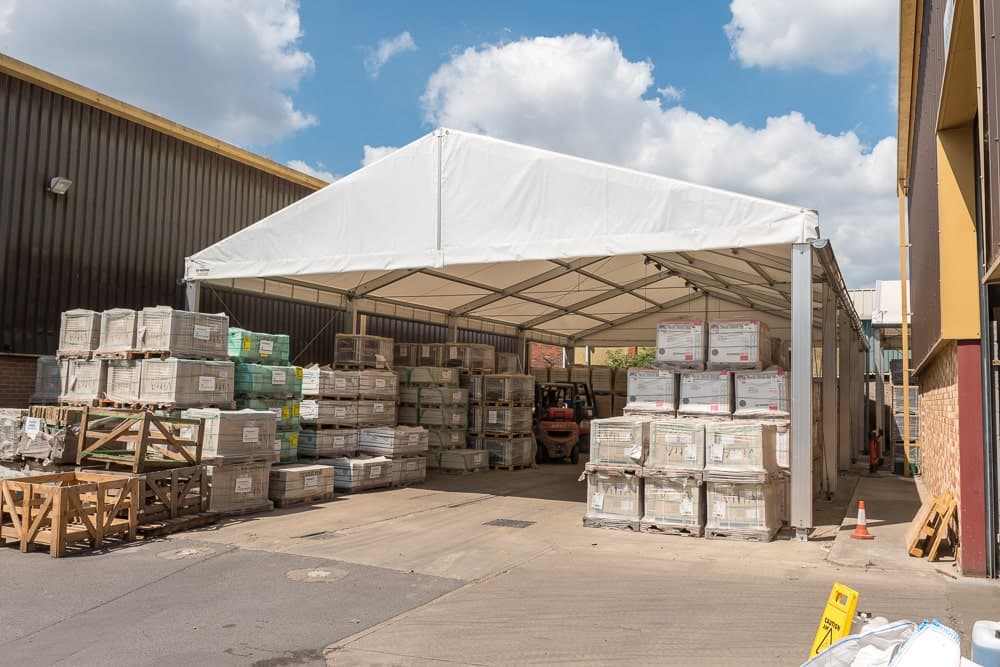
A standardised temporary building of medium size can be erected within just 4–5 days, which brings numerous advantages.
The rapid provision of additional space enables the winning of contracts and tenders. Unplanned storage capacity for transitional periods does not need to be provided at another location. In growth projects, quick and lucrative returns on capital are possible, new large orders can be accepted and processed on time, strengthening customer loyalty and generating follow-up orders.
5. Flexibility:
The practical, cost-effective and straightforward handling of mobile warehouse buildings, together with their functionality and durability, makes them an extremely flexible solution.
Companies with multiple sites can develop strategies for system buildings at different locations, and several system buildings can be erected at different points within a single site.
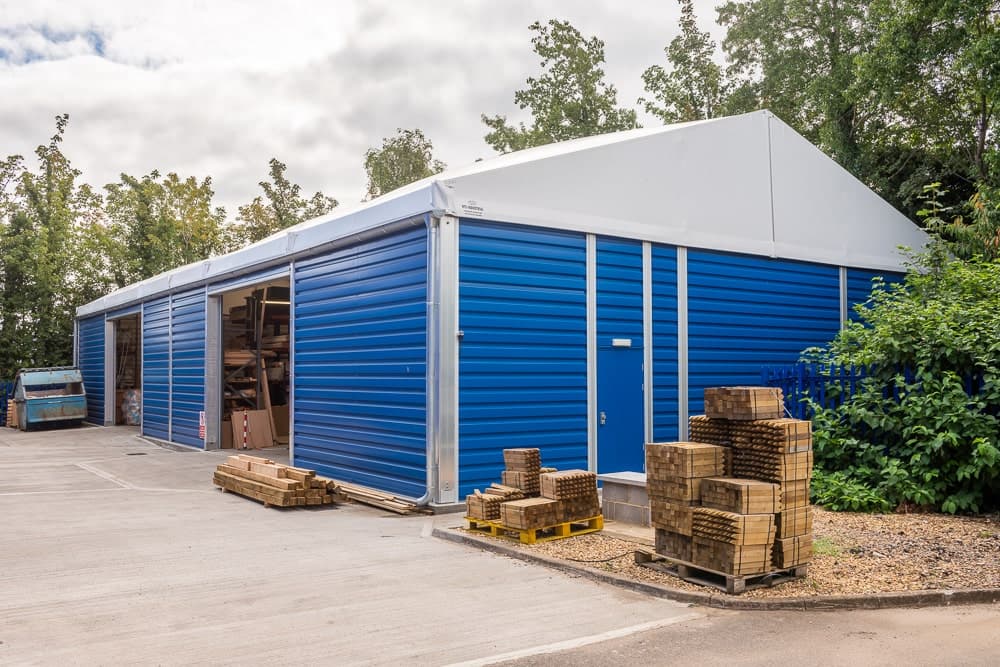
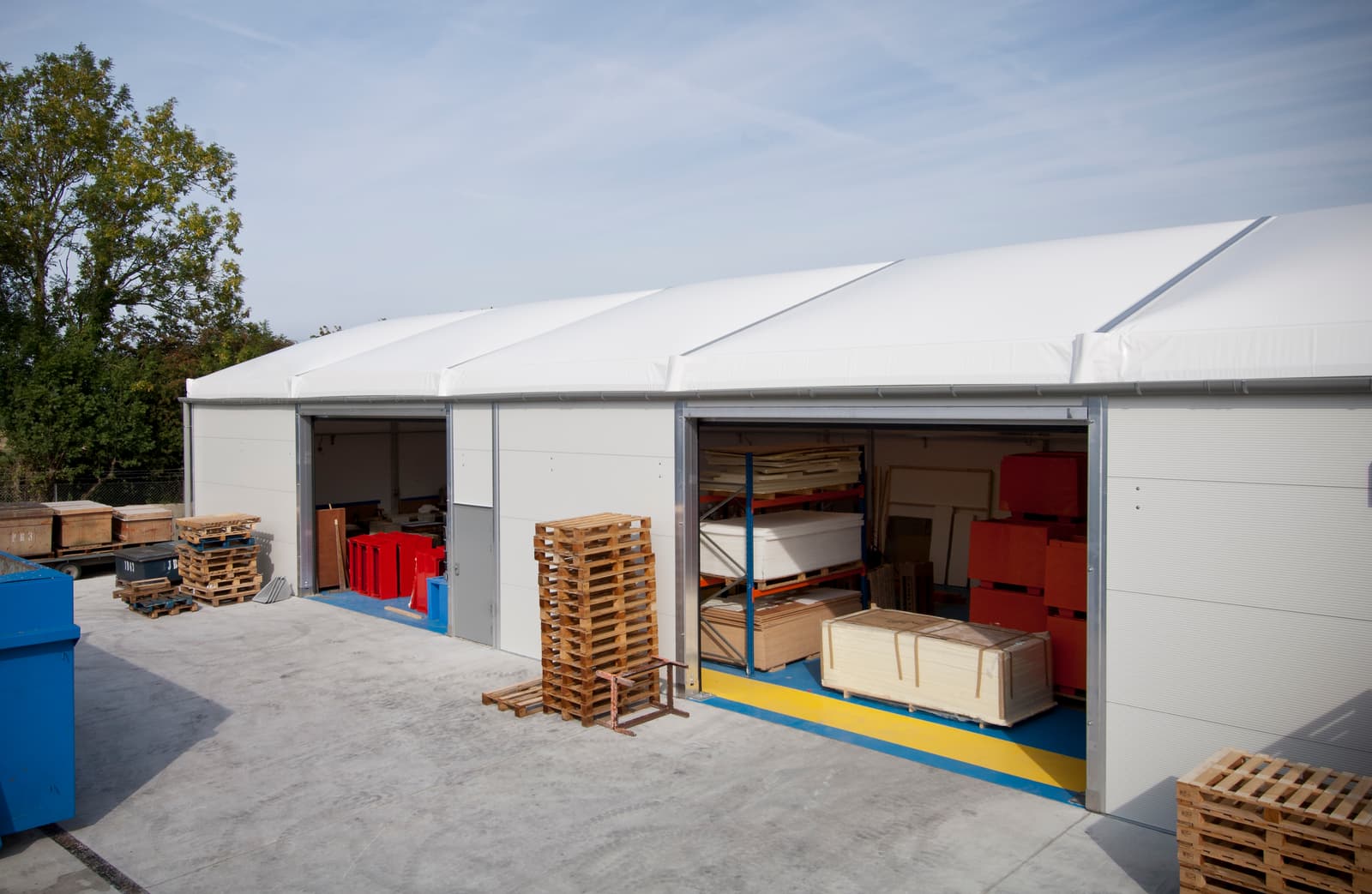
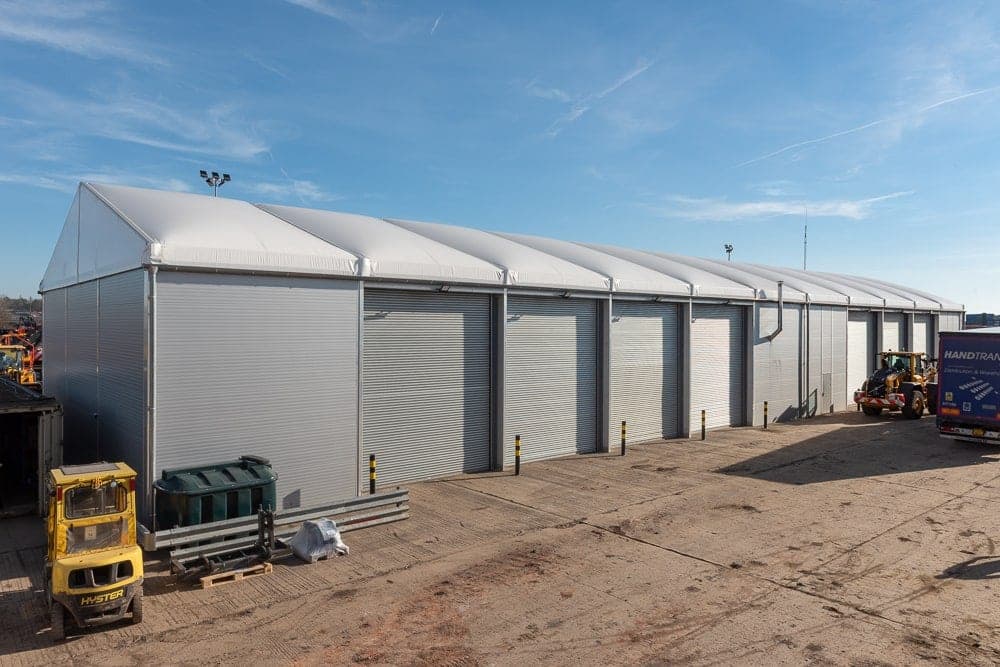
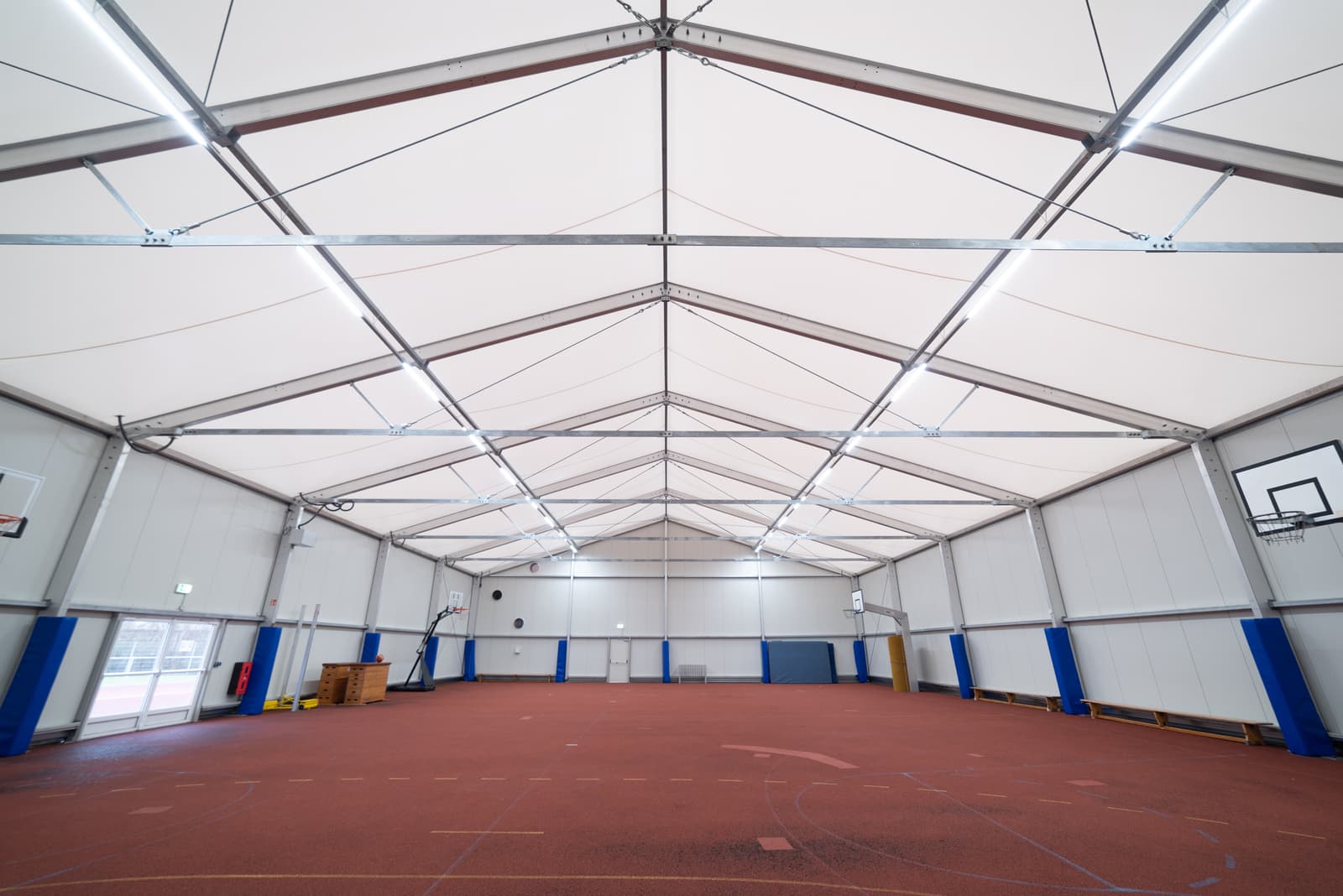
A temporary building can be used as a large warehouse, workshop, production building, weather protection, for storage, loading and unloading, waste processing and much more.
Warehouse buildings can also be connected to existing buildings or to one another, thereby integrating new areas into the existing operation and creating a larger amount of available space.
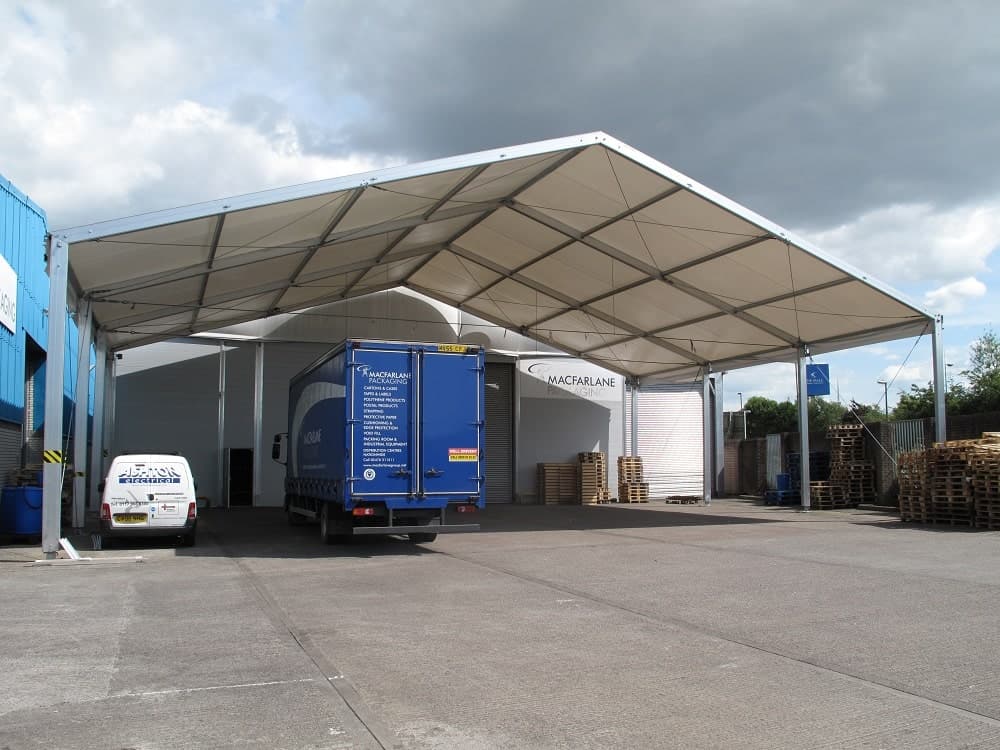
Most companies are now aware of this issue. Nevertheless, there are still surprisingly many manufacturing companies that continue to store equipment and goods outdoors, hoping that weather conditions will not cause excessive damage and costs.
Often, goods have to be stored outdoors, at least temporarily, in an unplanned manner because the existing storage space is required at short notice for other purposes.
A quick and cost-effective solution is the installation of a simple storage tent or a basic canopy as protection against moisture.
7. Profitable utilisation:
Any unused space on site can represent waste. Instead of providing off-site storage space, you can instead buy or rent a mobile warehouse building on site and profitably utilise previously unused space at your own location.
8. Environment:
The construction of a permanent warehouse building causes considerable environmental impact. In the same way, off-site storage increases transport costs and generates harmful emissions. These effects do not necessarily have to be caused by additional space.
The entire philosophy behind system buildings is based on reuse, particularly when mobile buildings are rented.
The prefabricated buildings are manufactured with the smallest possible use of materials, thereby contributing to environmental protection. The use of equipment and labour required for assembly is also minimal.
In contrast to on-site construction work, the risk of problems or delays during assembly is significantly lower with construction methods using prefabricated elements. All of this results in reduced industrial activity.
Last but not least, aluminium is a material that can be reused and recycled an unlimited number of times, making it one of the most environmentally friendly metals of all.