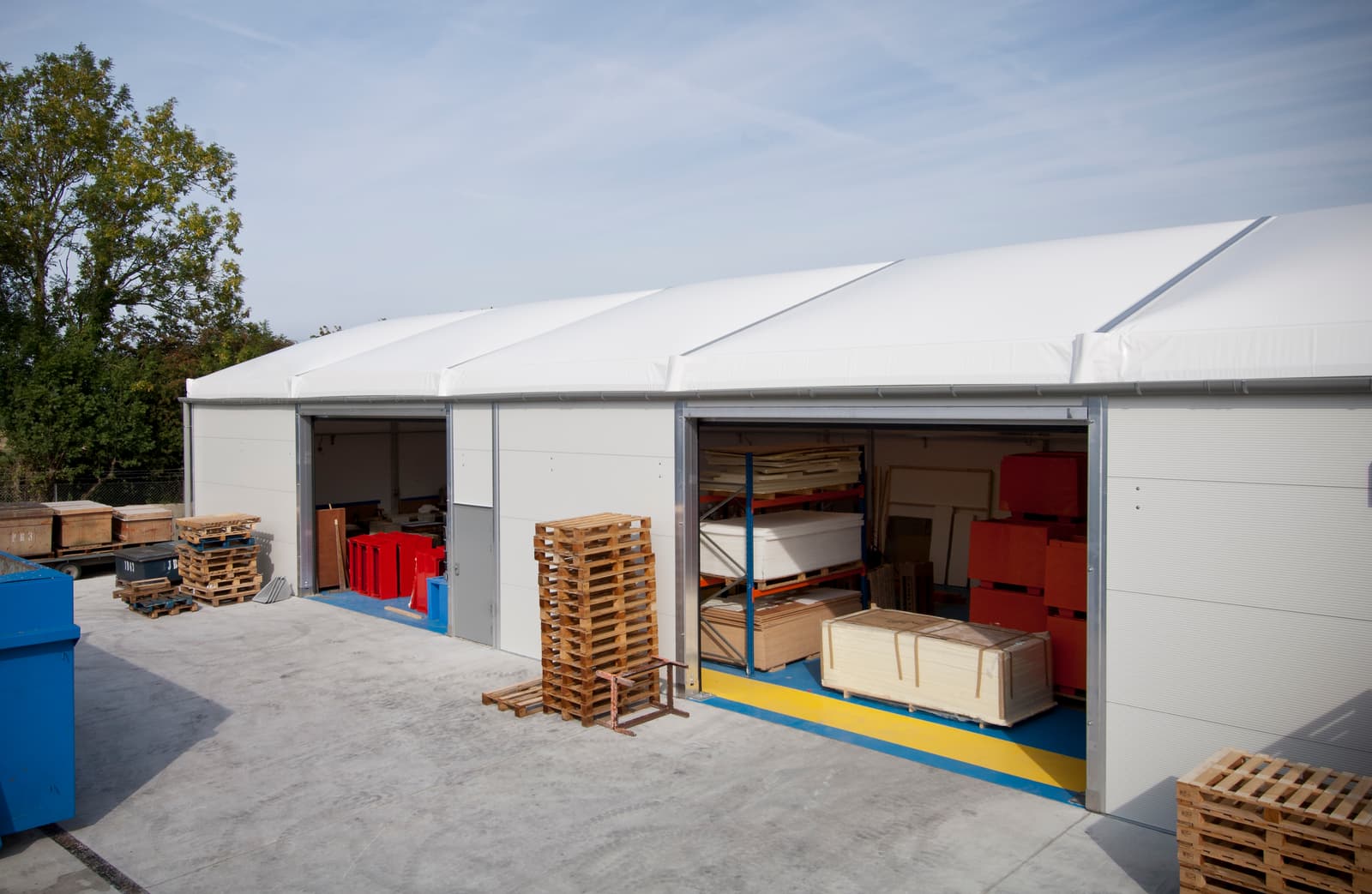
Storing construction timber correctly: How to protect your wood optimally
Wood is considered a very durable building material; however, it must be stored correctly before use. Otherwise, mould growth, pests or mildew stains can easily take hold.
We show you how to store construction timber correctly and provide a simple step-by-step guide to creating optimal storage conditions.
Why is the correct storage of construction timber important?
Wood is used in numerous construction projects, but it reacts sensitively to environmental influences. We show you what consequences improper storage can have.
Preservation of wood quality
Construction timber should be protected from direct sunlight and moisture to preserve its quality and durability. Strong temperature fluctuations should also be avoided. If wood is not stored under the right conditions, a range of damage can occur. These include warping or cracking, which not only affects the quality of the wood but also safety and stability.
Prevention of moisture damage
Moisture is one of wood’s greatest enemies. It can lead to mould growth, rot and insect infestation. During timber storage, precautions are often taken to protect it from rain, but rising ground moisture is frequently overlooked. However, this is just as harmful to wood.
The best storage locations for construction timber: storing wood indoors or outdoors?
Proper storage of wood is usually associated with indoor storage. However, it depends on what the wood will ultimately be used for. Construction timber, for example, should always be stored indoors.
Indoor storage
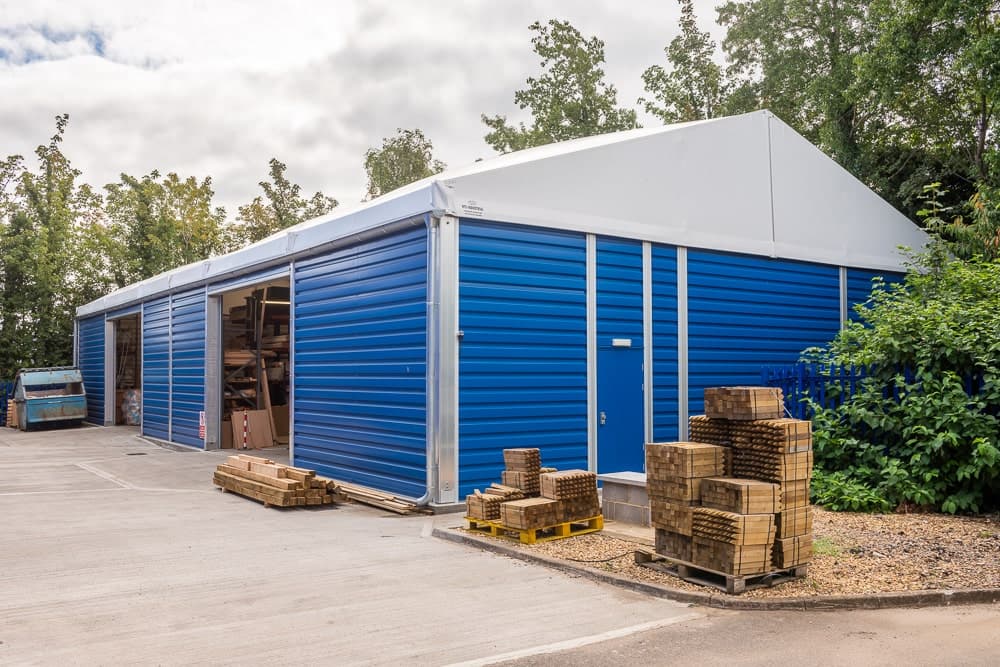
In storage buildings or sheds, construction timber is ideally protected from rain, snow and sunlight. In addition, when stored indoors it is exposed to smaller temperature fluctuations, which reduces the risk of warping and cracking. Indoor storage also offers advantages in terms of security, as it provides better protection against theft and vandalism.
However, construction timber can also be damaged when stored indoors, so the following points should be observed in any case:
- The wood should not be in direct contact with the ground.
- The storage area must be well ventilated so that moisture can escape. Fully enclosed spaces without a ventilation system are therefore not suitable for storing wood.
- Regular inspections are important in order to detect condensation and leaks in the roofing or side cladding.
Outdoor storage
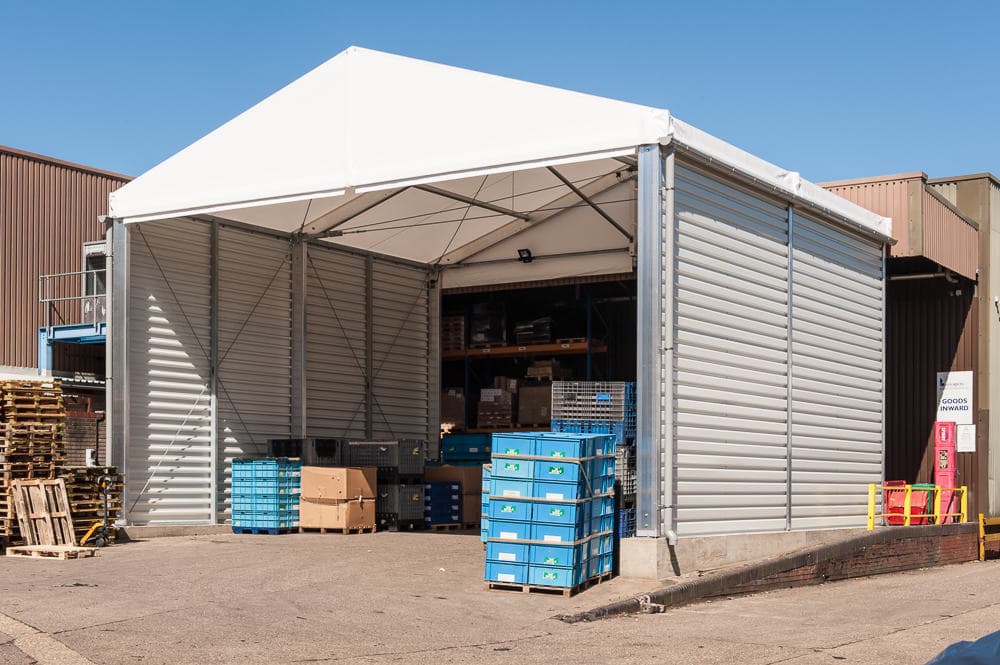
Firewood can always be stored outdoors. Wooden decking boards for terraces can generally also be stored outside, but should not be left exposed if they are still untreated and need to be sealed first. When it comes to construction timber, it is essential to ensure that it does not come into contact with rain or UV radiation during storage. The best protection outdoors is achieved with a professional canopy. This construction protects the wood from all weather conditions. A roofed structure does not require wall cladding, can be installed on almost any surface and is therefore particularly cost-effective.
For optimal outdoor storage of wood, it is important to observe the following points:
- The wood should be stored on a dry and raised surface. This protects it from rising ground moisture and ensures good air circulation.
- Signs of moisture, mould or pest infestation should be checked regularly.
- Construction timber should be positioned optimally under the roofed structure so that neither rain nor UV radiation can damage the wood.
Temporary building for construction timber from HTS TENTIQ: your solution for optimal timber storage
Industriezelte und Lagerhallen von HTS TENTIQ sind die ideale Lösung, damit Sie Bauholz richtig lagern können. Unsere modernen und mobilen Leichtbauhallen bieten zahlreiche Vorteile, die speziell auf die Bedürfnisse der Holzlagerung abgestimmt sind:
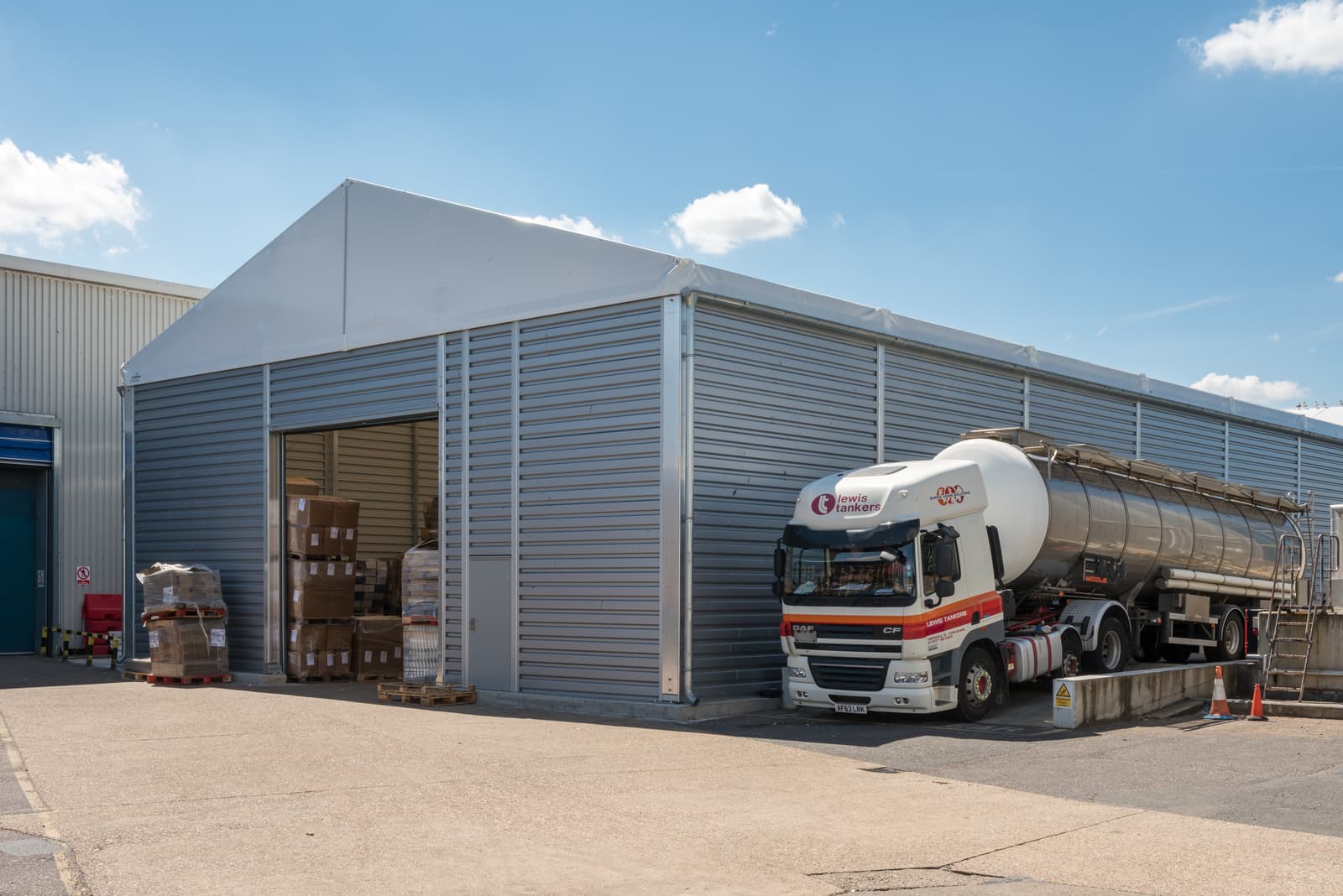
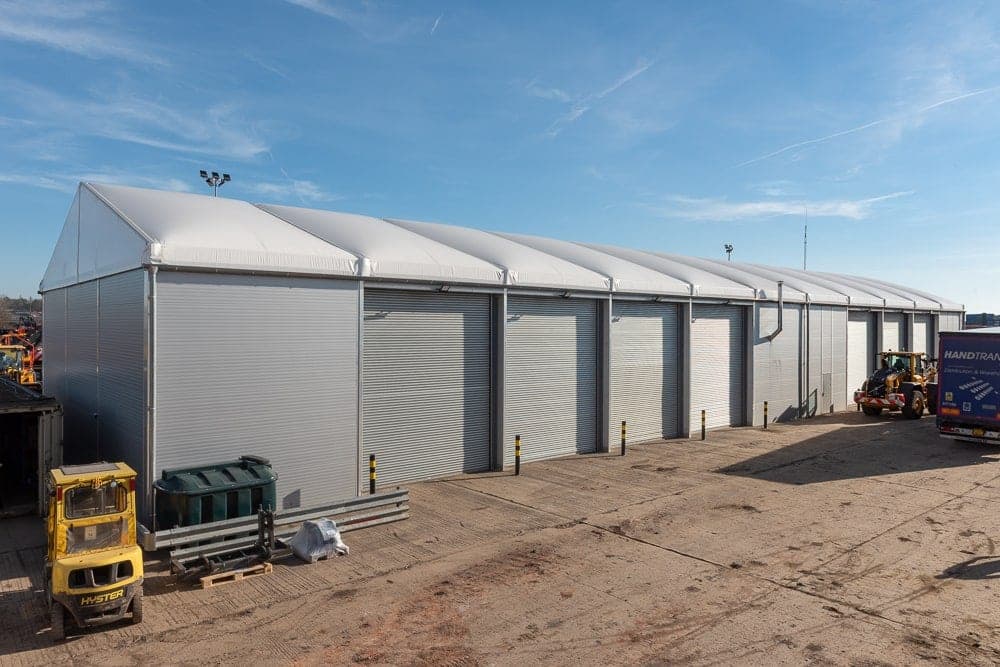
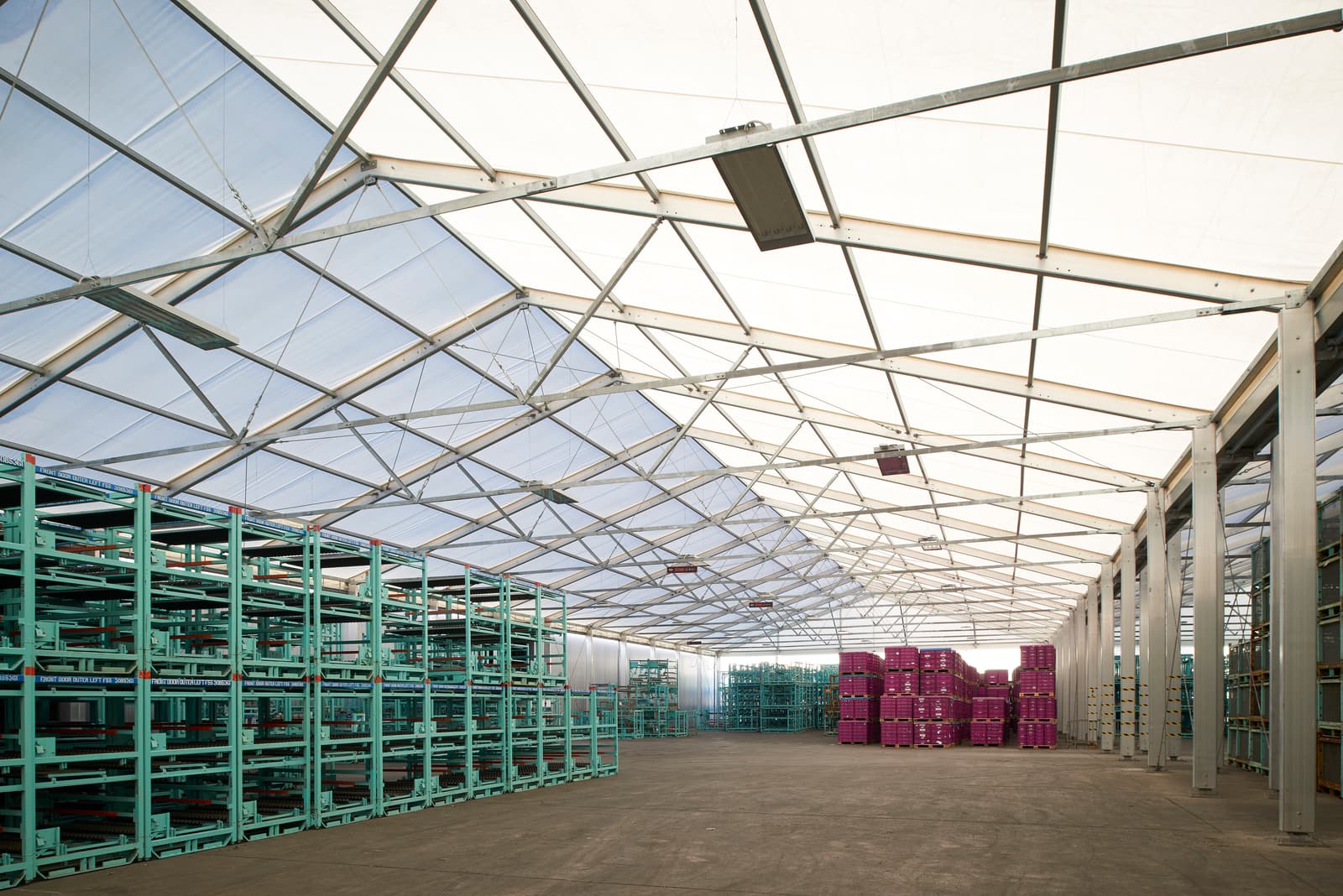
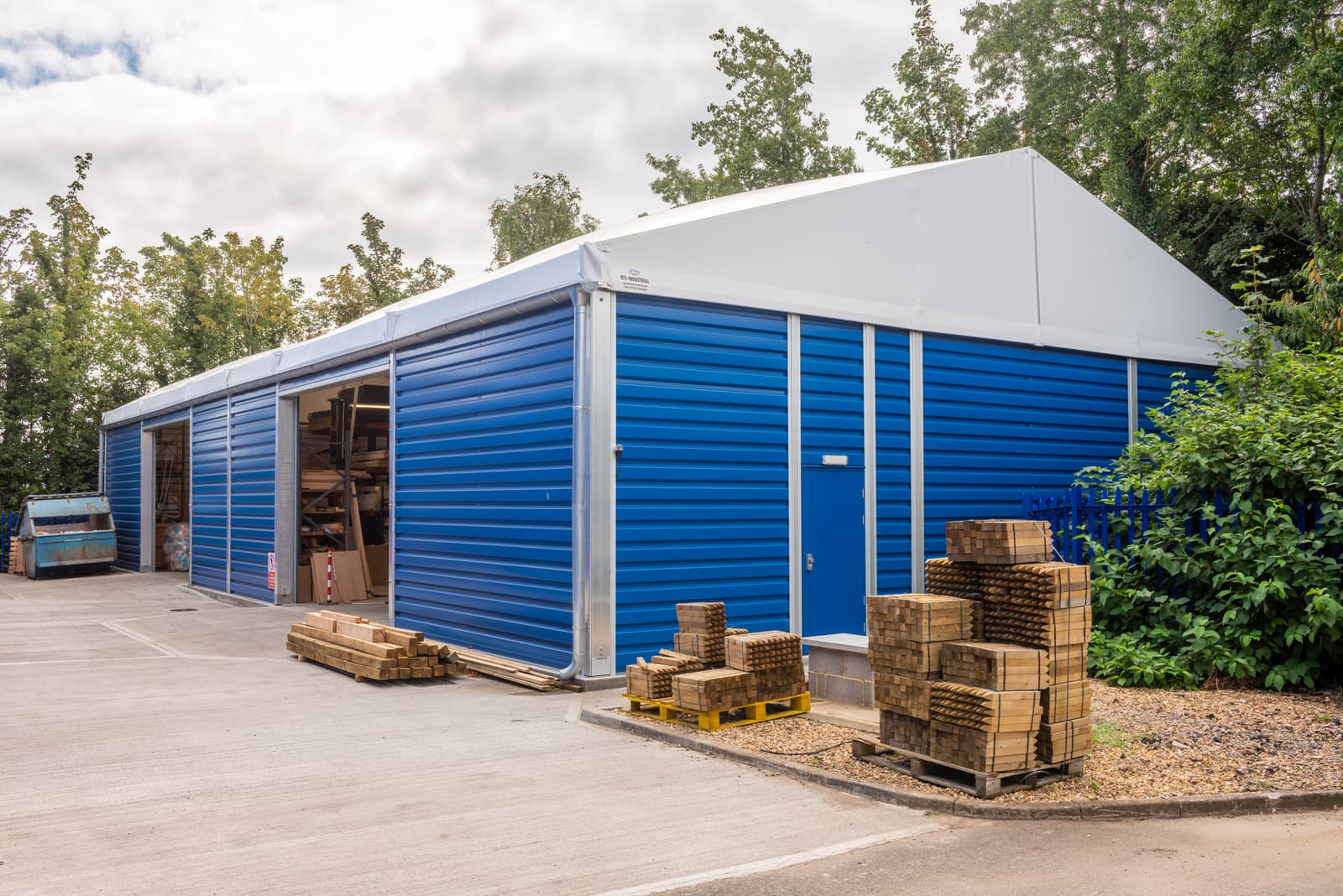
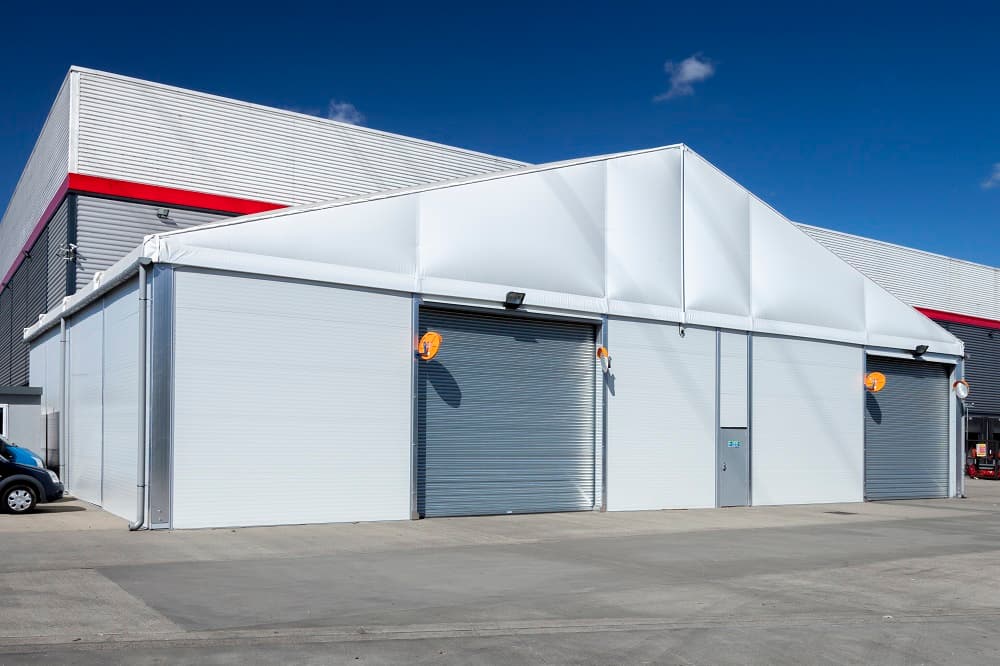
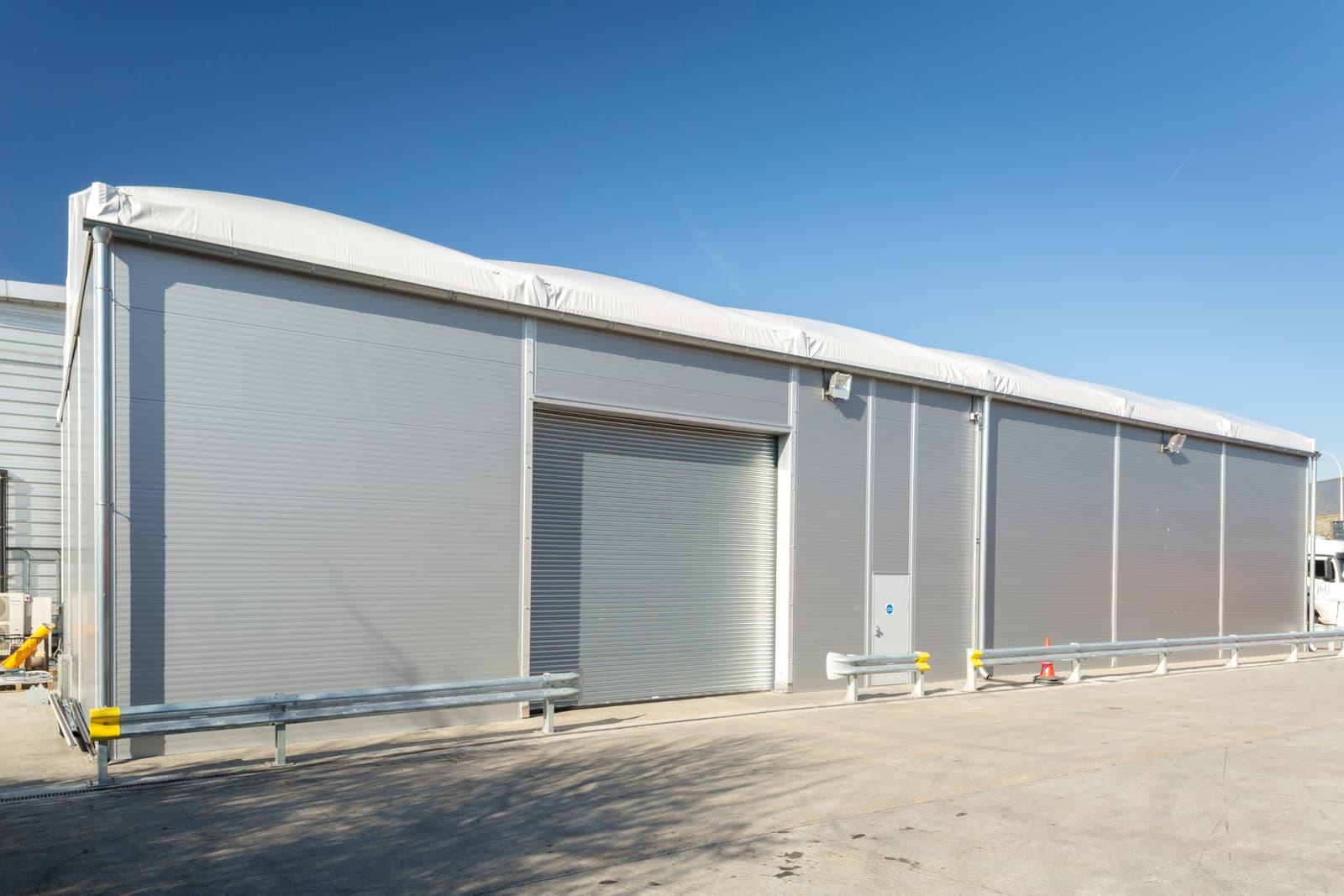
Industrial tents and storage halls from HTS TENTIQ are the ideal solution for storing construction timber correctly. Our modern and mobile temporary buildings offer numerous advantages that are specifically tailored to the needs of timber storage:
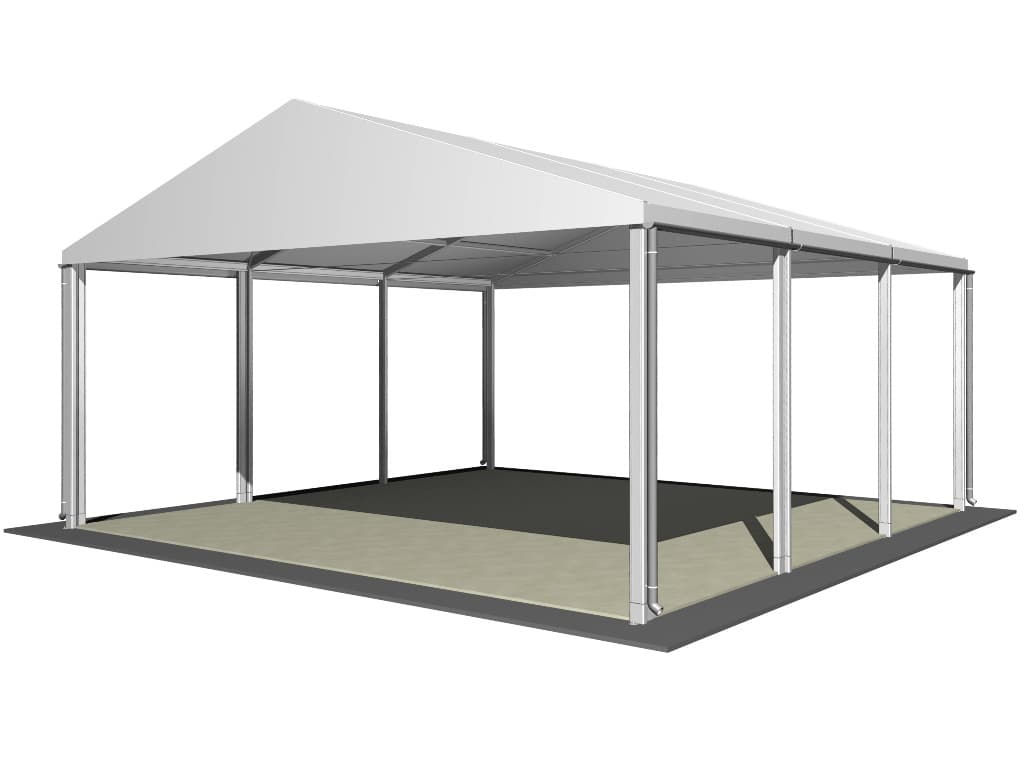
A temporary roofed structure protects insensitive goods and materials from weather influences such as wind, rain, snow and sun. Due to its open design, it is ideally suited for loading and unloading operations, but can also be used to protect machinery. A roofed structure is the simplest and most cost-effective option.
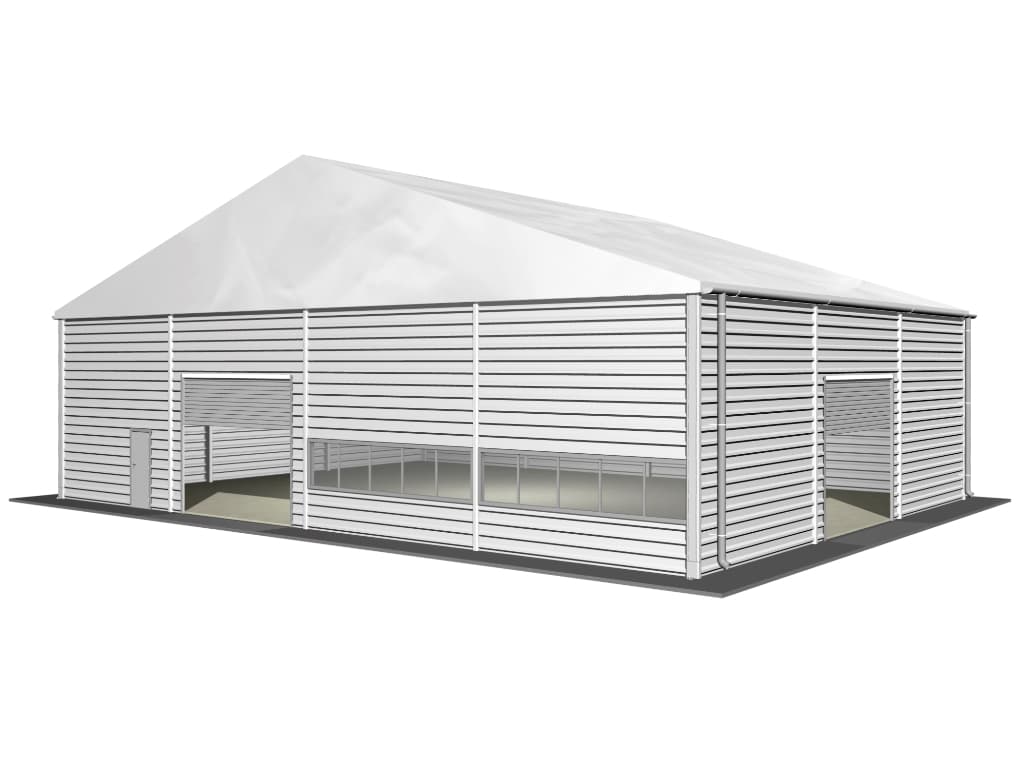
Non-insulated storage building
Mobile storage buildings that are not insulated are also referred to as cold buildings. They are the perfect place for goods and products that are not sensitive to temperature.
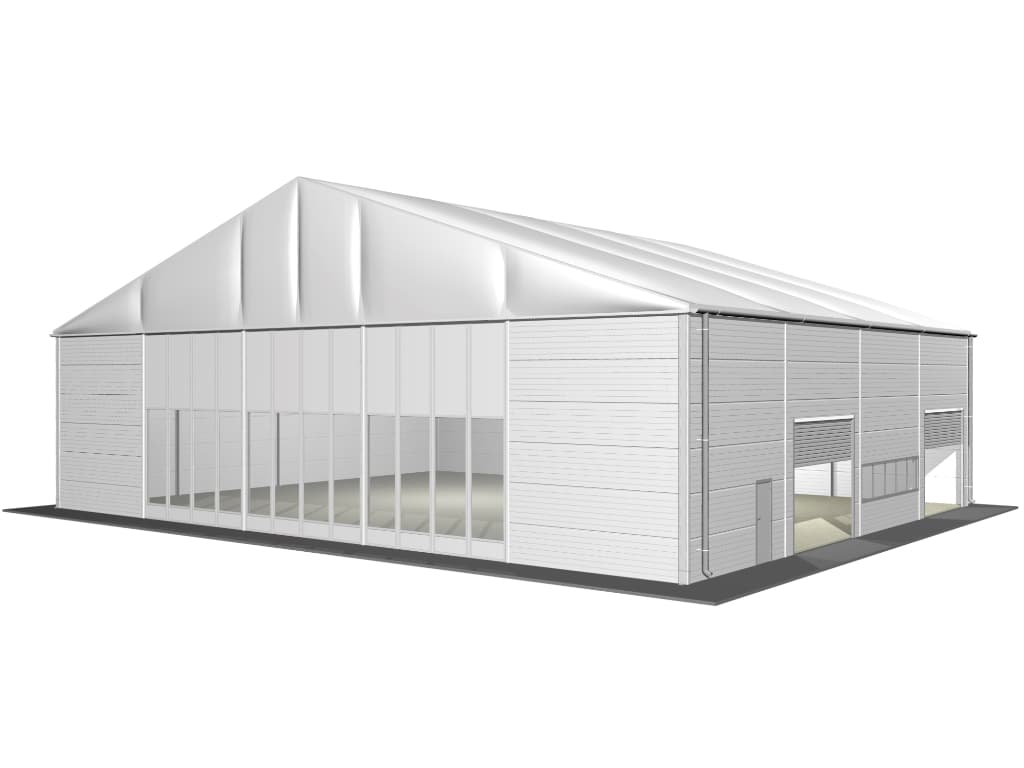
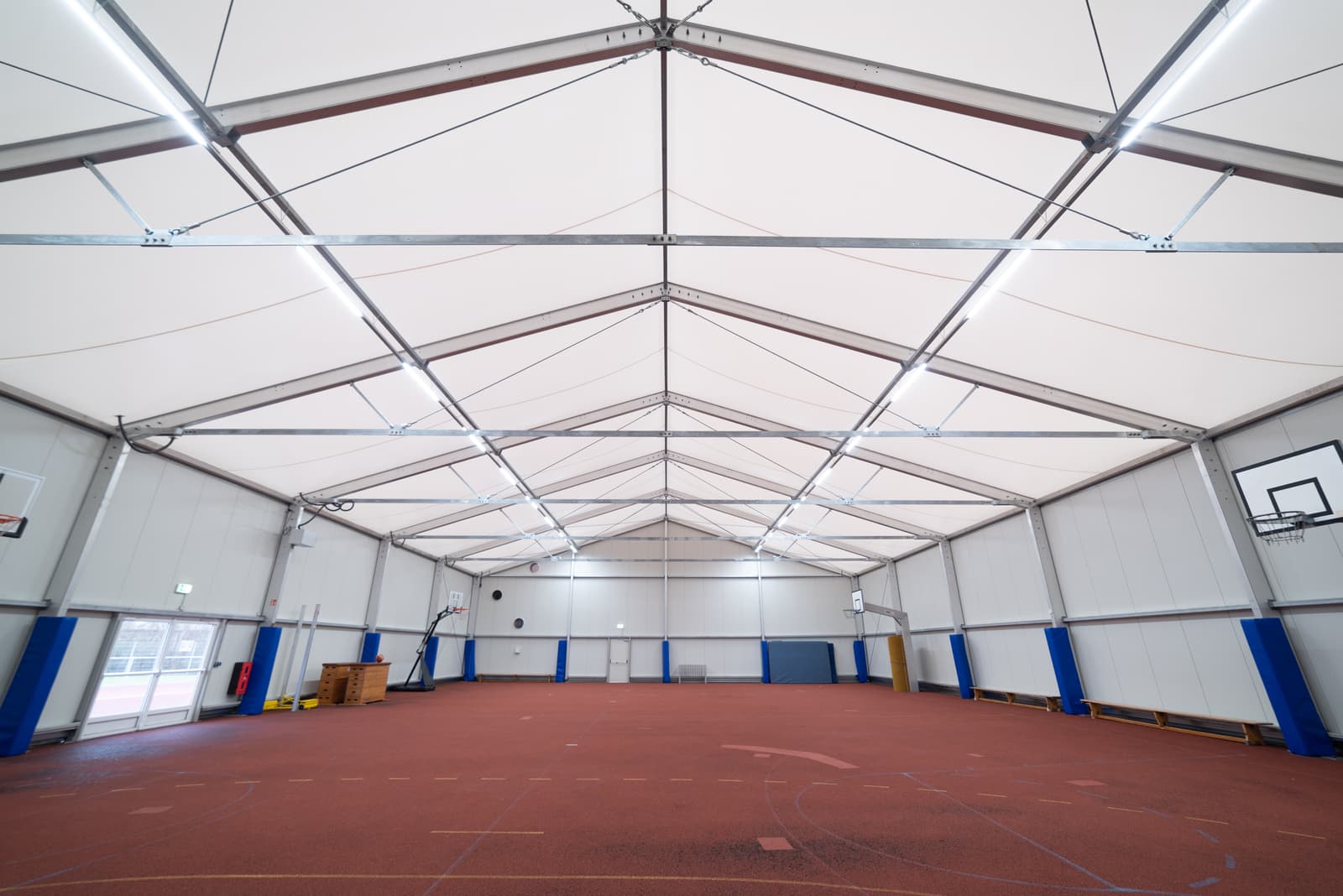
If consistent temperatures are required in a temporary storage building, an insulated storage building is the ideal choice. For this purpose, thermally insulated panels are used as side cladding and roofing. Alternatively, thermal roof tarpaulins can also be used as roofing for the building. Insulated storage buildings provide optimal protection all year round for temperature-sensitive goods, products and operational processes.
Protection against moisture
Storage buildings from HTS TENTIQ provide exactly the protection that timber requires during storage. Thanks to the use of high-quality materials, construction timber is protected against moisture-related damage. An anti-drip coating also prevents the formation of condensation. However, correct storage is also crucial, such as raised storage without direct contact with the ground. This is particularly important when storing timber in order to prevent mould growth.
No chance for harmful sunlight
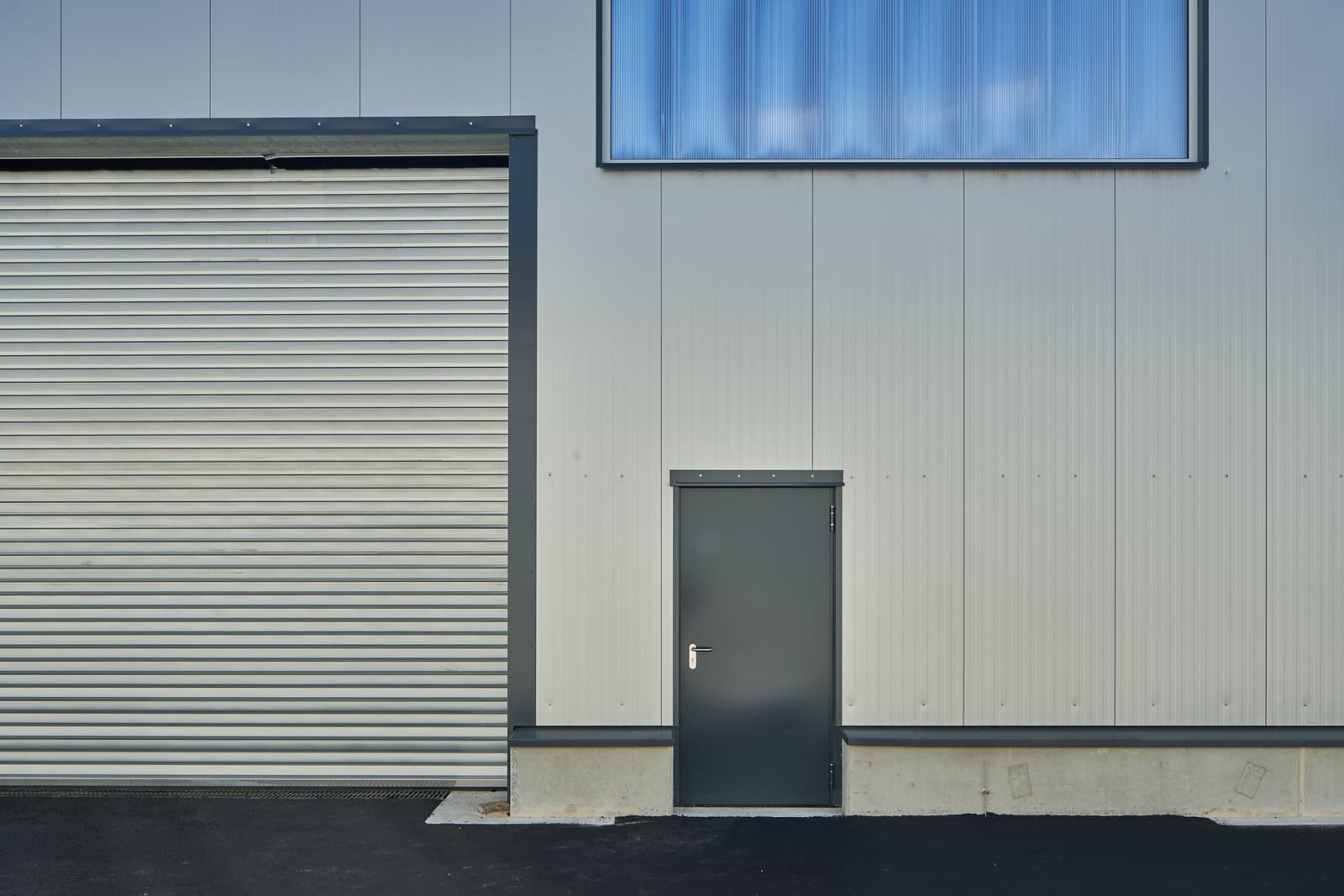
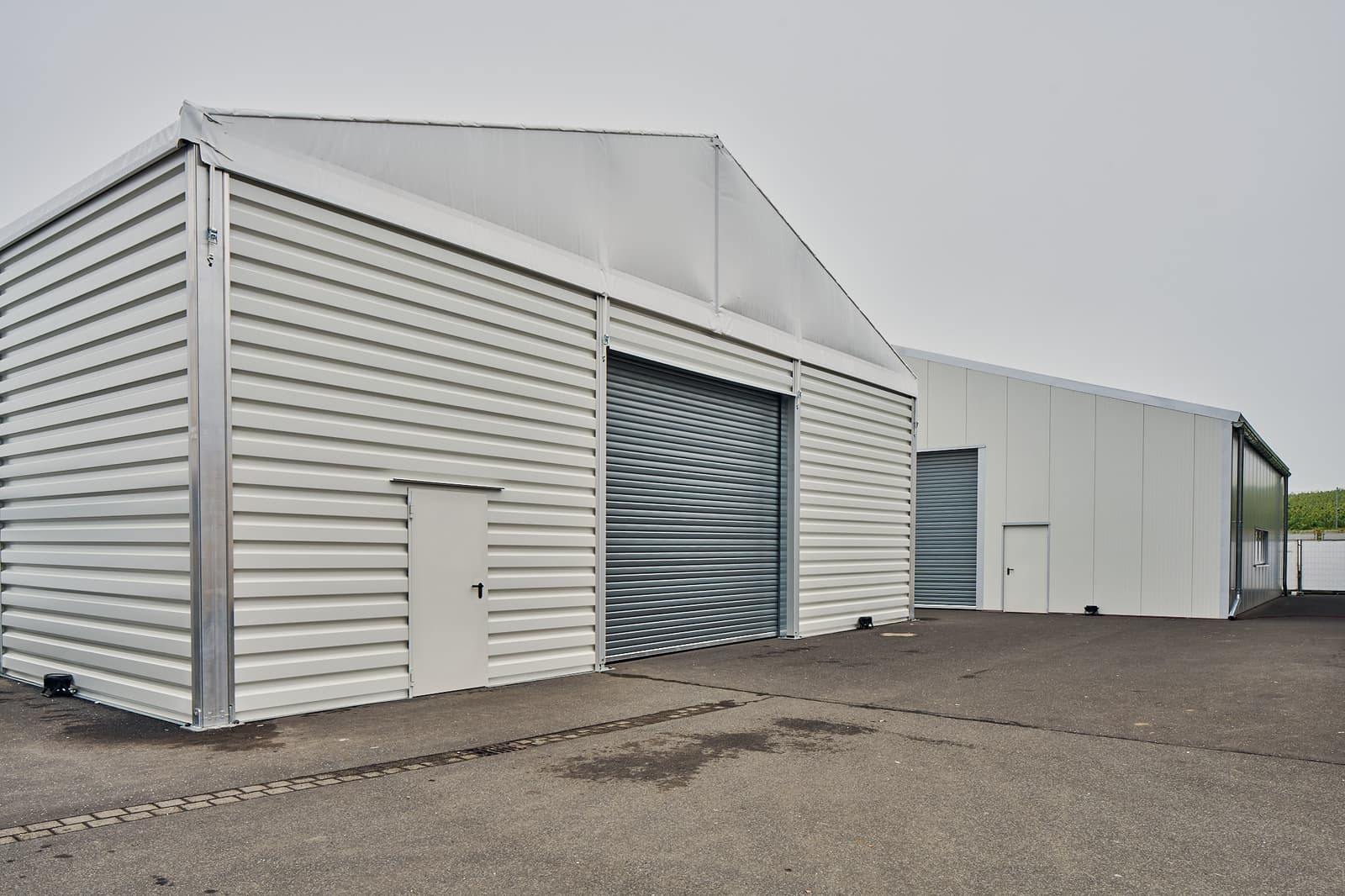
The heavy-duty PVC roof sheeting of our storage systems shields UV rays. If a simple roofed structure is not sufficient, side cladding can be used to create a fully enclosed building. Depending on the location, weather conditions and customer requirements, industrial-grade PVC, trapezoidal sheets or sandwich panels are available for this purpose.
Ideal air circulation through suitable building size
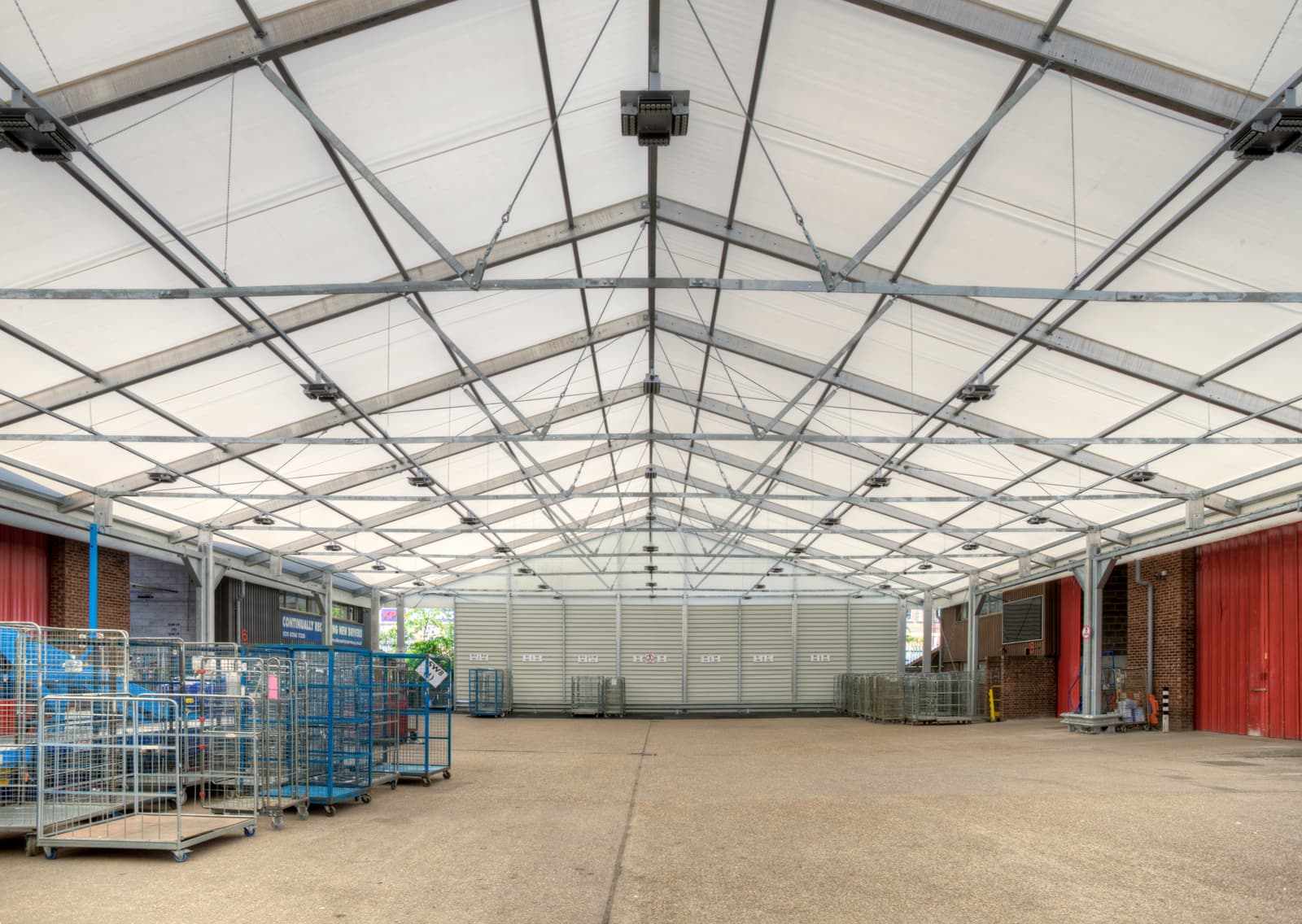
Each building is individually tailored by our construction expertise to the specific requirements. Thanks to this professional and well-considered planning, optimal ventilation of the timber is taken into account when determining the size of the storage building.
Sufficient space for optimal operational workflow
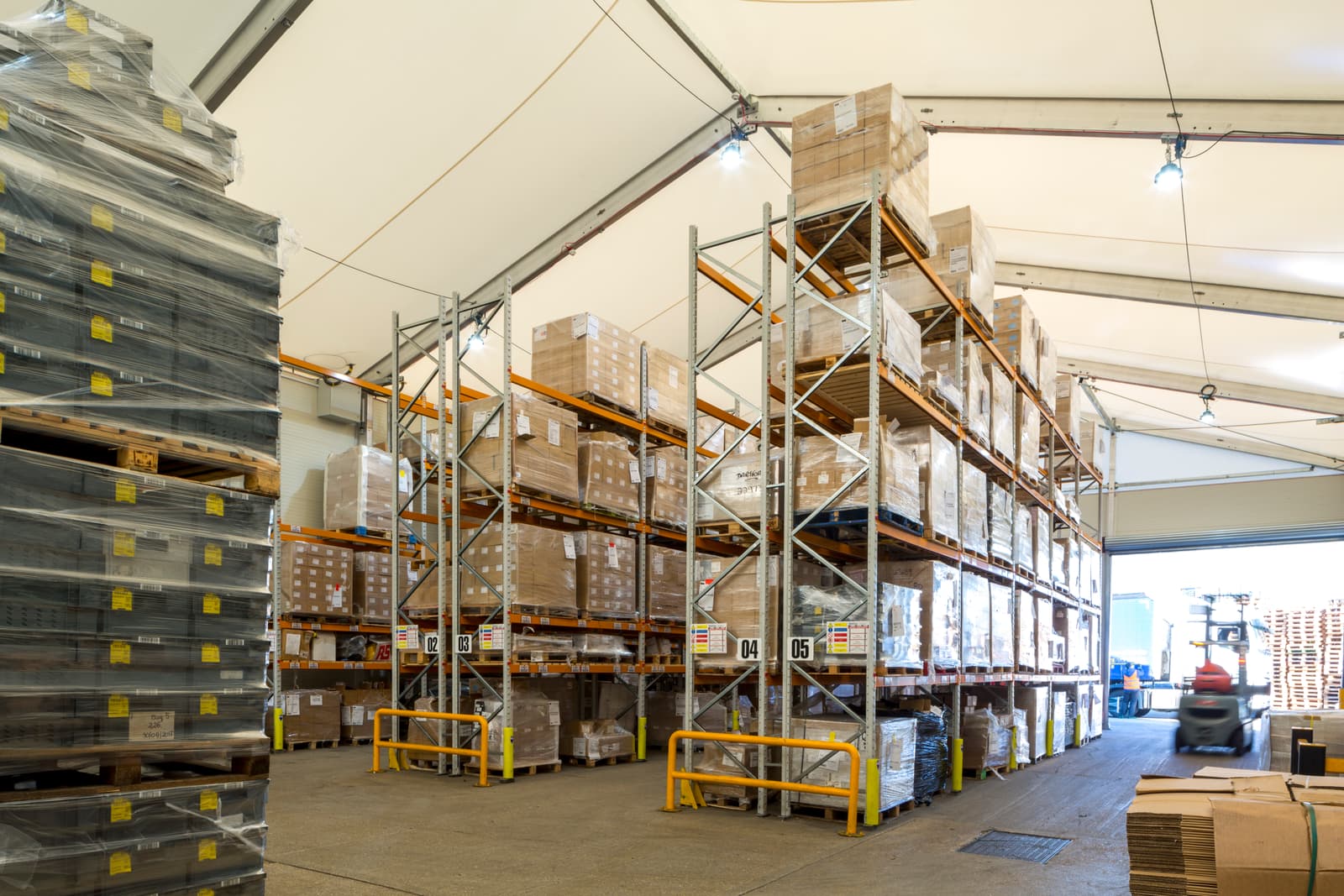
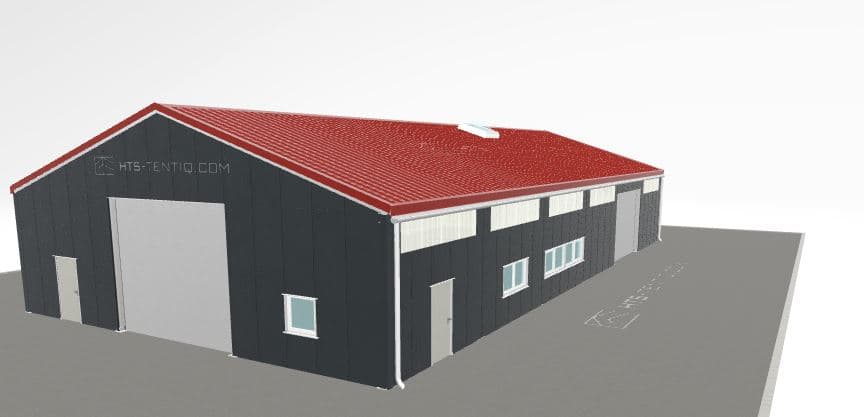
The accessories of our storage buildings can be fully tailored to customer requirements. By planning suitable doors and taking working routes into account, it is ensured that operational processes run smoothly. This not only facilitates the loading and unloading of construction timber, but also ensures that transport vehicles can manoeuvre without difficulty. With the free 3D building configurator from HTS TENTIQ, you can also easily plan your storage building yourself.
Fire protection for optimal safety
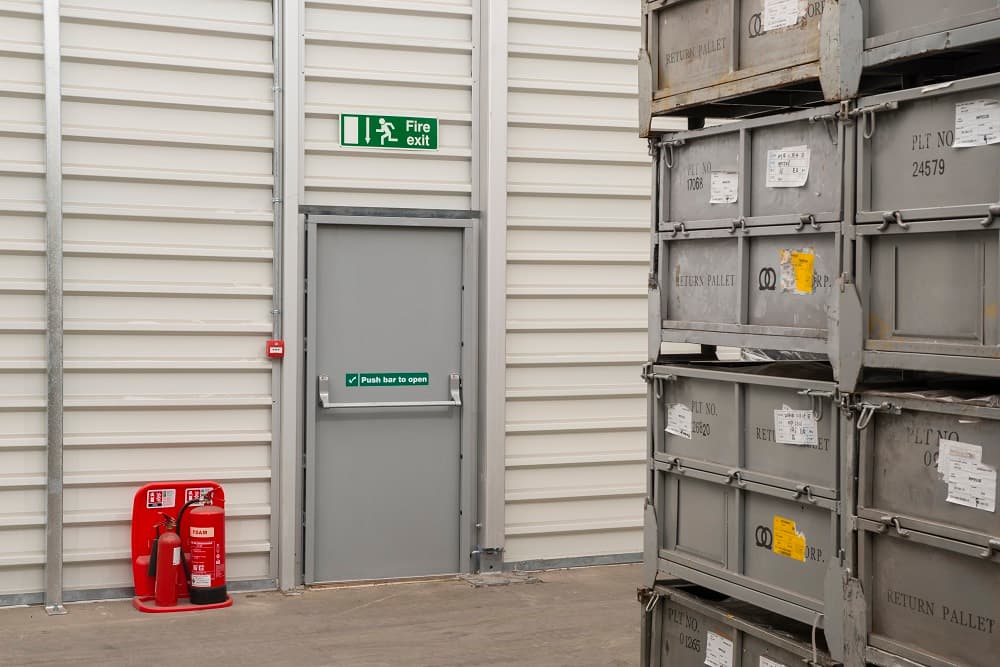
Our temporary buildings comply with all building regulations, including those for fire protection. These measures not only minimise the risk of fire, but also ensure the safety of personnel and the stored construction timber. They also provide protection for adjacent buildings.
Step-by-step guide to storing construction timber
Proper storage preserves the quality and durability of the wood. We show you the three essential steps for storing construction timber correctly:
1. Preparation of the storage site
To ensure that your construction timber remains in good condition in the long term, choosing the right storage location is crucial. Take the following aspects into account:
- Choose a dry, well-ventilated location that is protected from direct sunlight and rain.
- The ground should be level and firm to prevent the timber stacks from sinking or shifting.
- Create a gap between the ground and the construction timber to ensure good air circulation.
- Make sure the storage location is easily accessible so that the timber can be removed without difficulty when needed.
2. Correct stacking technique
The way you stack your wood plays a key role in its stability and durability. Observe the following points to minimise risks:
- Ensure that the stacks are stable and evenly arranged to prevent them from tipping over.
- Leave some space between the wall and between individual pieces of timber so that air can circulate.
- Do not stack the wood too high in order to maintain stability and minimise the risk of accidents.
- The timber stacks can be secured with straps or ropes.
3. Protection against weather influences
Wood is particularly vulnerable to weather influences that can cause damage. Therefore, adequate protection is essential. Pay attention to the following:
- Construction timber should always be protected from rain, snow and ground moisture.
- Position the construction timber so that all stacks are protected from direct sunlight. This prevents cracking and warping.
Additional tips for storing construction timber
To ensure that your construction timber remains in the best possible condition, we have compiled a few additional valuable tips for optimal timber storage.
Proper storage of freshly cut timber
If wet timber is to be stored, the storage location must provide ideal conditions for drying. To achieve this, a few special precautions must be taken:
- Good air circulation is an essential criterion for freshly cut timber in order to support the drying process. Otherwise, mould and mildew stains—yellowish or brownish discolourations—can quickly and easily develop. A well-ventilated location and the correct stacking technique ensure optimal conditions.
- Direct sunlight should absolutely be avoided for freshly cut timber, as it causes the wood to dry out too quickly and can lead to cracks and warping.
Use of stacking battens, supports and covers
In order to store construction timber correctly and protect it from damage, stacking battens, suitable supports and coverings should be used properly. Observe the following recommendations:
- With stacking battens, you create the necessary spacing between individual layers of timber. To avoid discolouration, the battens should ideally be made from the same type of wood as the stored construction timber. The battens should be at least 1 cm thick, and 3 cm for wet timber.
- There should be at least a 5 cm gap between the ground and the construction timber. To achieve this raised storage, various measures can be used. Pallets or wooden slats are commonly used. If grass or soil is the ground surface, concrete blocks are also suitable to protect the timber from ground moisture.
- When waterproof tarpaulins or special timber covers are used, they should not lie directly against the wood in order to avoid possible condensation forming.
Regular inspection of the timber
Regular inspections of stored construction timber allow damage to be detected and addressed at an early stage. Here are the key steps you should follow:
- Regularly check the timber for damp patches, mould growth, cracks or warping. In particular after heavy rainfall, the construction timber should be inspected. If necessary, relocate the timber to ensure more even drying.
- In the event of damage, remove the affected pieces of wood and improve ventilation.
- Look out for signs of insect infestation, such as small holes or sawdust. Treat infested timber immediately with suitable products.
Conclusion: The ideal solution for your construction timber storage with HTS TENTIQ
To store construction timber correctly, it is necessary to consider aspects such as ideal ventilation and temperature, proper stacking techniques, as well as protective measures against weather influences and pests. If these points are taken into account during timber storage, it is ensured that the construction timber remains in optimal condition.
The ideal storage location therefore places several requirements on the correct storage of wood. When choosing your storage solution, seek advice from experienced expertise in building construction to obtain the most suitable storage facility for your needs.