
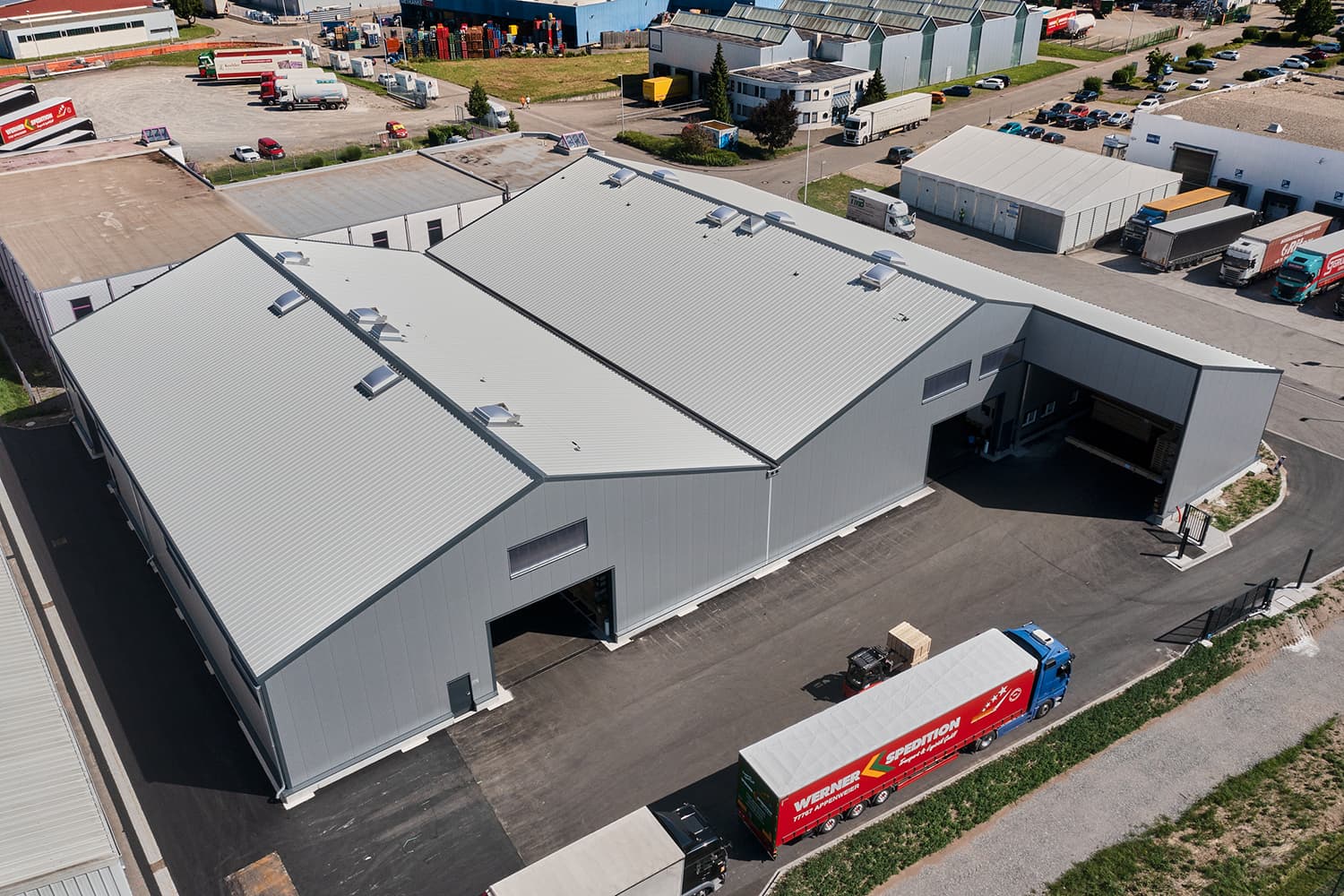
Building extension: How to expand your lightweight building
New orders, seasonal peaks or additional storage and production capacity: companies’ space requirements are constantly changing. This inevitably puts the existing infrastructure to the test.
Modular lightweight industrial buildings offer a quick and flexible solution here. Not only can they be erected swiftly, but they can also be easily extended if required – without the need for costly alterations. So, when planning, bear in mind that your building may need to expand in the future. Find out how lightweight industrial buildings can be extended quickly and easily, even at a later date.
Why extend a lightweight industrial building?
The size of a warehouse has a direct impact on the efficiency of industrial or commercial processes. A warehouse extension tailored to specific needs improves the flow of goods and work processes, as the additional space allows for shorter distances and faster transport. Particularly in the industrial sector, where flexibility and the conservation of resources are increasingly in demand, a warehouse extension is an efficient solution.
Extending a building is particularly worthwhile when the additional space required is clearly defined. It is also important that boundary clearances can be maintained, and that time, budget and sustainability play a key role.
Thanks to their modular design, HTS TENTIQ lightweight buildings are designed from the outset to allow for flexible adaptation and expansion.
What to bear in mind when extending a lightweight industrial building
Extending a lightweight industrial building can be a sensible solution both economically and functionally – provided the extension is well planned. To ensure the project’s success, technical requirements, legal frameworks and functional requirements must be assessed at an early stage. These include structural engineering, the building site, planning permission requirements and the specific use of the additional space.
We will show you what’s particularly important when it comes to planning, functionality, planning permission and cost-effectiveness.
Planning and design of the building: The basics
A successful building extension starts with thorough planning. It is crucial to analyse the existing building in detail:
- What materials were used?
- What condition are the structural framework, roof and foundations in?
- Do the structural conditions and ground conditions meet the requirements for the extension?
Particularly if the original building was not supplied by HTS TENTIQ, we recommend that our specialist staff carry out an on-site inspection. Based on this assessment, our experts can configure the extension to your lightweight building and provide you with a realistic quote.
Important: Extensions are generally possible without any problems, whereas widening is only possible to a limited extent. This should be taken into account at an early stage of the planning process.
HTS TENTIQ recommends contacting the relevant building authority at an early stage. In the case of older buildings, an on-site inspection by our specialist staff should always be carried out. This helps to avoid mistakes and ensures that the planned extension is optimally tailored to the existing structure and actual requirements.
Purpose of the building: What does the extension need to achieve?
Before finalising specific dimensions or components, it should be clear what the additional space will be used for. Is it for increased storage capacity, additional workstations or new machinery? Depending on the intended use, there will be different requirements regarding lighting, ventilation, doors, power supply and even the indoor climate.
A functional extension takes into account not only structural feasibility but also operational processes. This allows material flows to be optimised, internal routes to be shortened and processes to be made more efficient. The extension should therefore not be planned in isolation, but should form a central part of the overall concept.
Planning permission and regulations: staying on the safe side of the law
Like other building structures, lightweight industrial buildings are also subject to the applicable building regulations. Before any extension is carried out, it is therefore necessary to check whether the structural alterations are permitted. It is particularly important to ensure that boundary distances are observed and to clarify whether planning permission is required.
HTS TENTIQ recommends contacting the relevant planning authority at an early stage. This helps to avoid legal pitfalls, such as those arising from unclear intended use, missing documents or incorrect measurements in the planning application. Doing things properly from the outset saves time, money and stress.
Costs & benefits of a building extension
In many cases, an extension makes more financial sense than a complete new build. The existing infrastructure continues to be used, the investment costs remain manageable, and the construction period is significantly shorter. Furthermore, extensions can often be carried out without any downtime.
At the same time, the additional space boosts operational efficiency: processes are optimised, storage capacity is expanded, or new uses are made possible. However, it is important to carry out a realistic cost-benefit analysis. Upon request, HTS TENTIQ will provide a bespoke quote based on the original project and following an on-site inspection.
Advantages of extending a lightweight industrial building
HTS TENTIQ’s lightweight industrial buildings are modular structures based on a modular design principle and are ideal for extensions. Whether you need additional storage space or new production areas, an extension offers numerous advantages:
Flexibility
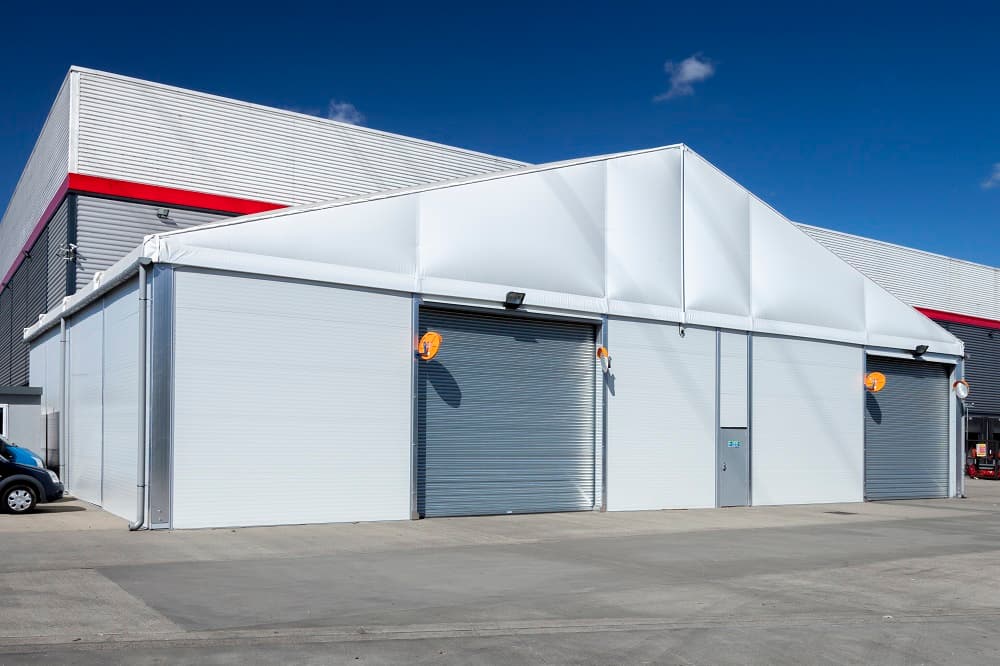
Cost-effectiveness
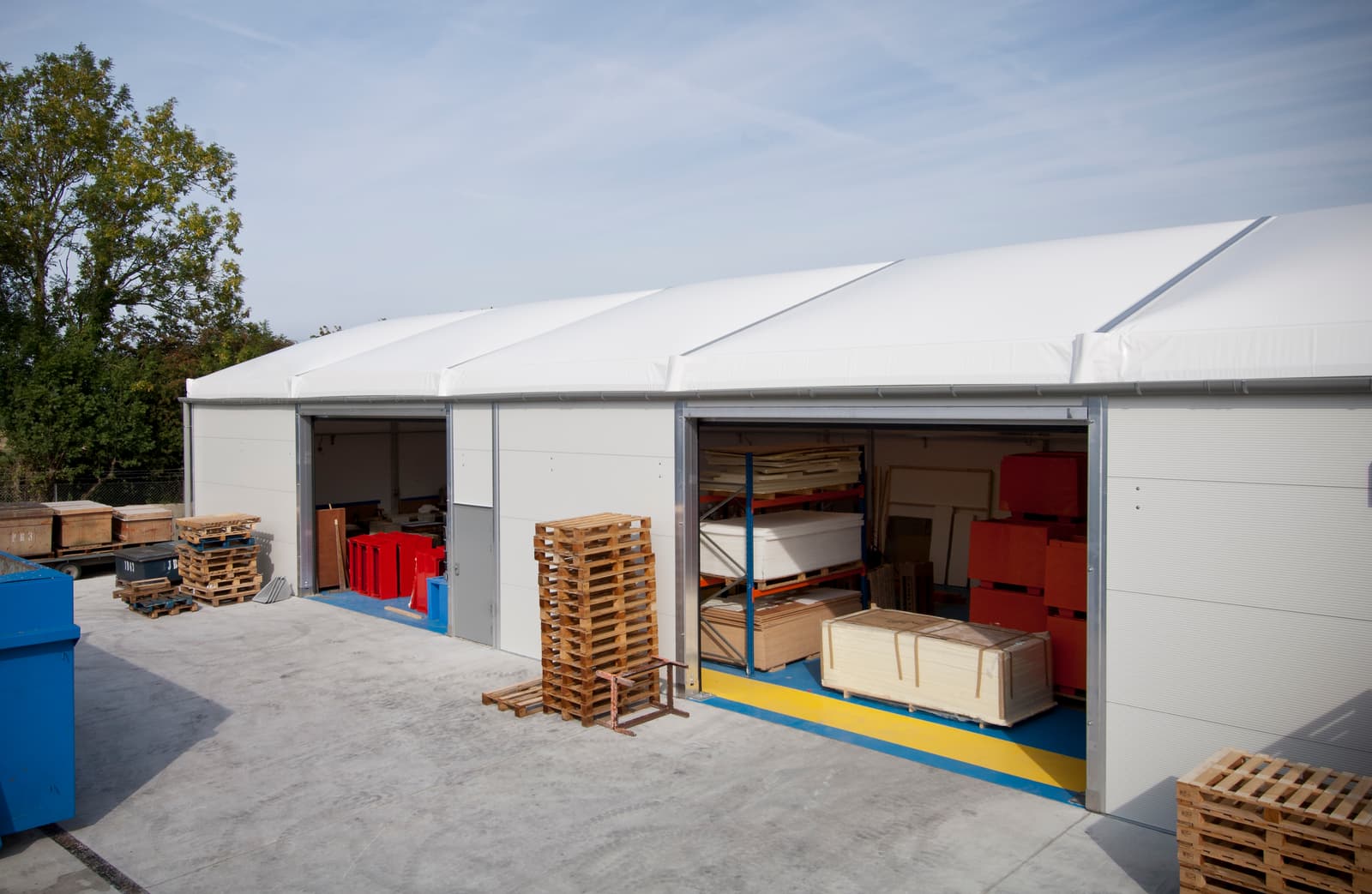
Rapid implementation
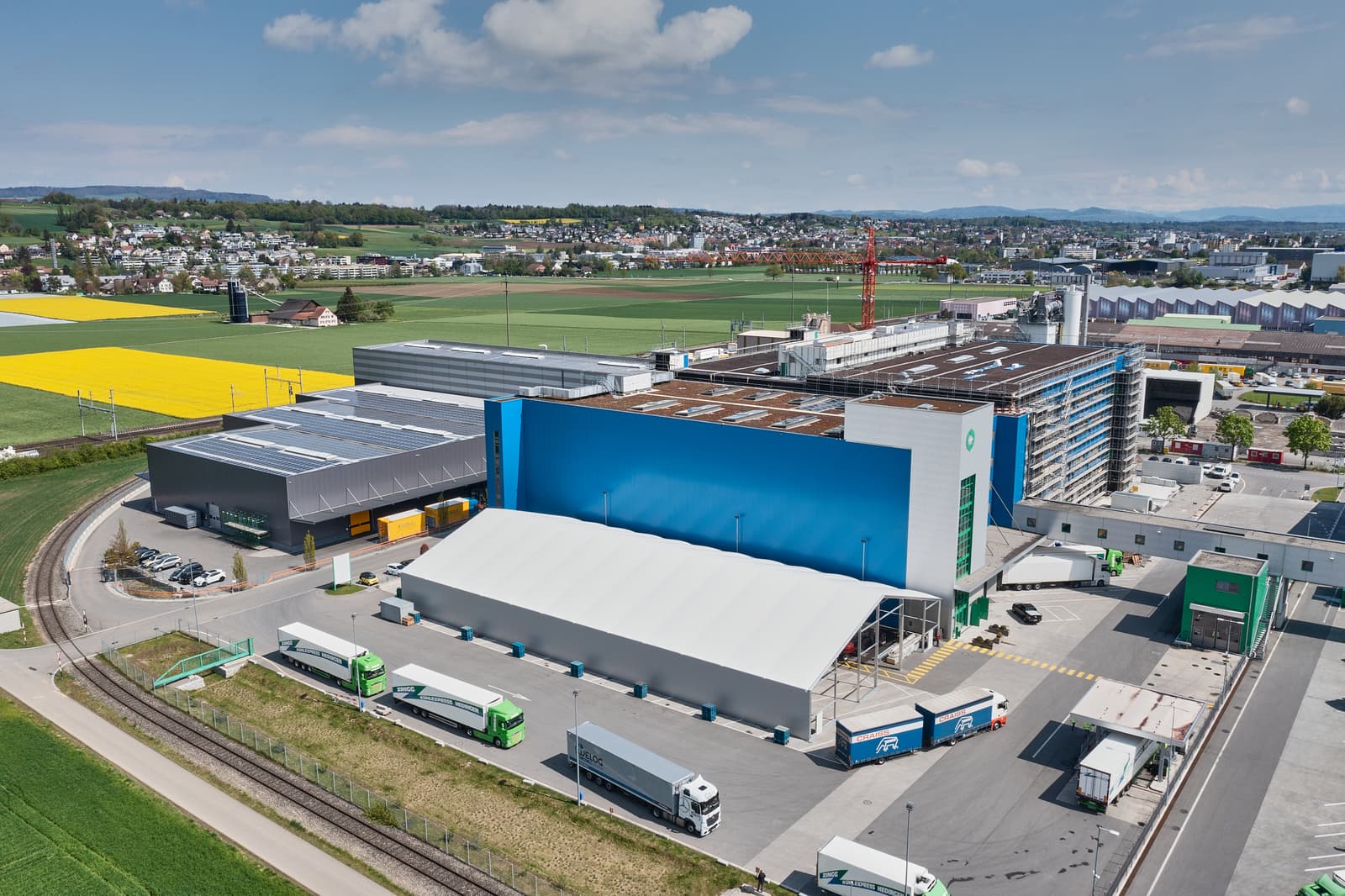
Customisation
Extending a lightweight building: what are the options?
When extending lightweight industrial buildings, there are essentially two options available: a side extension and an extension along the gable end. Both options have specific requirements and advantages.
Side extension: widening of the building
In principle, widening is only possible by means of an extension. In this case, the original truss frames – and therefore the posts on the long side – remain in place. Whether the existing height is sufficient for the extension depends on a structural assessment. Under certain conditions, the existing roof can be lowered slightly to accommodate the new width.
However, the preferred technical solution is often to add an extra building, resulting in a multi-aisle structure.
Technical implementation and integration:
- Extension to the existing structure: The existing side structure will be retained and subjected to a structural assessment. The new building or extension will be connected to the side.
- Integration of the roof section: Depending on structural constraints, the roof can be adjusted or lowered at the junction. The transition between the roofs is created using suitable waterproofing and flashing profiles.
- Sealing of joints: As the original side wall remains in place, the seals at the connection points are particularly important to ensure a permanently watertight joint.
Extension on the gable end: extension of the long side
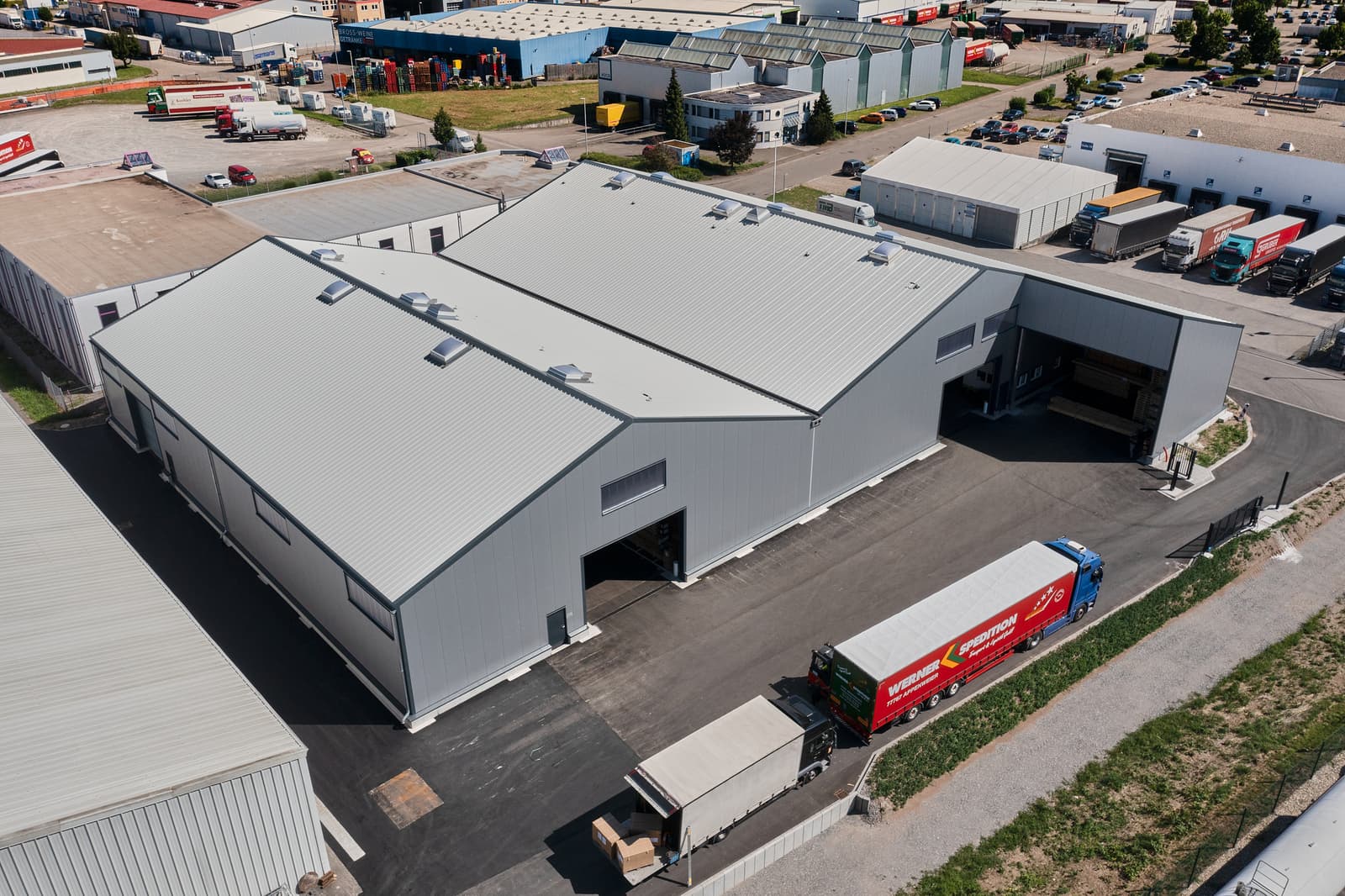
Extending the building along the gable end is the most common and technically simplest method of increasing floor space. HTS TENTIQ lightweight buildings can be extended indefinitely in 5-metre increments. This means that a building extension can usually be carried out without any problems, even without major structural alterations.
Technical implementation and integration:
- Clarify the requirements for the foundations: The building extension should be built on the same type of foundations as the existing structure. This will depend on the existing ground conditions and the structural requirements.
- Connecting the side extension: The front or rear panel is removed and the extended structure is attached directly to the existing structure.
- Roof extension: The roof structure is extended in a modular fashion.
- Roof and wall cladding and waterproofing: The roof and wall cladding for the extension is being installed and finishing strips are being fitted.
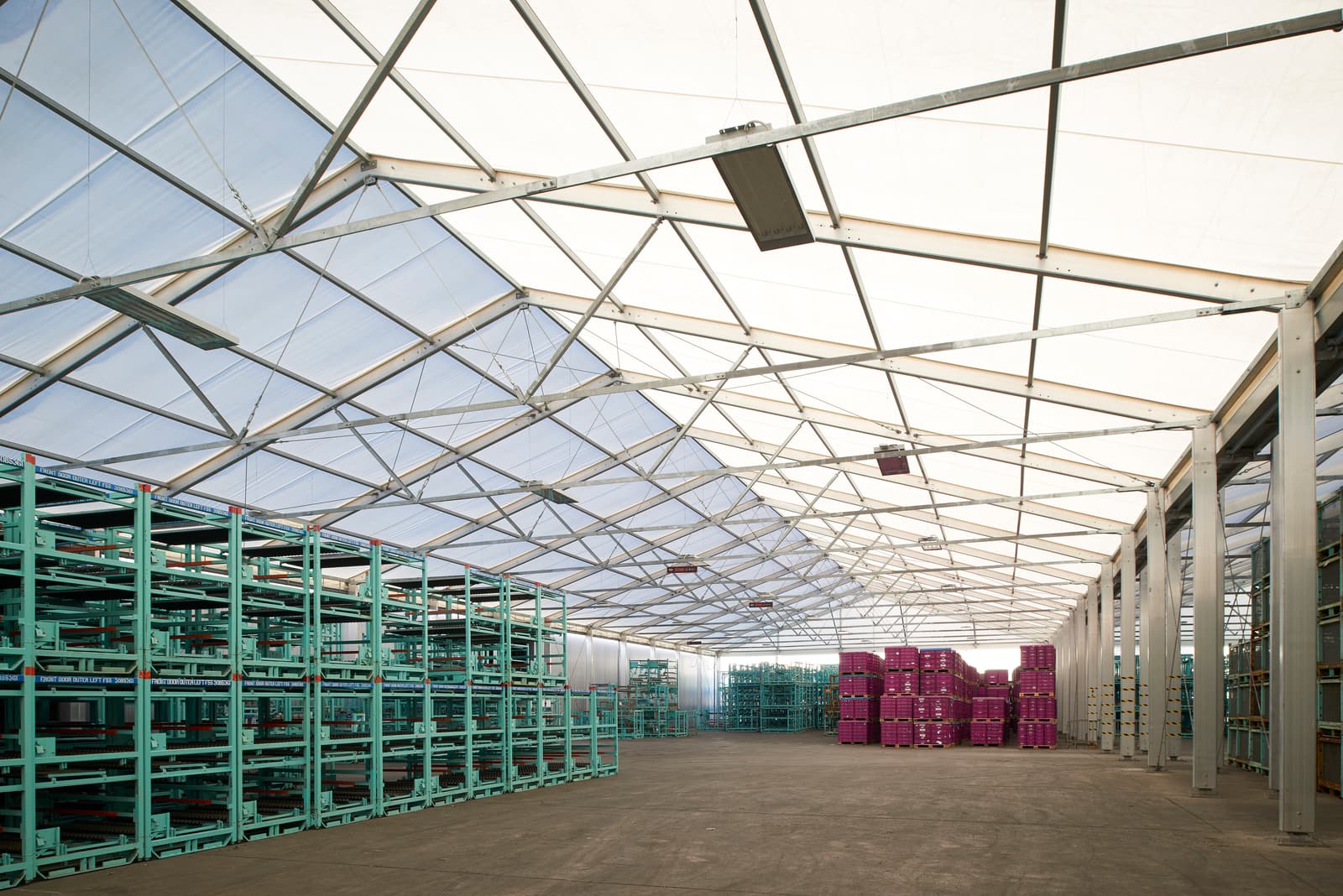
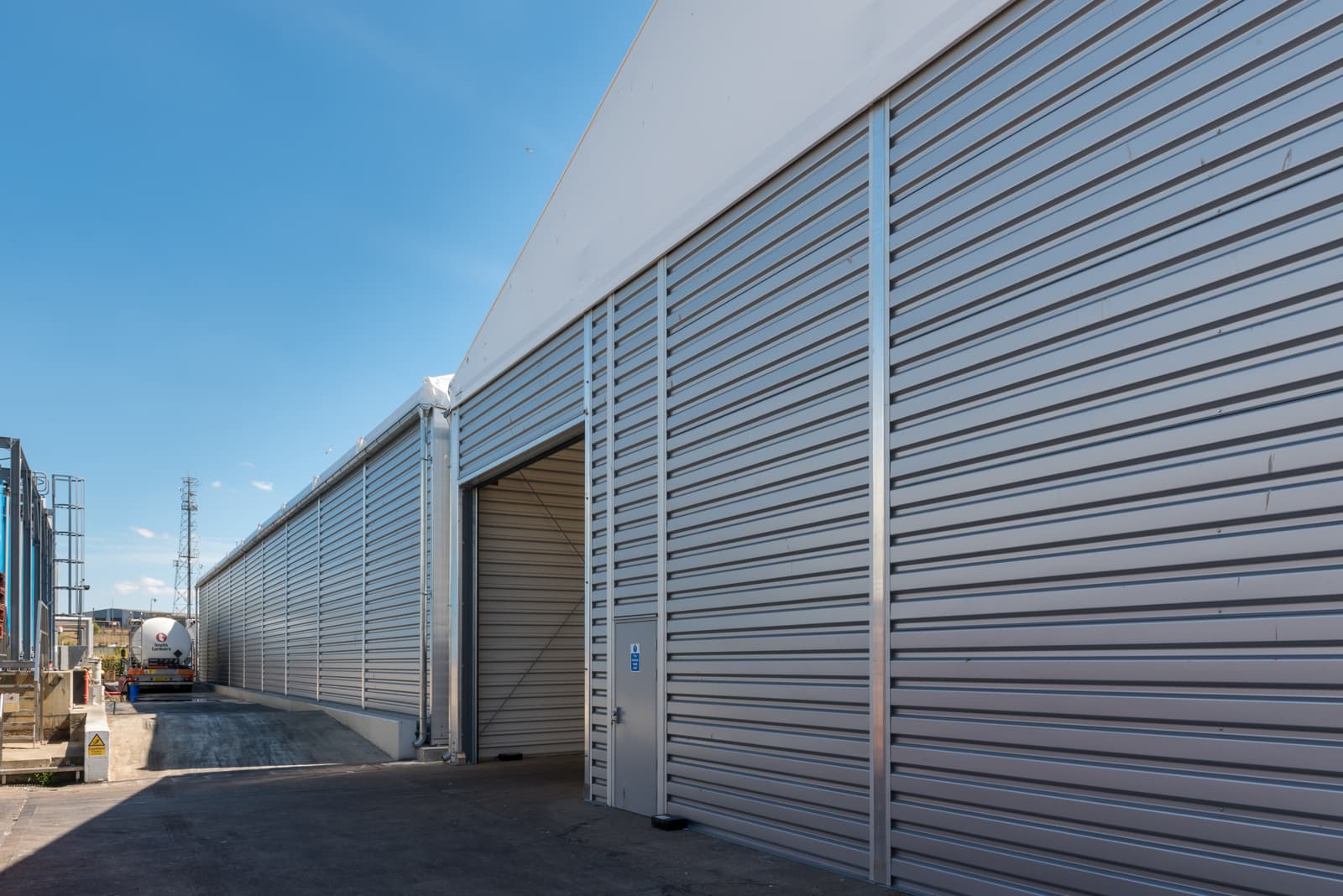
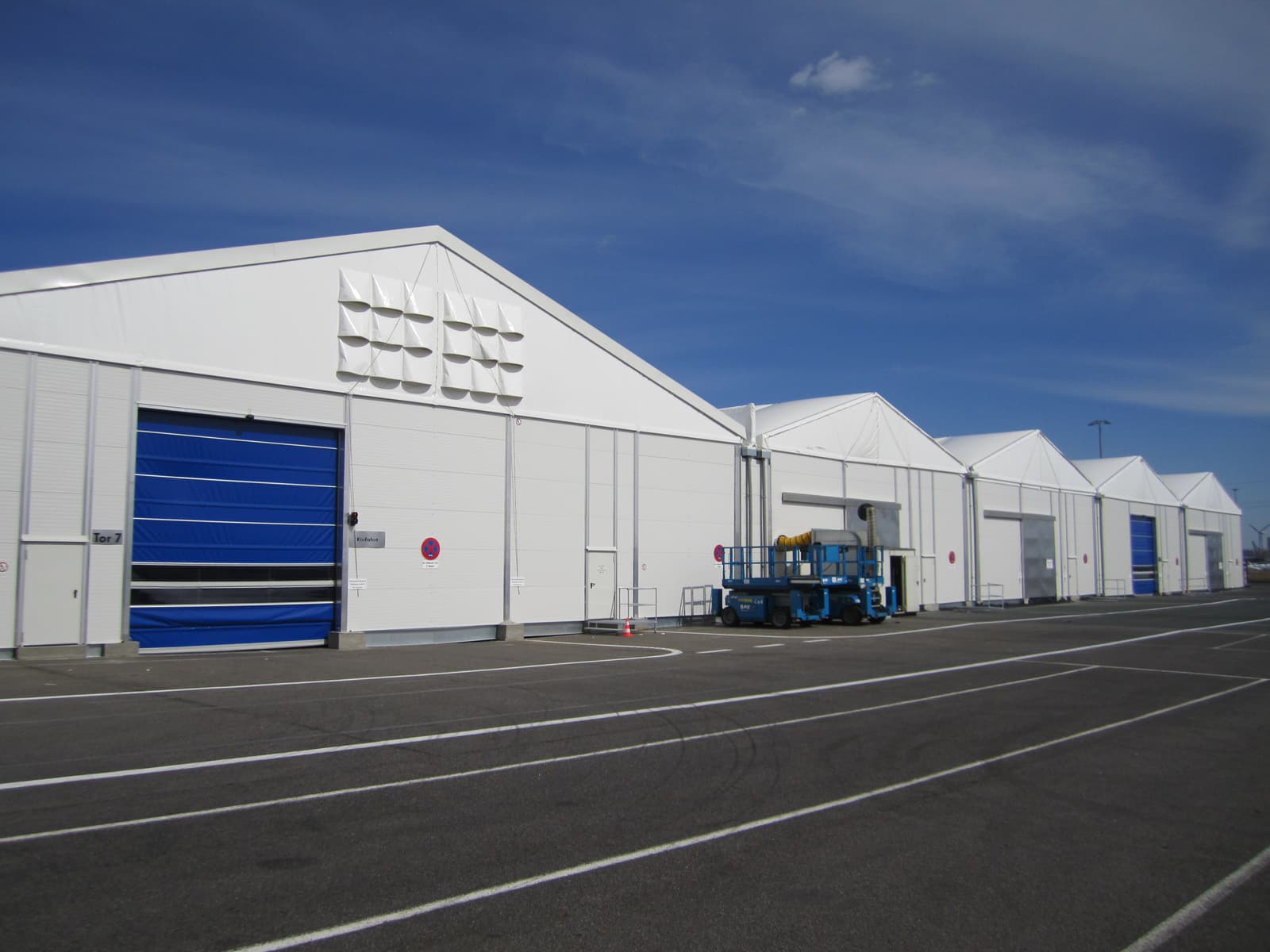
How to successfully extend a lightweight building: step by step
Sustainable construction in industry requires technical innovation, as environmental goals can only be achieved through modern solutions. Recyclable materials such as aluminium, energy-efficient fittings, modular construction methods and intelligent usage concepts make lightweight industrial buildings a sustainable component of modern industry.
HTS TENTIQ demonstrates how sustainable solutions are created through reusability, solar potential, effective insulation and certified environmental standards. For developers, designers and product, project or innovation managers, it is advisable to integrate sustainability into the planning process at an early stage, to opt for modular systems, to explore funding opportunities and to make targeted use of certifications.
The first step is to carry out an analysis: how much space is required, and what are the structural conditions? In addition to the question of location, technical considerations also play a role.
The existing building is thoroughly surveyed on site: dimensions, materials, access points and technical interfaces. This survey is essential for planning the extension with precision and avoiding complications later on. This is particularly important for buildings that were not originally supplied by HTS TENTIQ.
During a personal consultation with HTS TENTIQ, requirements, timelines and possible design options are discussed. A quotation is then drawn up based on this information and the site visit.
The extension is planned in detail based on the data collected. This includes technical drawings and specifications. At the same time, the client liaises with the relevant authorities.
Once all the planning and approval stages have been completed, production of the components for the building extension will begin. Thanks to the modular system, assembly is carried out swiftly and with minimal disruption to ongoing operations.
Once the construction work has been completed, the handover will take place. The new space will be integrated into the company’s operations and is now fully available for use.
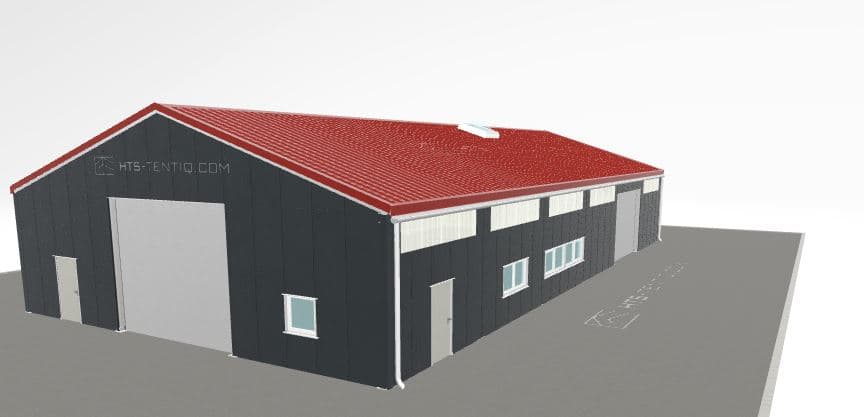
Extend your lightweight building: efficient, flexible and reversible
Extending your lightweight industrial building is more than just creating extra space. It is a strategic step towards flexibility and sustainability. Thanks to the modular system, existing structures can be expanded in a targeted manner, adapted to new requirements and, if necessary, dismantled again.
Whether you need space at short notice or require long-term scalability, lightweight industrial buildings can be planned with foresight and dynamically expanded through extensions.
In the event of an extension, the investment remains manageable, implementation is swift, and the materials used are recyclable. This creates functional added value for businesses whilst also contributing to resource conservation and energy efficiency.
Expertise
Frequently asked questions about the building extension
Lightweight industrial buildings are suitable for a wide range of applications: for example, for warehousing, logistics, production, workshops, vehicle storage, as well as for sports, agricultural or event venues. They offer flexible solutions for short-term or long-term use and can be easily adapted to different requirements. This means you can adjust the size of the building at any time or extend your lightweight industrial building should you need more space.
A lightweight building can be extended by adding modular sections to the gable end or by constructing side extensions – depending on structural requirements, available space and intended use. HTS TENTIQ assesses the feasibility on a case-by-case basis and offers tailor-made solutions for flexible extensions.
The correct size of a building depends on its intended use, space requirements and operational processes. The experts at HTS TENTIQ provide support through in-depth analysis and practical advice, ensuring that your building is optimally sized and economically planned.
Extensions to lightweight industrial buildings generally require planning permission and depend on various factors. These include, in particular, the size, location, intended duration of use (temporary or permanent) and the relevant provisions of the regional building regulations.
With HTS TENTIQ structures, the length of lightweight buildings is virtually unlimited, as modules can be arranged in any configuration in 5-metre increments.
Yes, HTS TENTIQ’s lightweight buildings can be custom-designed and manufactured. In addition to standard sizes, custom dimensions can be easily accommodated, meaning the building be tailored precisely to your requirements, available space and intended use.
The building width refers to the external dimensions. The clear width, on the other hand, describes the actual usable interior space between the load-bearing elements. The clear width therefore indicates how much space is effectively available for use and fitting out.
Yes, multi-aisle lightweight buildings are possible. In this case, two or more buildings are positioned directly next to one another and together form a larger, multi-aisle structure. As with individual buildings, they naturally have supporting columns. A self-supporting design is not possible for multi-aisle buildings.
Yes, it may be possible to combine buildings of different sizes, but this is not always feasible. Whether different dimensions can be combined depends on structural requirements, system compatibility and the structural conditions of the building. Each combination must therefore be assessed on a case-by-case basis to ensure a safe and functional solution.
Yes, it may be possible to add an extension to an existing building, but this is not always feasible. Whether an extension is technically feasible depends, among other things, on the structure of the existing building, the structural requirements and the site conditions. Each case must therefore be assessed on its own merits.
HTS TENTIQ’s lightweight buildings are made up of individual system components that can be flexibly added to or removed. At HTS TENTIQ, extensions are carried out in 5-metre increments, meaning the building can be easily adapted to growing space requirements at any time.
With a modular extension, a lightweight building is flexibly expanded using standardised building components. These modules can be seamlessly integrated into the existing structure. Once installed, the lightweight building forms a uniform, finished structure with no visible joints.