Demountable buildings: This is how easily lightweight temporary buildings can be dismantled and reassembled
Lightweight temporary buildings for dismantling are the optimal solution for companies seeking flexible and cost-efficient space solutions. These demountable buildings not only offer quick and straightforward assembly, but also the possibility of being easily dismantled and reassembled at another location.
This makes lightweight temporary buildings for dismantling ideal for changing sites, temporary projects and short-term space requirements.
What is meant by a demountable building?
The types of construction methods for buildings used to be quite limited. For a long time, solid construction dominated, in which buildings were erected from heavy materials such as concrete and stone to create durable and robust structures.
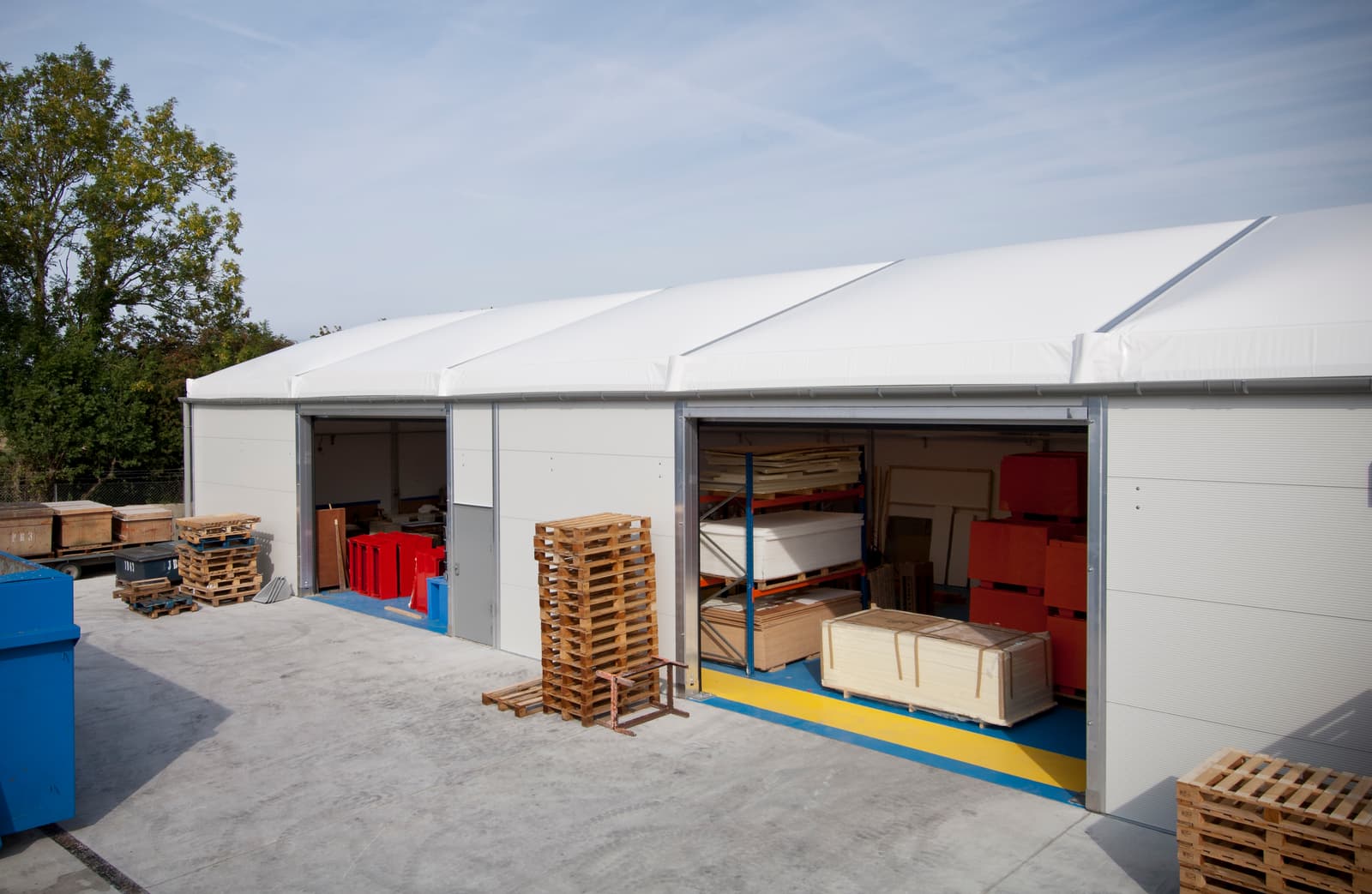
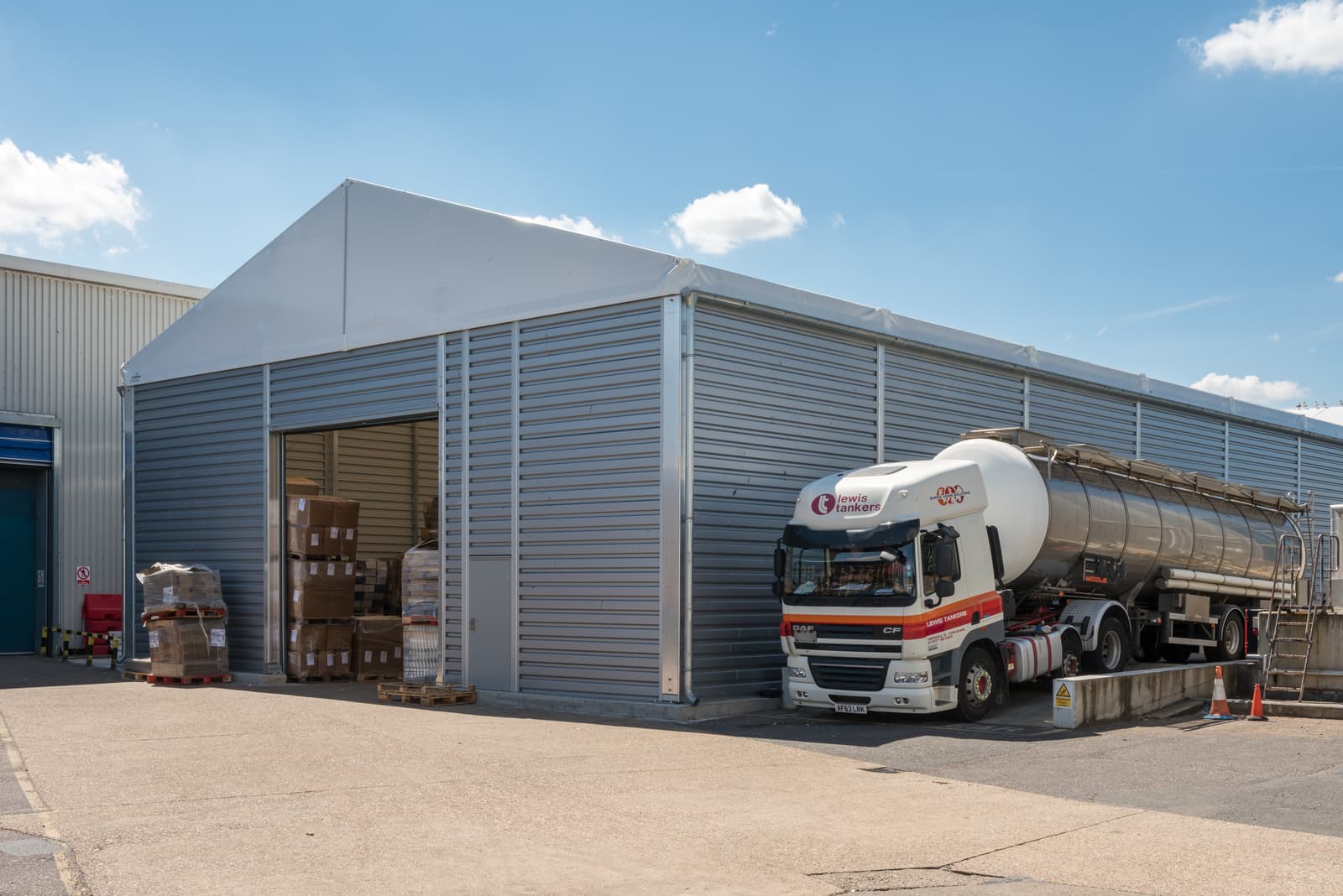
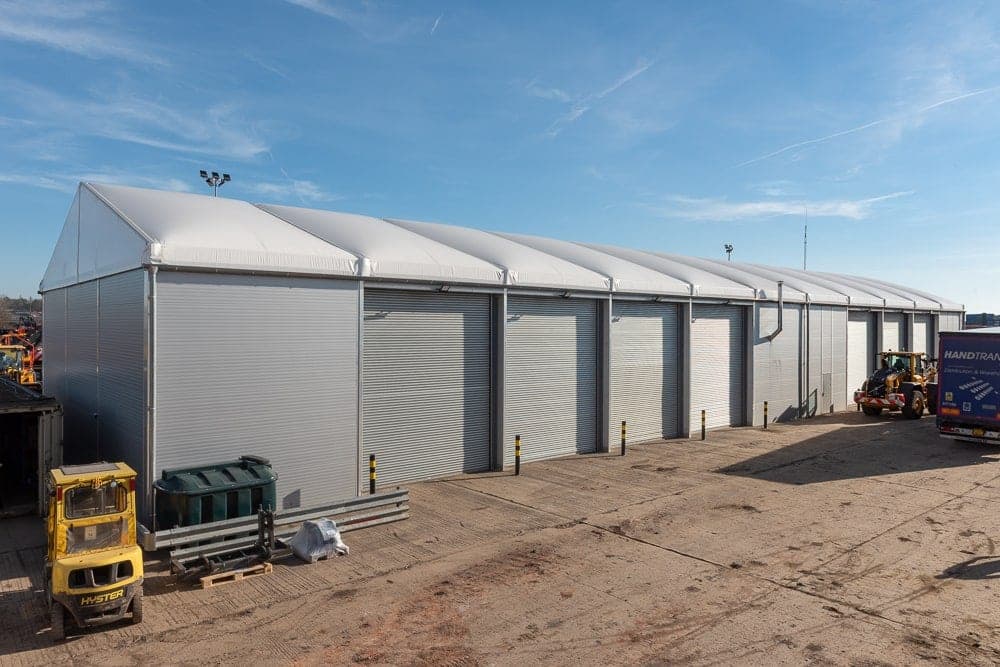
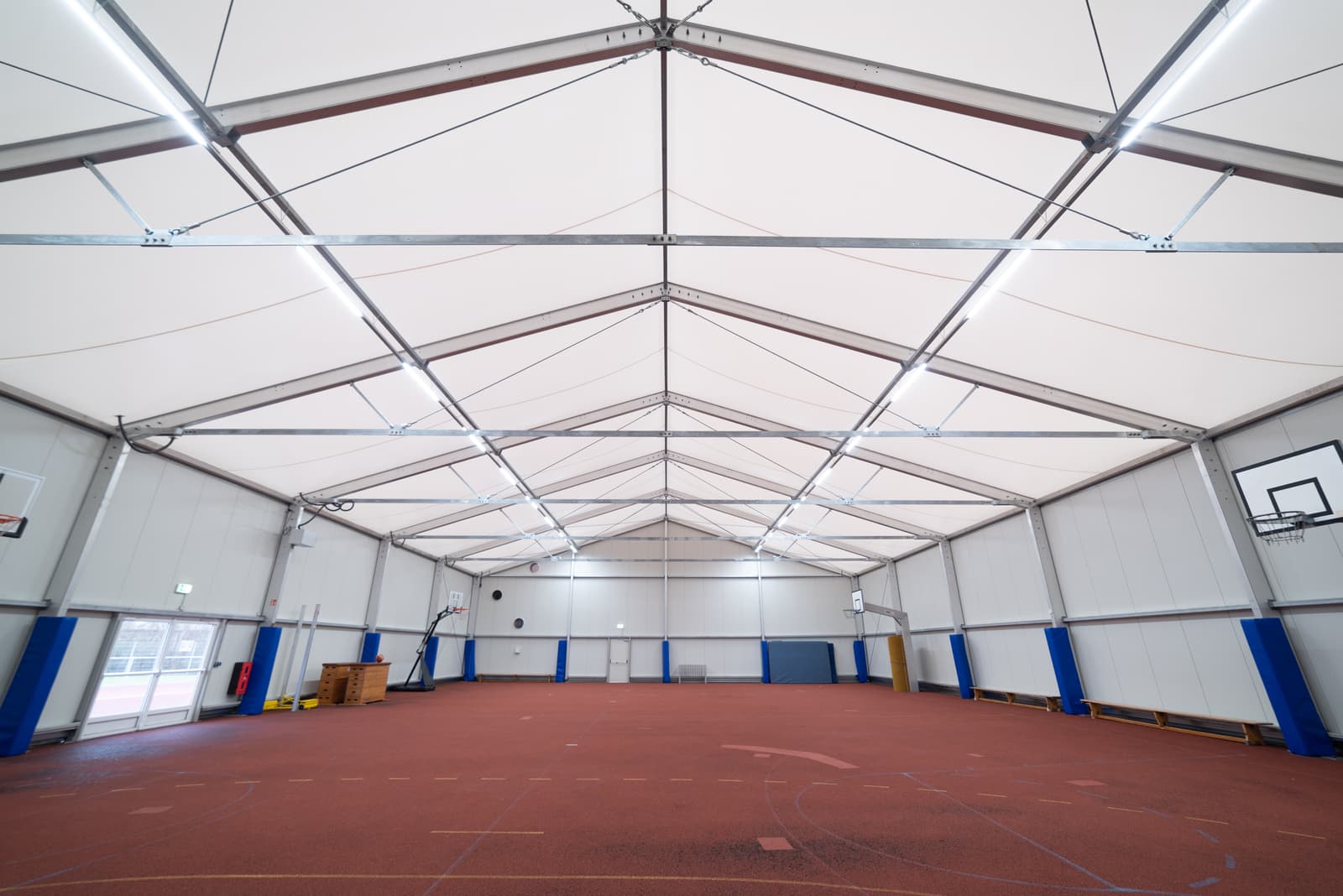
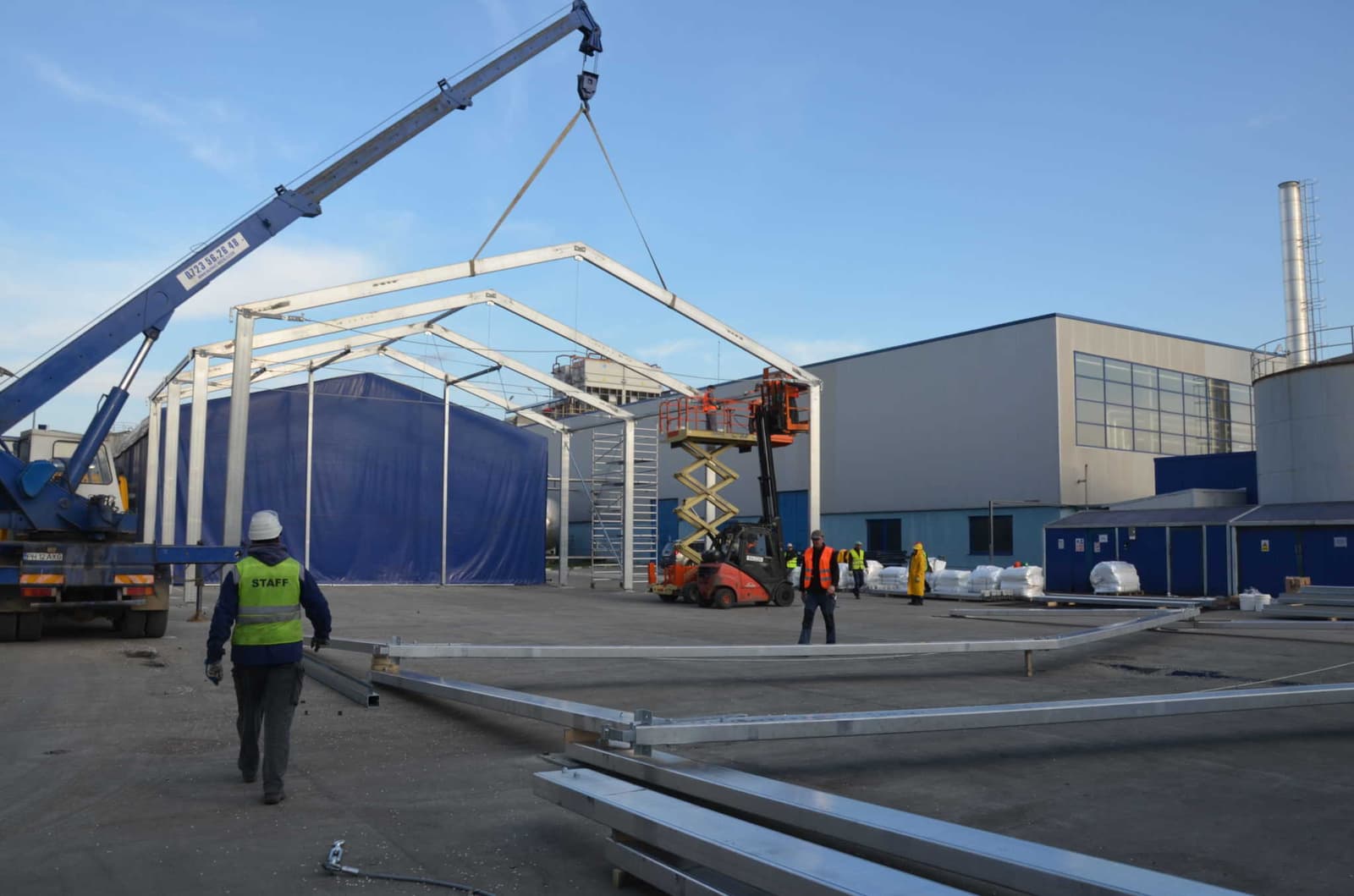
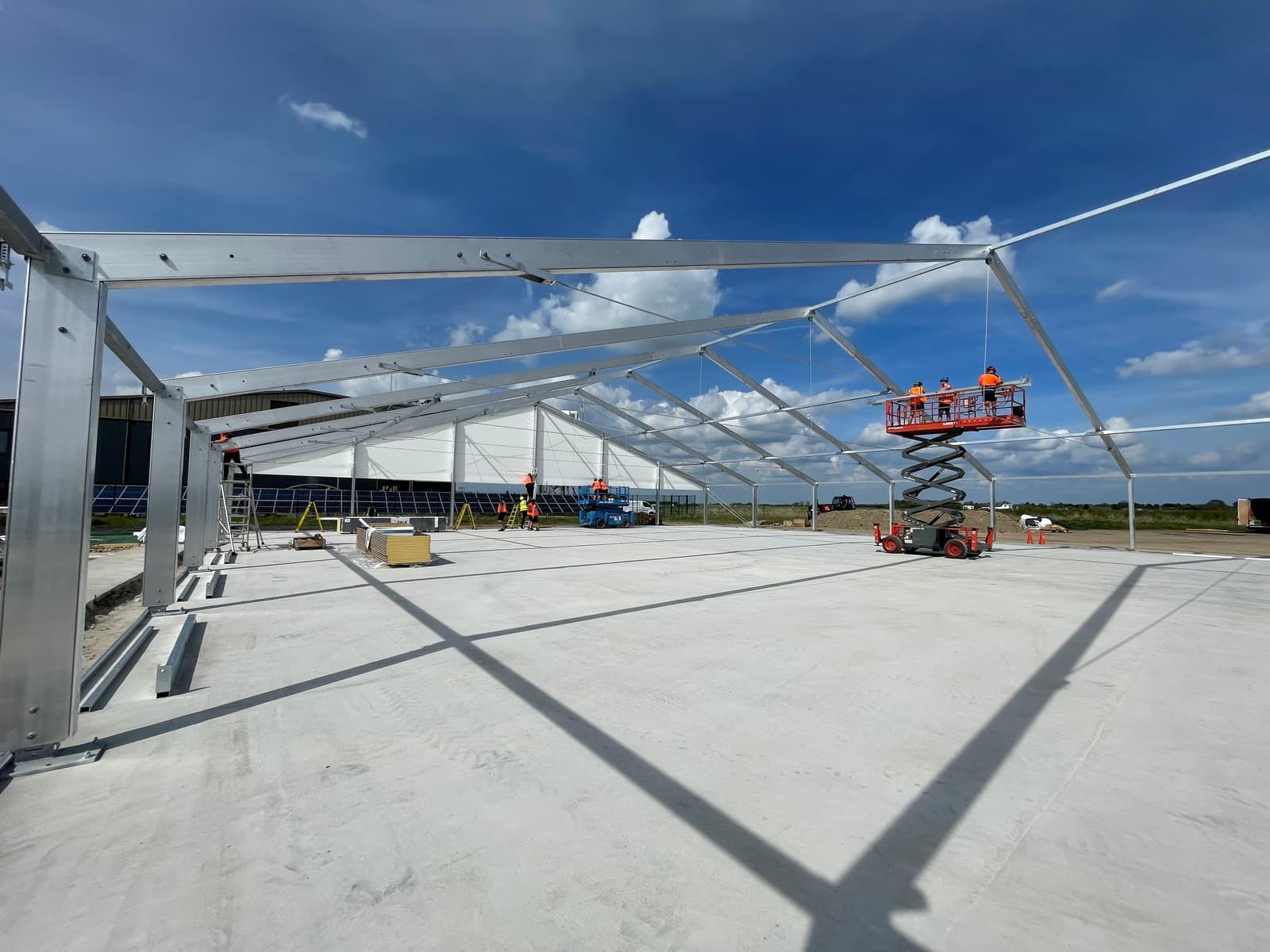
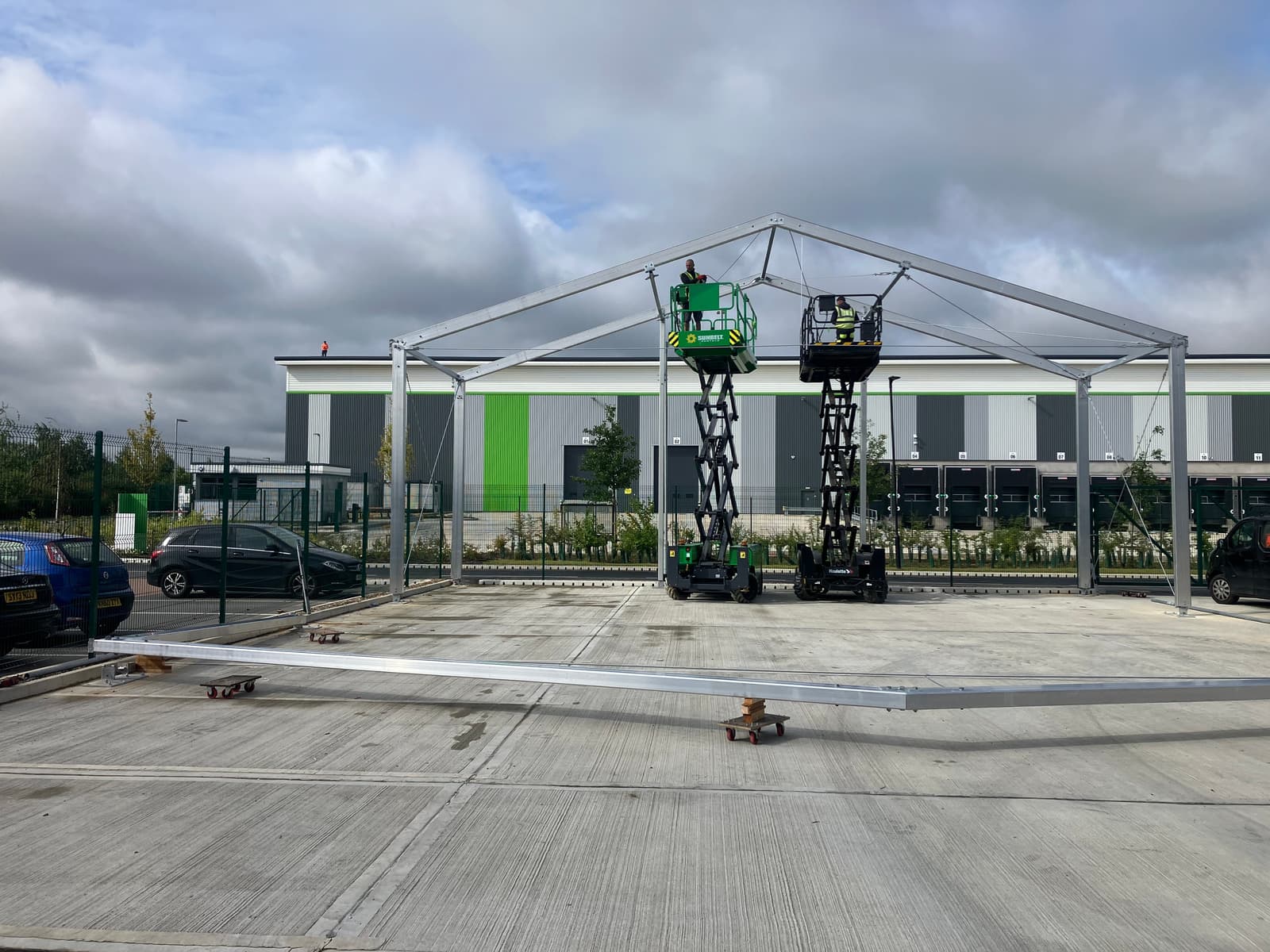
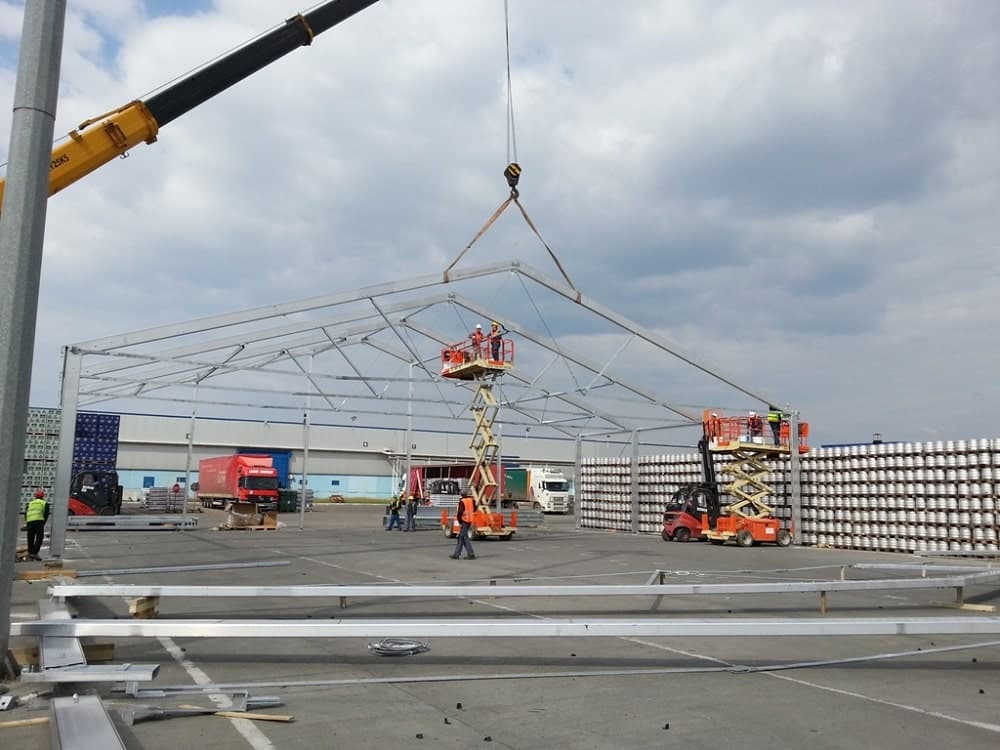
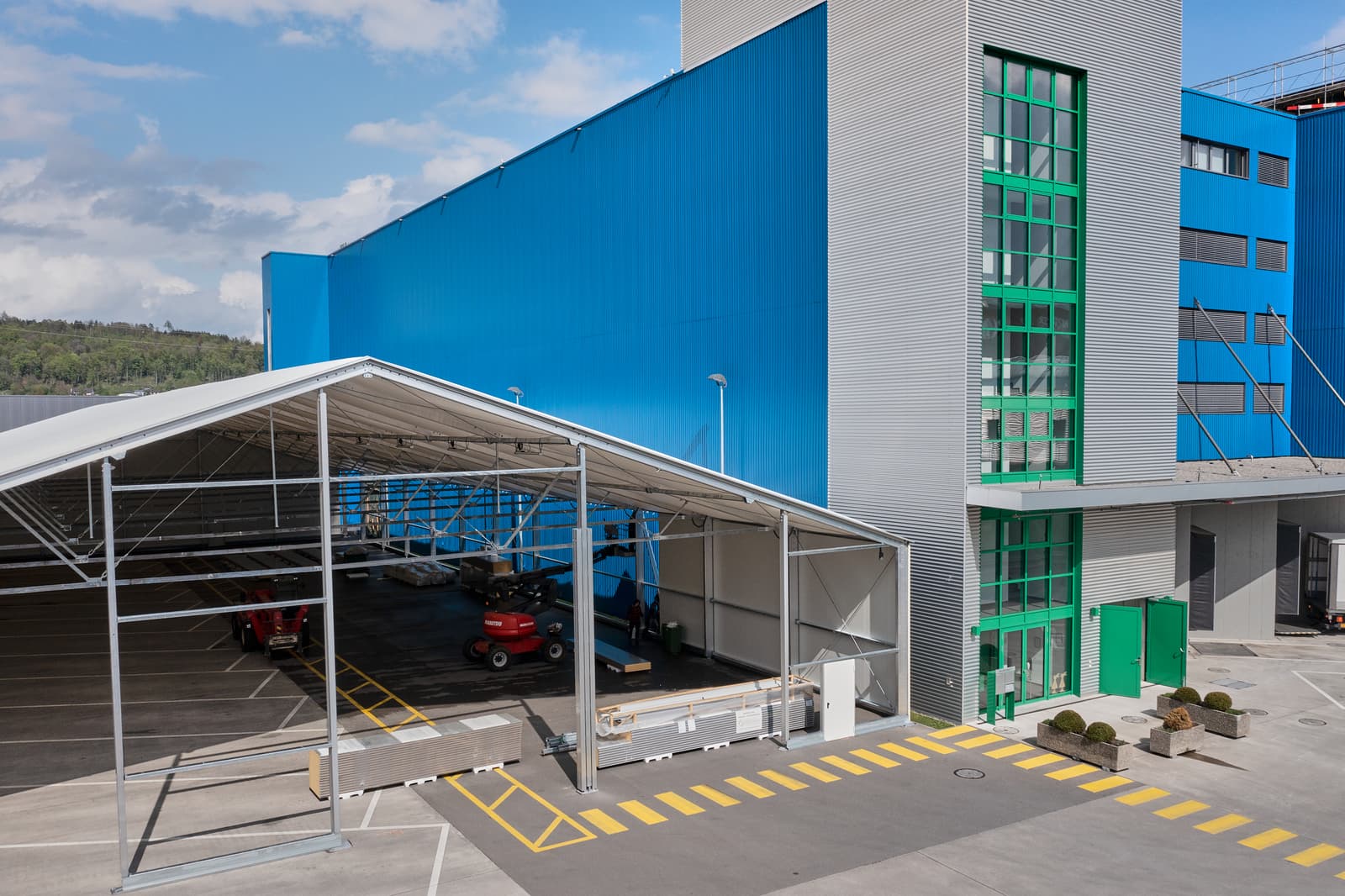
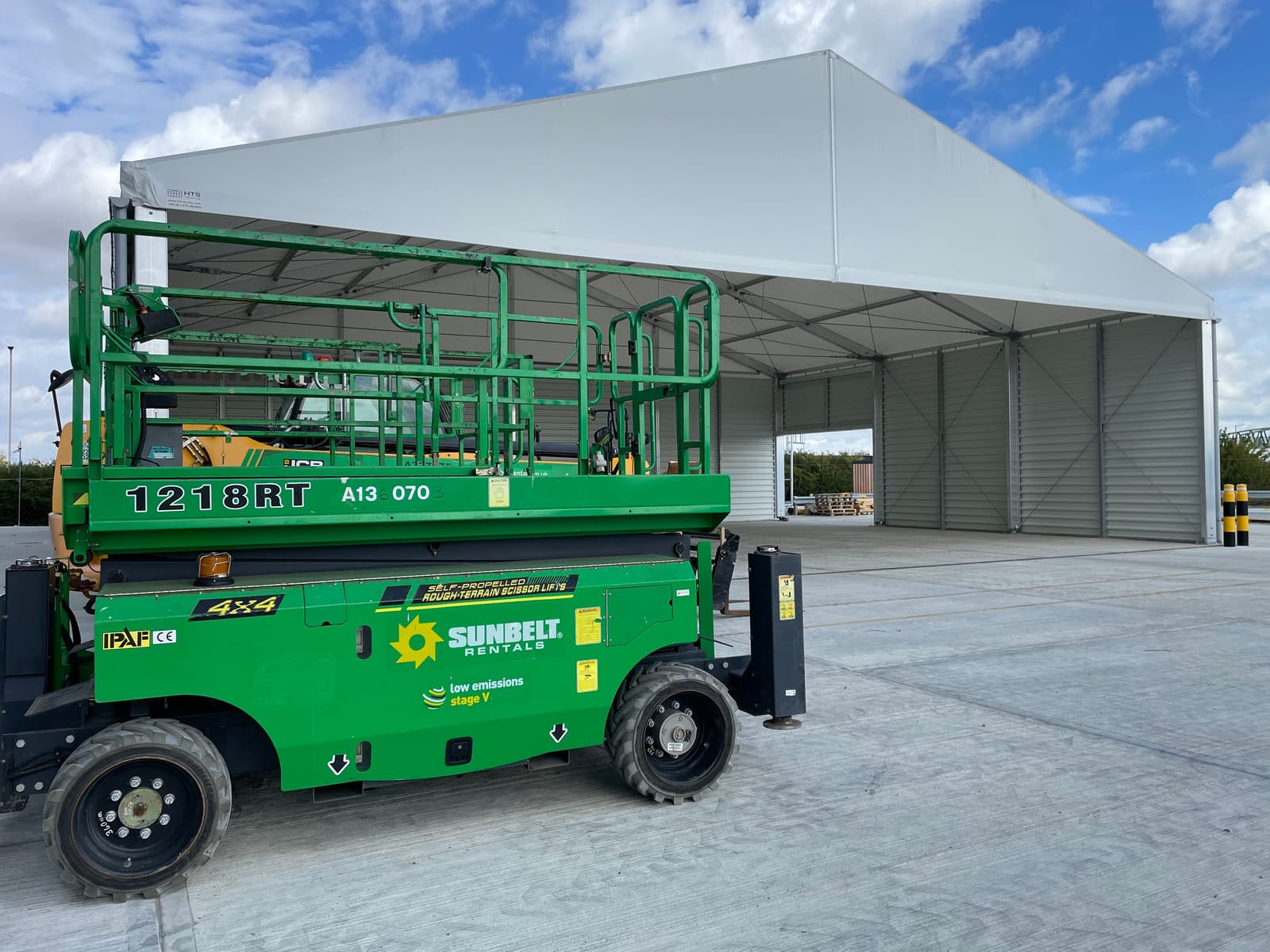
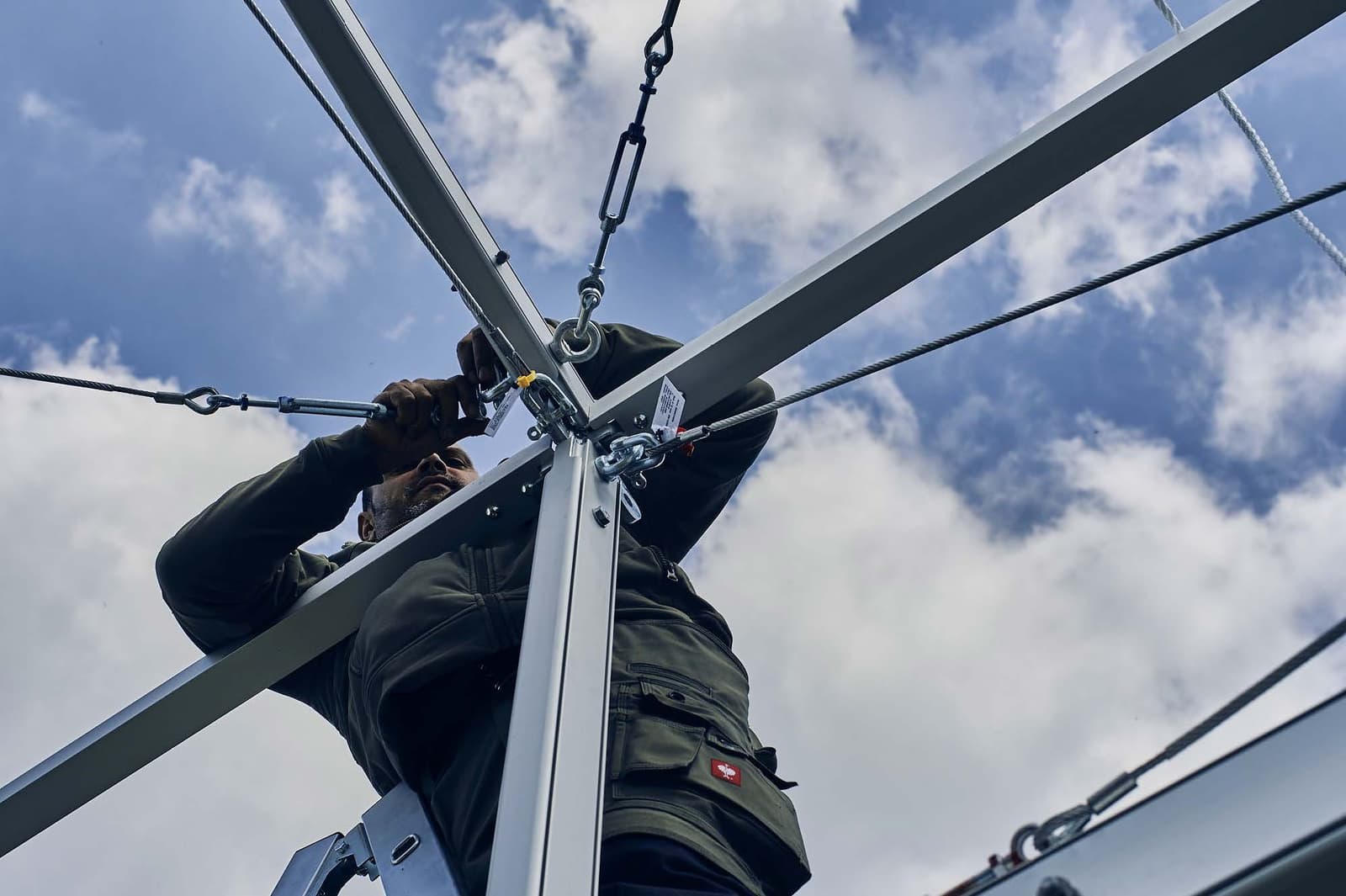
A demountable building can be used both as a temporary and as a permanent structure. It is quick and easy to assemble and can likewise be quickly and easily dismantled again. The reason for this is the modular system construction with prefabricated building elements that can be assembled and disassembled with little effort. In addition to the high level of prefabrication in production facilities, the materials used are also decisive for demountable buildings. Instead of building brick by brick on site using solid construction methods, materials such as aluminium are used in demountable buildings to create a lightweight yet robust frame. The selected side cladding and roofing are then mounted onto this frame.
See for yourself.
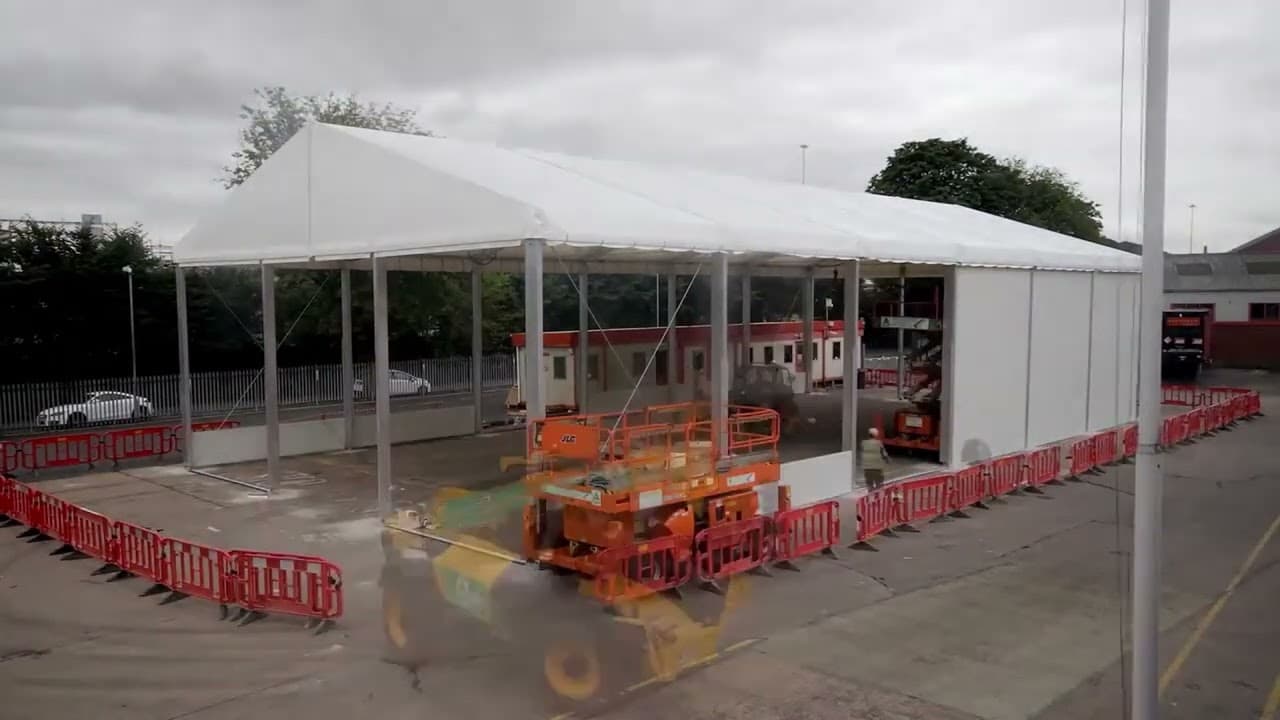
This video shows the assembly method for lightweight temporary buildings. This project was completed in less than a week, with the building constructed on an existing concrete surface.
Please accept cookies to watch the video.
What are the advantages of demountable lightweight temporary buildings?
Demountable or temporary industrial buildings offer a flexible, fast and cost-effective alternative for companies that need more space at their site. This makes them an ideal space solution for companies in almost all applications. In detail, mobile buildings have many advantages that also have a positive impact on competitiveness:
- Flexibility and mobility: These buildings can be quickly and easily assembled and dismantled, making them ideal for temporary use. Whether on construction sites, at events or for short-term storage solutions – the possible applications are virtually unlimited.
- High time efficiency: Thanks to prefabricated components, lightweight temporary buildings for dismantling can be erected in a short time. Depending on the size of the building, assembly can be completed in just a few hours. A lightweight temporary building can therefore also be made available for use at short notice.
- High cost efficiency: The components of mobile buildings are prefabricated in factories, which allows costs to be calculated precisely in advance. Compared to solid construction methods, fewer building materials are required for lightweight construction, resulting in lower material costs. Shorter construction times also reduce installation costs.
- Low weight and easy handling: The lightweight construction using materials such as aluminium significantly reduces the weight of the structure. This makes transport and handling of components easier, which in turn speeds up assembly.
- High level of individuality and adaptability: These buildings can be adapted to different needs and requirements. Whether size, shape or equipment – the modular construction method enables a tailored solution for every situation.
- Durability and longevity: Despite their low weight, the materials are robust and long-lasting. They provide protection against weather influences and are designed to withstand even frequent assembly and dismantling.
- Lower foundation requirements: Mobile buildings can be erected on existing solid surfaces such as paving stones, asphalt or gravel. Therefore, complex foundation work is often not necessary, and a building permit is not always required.
- Reusability: Thanks to easy dismantling and reassembly, demountable buildings can be used multiple times and for different applications.
- Environmental friendliness: The ability to reuse and, if necessary, reconfigure the buildings reduces material consumption and lowers the ecological footprint. This is a particularly important aspect in times of sustainability and environmental awareness.
Safe dismantling of buildings: How to ensure demolition without any unpleasant surprises
The dismantling of lightweight temporary buildings is just as simple as assembly and does not require any specialist expertise. However, it is important to plan and carry out the dismantling carefully in order to avoid problems or damage. If a component or accessory is damaged, all parts can be reordered from HTS TENTIQ.
We will show you how to safely dismantle a lightweight temporary building:
Releasing ground anchor fastening with ground nails
When dismantling a lightweight temporary building with ground anchor fastening, the ground nails are pulled out using a suitable ground nail puller or a forklift. After a visual inspection for possible damage or deformation, the ground nails can be reused for the next assembly. In rare cases, the ground nails are so firmly anchored in the ground that they have to be cut off flush with the ground surface.
Releasing anchor fastening with plugs
If your lightweight temporary building has been anchored in the foundation using plugs, these must also be carefully removed. First, the nuts are unscrewed from the plugs, after which the plugs are cut off flush with the surface of the foundation. If, during installation, the holes for the plugs were drilled deeper so that the plugs can be driven in further, they can also be driven deeper into the concrete foundation. To create an even surface, the holes are finally sealed with suitable filling material.
Holes in the cladding of the building
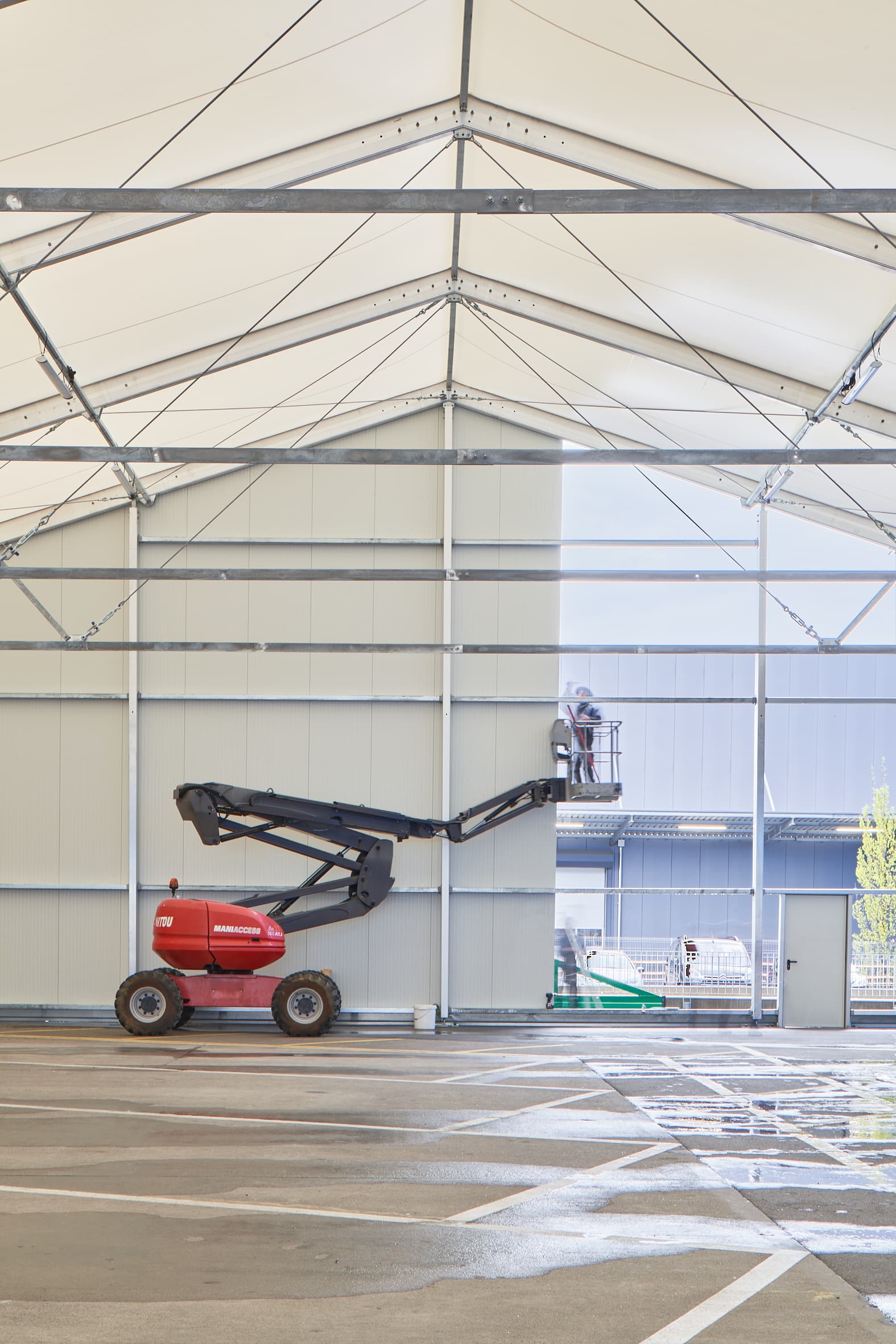
After all anchors have been released, you should proceed with dismantling the cladding of the building. When dismantling a lightweight temporary building with a solid roof or wall panels, the screws with sealing washers are first removed. The existing drilled holes in the panels remain visible, but the panels can still be reused sustainably. During reassembly, special larger screws with sealing washers are used, and the wall rail is positioned so that drilling takes place into a closed substructure, ensuring that existing drill holes are not hit again. With this method, repeated assembly and dismantling is possible without allowing water ingress.
.jpg&w=1600&q=75)
Demountability vs. durability: Impact on quality and service life
If a lightweight temporary building is dismantled carefully and by qualified personnel, demountability has no negative impact on durability. A professional approach is therefore crucial to ensure that the quality of the building is maintained and that the individual components can be reused for decades.
HTS TENTIQ uses exclusively high-quality materials in the manufacture of all lightweight temporary buildings, which are very robust, durable and specifically designed for repeated assembly and dismantling. This applies not only to the aluminium frame structure, but also to all wall and roof cladding, whether single-skin PVC sheeting, trapezoidal sheet metal or sandwich panels are used. The high resistance of the materials used ensures that demountable buildings retain their stability and robustness even after repeated dismantling and reassembly.
Through the combination of high-quality materials and professional dismantling, lightweight temporary buildings from HTS TENTIQ achieve a service life of several decades.
For this reason, more and more companies are opting to purchase lightweight temporary buildings despite the rental option. High-quality mobile buildings offer the flexibility to be used at changing locations and for different purposes. They are therefore ideal for quickly creating space for an undefined period of time, enabling companies to respond quickly and efficiently to changing needs. This makes mobile buildings a sustainable and economically advantageous solution for a wide range of applications.
Conclusion: Demountable buildings as a flexible, durable and efficient solution
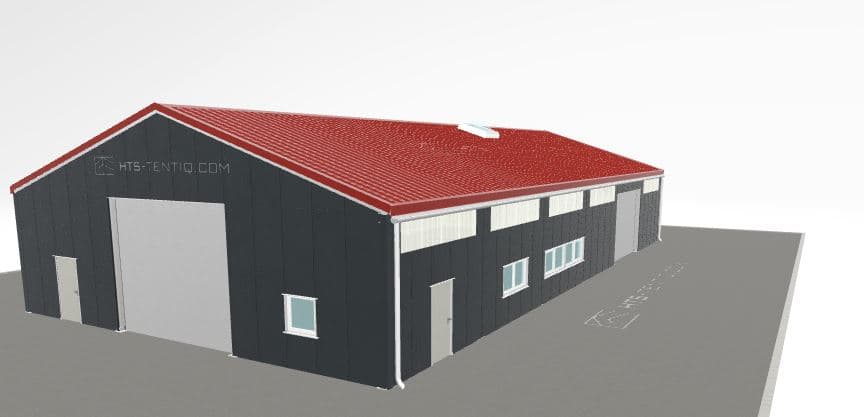
Many companies need to be able to respond quickly and flexibly to changing space requirements. Buildings for dismantling provide the appropriate space solution for these demands, which is why demountable lightweight temporary buildings are increasingly coming into focus. They not only offer a cost-efficient solution for temporary space needs, but also stand out due to their ease of handling. Thanks to their lightweight construction in the form of a modular system, buildings for dismantling can be reused multiple times and deployed at different locations without any loss of quality.
Demountable buildings therefore represent a versatile option for efficiently meeting both temporary and long-term space requirements.