.jpg&w=1600&q=75)
How stable are industrial tents?
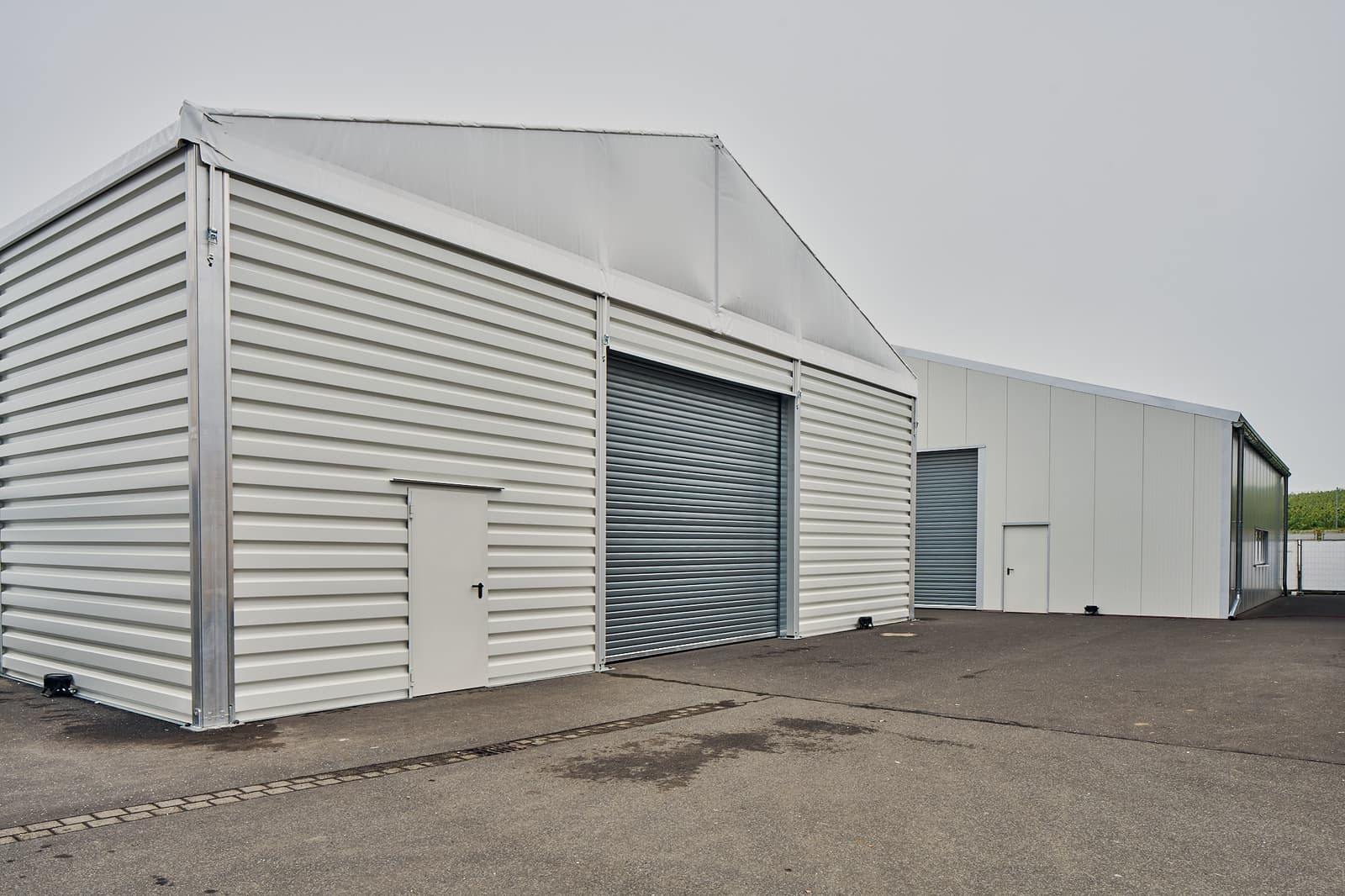
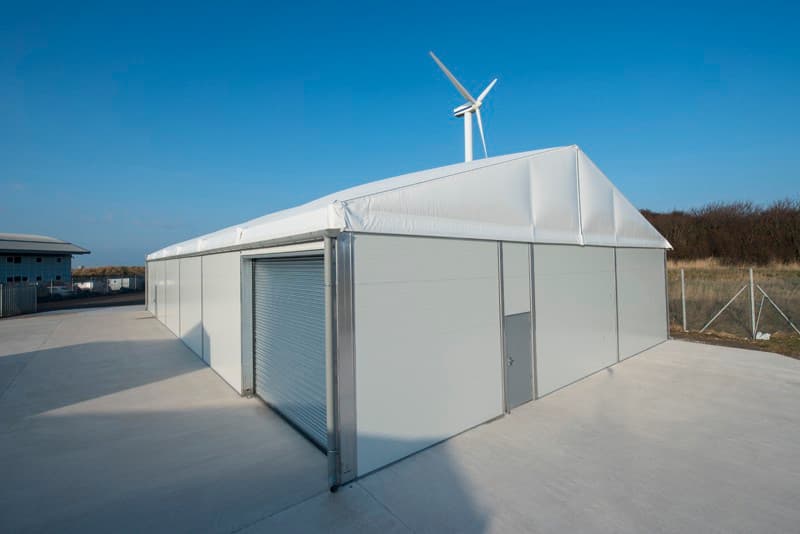
A common misconception about industrial tents or mobile temporary buildings is that they are not sufficiently stable for long-term industrial use.
Reasons for this could be the tent-like aluminium frame, their designation as “tent” or “mobile”, or simply misinformation. Whatever the reason people come to this conclusion, it is incorrect.
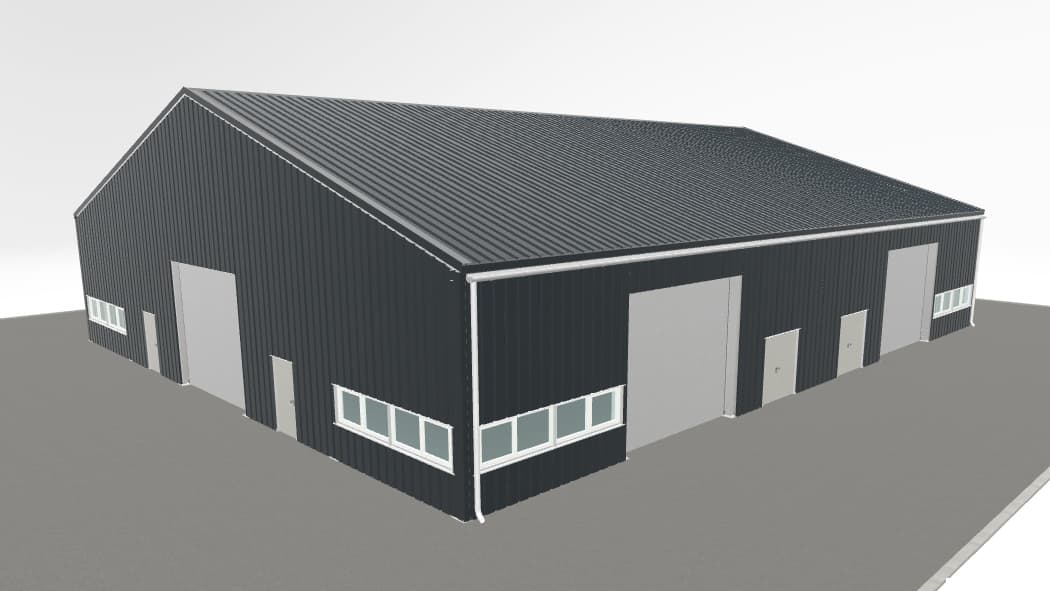
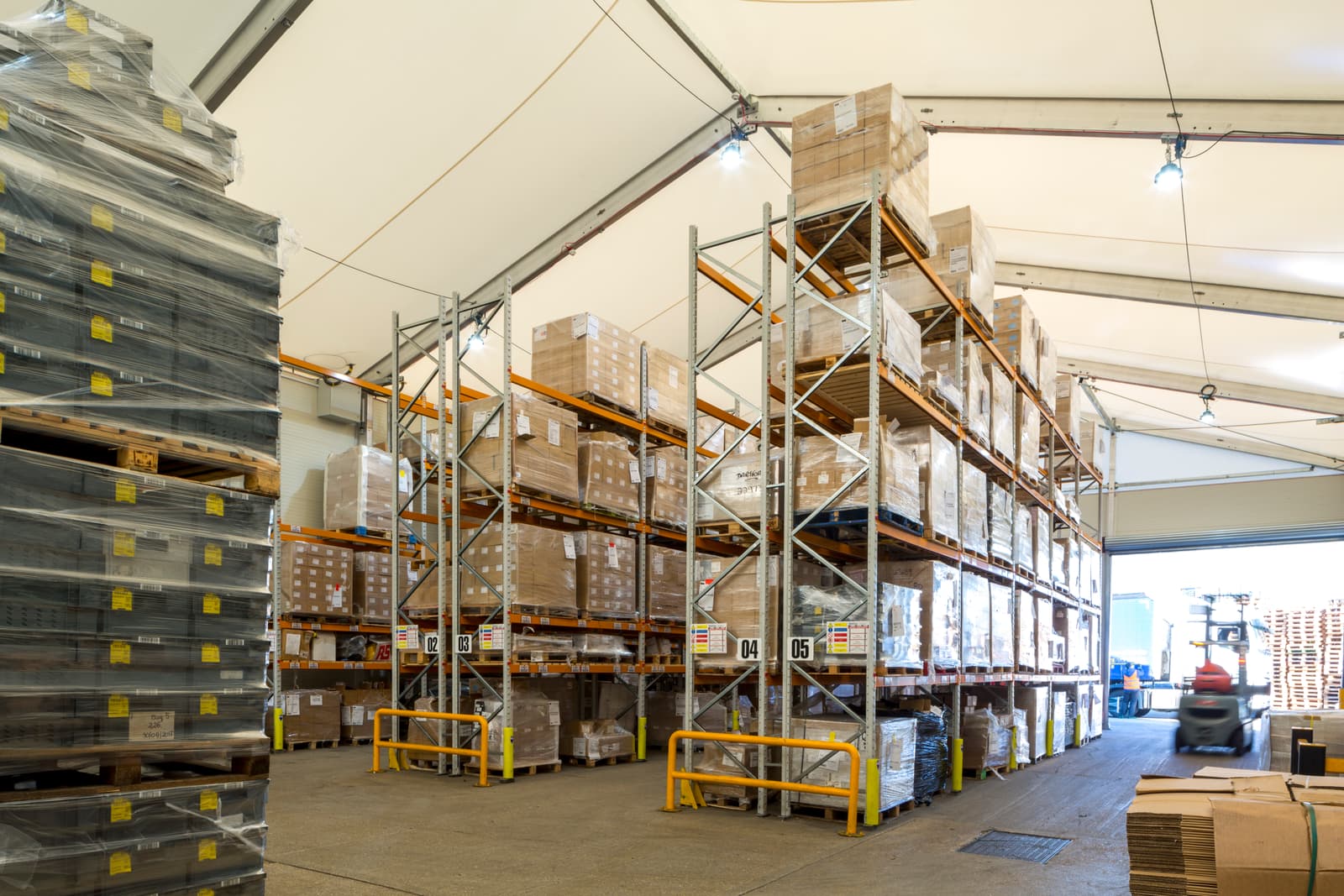
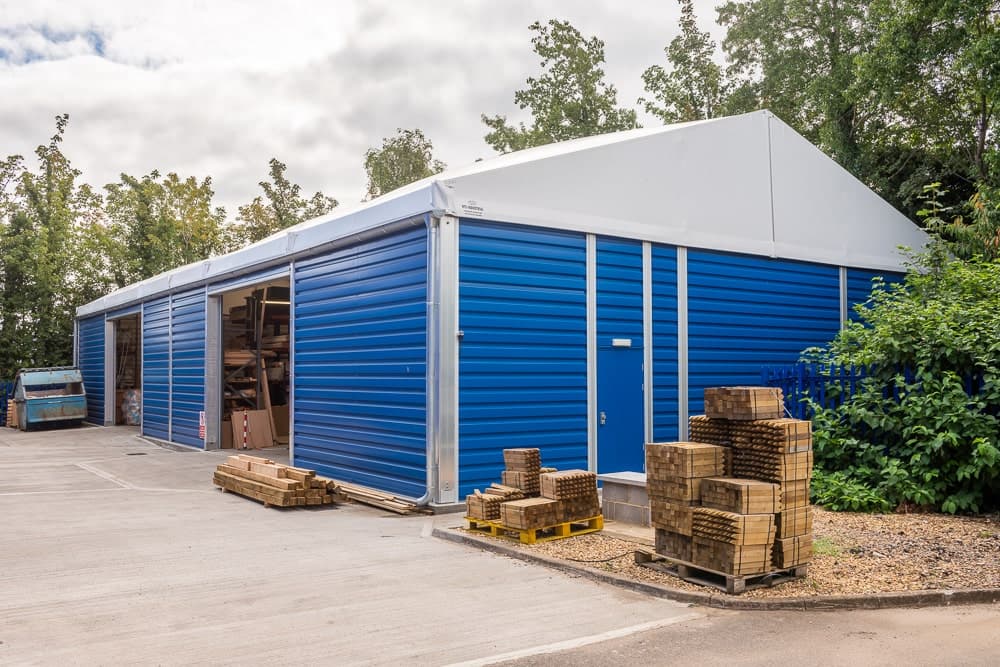
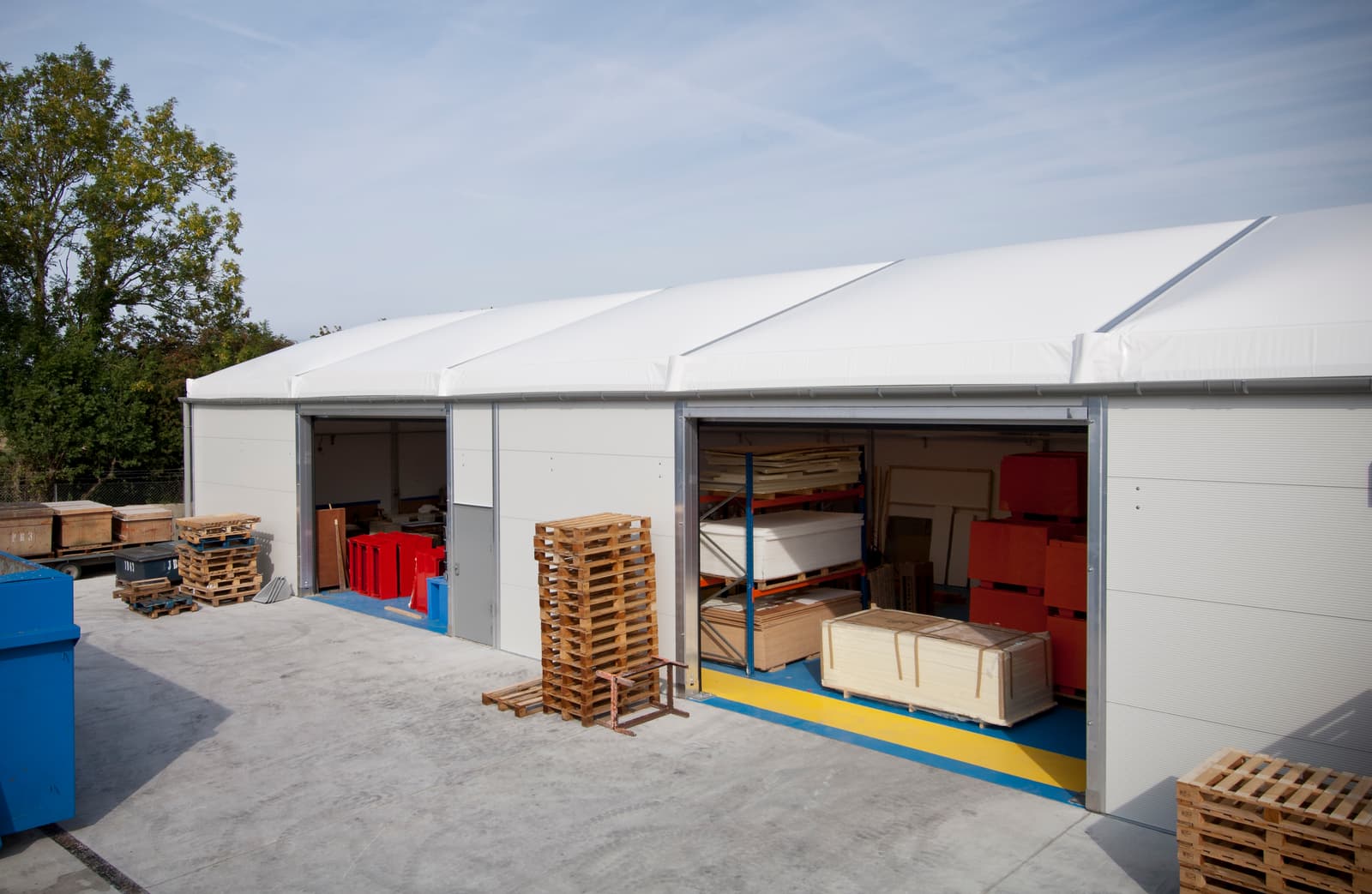
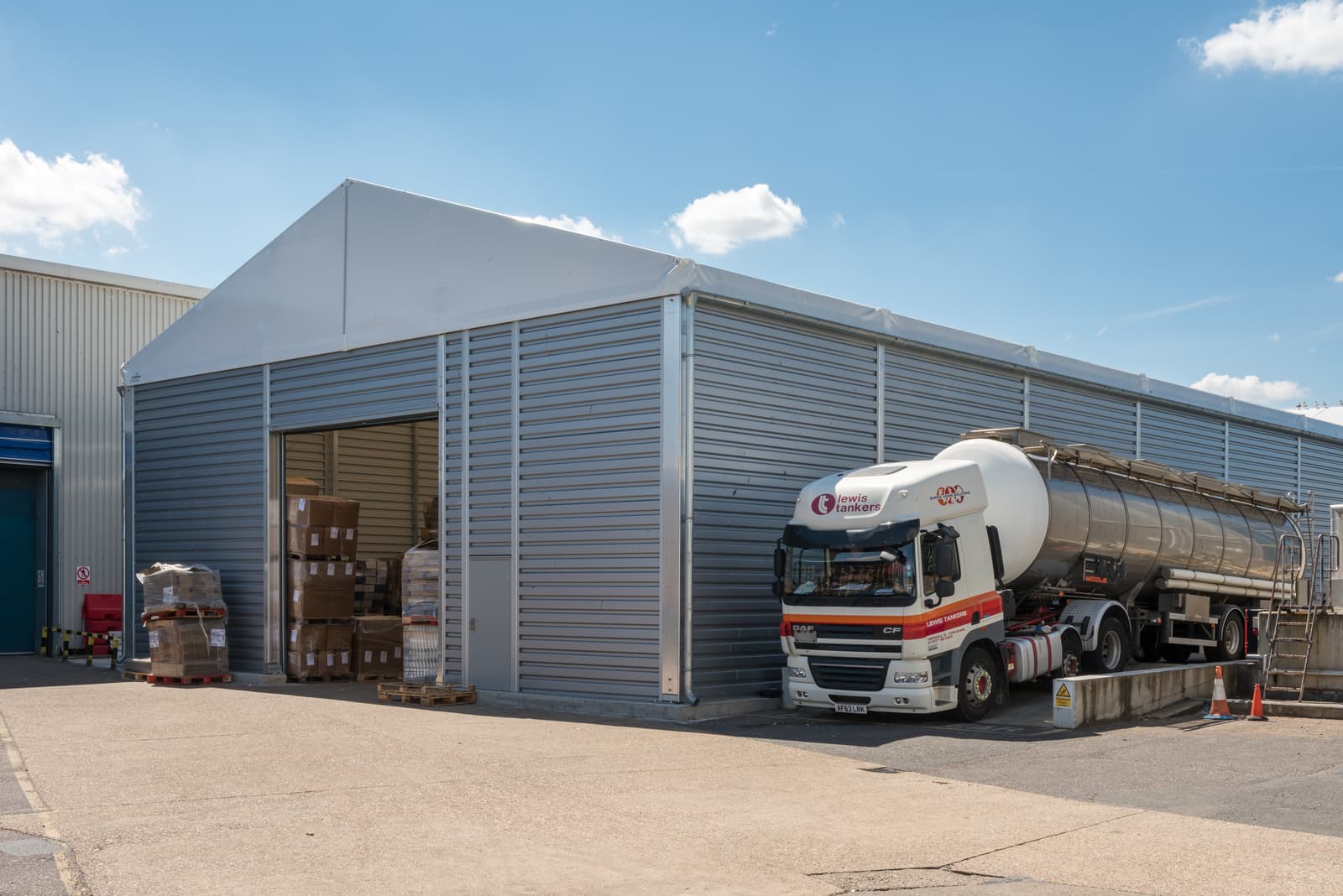
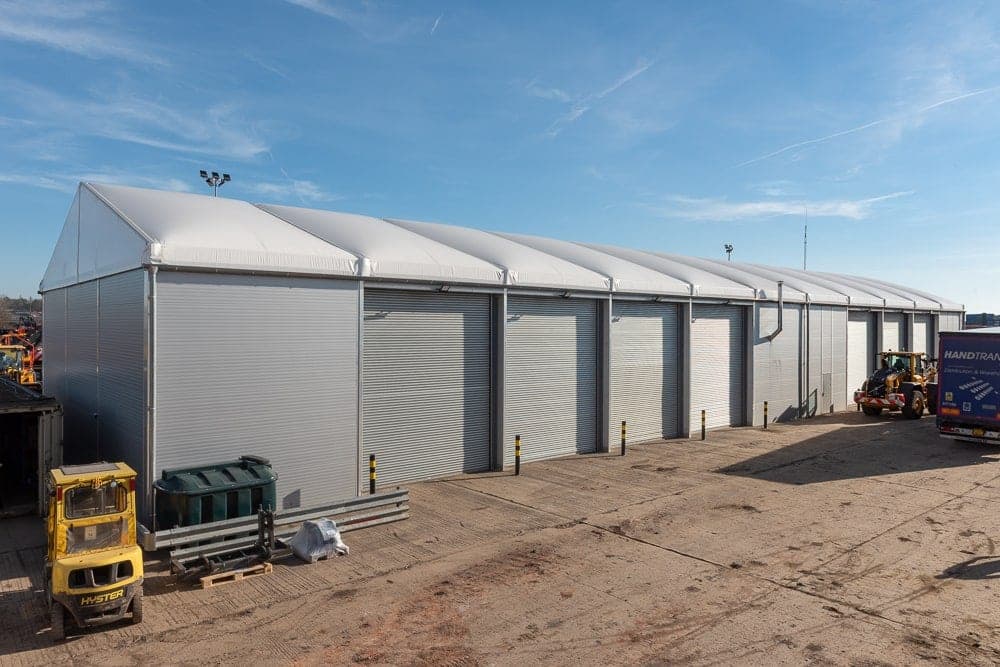
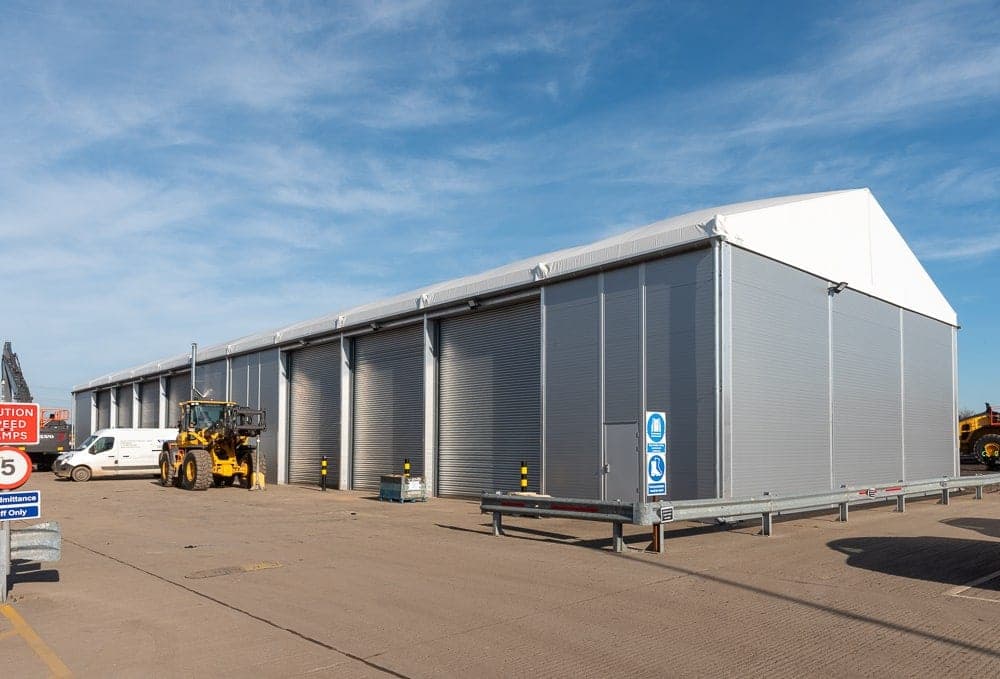
Mobile temporary buildings are developed and constructed for long-term industrial use and can be used for the same purposes instead of steel warehouses or conventional buildings.
The main reason for their classification as “mobile” lies in the fact that this is one of their many characteristics. Assembly using anchors on existing concrete surfaces means they can simply be dismantled again and reassembled at another location.
In addition to long-term use, this is precisely what makes temporary use or leasing possible in the first place.
Which standards do they comply with?
For long-term use, every building must be able to withstand the maximum snow and wind loads of a specific region and, ideally, a specific site.
For example, a coastal location may fall within the same region as a site located 50 km inland; however, buildings on the coast generally have to withstand significantly higher wind speeds. The same applies to high-altitude areas, where snow loads play an even greater role in addition to wind speeds.
Regardless of a country’s or region’s building regulations, industrial tents for long-term use must be able to withstand these wind and snow loads over months and years – not just a few days or weeks.
Why they are so stable
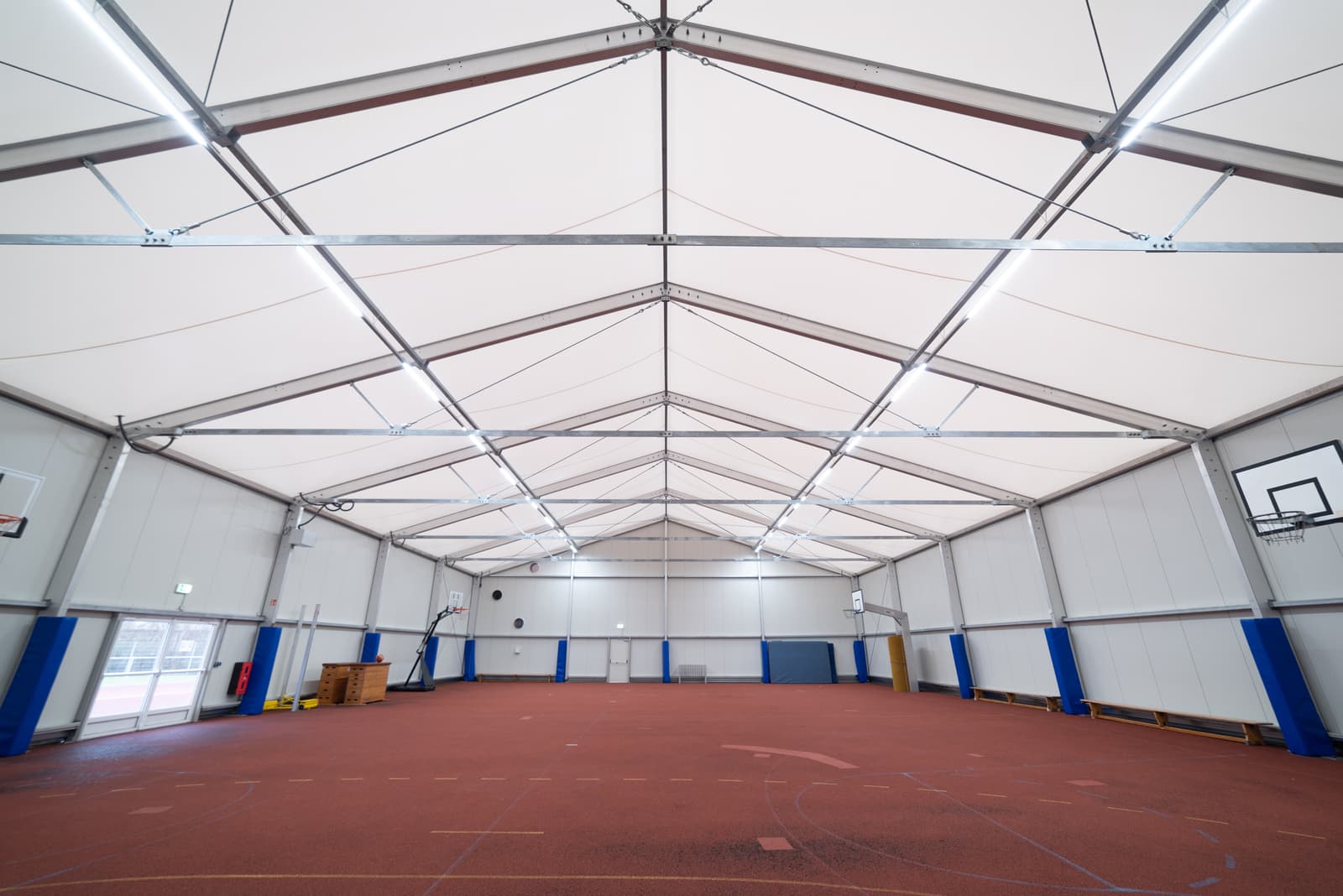
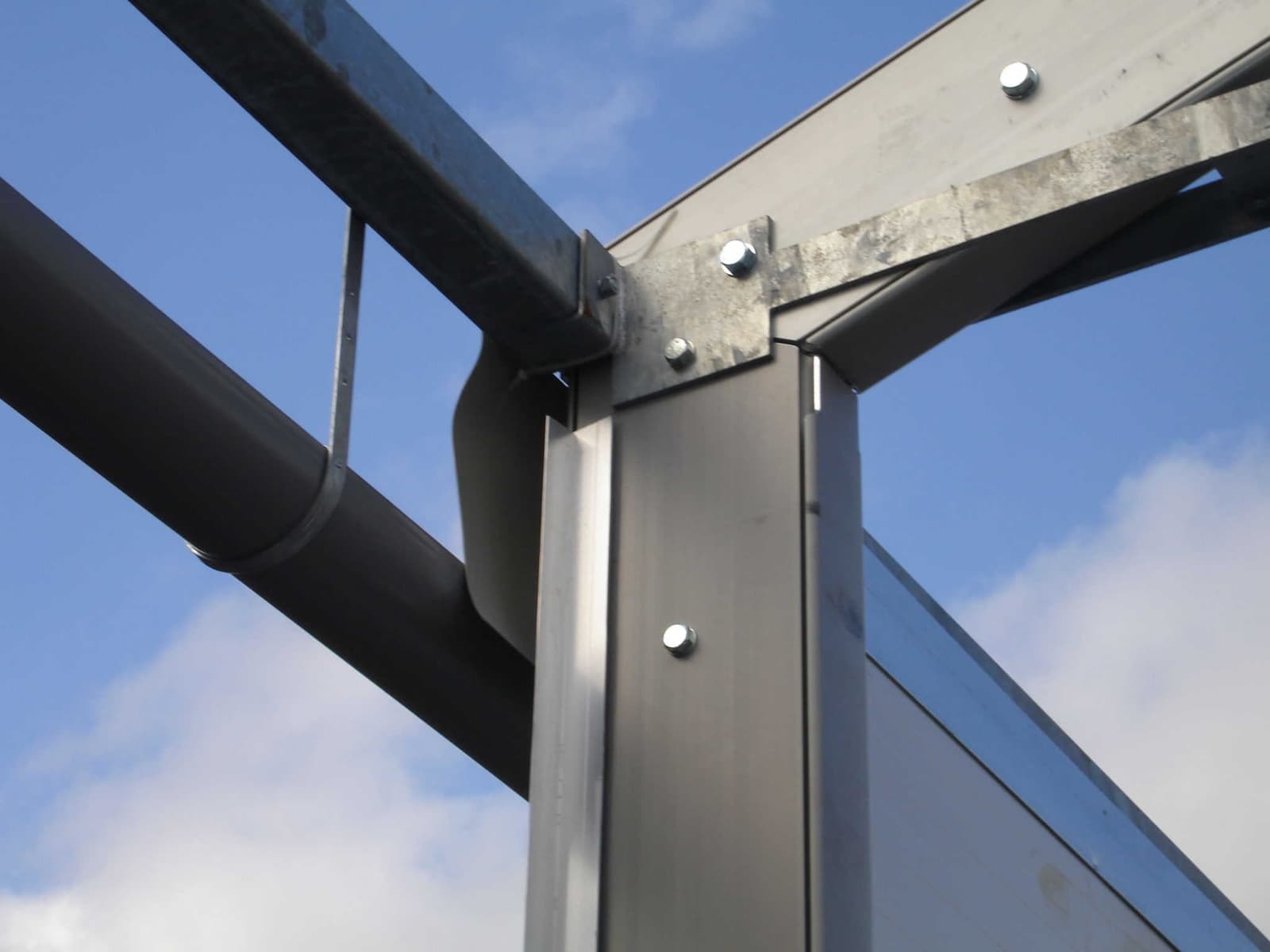
- The calculation of buildings in accordance with the minimum requirements of regional standards ensures that they are structurally stable, safe, and durable in the long term. In some cases, however, structural calculations and the manufacture of mobile storage buildings and other structures are carried out to higher standards in order to achieve greater stability for even higher wind and snow loads.
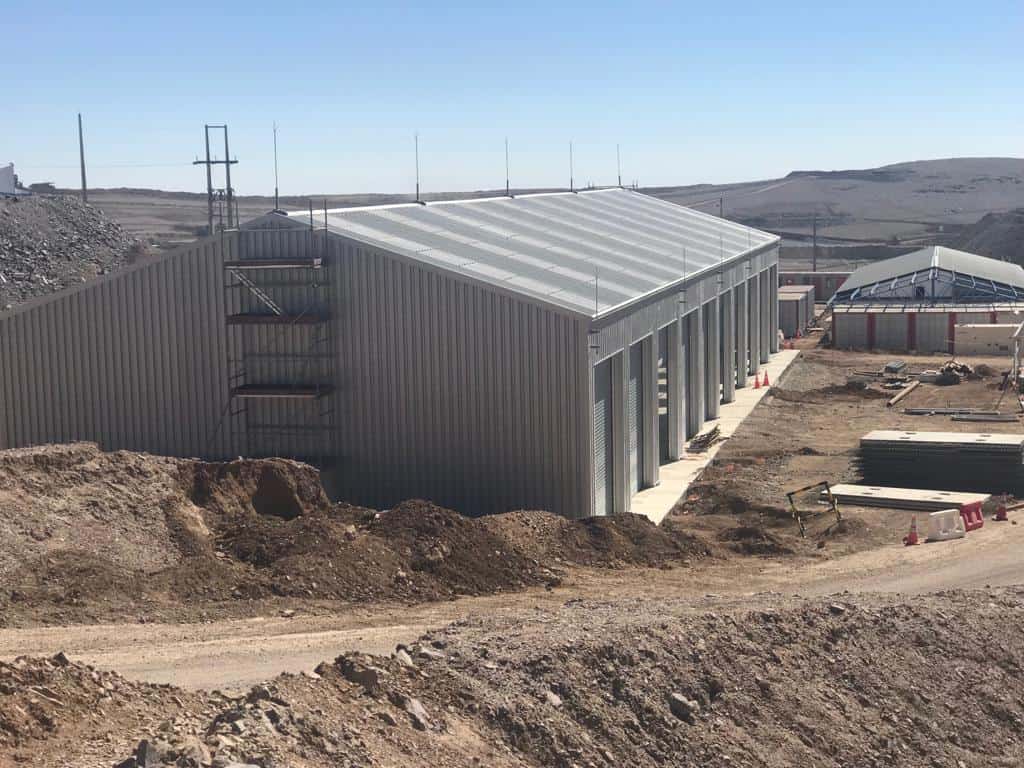
- A good example of this is the development, manufacture, and installation of a temporary building by HTS TENTIQ in the Chilean Andes at an altitude of 5,000 metres above sea level.
- The altitude played a central role. Even more decisive, however, was the fact that the warehouse was built in a highly earthquake-prone zone and had to comply with Chile’s building regulations for earthquake-resistant structures.
- The main reason HTS TENTIQ was able to fulfil these and many other requirements is that we have an in-house design and engineering department as well as state-of-the-art production facilities. Our structural engineers carry out individual structural calculations here.
- As long as we are able to design buildings precisely in accordance with the applicable building regulations, we are also able to provide them.
- This is not the case with many suppliers of industrial tents that only produce in series.
- Frame sizes and the corresponding structural design are only available in standard sizes, regardless of requirements.
- For customers, this can have dangerous consequences if they are persuaded to use an industrial tent that does not have sufficient stability for the region or site and may therefore be unsafe.
When are they not stable enough?
When considering the use of an industrial tent, you should pay particular attention to two things.
First, ask for the structural calculations of the mobile building and, if you are unsure, have them checked by an engineer.
Secondly, be sceptical if you are renting or buying an industrial tent from a supplier that relies on used stock. The frame warranty may have expired, or it may have already been in use for more than 10 years. There is also a risk that buildings are assembled from components of different ages or even different systems, and therefore do not fit together properly. All of these factors can compromise the stability of a building.
Whenever possible, use a factory-new, made-to-order building, whether it is intended for short-term or long-term use.
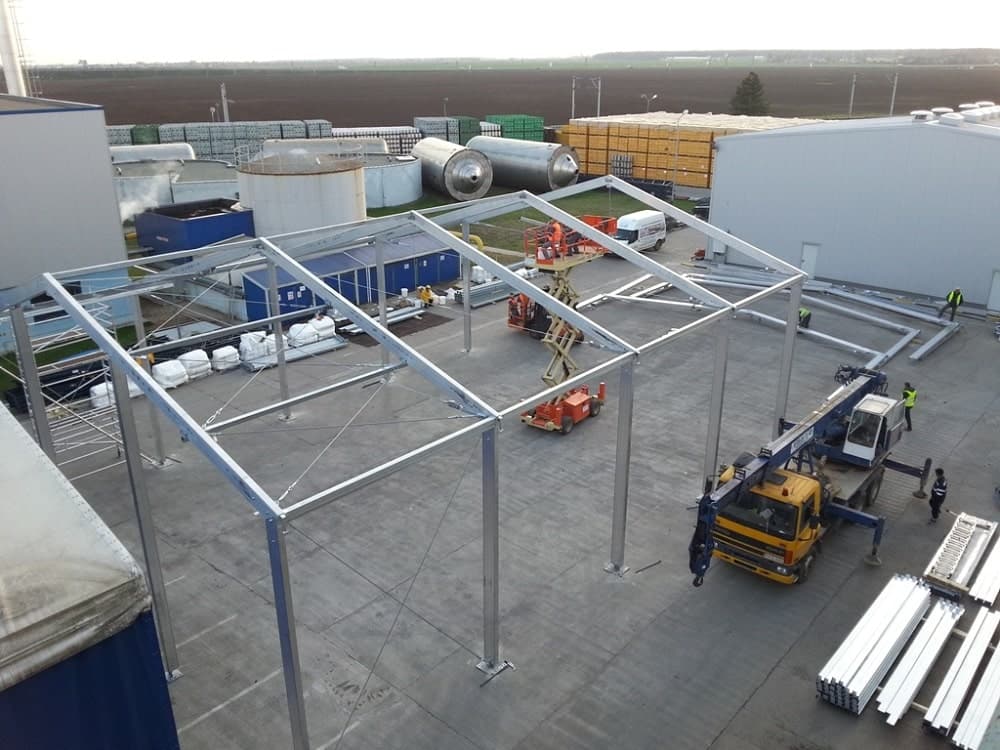
HTS TENTIQ has recently launched a new carbon hybrid construction method. This advanced, patented design features an extremely lightweight and slightly narrower carbon-aluminium frame. The advantages are significant. The frames are considerably smaller and easier to handle and transport, while being significantly more stable than comparable aluminium frames.
At present, these frames are in high demand among military and humanitarian organisations, as they give the term “rapid deployment” a completely new meaning. Their future use for mobile temporary buildings and in industrial applications is an exciting new development, particularly in earthquake-prone zones.
Carbon-Hybrid-Technology