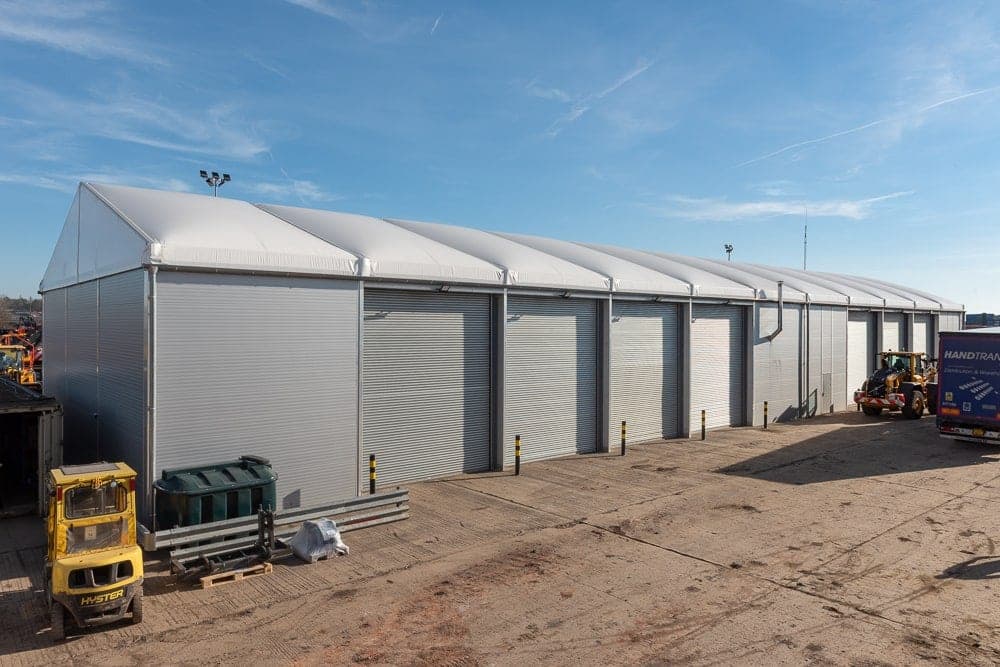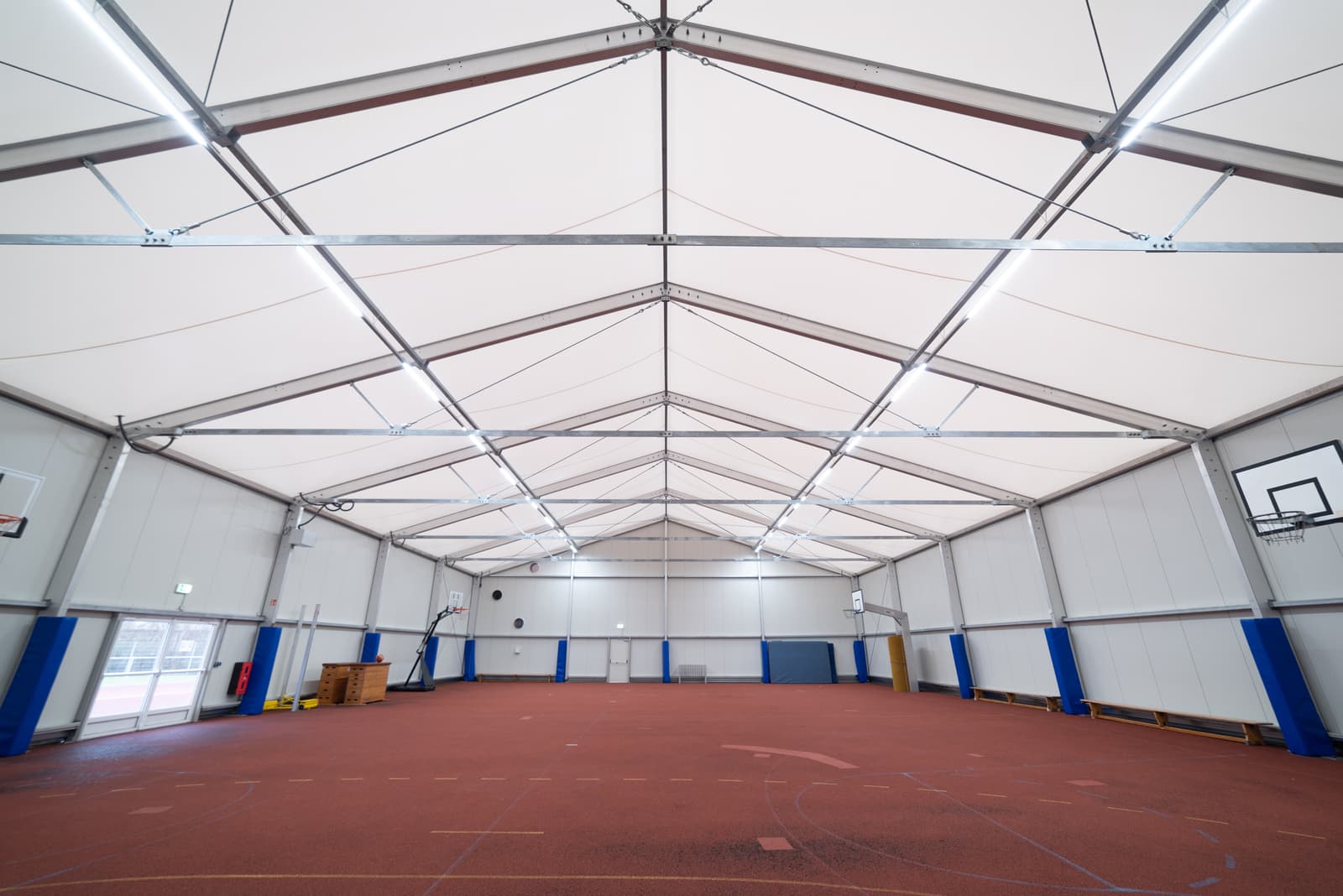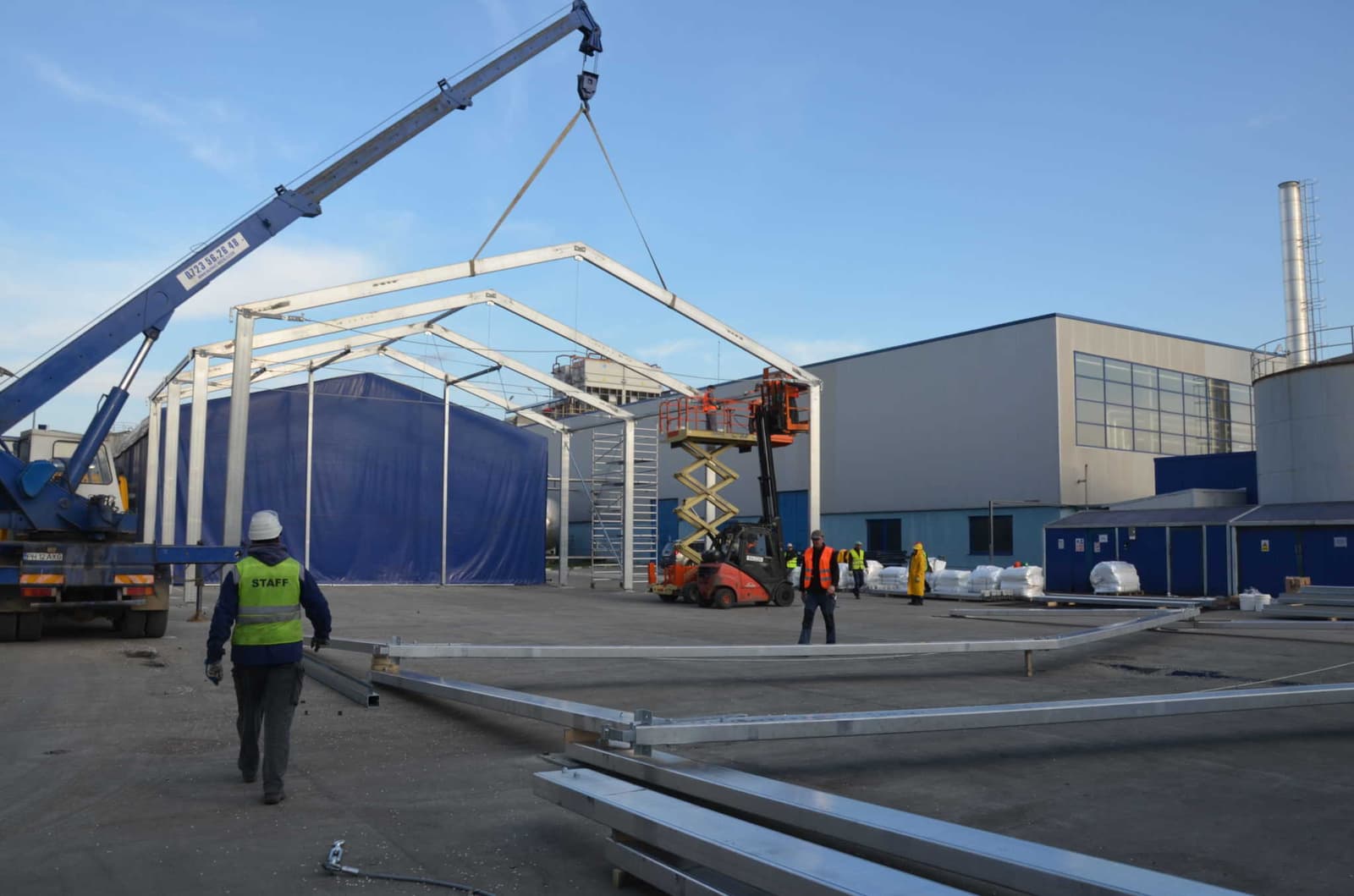
Planning permission for temporary buildings and storage tents: necessary or not necessary?
A new storage tent, a sales room or an expanded production building: companies often have to react very quickly to sudden space requirements. From a structural engineering perspective, temporary buildings offer the perfect solution for this. The combination of a flexible modular system, short delivery times and rapid assembly makes temporary buildings ready for use faster than any other spatial solution. And: in some cases, temporary buildings are buildings exempt from planning permission – so no building permit is required.
We show you under which conditions you can erect a temporary building without planning permission.
Do temporary buildings require planning permission?
Temporary buildings only require planning permission under certain conditions. It is therefore entirely possible to erect a building without planning permission. Depending on the duration of use and size, your new temporary building is not only quickly ready for use, but also a building exempt from planning permission.
- According to DIN 13782, our temporary buildings can be erected as “temporary structures”.
- With a maximum installation period of three months and a maximum floor area of 75 m², you can erect a temporary building without planning permission.
- For permanent use of temporary buildings, planning permission is required. Our temporary buildings have a very long service life.
Buildings exempt from planning permission: buildings without planning permission
Is it possible to erect and use a building without planning permission? In Germany, there are no uniform regulations governing which constructions require planning permission. Depending on the federal state, different regulations apply. For any planned construction, it is therefore always advisable to contact the responsible building authority.
However, constructing a building does not automatically require planning permission. Whether a planning application must be submitted when erecting a building essentially depends on the following factors:
- Construction method: temporary building, steel construction or solid construction
- Floor area
- Duration of use
- Requirement for a foundation
Buildings exempt from planning permission can be realised with temporarily used temporary buildings. The maximum floor area is subject to different regulations in the individual federal states. A tent hall exempt from planning permission can, in some federal states, be up to 100 m² in size, while other federal states limit the possible floor area to 75 m².
In the case of permanent use or construction in steel or solid construction, planning permission is always required. We provide detailed information on temporary buildings without permission and permanent structures requiring a building application.
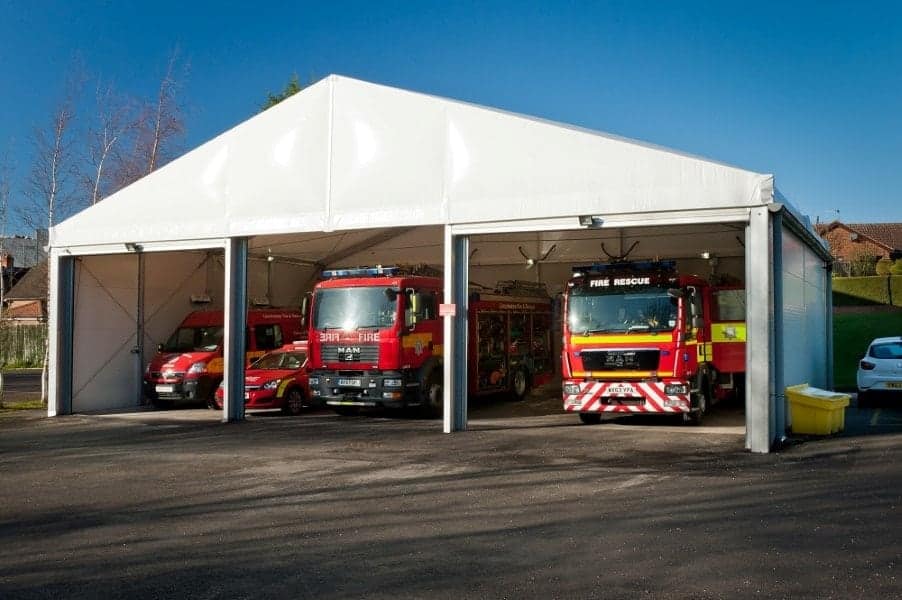
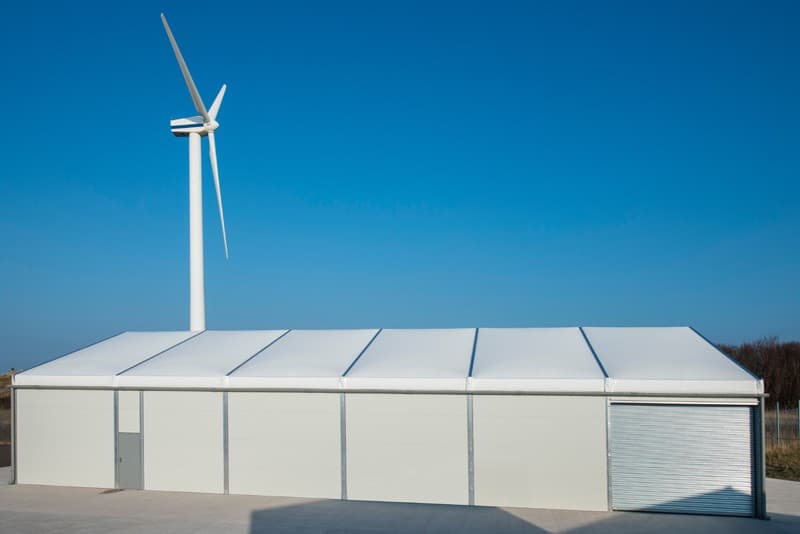
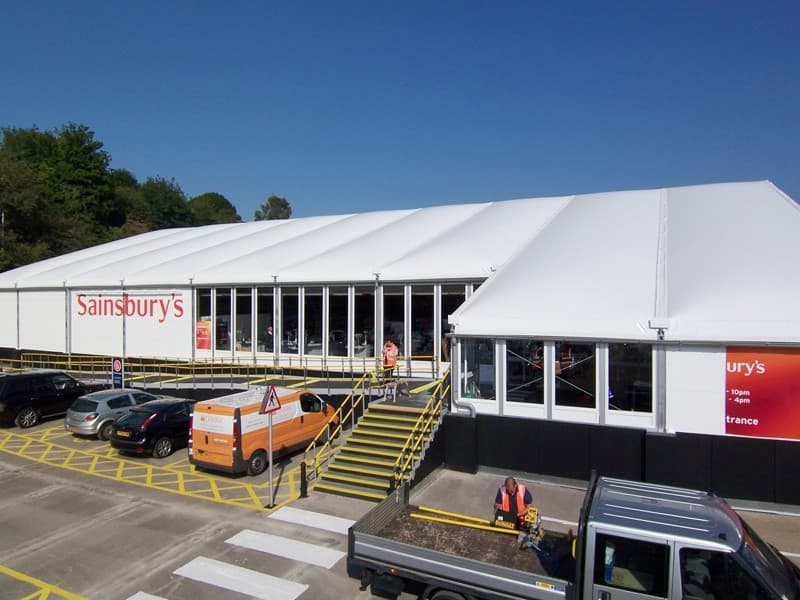
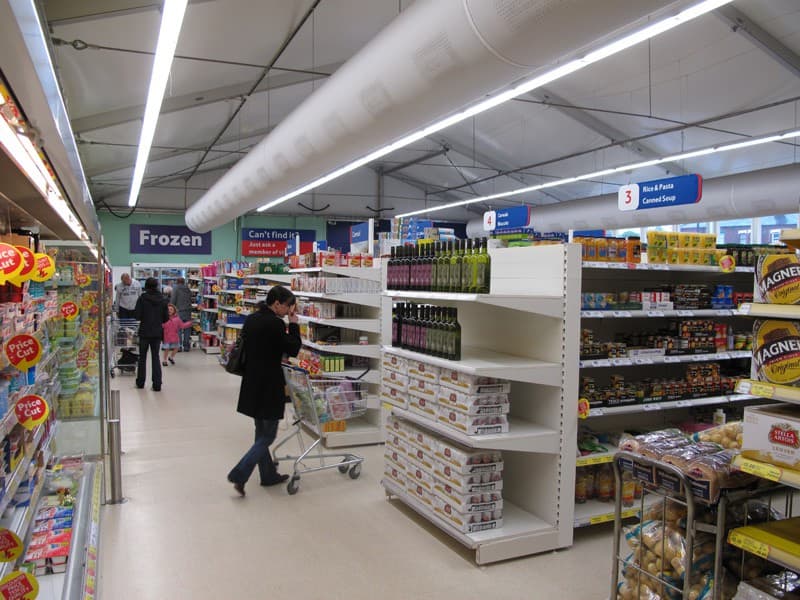
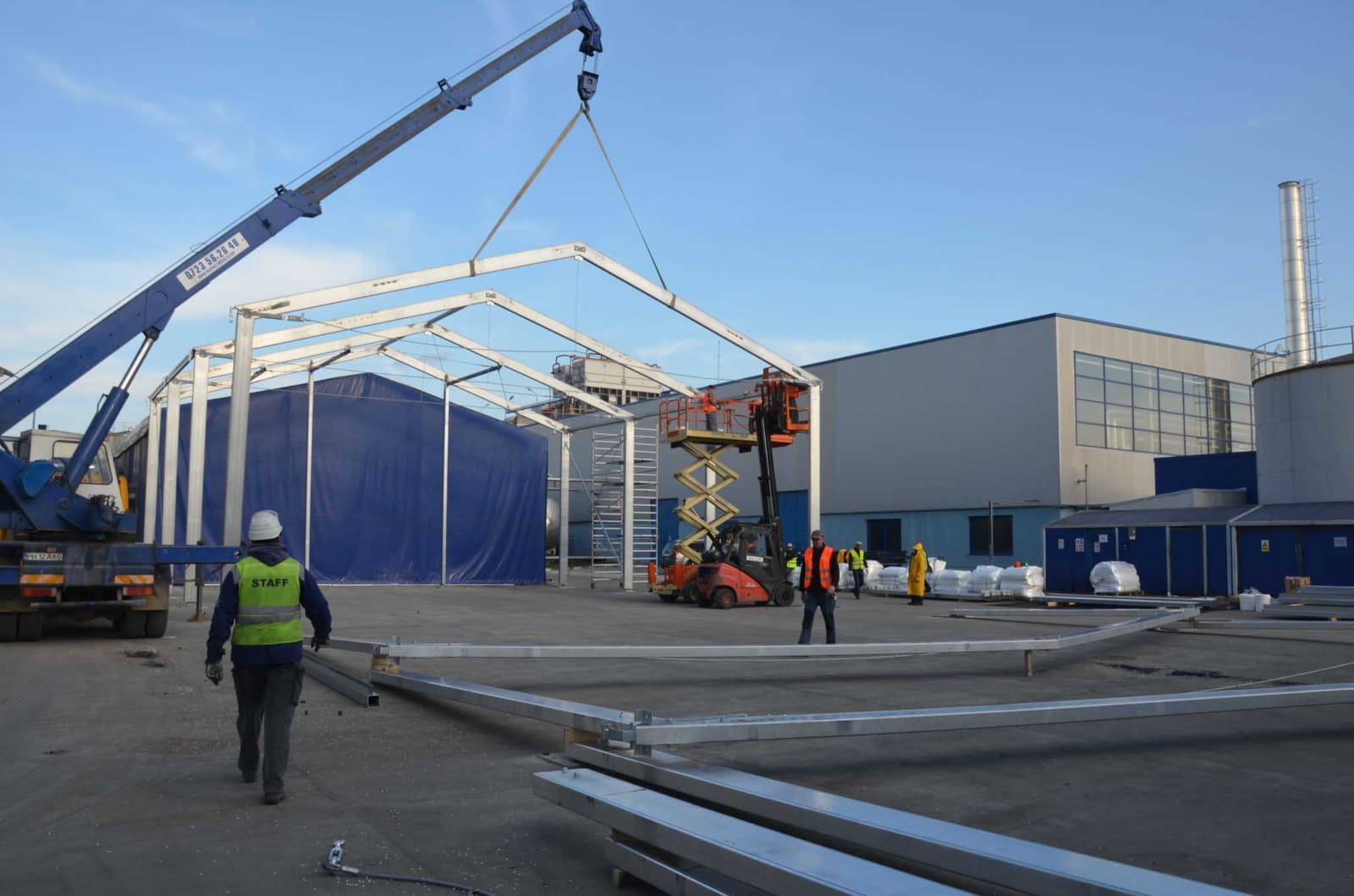
Temporary structures according to DIN EN 13782: buildings with operating approval
“Temporary structures” are categorised as temporary constructions such as tents or also temporary buildings and storage tents.
“Temporary structures” do not require planning permission but must be registered with the building authority, after which an inspection is usually carried out by a monitoring organisation such as TÜV, and the building may be used temporarily. The decisive factor for temporary structures is the operating approval. This document can be issued by HTS TENTIQ.
The advantage of approval as a “temporary structure” is, on the one hand, that no building application has to be reviewed. Temporary buildings without planning permission therefore offer significant time savings. On the other hand, depending on ground conditions, temporary structures can be anchored with ground stakes, meaning no foundations need to be poured for the building. Temporary structures fall under DIN EN 13782.
But how long may a “temporary structure” remain in the same location? By law, a maximum installation period of three months is prescribed for temporary structures; in exceptional cases this may be six months. However, the installation period can be extended by the building authority if it is proven that the structure is genuinely temporary, meaning it will eventually be dismantled. This can be demonstrated, for example, through a rental contract. The building authority then usually requires the structure to meet the local snow and wind load requirements. Our standard temporary buildings therefore cover 70% of Germany’s area in terms of wind and snow loads. For special snow loads such as in the Alps or special wind loads such as in coastal regions, we can design customised buildings that are specifically engineered according to local conditions.
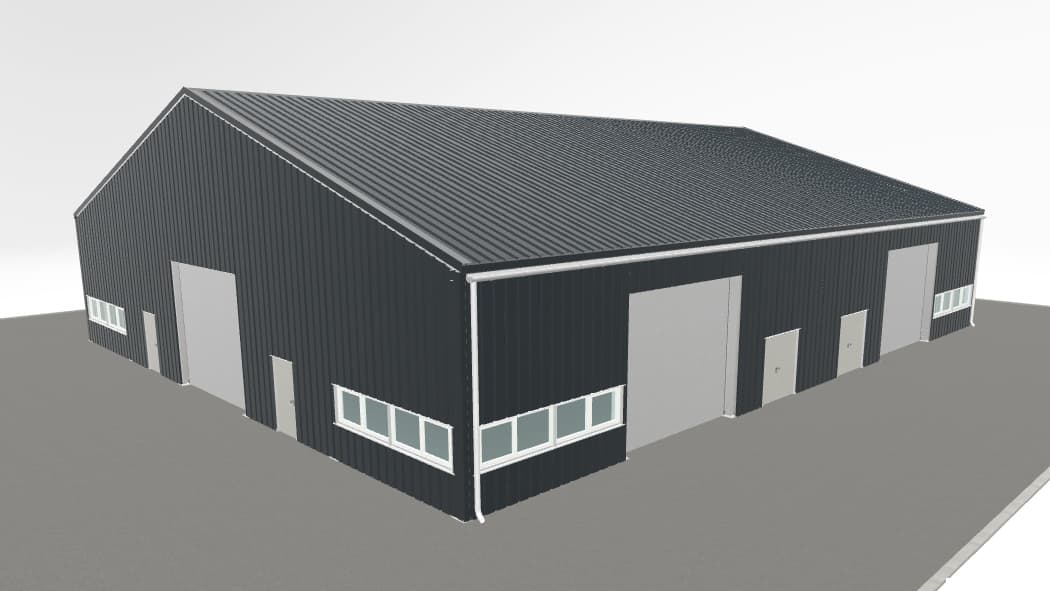
Permanent buildings according to DIN EN 1991: buildings with planning permission
If a building is to be erected permanently, planning permission with structural analysis in accordance with DIN EN 1991 is required. This is essentially the same as in residential construction. A site-specific structural analysis must be prepared, which is reviewed by the building authority or a certified structural engineer. After this, the building application can be approved.
For a building application under construction law, it is advisable to appoint an architect who submits the application in the proper form.
Even temporary buildings that cannot be approved by the building authority as a “temporary structure” must be applied for as permanent buildings, even though they are actually intended to be dismantled again.
Building construction with HTS: how we support you in the building approval procedure
There is no question that obtaining planning permission can be time-consuming and complex: deadlines and requirements must be met, building descriptions and construction drawings must be prepared, and the necessary plans organised. You do not have to handle this bureaucratic effort on your own.
As an experienced manufacturer of temporary buildings, we at HTS TENTIQ are very familiar with the legal requirements in building construction. We share this expertise with our customers and support them throughout the joint construction project: from planning, through any required planning permission, to installation.
The legal responsibility to obtain planning permission lies with the client. However, we have already gained extensive experience in dealing with building authorities and support you in all necessary steps. We prepare your project precisely in line with all formal requirements of the building application. The preparation of the building description and construction drawings is the responsibility of your trusted architect, whereby a locally based architect is recommended. With us, you have experienced experts for temporary buildings at your side who know what matters when it comes to buildings with and without planning permission.
Conclusion: Using temporary buildings without planning permission
Admittedly, it is not easy to gain clarity regarding building regulations and planning permission. This is also because there are no uniform rules in Germany as to which constructions require planning permission, as building law is the responsibility of the federal states. The simplest and fastest route is a building without planning permission. The option to erect a building exempt from planning permission is provided by temporarily used temporary buildings.
In this case, you can erect a building exempt from planning permission and use it immediately after assembly. This saves a great deal of valuable time. In addition, temporary buildings are quickly available, assembled in a very short time and also dismantled again. Temporary buildings without foundations are therefore also the perfect mobile buildings.
Even when using your building as a “temporary structure”, it is advisable to contact the responsible building authority at an early stage. Proof that the building is temporary can, if necessary, be provided by a rental contract. If the building authority does not agree to classification as a “temporary structure”, a building application must be submitted.
For both options, our temporary buildings come with the necessary documentation.