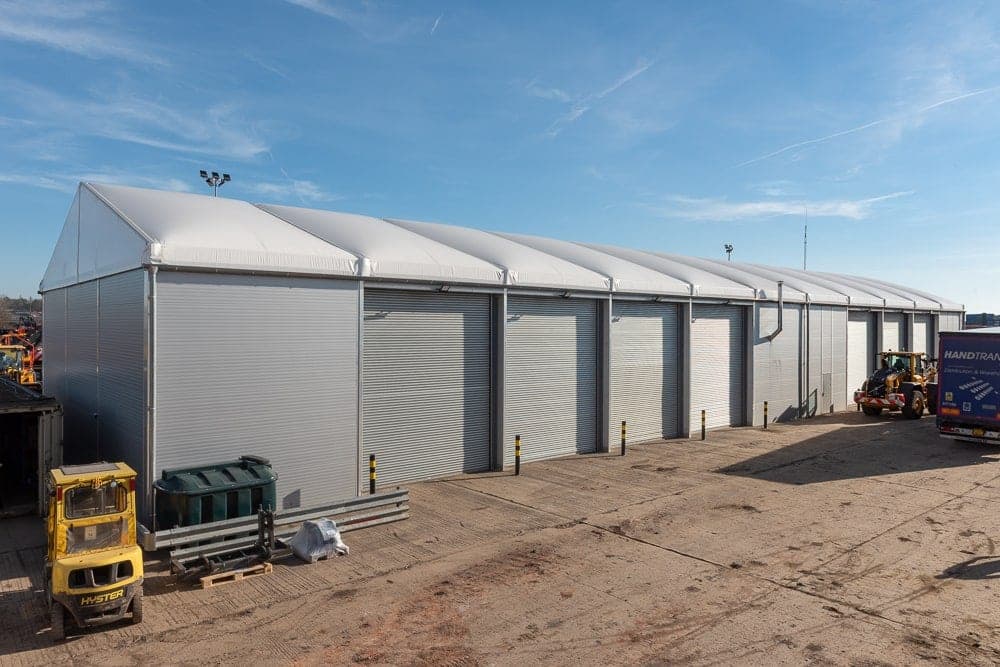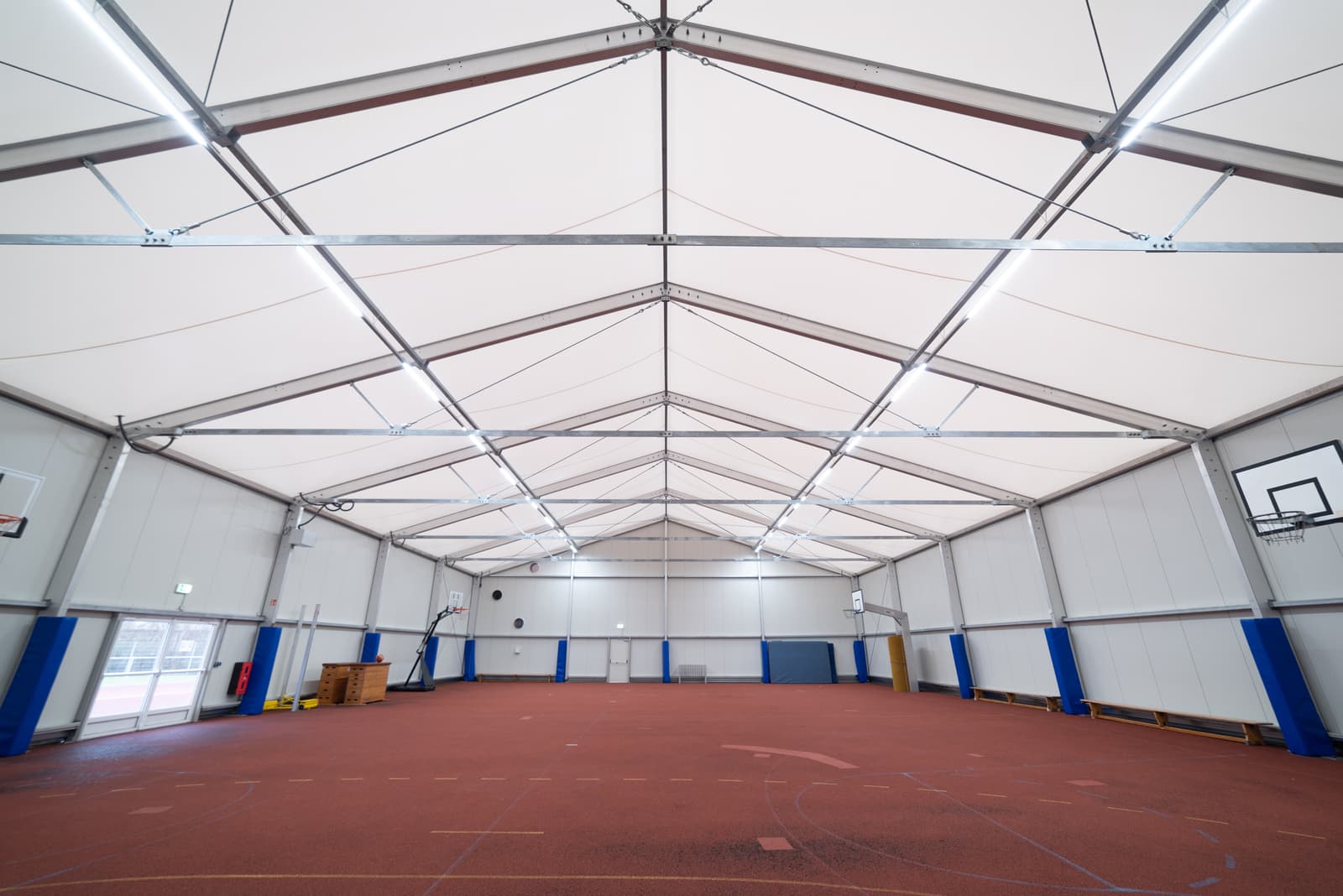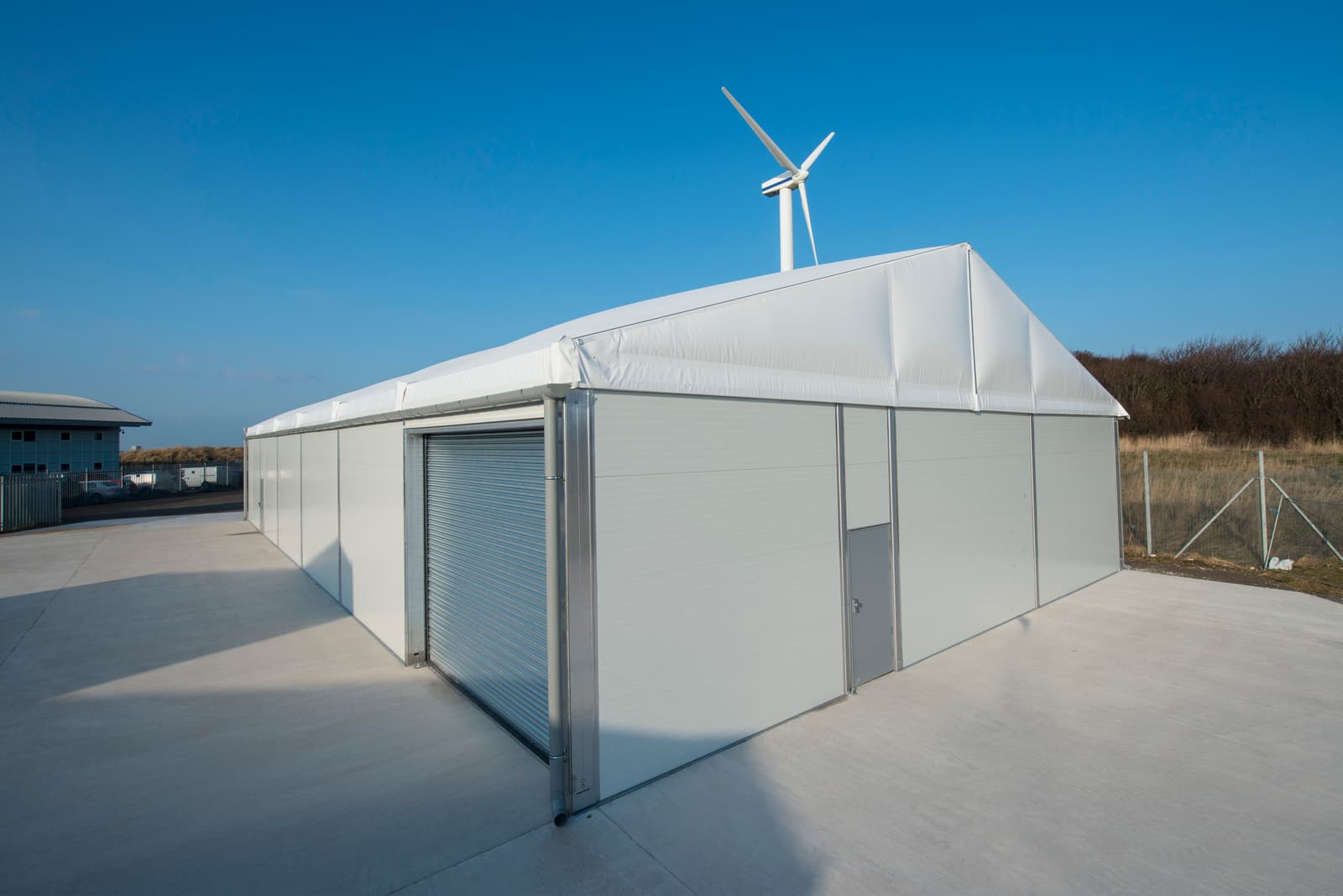
Mobile temporary building without foundation: Flexible and quickly assembled
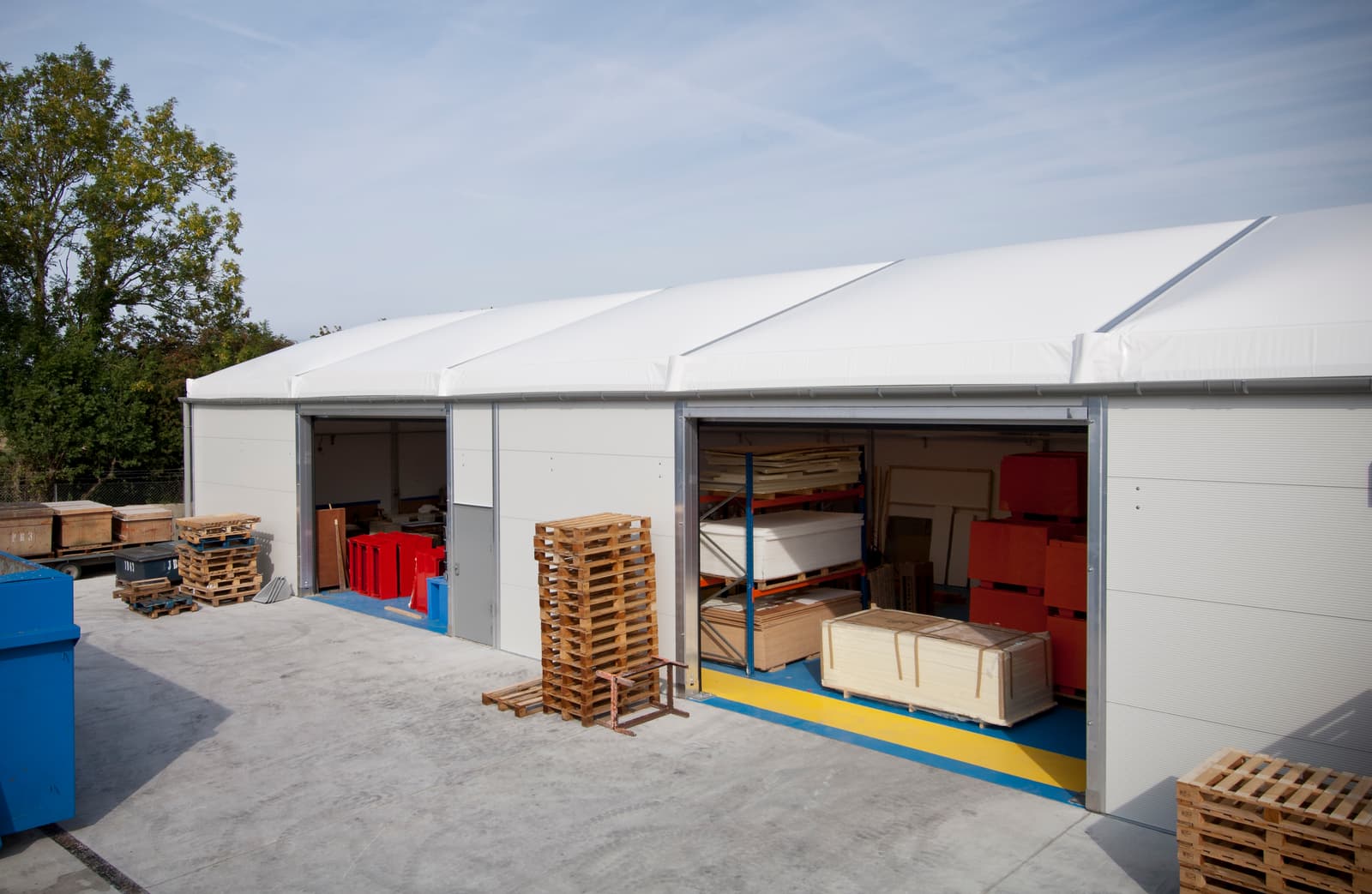
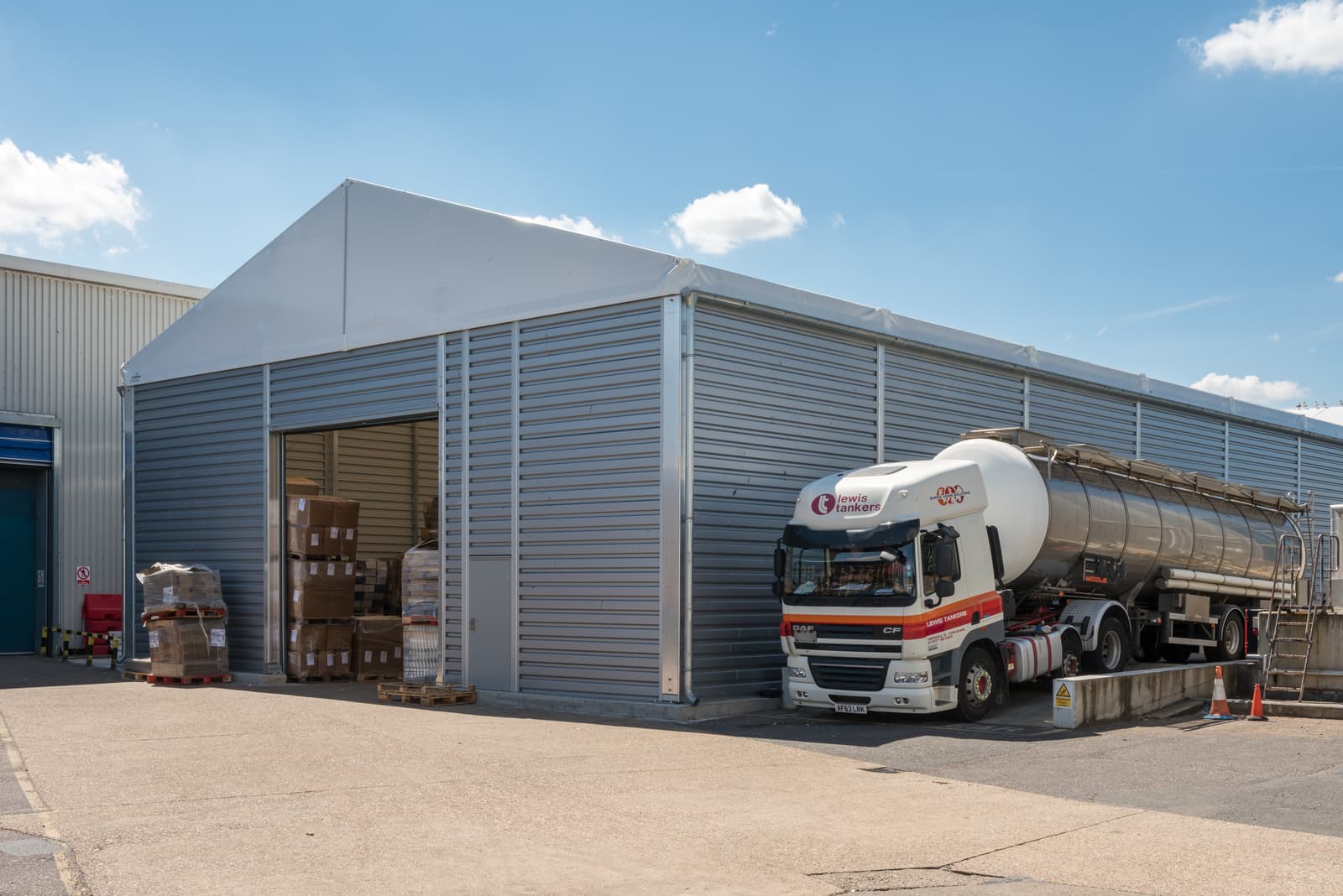
Not every construction of a new building requires a foundation. Temporary buildings can, in most cases, be erected on firm ground without any foundation.
The reason is the low weight of aluminium, which is used in the production of temporary buildings. This makes these buildings quickly ready for use.
The advantages of temporary buildings without foundation
Temporary buildings offer a wide range of advantages both with and without a foundation:
- Short delivery times:
Prefabricated buildings with aluminium frames are available in very short timeframes, meaning existing space requirements can be met quickly. The production facilities of HTS TENTIQ have a capacity of up to 60,000 m² of finished tents and buildings per week. - Fast assembly:
A temporary building without a foundation is erected on site in a short time and is quickly ready for use. If business operations are interrupted due to the building work, in most cases they can resume within a week. - High-quality standards:
Aluminium is used in the manufacture of temporary buildings. This lightweight metal has a very low dead weight while ensuring high structural stability. - Optimal value for money:
Investment in an aluminium storage building pays for itself much faster due to lower acquisition costs than the significantly higher investment required for a solidly constructed building. Transport costs for a lightweight building are also considerably lower due to the reduced weight compared to other constructions.
- High flexibility:
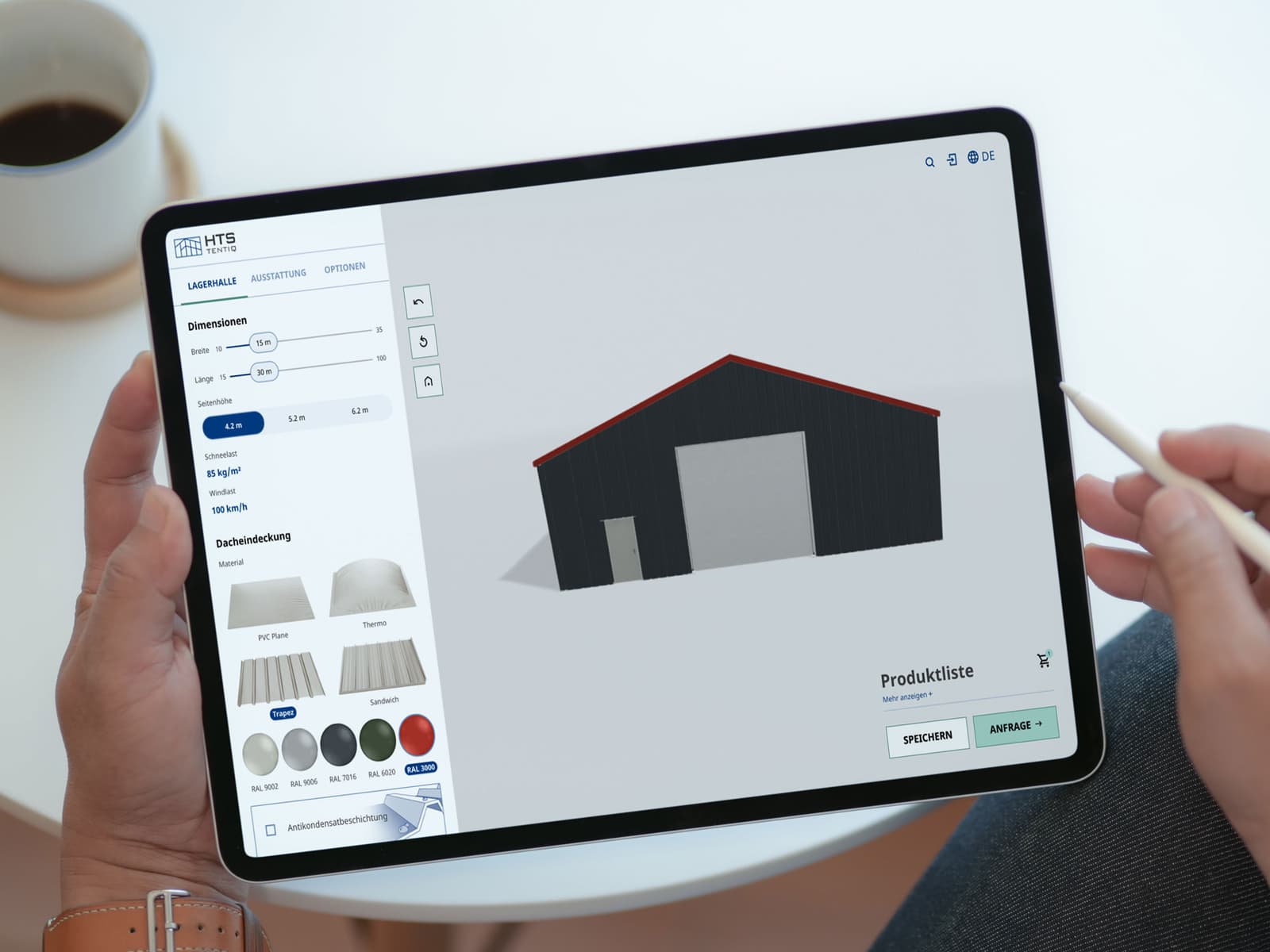
Aluminium buildings are manufactured using a modular system that allows maximum flexibility in terms of dimensions, design, and equipment. - Easy dismantling and reassembly:
Mobile aluminium buildings can be dismantled easily without being damaged. In addition, a dismantled temporary building can be reassembled at a different location without any difficulty. - High cost-effectiveness:
Despite the relatively low financial investment, a temporary building without a foundation offers high economic value, as business operations can be carried out according to plan and demand in a short time due to its rapid availability and assembly. - Sustainability:
If a temporary building without a foundation is erected, the installation area can be immediately returned to its original use or repurposed after dismantling. The structure of a temporary building has a very long service life of several decades and can be almost completely recycled at the end of its lifecycle. This makes lightweight construction buildings convincing in terms of sustainability as well.
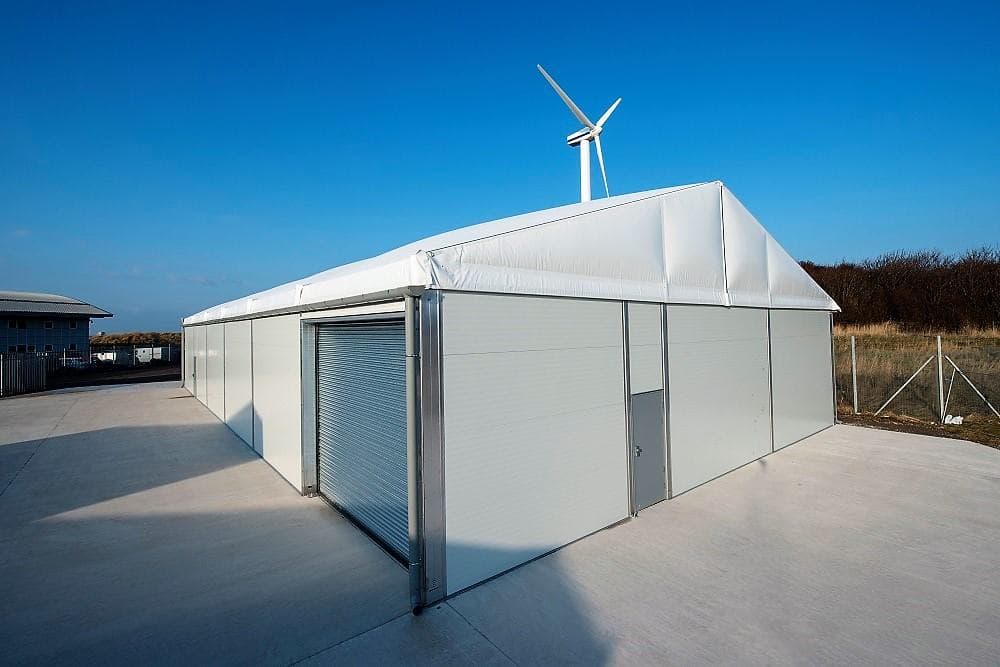
Temporary buildings without foundation: Key facts at a glance
Building a temporary building without a foundation – what actually needs to be considered? Below you will find a comprehensive overview of the key facts and information on the construction of temporary buildings without a foundation. Learn more about the advantages compared to conventional steel buildings, the possible ground surfaces, and the various ground anchoring systems of this innovative construction method.
Temporary building vs steel building: no foundation, lower weight
Temporary buildings are robust constructions made from aluminium profiles and offer many advantages over steel buildings. One of the advantages of this construction method is the low weight of aluminium, which is due to the low density of this lightweight metal. Overall, an aluminium building therefore has a much lower total weight compared to a steel building. At the same time, aluminium has a very high level of stability and structural strength. As a result, the service life of temporary buildings is similar to that of steel buildings and amounts to several decades.
In contrast to steel buildings, temporary buildings can be assembled without a foundation. If assembled without a foundation, the temporary building can be erected as a “temporary building” in accordance with DIN EN 13782. In this case, the building may only be used temporarily at one location, with a maximum standing time of three months. In exceptional cases, this period may also be longer. When erected as a “temporary building”, no building permit is required; a notification to the building authority is sufficient.
Free site selection: temporary buildings can be erected on a wide variety of ground surfaces
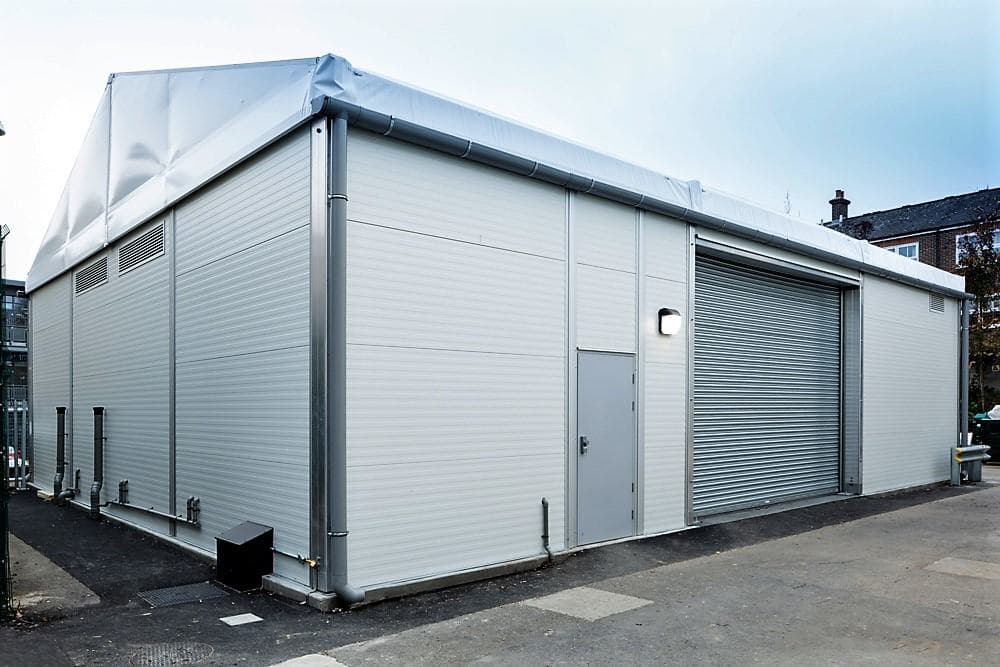
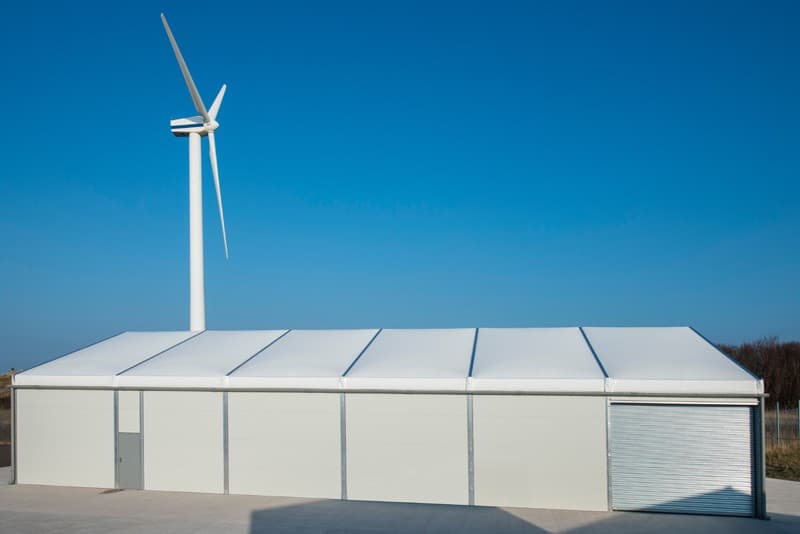
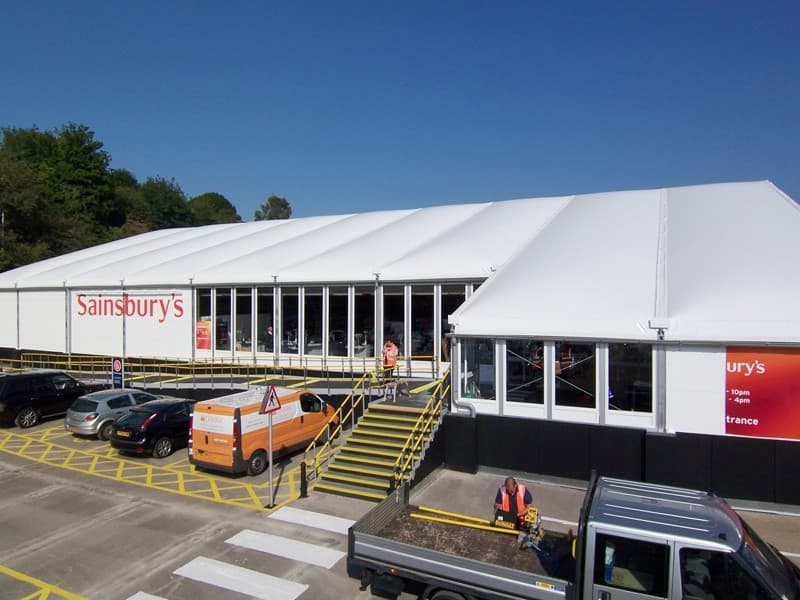
A temporary building can be erected on almost any ground surface. If no foundation is present, many different solid surfaces are suitable for constructing an aluminium building – including gravel, crushed stone, paving stones, or asphalt. As a temporary structure, a lightweight building can also be erected on plain topsoil and therefore on a meadow.
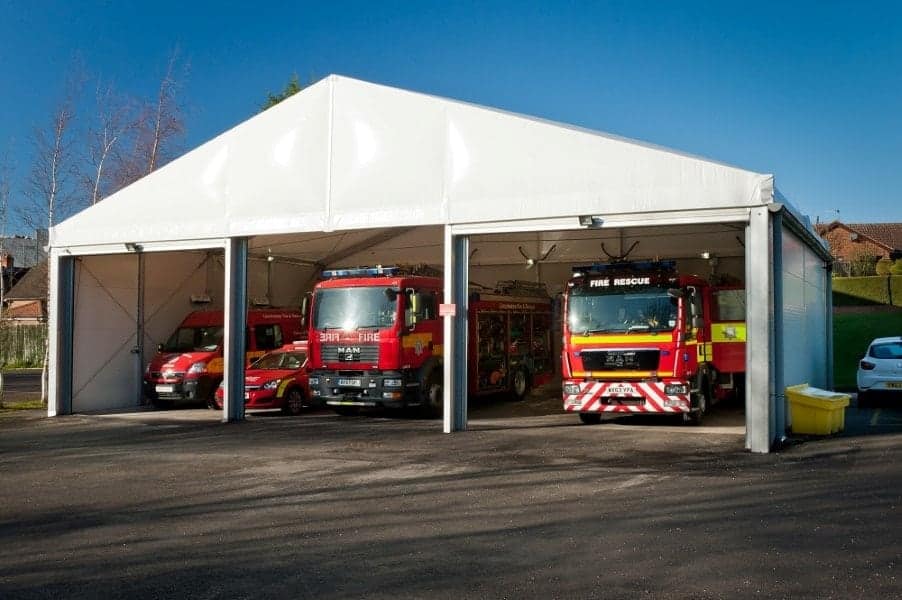
Solid ground anchoring: maximum stability even without a foundation
The type of anchoring used for a temporary building without a foundation depends on the ground conditions. On foundations, we at HTS TENTIQ use anchoring with chemical anchors, with synthetic resin used as the filling material. After the resin has cured, the base plate is secured with a nut and washer. This type of fastening is included at no additional cost.
For surfaces made of concrete, asphalt, gravel, crushed stone, or firm soil, the optional anchoring variant using ground nails can be used. The number of ground anchors is adapted to the size of the building. Fixing with ground nails provides a very solid ground anchoring system while being cost-effective and requiring minimal effort.
Temporary building without foundation on a slope: is that possible?
Temporary buildings without foundation can be erected on a surface with a slight slope. The gradient must not exceed 2%. Even on a sloped surface, installation with ground nails is possible.
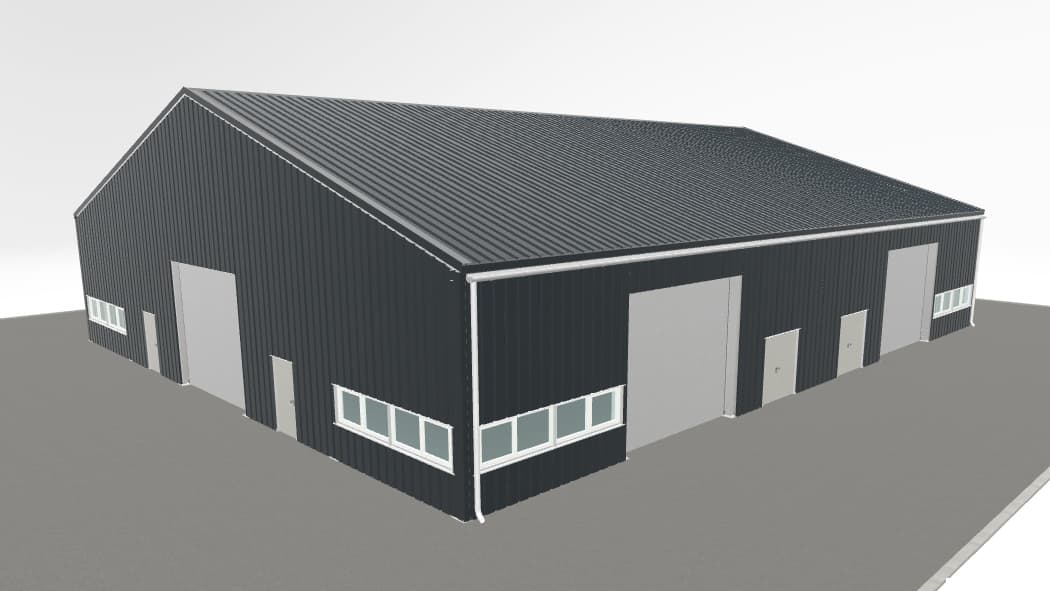
HTS temporary buildings without foundation: the installation process
The assembly of temporary buildings without foundations is simple and quick. At HTS TENTIQ, we follow the installation process in six steps:
- The site for the building is surveyed. The base plates are positioned at the corners, and the fixing points for the frame supports are defined.
- Depending on the ground conditions, chemical anchors or ground anchors are used for fastening.
- When chemical anchors are used, the base plate is secured with a nut and washer after the resin has cured.
- A lifting test is then carried out to ensure that the building complies with structural calculations and can withstand the required snow and wind loads.
- In the next step, the aluminium frame is laid out, the supports are fixed to the base plates, and then positioned step by step.
- Once the frame has been erected, the roof, wall cladding and doors, as well as gutters and all other components, are installed.
In the case of a standard prefabricated building, this process is usually completed within one week.
Foundations for temporary buildings: when they are necessary and why
The purpose of a foundation is to safely transfer the load of the building into the ground without causing settlement. However, due to the low self-weight of aluminium buildings, this is generally not necessary. Nevertheless, there are certain applications for which a foundation is suitable. Personal preference also plays a major role in whether a temporary building is erected with or without a foundation.
Installing a temporary building on a foundation is advisable if a level floor surface is required. If forklifts and machinery are used inside the building, a level surface is recommended. The construction of a foundation is also advisable in cases where the ingress of water through the ground must be strictly prevented. Typically, the foundation is built as a concrete slab or a ring beam to ensure a level floor surface.
If the temporary building is to be used permanently at one location, a building permit with structural calculations in accordance with DIN EN 1991 is required. A building permit is also necessary if the building is erected without a foundation. In this case, the decisive factor is permanent use.
Conclusion
Temporary buildings without foundation are quickly available, can be assembled in a short time, and therefore provide an optimal solution even for short-term space requirements. In addition, lightweight buildings can be easily dismantled, and reassembly at another location is possible without any loss of quality. This allows companies to test whether the chosen site proves suitable.
At the same time, temporary buildings without foundation are cost-effective to purchase without having to compromise on high stability and durability. On the contrary, the aluminium structure of the frame offers very high stability despite its low weight and a long service life.