
Modular construction in industry: advantages, areas of application and the future of building construction
Modular construction represents modern, efficient and resource-conscious building. Through prefabricated building components, buildings can be realised quickly, flexibly and with lower environmental impact. An approach that is becoming increasingly important in times of climate protection and land scarcity.
What is meant by modular construction?
Modular construction is a construction method in which room units are prefabricated in a factory and then assembled on site into a building according to a modular principle.
Many modular buildings are fully prefabricated by the manufacturer and are delivered to the site more or less ready for use, where they are then assembled. Others are manufactured in several parts at off-site locations.
In modular buildings, three different construction methods are distinguished:
- Skeleton construction: The load-bearing structure consists of horizontal beams and vertical columns made of aluminium, steel, concrete or timber.
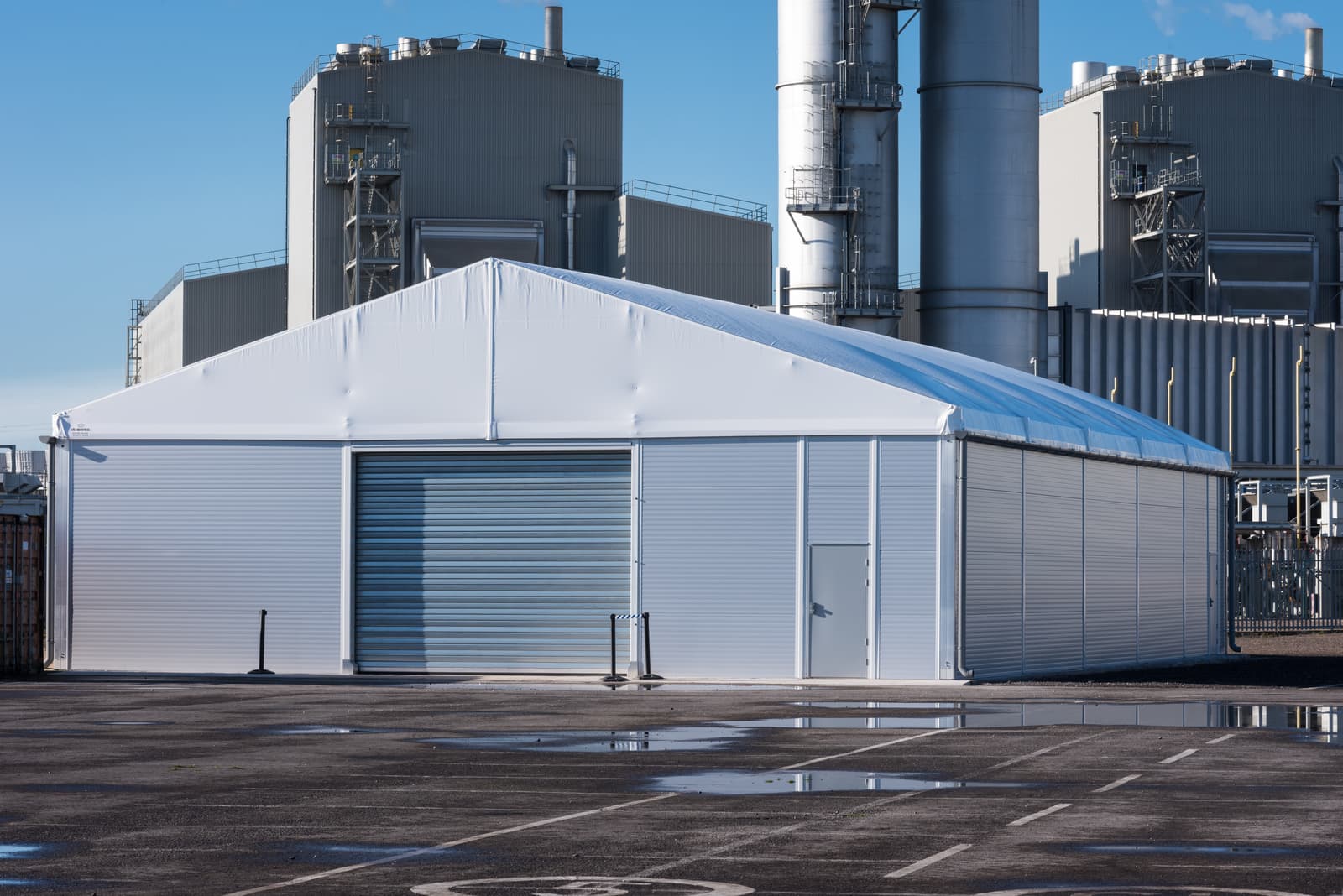
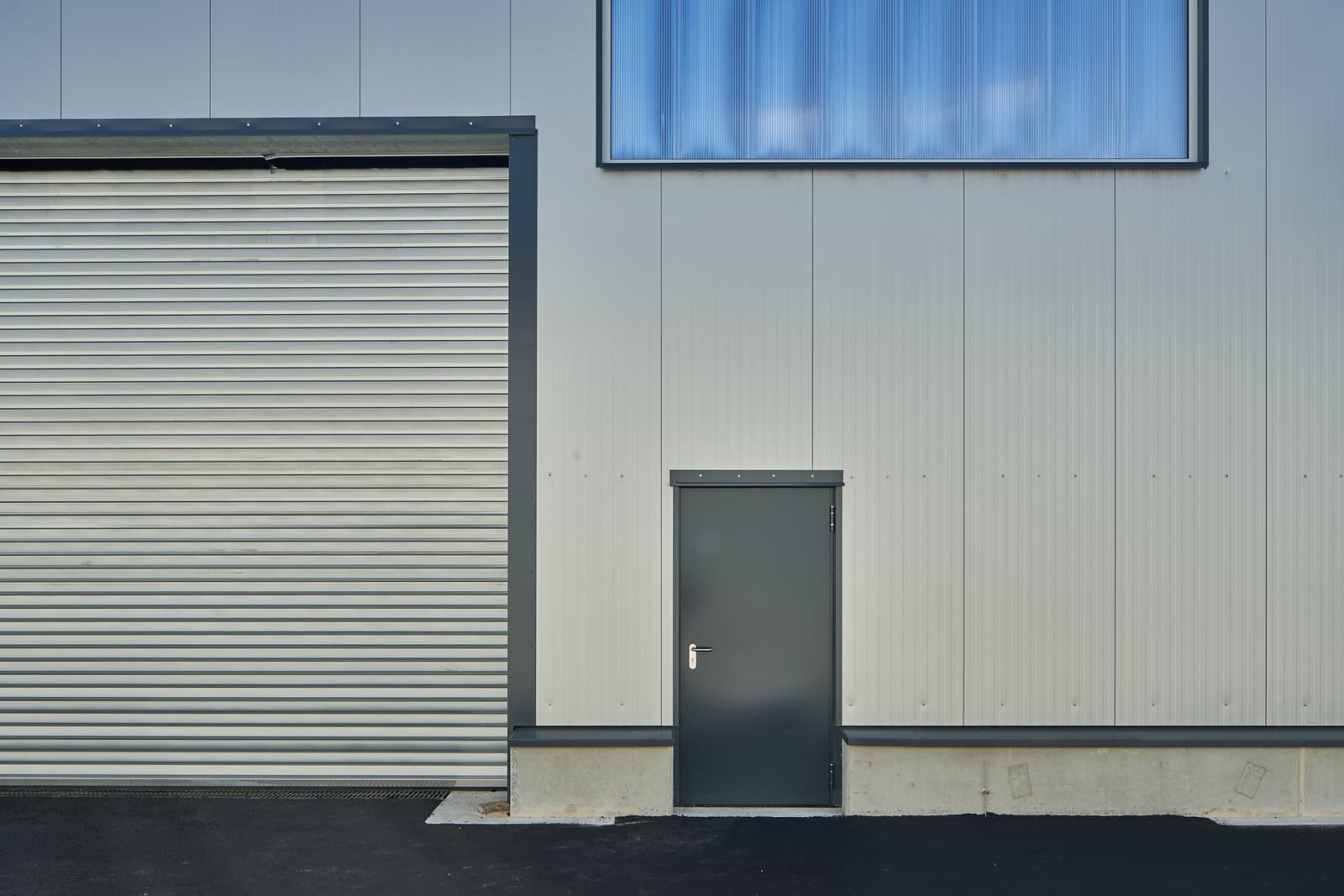
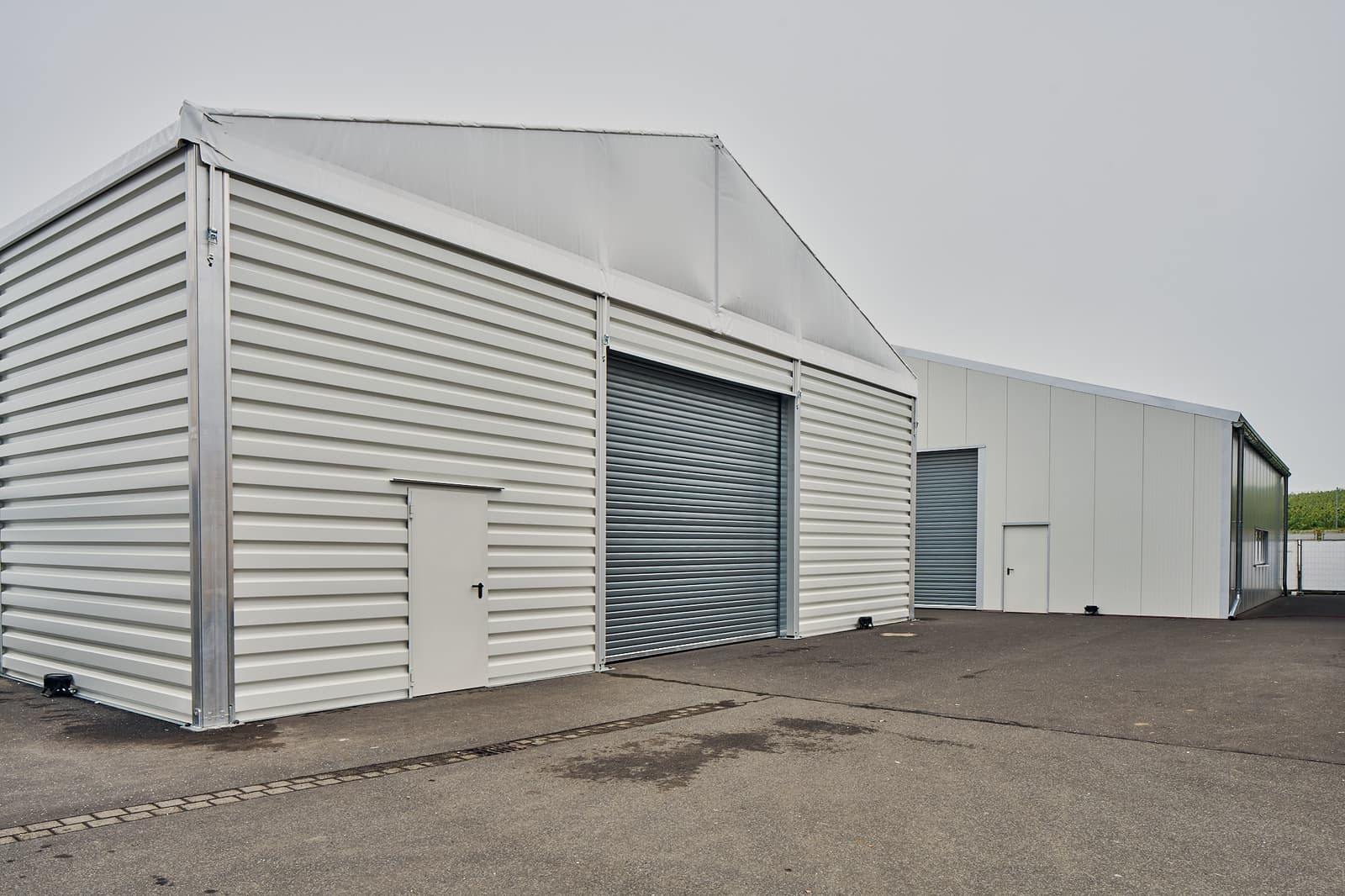
- Depending on the intended use, the floor structure differs. In the events sector, a floor is usually laid first, such as a cassette floor or heavy-duty floor. This is followed by the erection of the framework as well as the installation of roof and side cladding and further equipment. In the industrial sector, by contrast, no floor is usually installed. Instead, construction takes place directly on a prepared surface, such as a foundation, concrete slabs, or asphalted or paved ground. In this case, roof and wall cladding are also mounted directly onto the framework.
- Large-panel construction: wall-sized prefabricated elements – often already equipped with windows, doors and insulation – are manufactured in a factory. On site, these are assembled into a building. Also known as panel construction, for example in the case of prefabricated houses.
- Container or room-unit construction: complete room modules with finished fittings are produced in a factory and assembled into a building at the place of use. Fast, flexible and almost ready to use.
Especially for commercial, industrial and military applications, modular construction offers decisive advantages: it enables rapid availability, flexible use, easy expandability and reusability, while at the same time providing a sustainable and robust construction method.
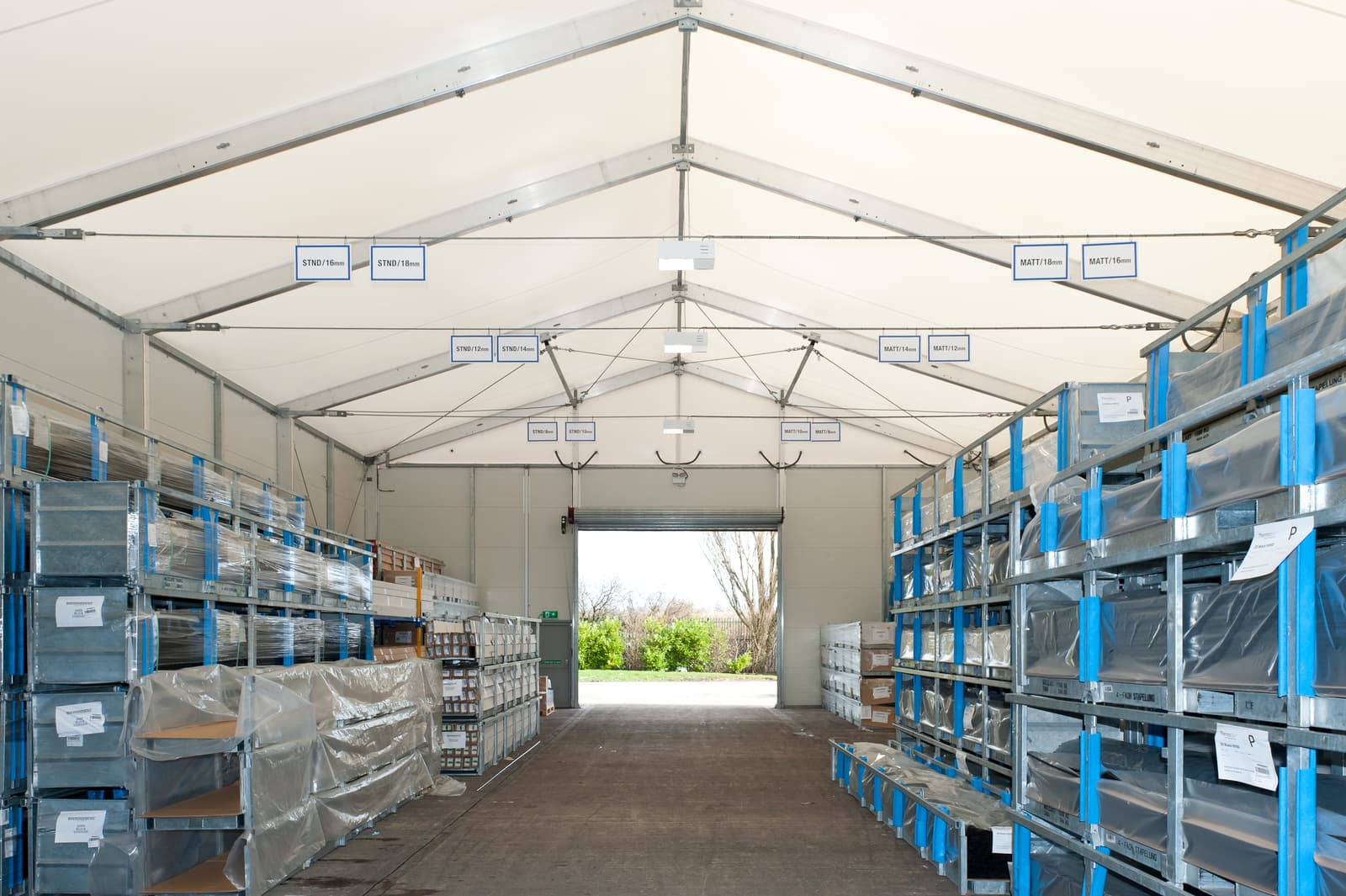
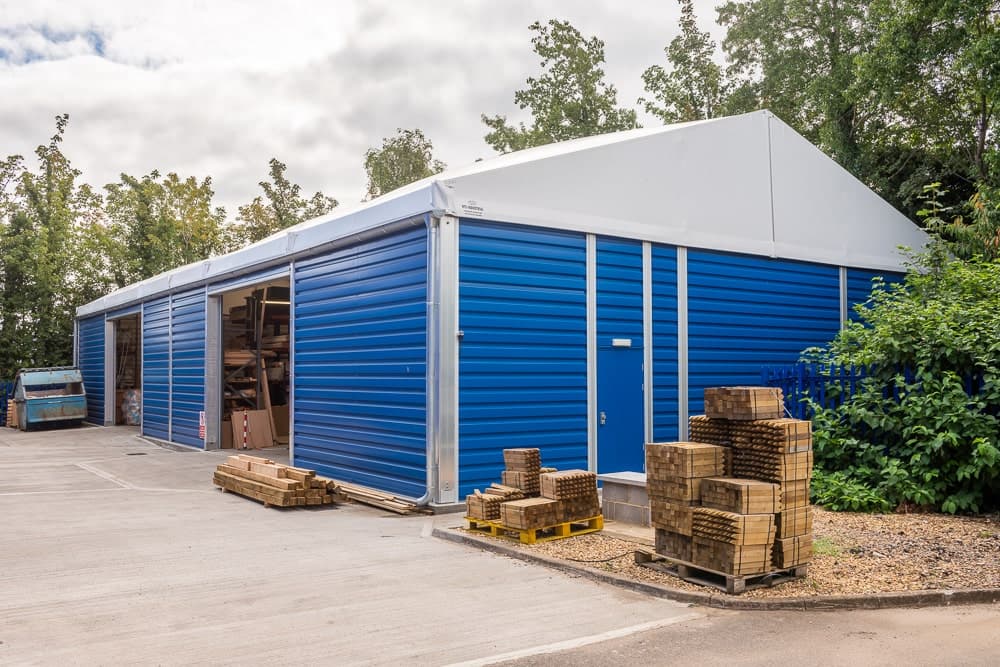
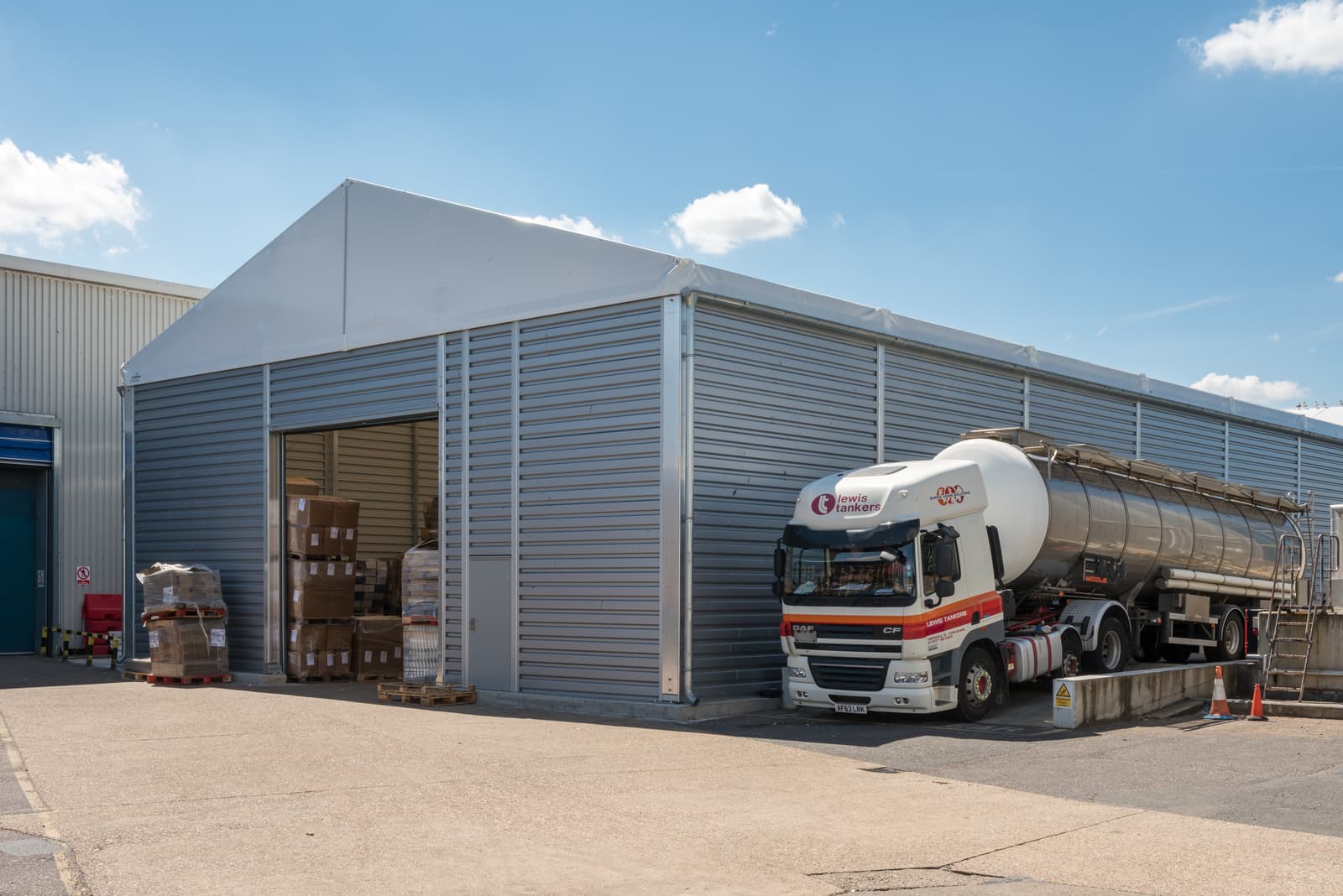
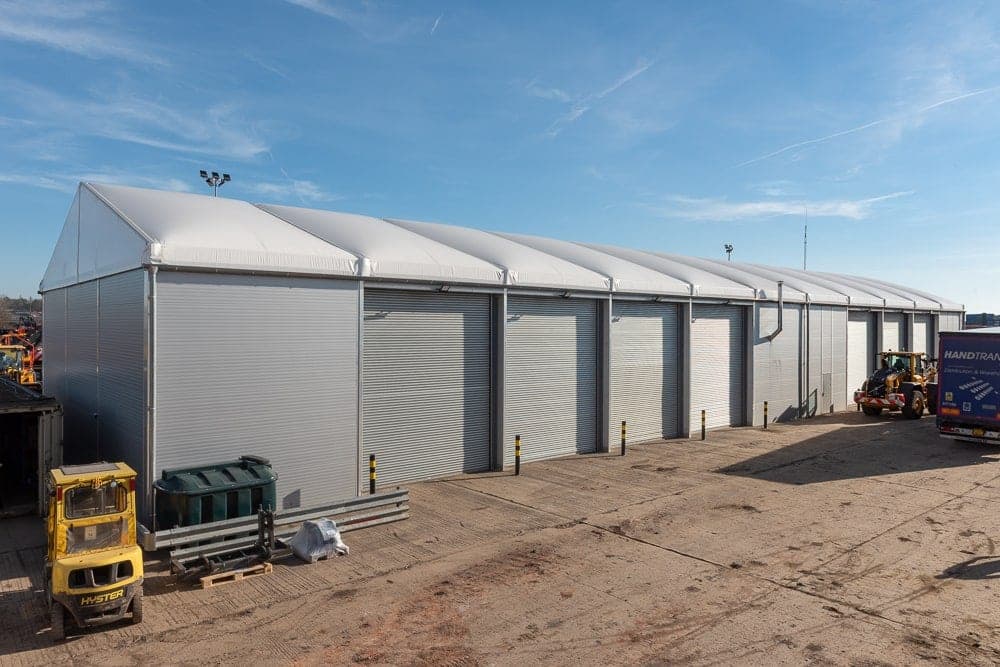
Tents and industrial buildings from HTS TENTIQ are erected using modular temporary building construction and represent a form of skeleton construction. The framework is assembled on site from prefabricated aluminium profiles using steel connecting elements. The corresponding wall and roof cladding is then added. Thanks to the modular construction method, HTS TENTIQ structures can be easily modified or expanded at any time.
Sustainable building: materials, CO₂ balance, dismantling
Whether in commercial, industrial or private construction – sustainable building is no longer an option, but a necessity. Modular construction helps to achieve this: building components are precisely prefabricated in the factory. This enables materials to be used efficiently, conserves resources and reduces waste. The shortened construction time saves energy and reduces emissions as well as disruption on site.
In addition, modular buildings can be fully dismantled and reused at another location. This avoids construction waste and conserves raw materials. The dismantlability and recyclability of the materials also significantly improve the CO₂ balance. In many cases, only point or strip foundations are required, which reduces disturbance to the ground. However, as the building fully covers the ground surface, the area is still considered sealed. This protects natural areas, promotes the infiltration of rainwater and preserves local ecosystems.
Advantages of modular construction
With modular construction, spatial solutions can be realised that are ideally suited to our modern working world. We have taken a closer look at the advantages of modular construction for you:
1. Off-site construction: hall construction independent of daylight and weather conditions
As a building in modular construction is prefabricated in a factory, it is an off-site construction. This offers the major advantage that the individual building components can be manufactured under controlled conditions. External factors such as rain, snow, wind or sun do not affect production. This enables year-round manufacturing, allowing rapid response to space requirements at all times without being dependent on specific weather conditions.
2. Time and cost savings
Due to the high degree of prefabrication in the production facility, construction time on site is significantly reduced. Modular construction requires considerably less personnel, machinery and materials. Fewer assembly teams, project managers, subcontractors, suppliers and construction equipment are needed compared to traditional solid construction. Delays caused by poor weather conditions or difficult site conditions are noticeably reduced for clients. This minimises both costs and time expenditure.
On-site assembly is carried out in a short time thanks to the modular system. In addition, the erection of many modular buildings usually requires only one construction crew in a single vehicle together with a site supervisor. This reduces the use of vehicles and trips to and from the construction site. In turn, this lowers fuel costs as well as transport times and costs.
3. Highest quality standards and long service life
High construction quality and the use of high-grade materials result in maximum durability and safety of a modular building. For this reason, we not only ensure high quality in the manufacturing process, but already apply our quality standards when selecting materials.
All buildings manufactured by HTS TENTIQ are certified according to European and international standards. Our management system is certified according to ISO 9001, ensuring consistently high quality. We also implement DIN EN ISO 14001, thereby making an important contribution to environmental protection.
In addition, each of our products carries CE marking, which enables full traceability of the entire supply chain of all raw materials used. The CE marking confirms compliance with all EU-wide legal requirements regarding health, environmental and consumer protection.
To meet all safety requirements, our products are manufactured in accordance with DIN EN 13782 (temporary building) or DIN 1991 (permanent construction). To confirm compliance of our aluminium structures with European standards, our buildings are additionally certified according to DIN EN 1090.
4. Error minimisation thanks to maximum control
With modular construction, we follow a controlled and systematic approach. Our temporary buildings are manufactured in highly technologically advanced production facilities. Our computer-controlled machine tools (CNC machines) operate with very high precision. This enables us to minimise error rates and delivery delays. At the same time, waste is reduced.
Due to the high level of accuracy in the production of individual components, we also reduce the need for rework. This in turn increases the cost efficiency of the construction project and customer satisfaction.
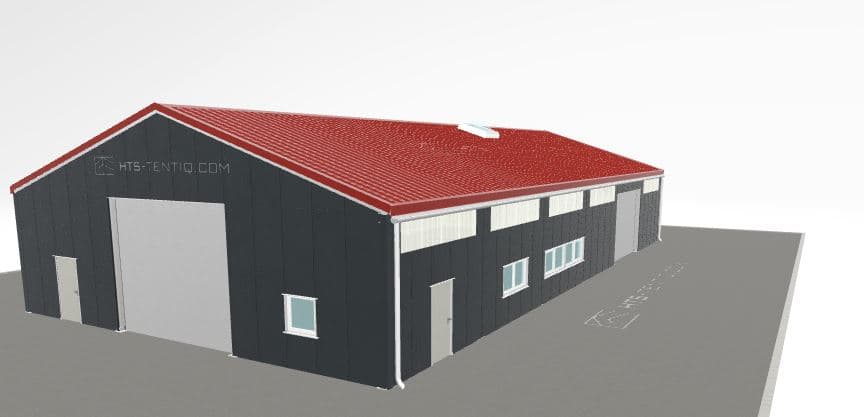
5. Less waste for the environment: sustainable building construction thanks to recyclable materials and relocatable industrial buildings
The construction of modular buildings in a controlled factory environment generates less waste. In addition, the computer-controlled production process enables very precise manufacturing of individual components. Any waste generated during production in the factory is immediately fed back into the company’s existing recycling cycle. The individual materials can also be recycled.
6. Large and small building structures for every application
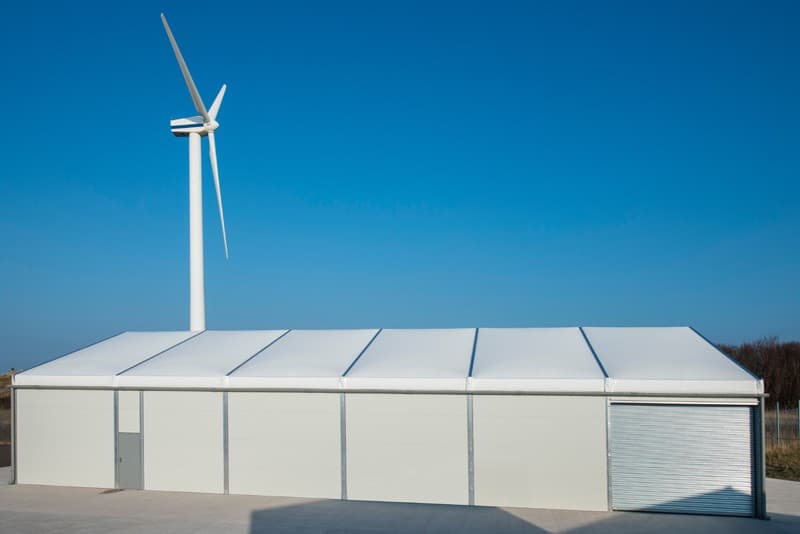
The components of an industrial building in modular construction can be manufactured in various shapes and sizes, allowing them to be optimally adapted to the intended application. The length can be customised, while width (max. 35 m) and height (depending on snow load) are limited within structural requirements. Modular buildings can also be easily expanded: the length can be extended without difficulty by adding additional frames in a 5.00 m grid. By contrast, extending height and width requires a more complex process, as existing components must be replaced and the hall partially dismantled prior to conversion, which involves greater effort.
7. Low foundation requirements
Im Vergleich zur Massivbauweise benötigt die modulare Bauweise meist nur einfache Punkt- oder Streifenfundamente. In manchen Fällen ist sogar eine Verankerung auf bestehenden befestigten Flächen möglich.
8. High energy efficiency through modern insulation systems
Modular temporary buildings can be equipped with energy-efficient wall and roof elements that significantly reduce energy consumption for heating or cooling. In combination with modern heating and ventilation systems, operating costs can thus be minimised and year-round use achieved.
9. Reduced construction site impact
Due to the prefabrication of building components, construction time on site is significantly reduced. This means on site: less noise, less dust and considerably reduced traffic from construction vehicles.
10. Full flexibility through expandability, relocatability and dismantlability
A major advantage of modular systems is the ability to carry out extensions or conversions even during ongoing operations – without long periods of downtime. New modules can simply be added without significantly affecting the existing structure. In addition, modular halls are not tied to a fixed location: they can be completely dismantled if required and rebuilt at another site – without any loss of quality. This relocatability provides companies with strategic flexibility, for example for site changes, temporary projects or seasonal requirements.
Dismantling at the end of the service life is carried out in a resource-efficient manner. The materials used can be recycled or reused for new projects. This makes modular systems highly scalable in the long term – both in terms of size, location and service life.
11. Clear cost overview and high level of predictability
Thanks to standardised processes and a high degree of prefabrication, construction costs for modular halls can be precisely calculated. Unexpected additional costs due to construction delays, weather conditions or material shortages are largely avoided. The shortened construction time also reduces the duration of interim financing – a clear advantage for liquidity planning.
12. Bespoke premium halls: individual design options in hall construction
Modular construction enables standardised manufacturing in production facilities, but does not exclude individual planning and design of buildings. On the contrary: temporary buildings can be flexibly adapted to customer wishes and requirements. From insulated glass panels as façades to two-storey buildings with terraces or balconies – with bespoke premium buildings or exhibition buildings, high levels of comfort and an aesthetic appearance can be achieved without compromising functionality.
For optimal comfort, premium halls are equipped with the appropriate accessories. These include various floor coverings that can be precisely matched to the intended use, windows, doors, heating systems, air conditioning and many other equipment options.
Applications of modular construction in industry & commerce
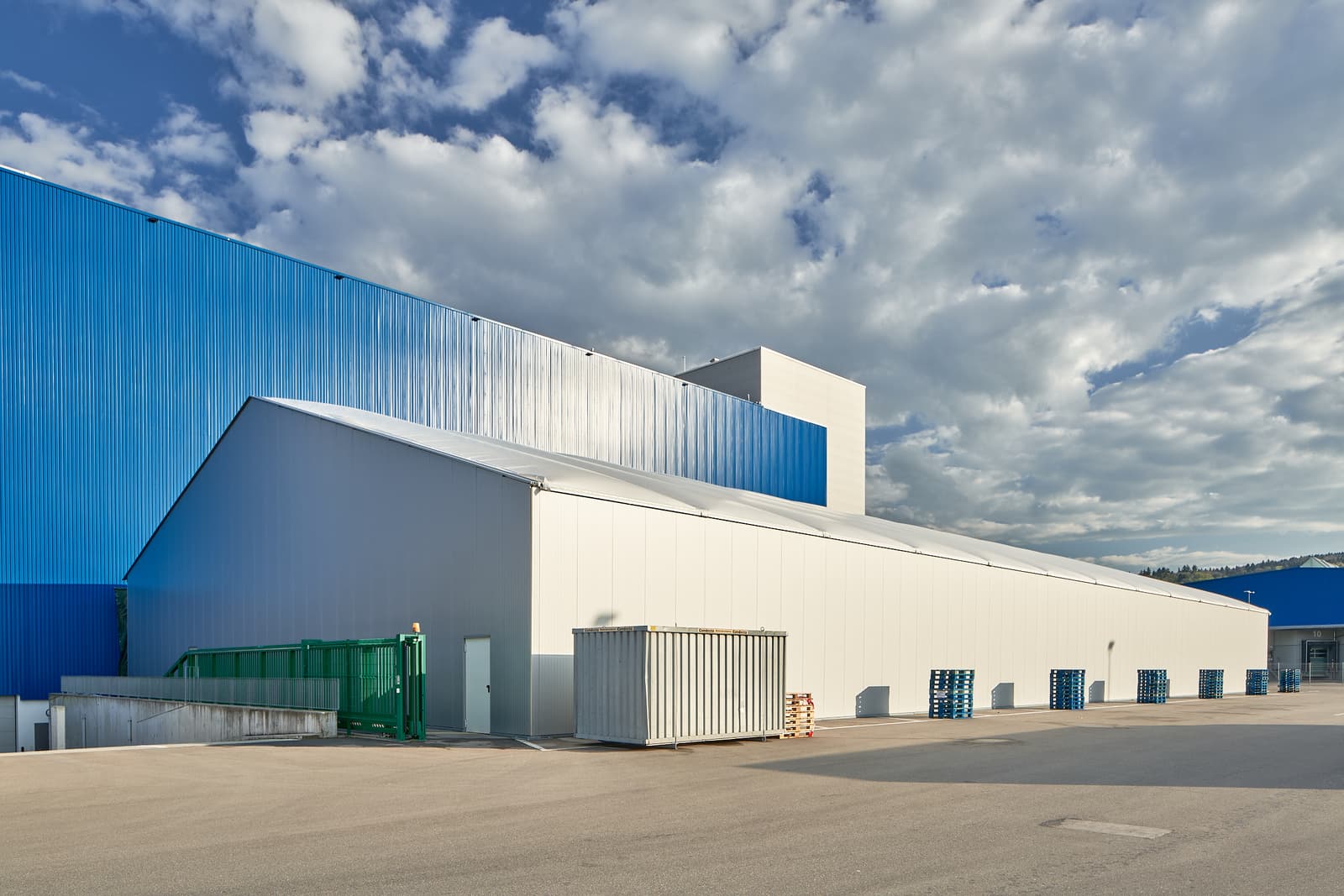
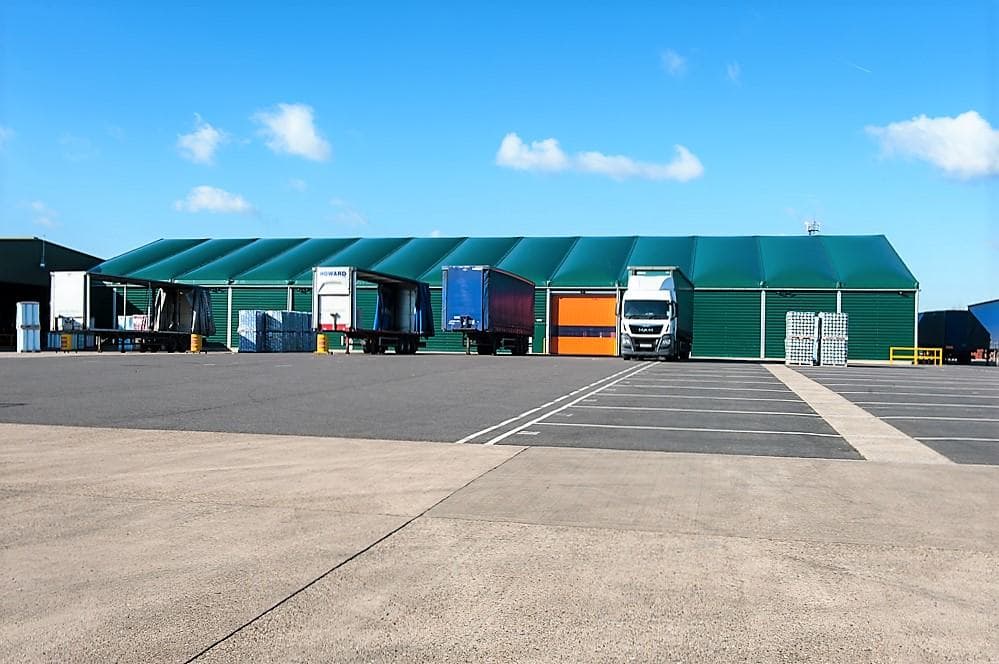
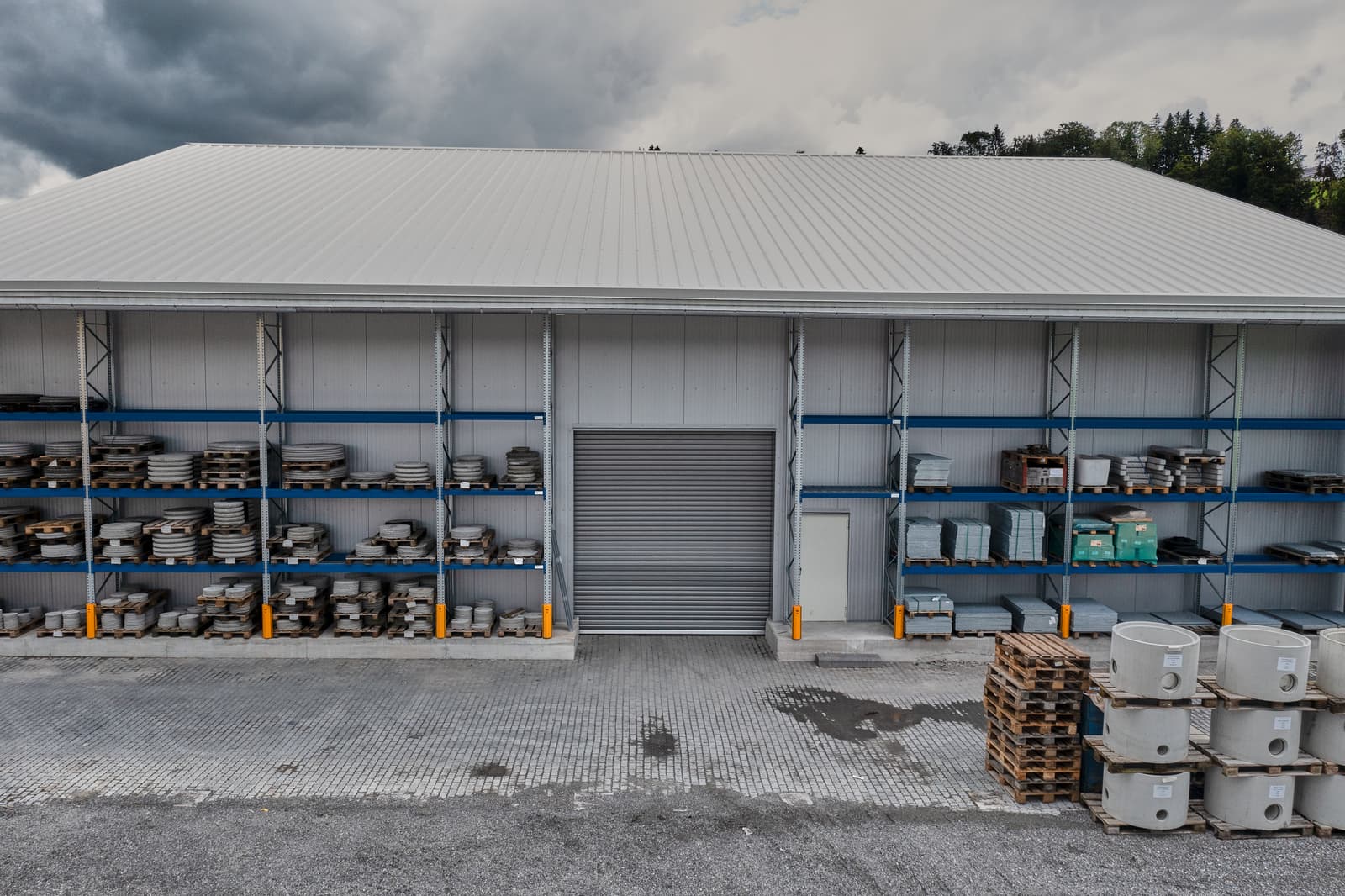
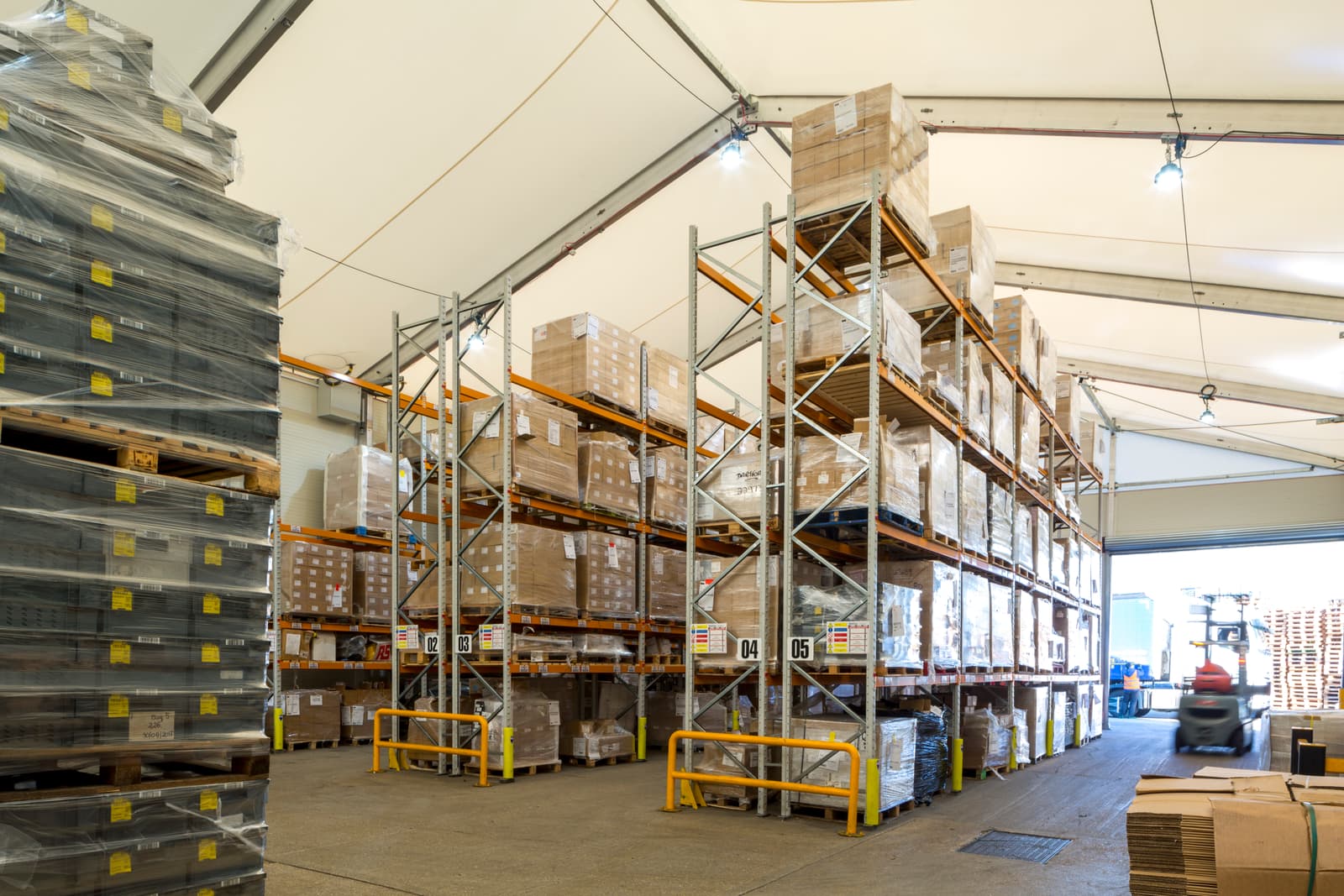
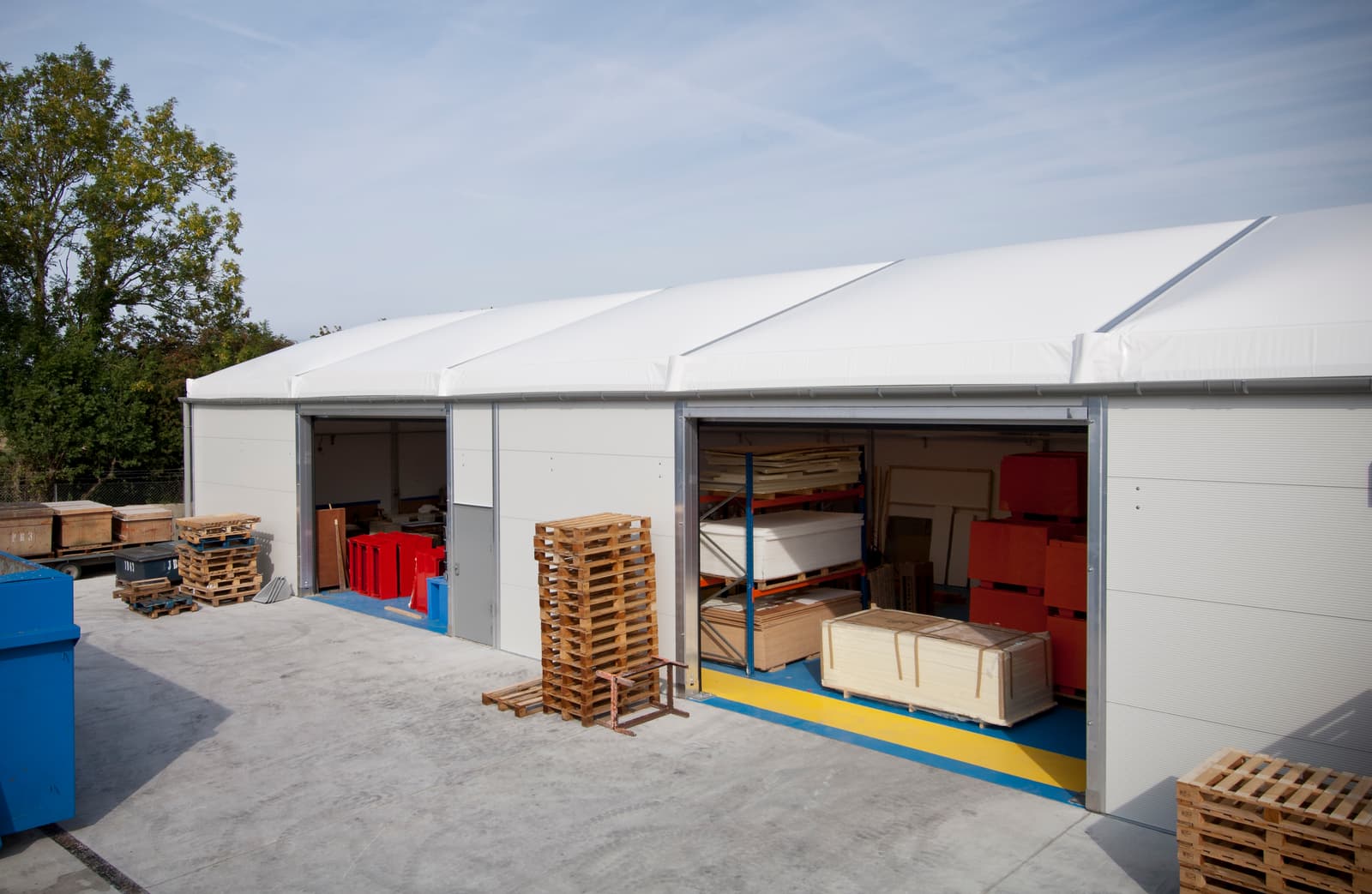
The modular construction method has established itself in many industries as a versatile and efficient form of building. In industry, modular construction is frequently used for temporary or permanent production halls, workshop buildings, storage areas and office spaces. Particularly for growing businesses or construction projects on factory sites, it enables flexible solutions that can be realised quickly.
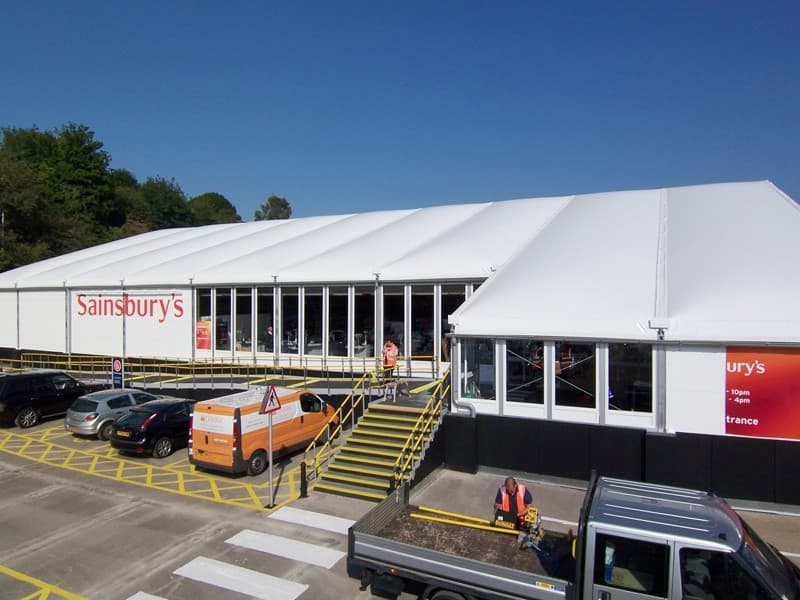
In retail, wholesale, craft businesses or start-ups, modular construction provides ideal conditions for cost-efficient, short-term logistics or storage solutions as well as sales and office spaces. Mobile branches or temporary showrooms can be quickly assembled and dismantled – ideal for rapidly changing business models.
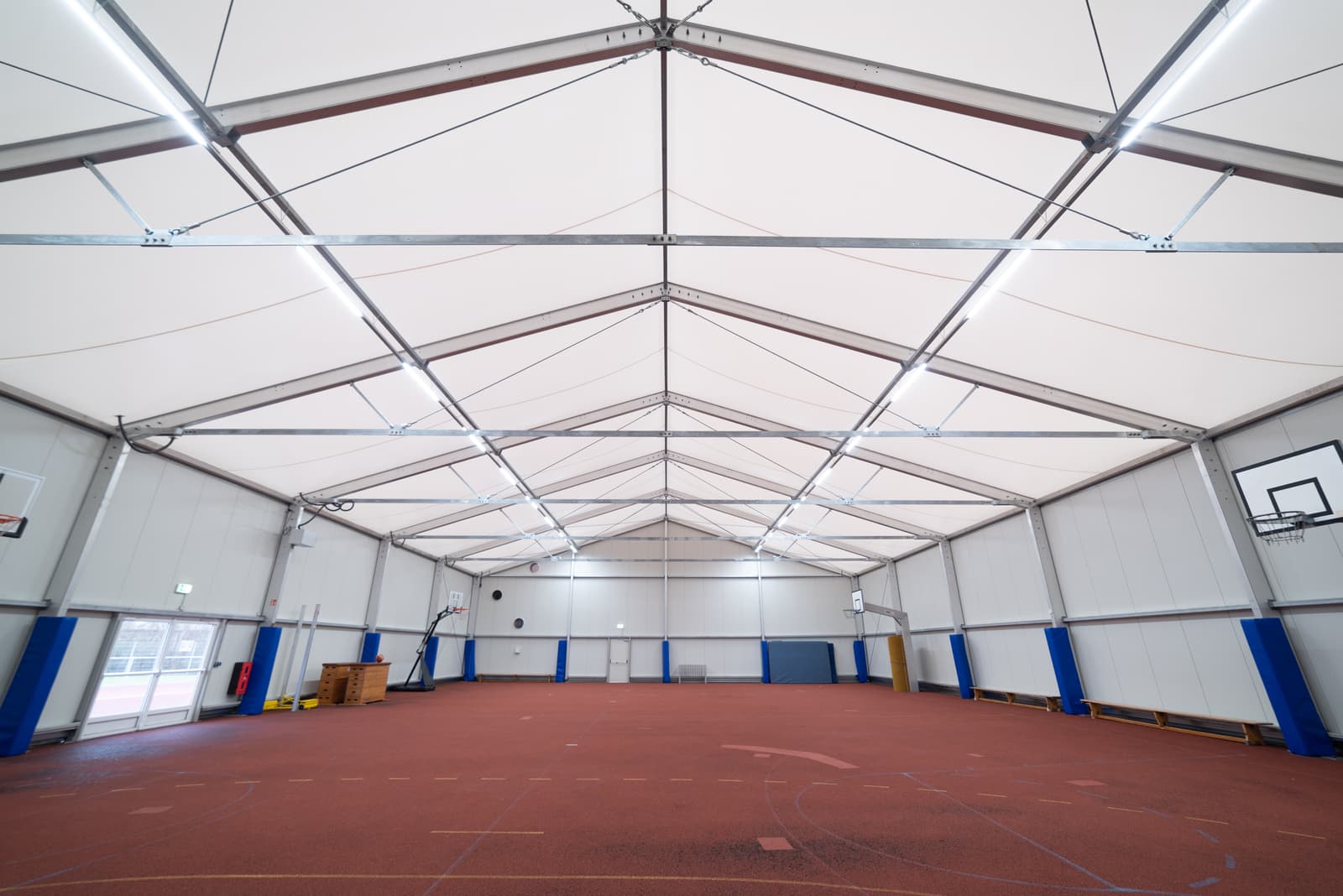
Whether as a sports hall, multi-purpose hall, VIP area, exhibition stand or VIP lounge: modular buildings can be precisely adapted to the requirements of events and offer a high degree of mobility and design freedom. After the event, they can be removed without leaving residue or reused elsewhere.
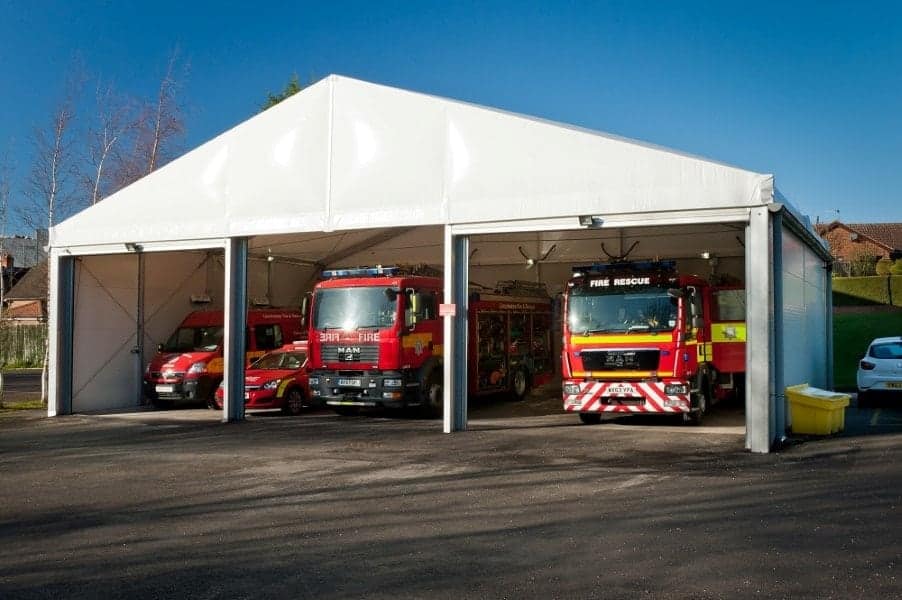
Even in crisis areas or after natural disasters, modular accommodation for refugees, mobile medical stations or classroom spaces are urgently needed. Modular structures can be transported quickly worldwide, assembled on site and adapted to new situations when required.
Modular buildings compared to conventional construction
In traditional construction using concrete or brick, many processes are weather-dependent and must be carried out on site, which is time-consuming. In contrast, with modular construction a large proportion of the work takes place under controlled and consistent conditions in factory halls – this saves resources, reduces emissions and minimises construction waste.
The amount of greenhouse gas emissions generated over the entire life cycle of a building – from the production of building materials, through use, to dismantling and disposal – is lower in modular construction than in solid construction. This means modular buildings perform significantly better in terms of their CO₂ balance. The reusability of modules, lower energy consumption during manufacturing and assembly, the option for energy-efficient equipment, and recyclability make modular construction an ecological building approach.
Compared to conventional construction, modular building also offers clear economic and strategic advantages, with predictable construction costs, shorter build times and rapid payback. Modular systems also stand out in terms of flexibility: they can be erected more quickly, as well as expanded, relocated or dismantled more easily. Building modularly therefore also means building adaptably – ideal for dynamic markets, temporary uses or uncertain times.
This is how HTS TENTIQ implements sustainable modular construction projects
HTS TENTIQ has been a specialist in modular temporary building construction for many years, in which prefabricated aluminium profiles and steel connections are assembled on site into flexible hall and tent systems.
The building components are prefabricated under controlled factory conditions, significantly reducing material losses, energy consumption and emissions.
In addition, we carefully examine the entire supply chain and place particular emphasis on the use of high-quality materials of European origin. These quality standards make a significant contribution to resource conservation as well as the durability and recyclability of our hall and tent solutions.
All our products can be dismantled, adapted and reused at other locations – ideal for temporary applications with a low environmental footprint. At the end of their life cycle, most materials are recycled and returned to the material cycle.
Conclusion: Why modular construction is the future
Modular construction is an innovative and forward-looking building method that is becoming increasingly popular. Through the factory prefabrication of frame profiles, on-site assembly is significantly more efficient – saving time, reducing costs and conserving resources. In a dynamic economy in which companies must respond flexibly and quickly to change, this construction method offers a clear competitive advantage.
At the same time, modular construction enables a high degree of flexibility and individuality in the design and use of industrial buildings. Temporary buildings in modular construction can be easily expanded or repurposed for other uses. The quick and simple assembly and disassembly also enables the reuse of buildings at other locations.
This versatility is complemented by a wide range of design options. As a result, each commercial building can be adapted to the most diverse requirements and numerous areas of application can be realised.
Our Expertise
Frequently asked questions about modular construction
Due to the high degree of prefabrication, modular construction reduces material consumption and construction waste. At the same time, it generates less noise and fewer emissions on site. Modular buildings made from aluminium are dismantlable, reusable and recyclable – this improves the CO₂ balance and supports a sustainable circular economy.
Modular buildings can be rebuilt at another location without any loss of quality and are fully dismantlable. The frame construction of HTS TENTIQ temporary buildings consists of high-quality aluminium, which can be recycled at the end of its life cycle.