Industrial tents: What is an industrial tent and when is it used?
Additional space for storage, production or retail purposes can be realised easily and cost-effectively with an industrial tent. Quickly assembled and flexibly expandable, these mobile constructions are a straightforward solution for many companies when there is short-term or temporary space requirement.
Discover with us the advantages of industrial tents and how they can help meet your operational requirements.
What is an industrial tent?
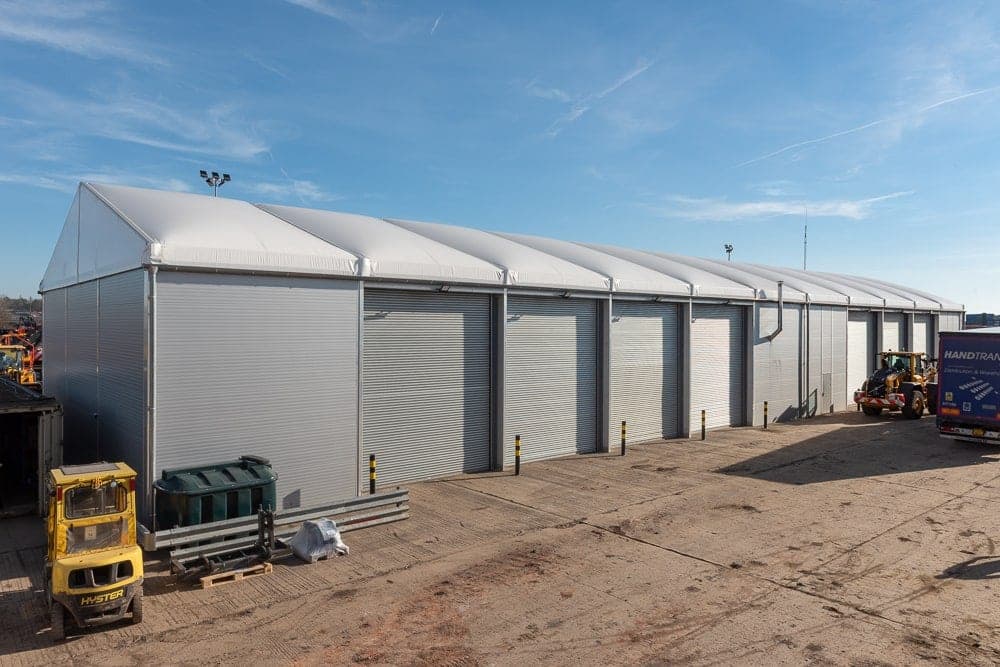
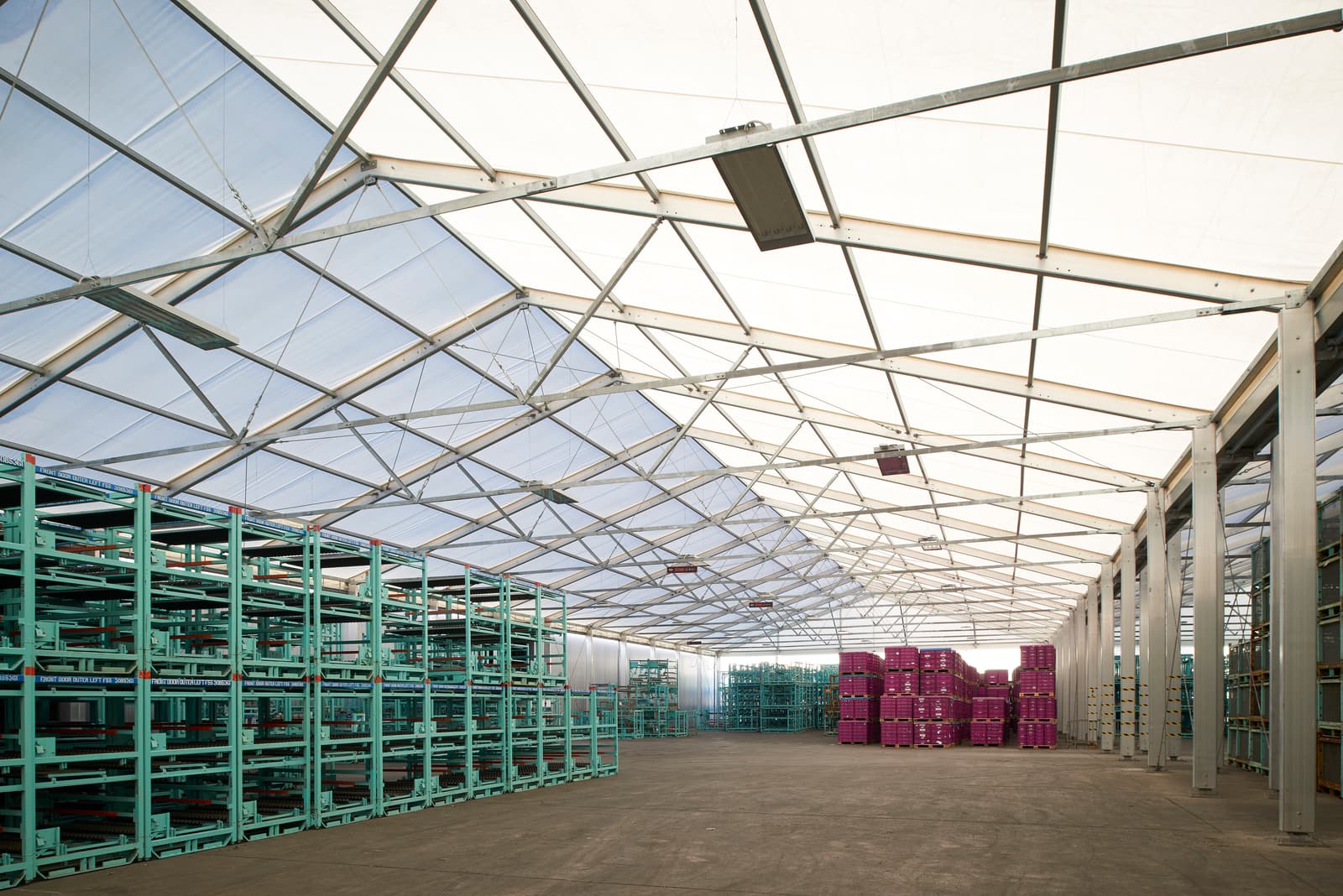
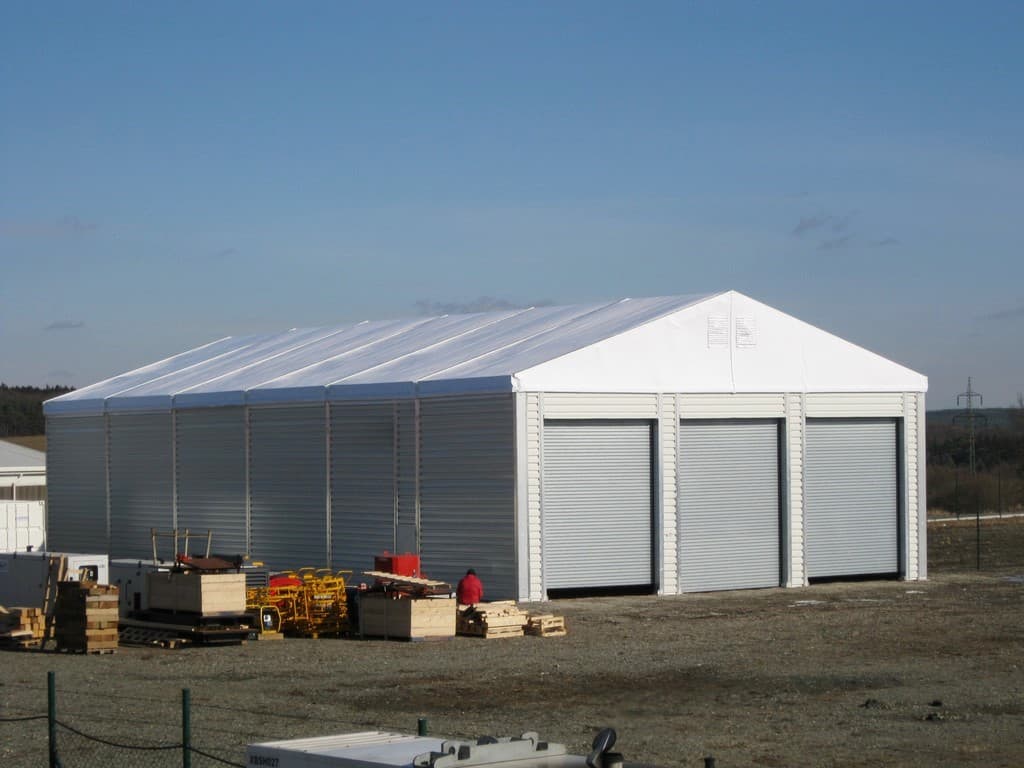
An industrial tent is a temporary building that can be dismantled and reassembled. It is therefore a mobile construction for which a change of location poses no problem. A tent for industrial use is employed for both short- and long-term purposes and is also referred to as a storage tent.
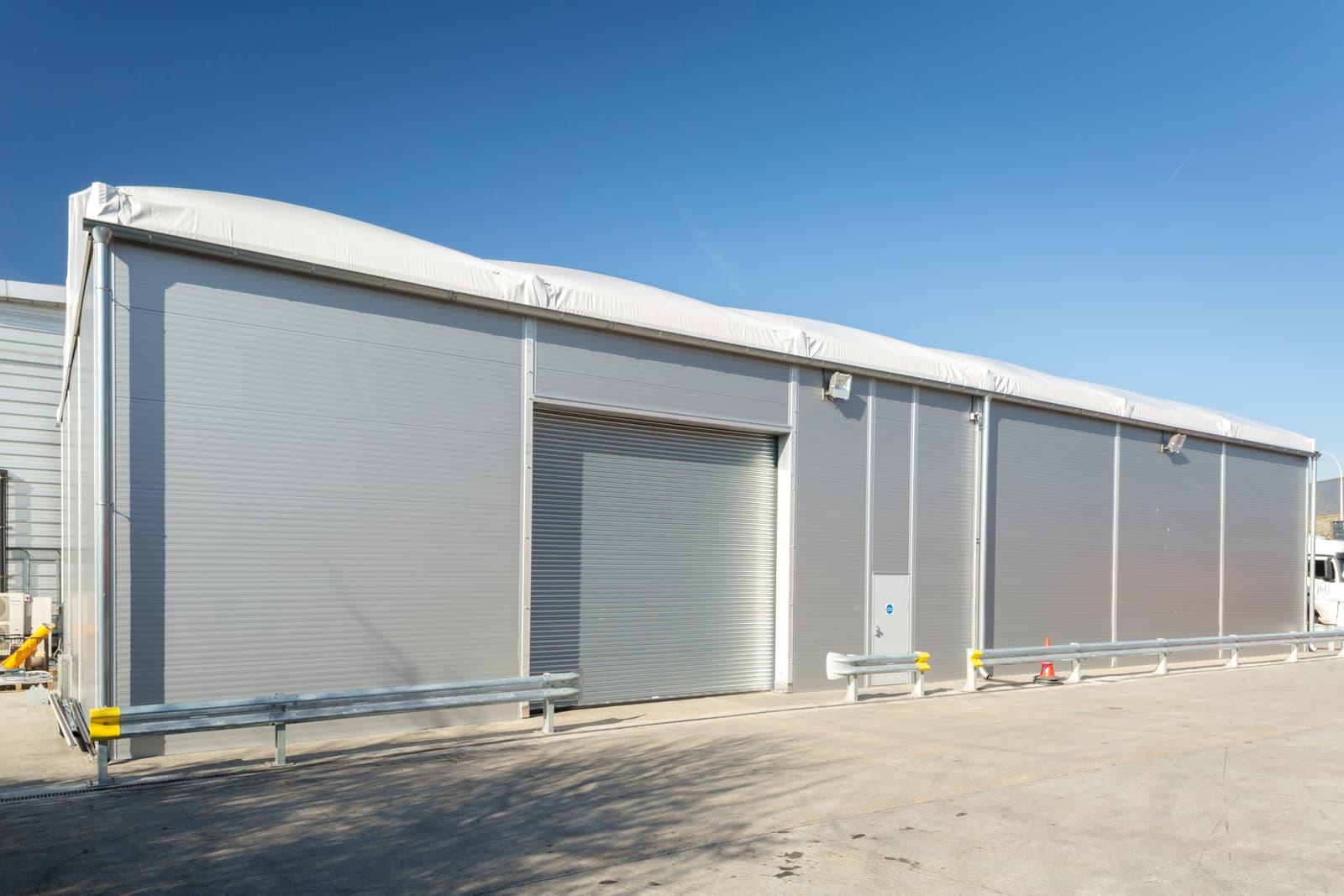
Alongside industrial tents, industrial buildings are also frequently used. These two constructions are often confused, as they serve similar functions and are used for similar purposes. Industrial buildings are also referred to as tent buildings, which makes the distinction from industrial tents even more difficult. The construction of industrial buildings and industrial tents is based on the same principle, as both are temporary buildings. The key difference lies in whether it is a fixed or a flying structure. While industrial tents are typically clad with sheeting, industrial buildings are characterised by the use of sandwich or trapezoidal cladding. A fixed cladding indicates that the structure is designed for longer-term use.
The versatility of industrial tents: functions, applications and advantages
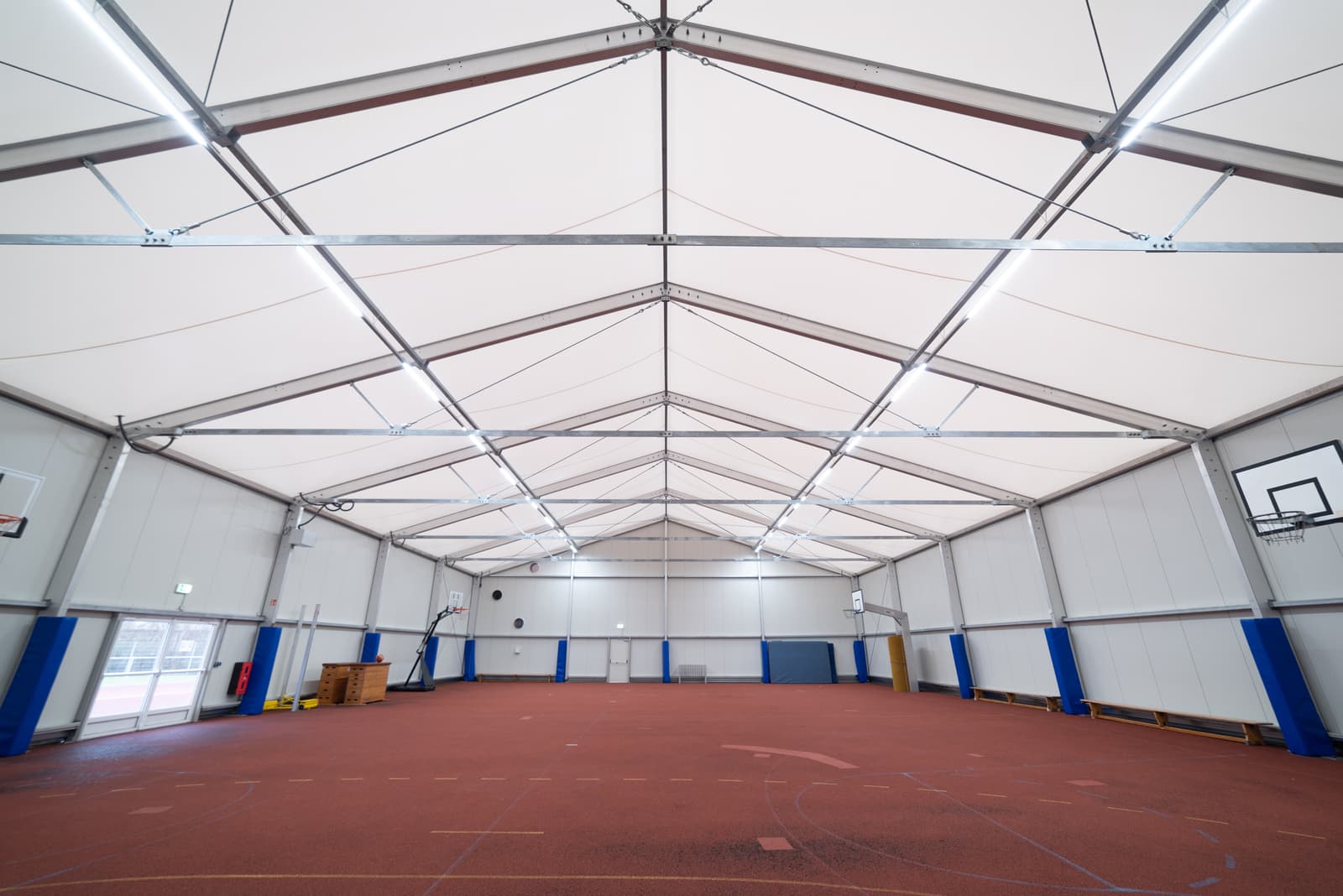
Industrial tents are highly flexible space solutions. Length, height, side cladding and many other configuration options can be customised individually. The basis for the planning and design of an industrial tent is always the client’s usage concept. Only in this way can an industrial tent be created that offers maximum functionality. We show you how flexible storage tents are in practice and what they can be used for.
Areas of application for industrial tents
Industrial tents can be precisely adapted to your requirements, meaning there are hardly any limits to their use. We show you the areas in which tents for industry are particularly commonly used:
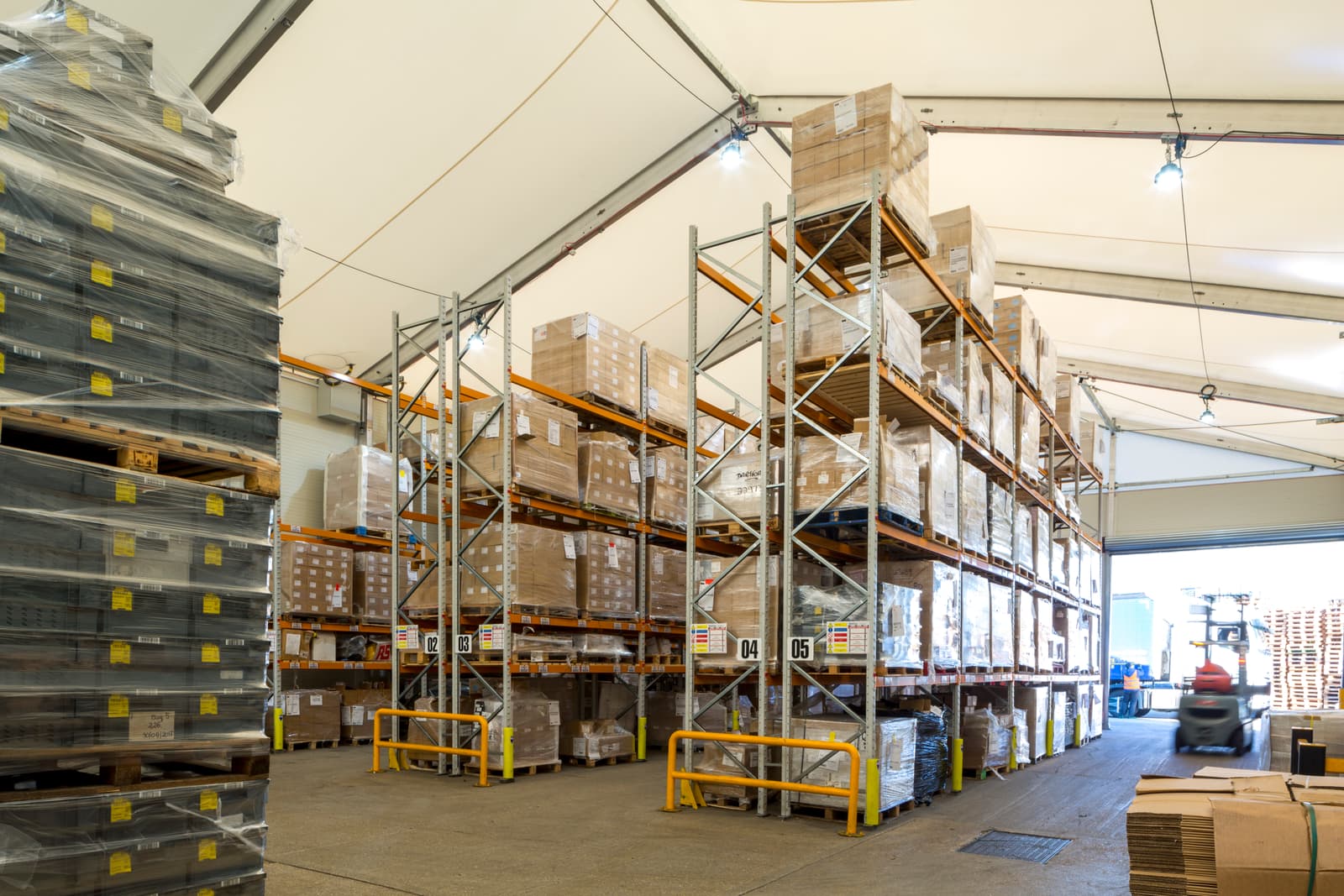
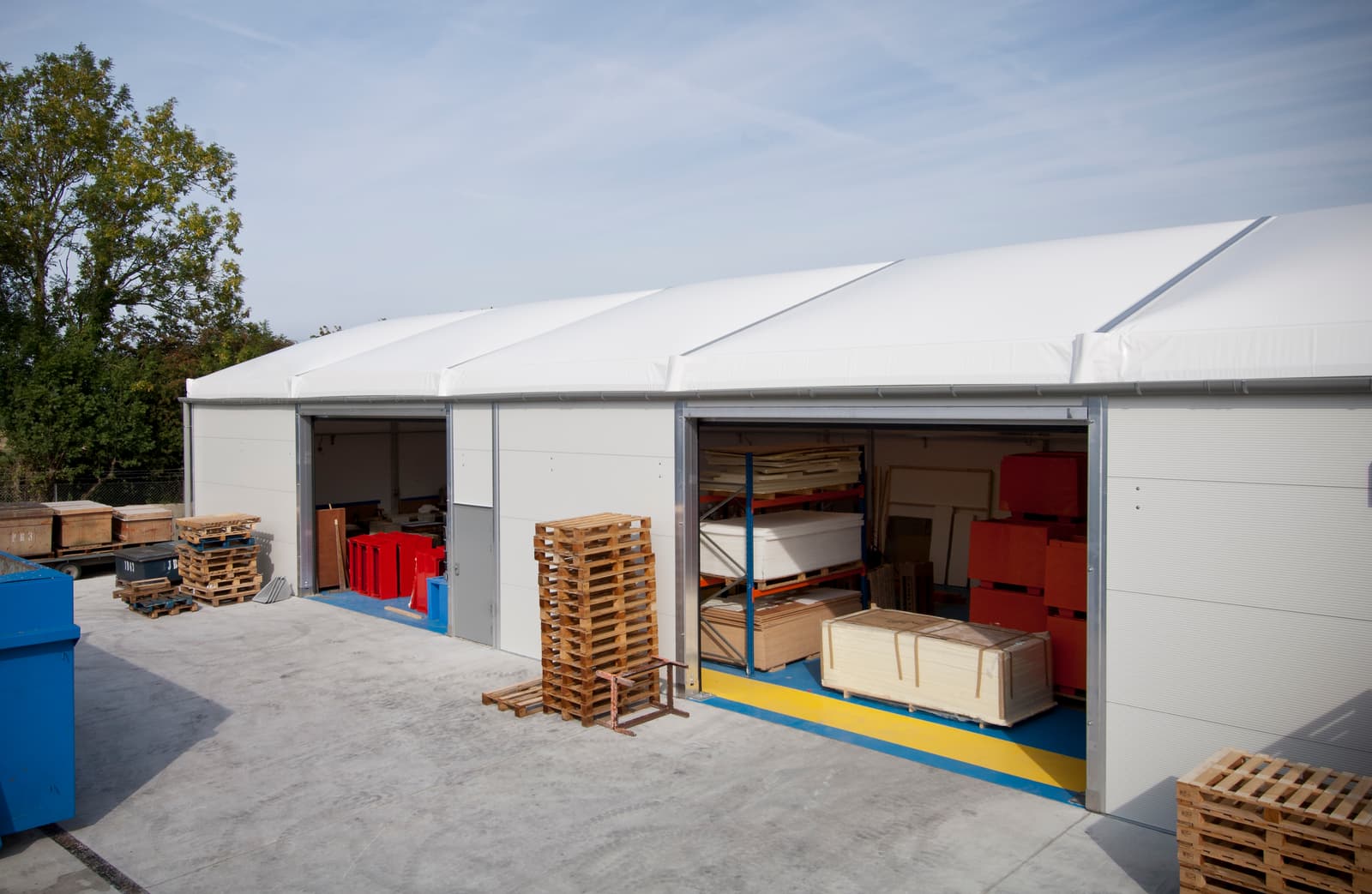
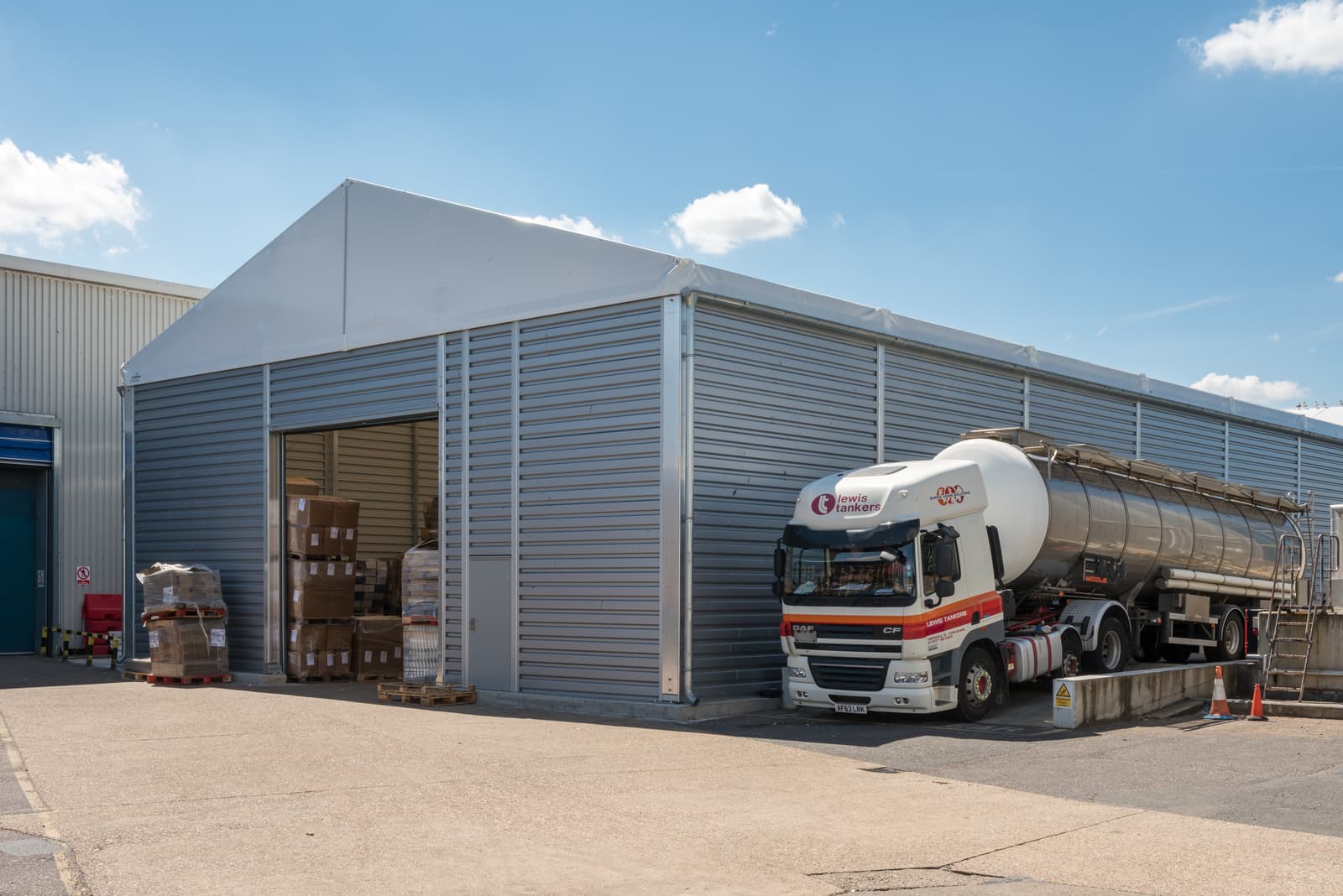
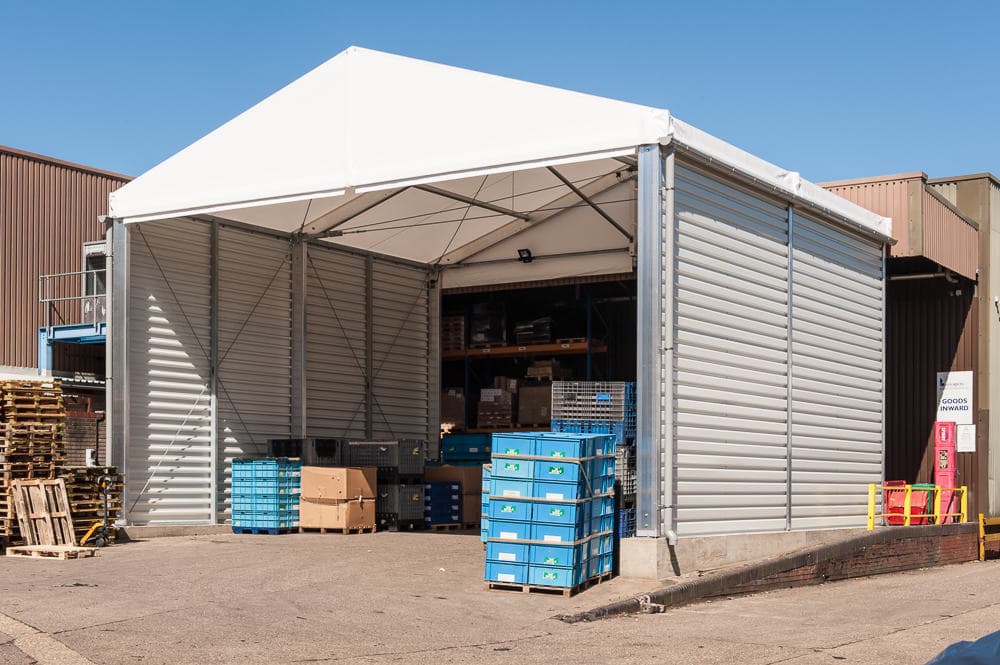
- Storage tent: Industrial tents are particularly popular for expanding short-term storage capacity. They can be used as both temporary and permanent storage space for goods, products or equipment.
- Weather protection tent: Industrial tents provide a practical solution for simple industrial or commercial work that would otherwise take place unprotected outdoors. These tents allow a degree of flexibility and adaptation to the respective working conditions, but above all contribute to the protection and optimisation of processes that do not require a permanent or insulated space.
- Sales tent: With an industrial tent, you create the perfect sales area to present goods in an attractive way. A sales tent can be realised for a wide range of sectors and is, for example, very popular in retail and for seasonal goods.
- Agricultural tent: In agriculture, industrial tents are often used as feed tents or harvest storage. Agricultural machinery or vehicles can also be stored safely and securely in an industrial tent.
All of these are just some of the possible applications of industrial tents. There are many further ways in which you can use industrial tents for your purposes.
Design and configuration options for industrial tents
A wide range of fittings and accessories not only optimises the functionality of a storage tent, but also factors such as safety, atmosphere, appearance, room temperature and lighting conditions. How and with what you equip a tent for industrial use is therefore not insignificant.
In the construction of industrial tents, PVC sheeting is used for both roof covering and side cladding. PVC sheeting provides a robust, weather-resistant and flexible cladding option that meets the requirements of industrial and commercial use. It is not only resistant to a wide range of weather conditions, but also easy to assemble and replace when necessary. By exclusively using PVC sheeting in industrial tents, it is ensured that these structures offer optimal protection and durability, tailored to the specific needs of users.
Weather resistance and durability of industrial tents
High-quality tents for industrial use are manufactured from robust materials, enabling them to last for several decades. They are designed to reliably withstand wind, rain, snow and other weather influences. They can also be adapted to specific local weather conditions, for example through a suitable roof shape as well as adjustment to the wind and snow loads present on site.
Our industrial tents, like our industrial buildings, are suitable for a wind load of 0.5 kN/m². In addition, our industrial tents are standardly designed for a roof snow load of up to 100 kg/m²; however, we can also adapt our structures to significantly higher loads.
As a rule, industrial tents are maintenance-free, and with proper care and storage when not in use, their lifespan can extend to several decades.
Cost factors and economic efficiency of industrial tents
When an industrial tent is to be purchased, factors such as the associated costs, effort and installation time play a major role. After all, the structure should represent the best solution for the space requirement and also be economically viable.
When constructing a permanent building in solid construction, very high building costs must be calculated and a long construction phase must be taken into account. In comparison, tents for industrial use are a cost-effective and straightforward solution for temporary and semi-permanent space requirements. They are quickly available and impress with a very short installation time. Depending on size, an industrial tent can be assembled and ready for use in just a few days. This makes it a highly economical solution for many applications, as business operations can usually continue as normal. The countless configuration options and subsequent layout adjustments also make storage tents economical and highly flexible space solutions. They can not only be easily and cost-effectively extended, but also attached to other building types.
In the case of temporary additional space requirements, it is also possible to rent industrial tents. In many cases, renting can be an ideal alternative to purchasing.
Using industrial tents without planning permission
An industrial tent can in many cases be erected without planning permission. Decisive factors include size, duration of use and ground conditions. If your industrial tent
- is to be erected without a foundation,
- remain in place for a maximum of 3 months, and
- have a maximum floor area of 75 m²,
then it can usually be erected as a so-called temporary building in accordance with DIN EN 13782. This allows you to avoid the often lengthy process of obtaining planning permission. The criteria for erection as a “temporary building” vary depending on the federal state. You can enquire at the relevant building authority about which regulations apply in your region.
What is the difference between an industrial tent and an industrial building?
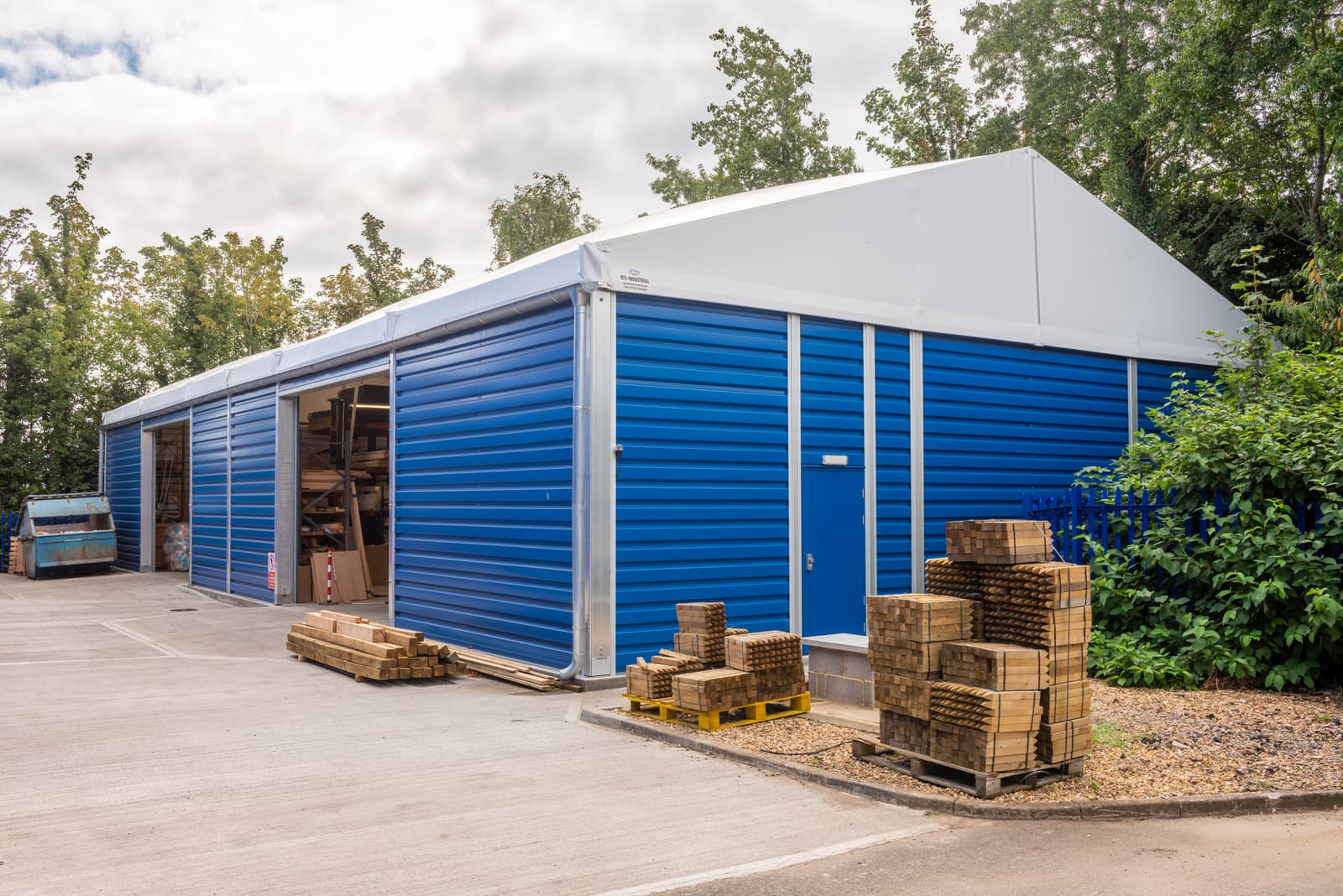
Besides tents for industry, industrial buildings are also used to create additional space for industrial purposes. The two similarly sounding terms do have quite a bit in common; however, there are very significant differences between these two construction types. To find the right solution for your individual requirements, we show you how an industrial tent differs from an industrial building.
Materials and construction of industrial tents and industrial buildings
Both industrial tents and industrial buildings in lightweight construction are mobile structures that can be used for various purposes such as storage, production or sales. Both constructions can be built in lightweight construction using an aluminium frame and feature similar installation technology. However, the differences lie in the details. We will show you exactly where these differences lie by examining the individual components and materials used:
Framework
A building can be made from various materials such as steel, aluminium, concrete or wood. Steel is a material that offers high load-bearing capacity and stability. Concrete is another common material that provides good fire protection. Wood is an ecological and sustainable material that offers a natural appearance. Aluminium combines these properties: a very stable raw material that is nevertheless lightweight, non-combustible, and develops a natural protective layer against corrosion when exposed to air. All industrial buildings from HTS TENTIQ are made from aluminium. This lightweight construction results in numerous advantages without restricting functionality in any way.
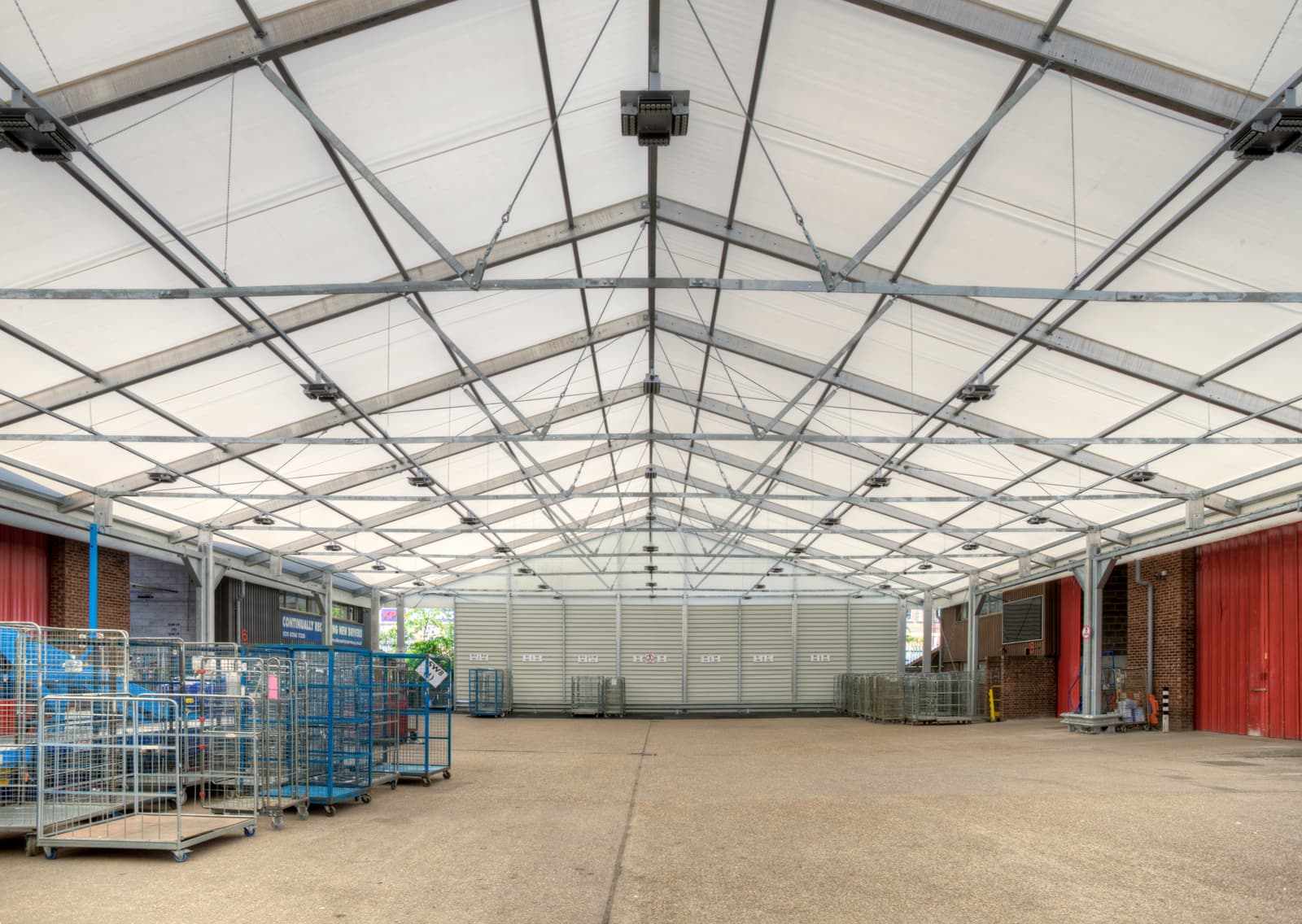
For the framework construction of industrial tents, aluminium is mainly used; connecting parts are usually made of steel. The profile thickness depends directly on the span of the structure. In both industrial buildings and industrial tents, the truss spacing is normally 5.00 m and the side height can reach up to 7.20 m.
Due to the durability of the materials used, tent buildings and industrial tents can have a service life of several decades. At HTS TENTIQ, high-quality anodised aluminium is used for all constructions, while corrosion-resistant hot-dip galvanised steel is used for the connecting parts.
Roofing
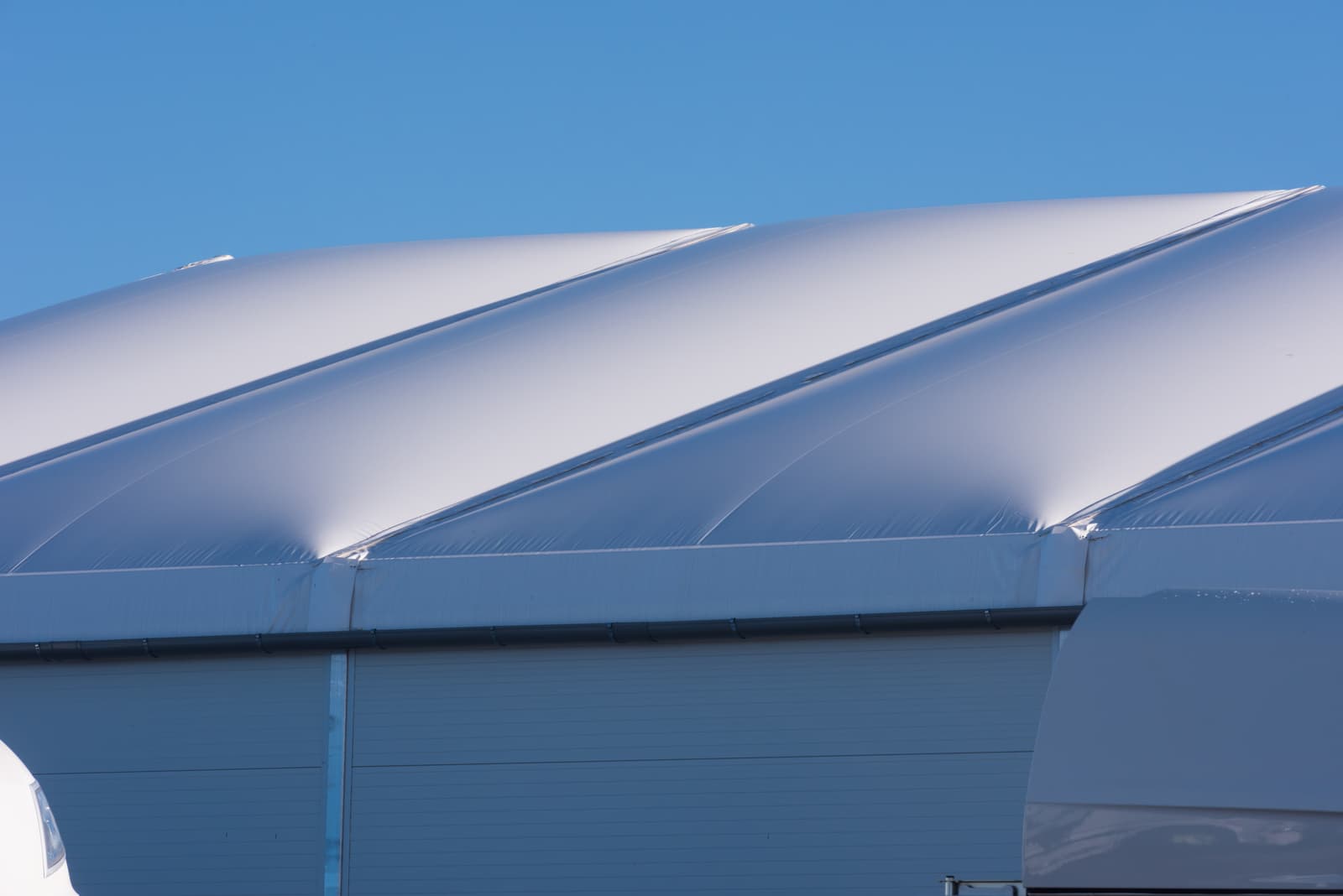
Another key difference lies in the material used for the roofing. For an industrial tent, a PVC roof membrane is used. This very strong, industrial-grade material allows plenty of daylight to pass through but is not insulated. The PVC used by HTS TENTIQ is moisture-repellent, flame-retardant and fungicidal. It complies with international standards such as DIN 4102 B1, BS 5438 / 7837 and is manufactured according to the latest guidelines. The material can be produced in either transparent or opaque, high-gloss white PVC. Thanks to its high quality, long-term use is guaranteed while remaining cost-effective. Installation is very straightforward and quick, and in the event of damage, the PVC covering can be easily replaced. An insulated, double-layer thermal roof membrane can also be selected to tailor the roofing to specific usage requirements.
Industrial buildings can be fitted with a trapezoidal sheet metal roof. For our trapezoidal sheets, we use galvanised steel with a material thickness of 0.88 mm. For additional condensation protection, a trapezoidal sheet roof can be fitted with an anti-drip coating. To obtain an insulated industrial building, sandwich panels are used as roofing due to their insulating properties.
Would you like to insulate your building even more efficiently? Find out more here in our flyer about thermal roof membranes with additional insulation.
Side walls
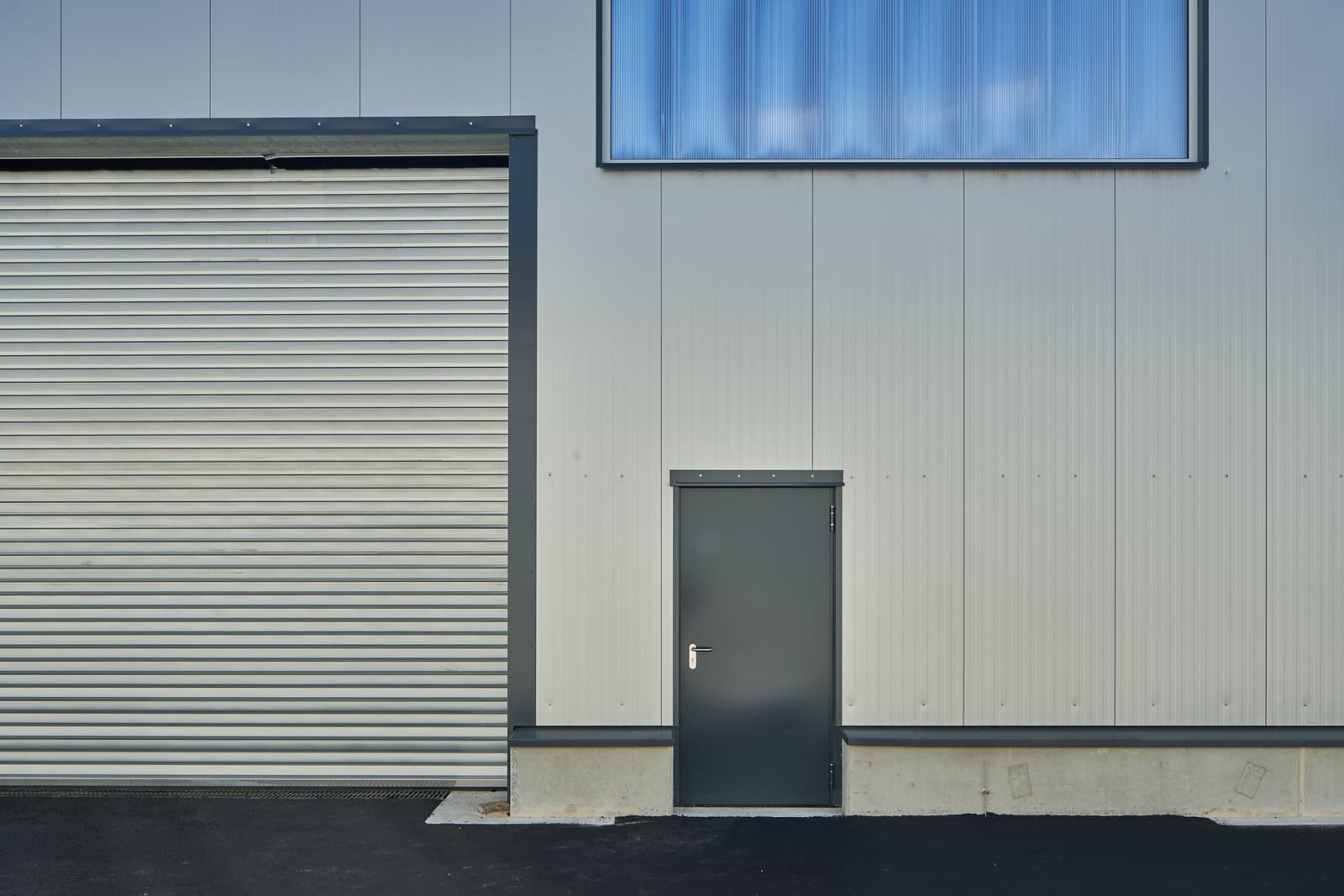
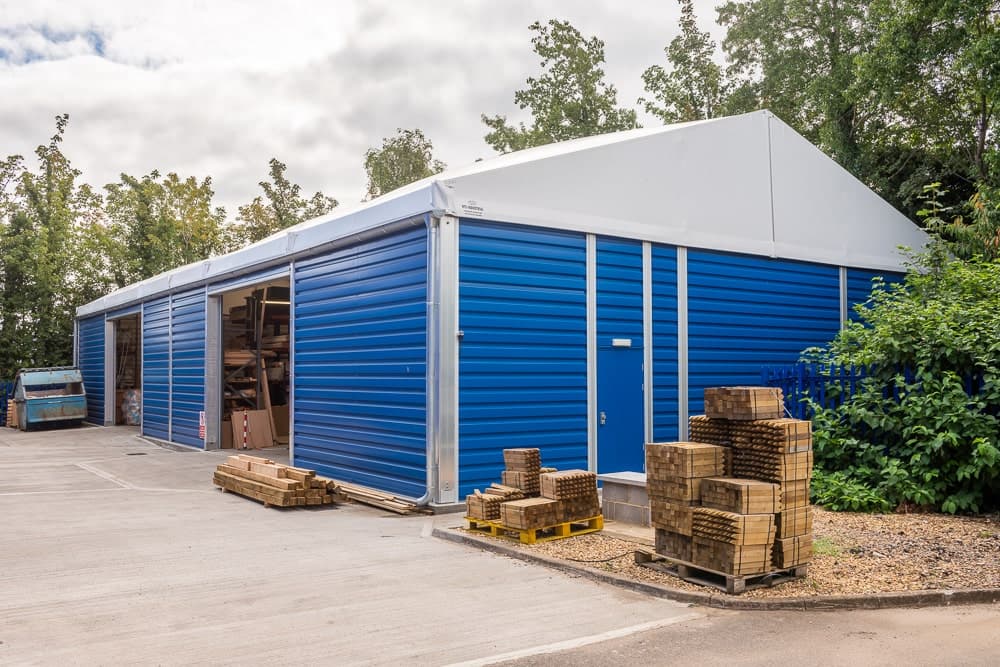
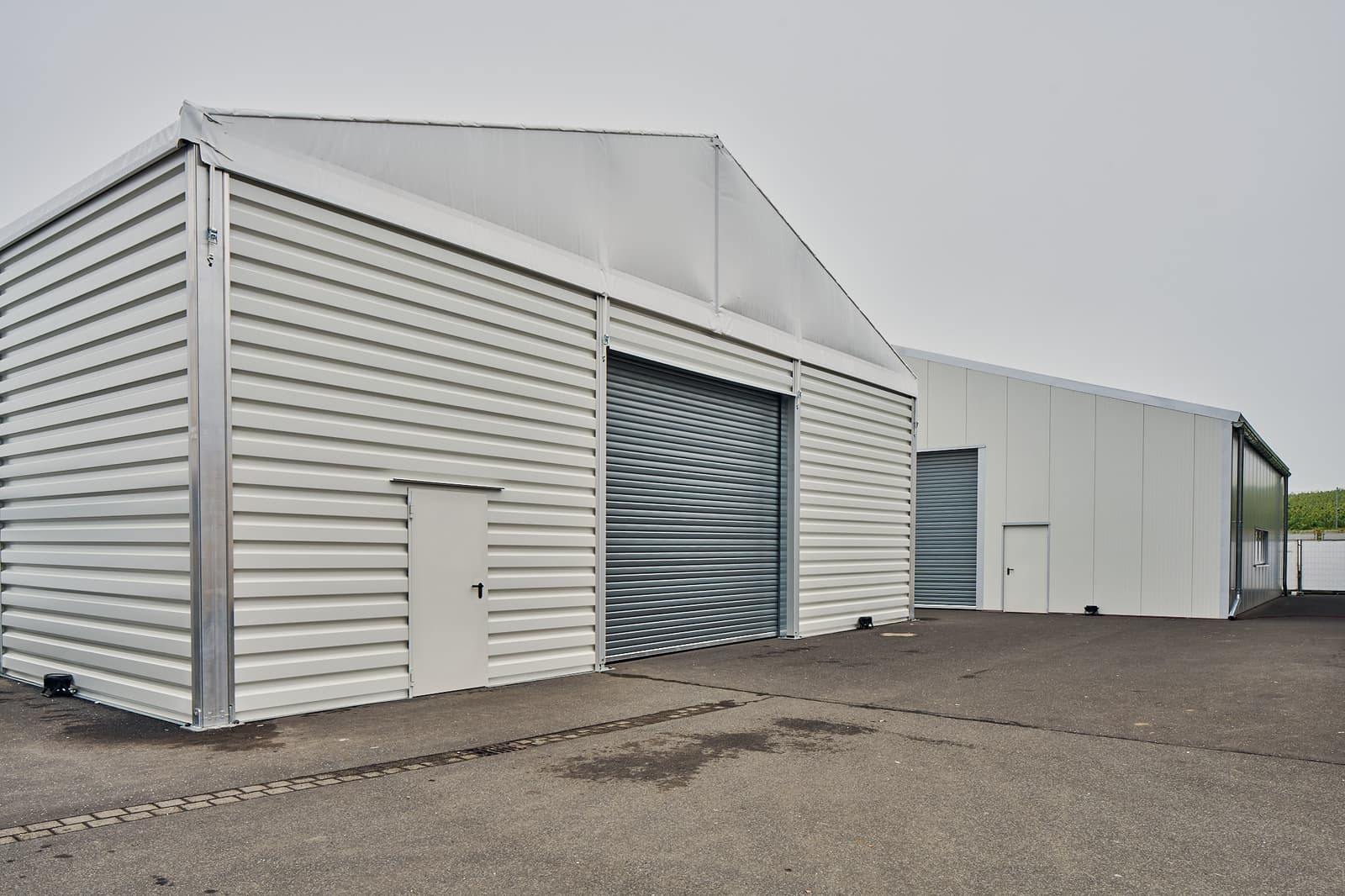
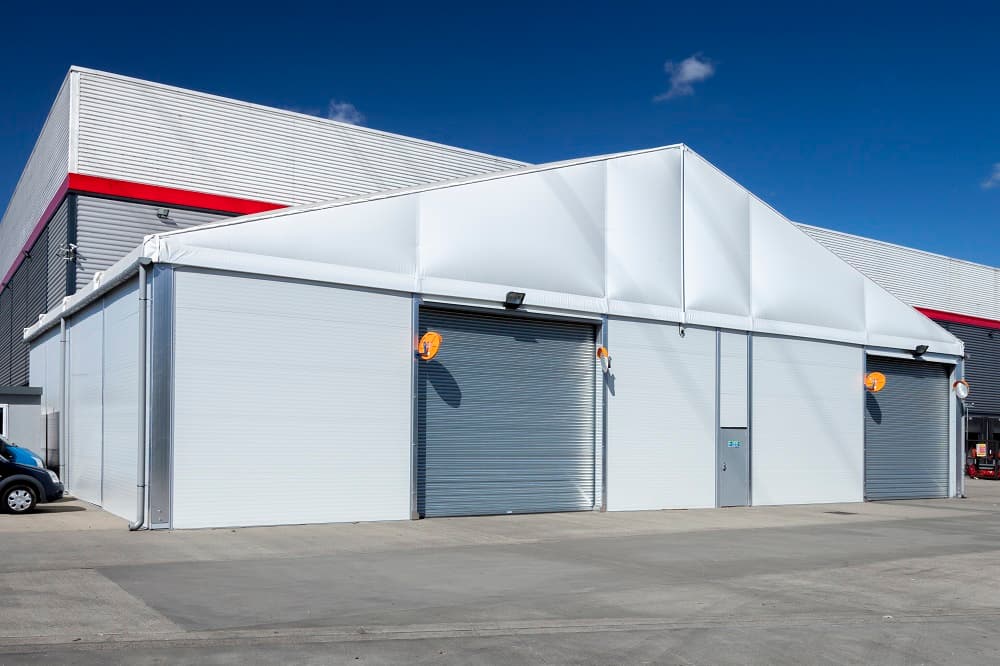
The side cladding of an industrial tent usually consists of single-skin PVC. Depending on requirements, storage tents can also be fitted with trapezoidal sheet metal or sandwich panels. In an industrial building, the side cladding is tailored precisely to your needs.
To ensure that you receive the desired structure, you should ask according to which criteria and standards the industrial tent or industrial building was constructed.
Comparison of industrial tents and industrial buildings: advantages and disadvantages at a glance
Both options – industrial tents and industrial buildings – have their advantages and disadvantages. It is therefore important to find the solution that best meets your individual requirements. We show you the points in which they differ:
- Service life: Industrial tents are primarily designed for temporary or semi-permanent use. If you are looking for a time-limited space solution or wish to store goods, products or vehicles that are insensitive to temperature and humidity, then an industrial tent is the ideal choice. Depending on the usage concept, industrial tents can also be used on a permanent basis.
- Availability: Industrial tents and industrial buildings in lightweight construction are available very quickly due to their modular design. In both cases, the individual components are prefabricated in highly technologically advanced production facilities. On a weekly basis, we can produce up to 60,000 m² of tents and buildings in our production facilities.
- Assembly and disassembly: An industrial tent with single-skin PVC roof membranes and PVC sheeting as side cladding is quicker and easier to assemble and dismantle than an industrial building. However, since both constructions are built in lightweight construction, the installation time is very short in both cases.
- Mobility: Industrial tents can be transported to another location more easily and reassembled. For many buildings, reassembly is not recommended or is not even possible. However, industrial buildings in lightweight construction are just as mobile as storage tents, and only require slightly more effort when relocating.
- Building permit: If your industrial tent is only used at a location for a short period of up to three months, it can under certain conditions be erected without a building permit. For tent buildings, a building permit must in many cases be applied for.
- Weather resistance: Buildings and tents both offer very good protection against weather conditions. This means that your staff and goods are ideally protected from rain, sun, wind and snow in both structures. Industrial buildings can also be adapted to local weather conditions through many customisation options.
- Durability: Due to the stronger aluminium frame, industrial buildings are generally more robust and durable than industrial tents, especially in long-term use.
- Safety: With industrial buildings, depending on the specification, a very high level of burglary protection can be achieved. If an industrial tent is not fitted with PVC side cladding but with sandwich panel side cladding, this version also provides burglary protection.
- Risk of damage: Industrial tents are more susceptible to damage, primarily PVC side cladding. At the same time, however, these can be repaired or replaced quickly and cost-effectively. With a specially designed Repair & Fixing set for PVC membranes, tears and holes can easily be repaired by yourself.
- Insulation: Temperature conditions in industrial tents and buildings are comparable as long as no heating or air-conditioning systems are in use. In fact, an industrial tent with translucent roof membranes can even heat up noticeably under sunlight. In both types, condensation can form; however, this can be prevented in both tents and buildings by using an additional underlay membrane. A translucent PVC roof covering for industrial tents also allows natural light to enter, improving lighting conditions inside.
- Costs: A tent is usually cheaper to purchase than a building due to its simpler equipment. As both construction types are maintenance-free, there are only very low maintenance costs in both cases.
What is an industrial tent better suited for than an industrial building?
In most cases, an industrial tent is better suited than an industrial building for temporary, mobile and rapid space solutions. Which type of temporary building is the ideal choice in your case primarily depends on your usage concept. For goods and products that are not sensitive to temperature, an industrial tent can be used. Goods, vehicles, machines and work processes can be stored or carried out here under protection from the weather.
An industrial tent is also the better solution if you need additional space at very short notice. This is often the case due to refurbishment work, insufficient storage capacity or for storing seasonal goods. Temporary and mobile spaces can be perfectly realised with industrial tents, as they offer very fast assembly and disassembly times.
If you need to remain flexible with your space solutions, industrial tents are also more suitable, as they can be expanded or reduced quickly and cost-effectively. Although industrial buildings offer the same flexibility, extensions are somewhat more expensive due to the higher requirements for the framework.
The key criteria for or against an industrial tent are therefore service life, usage behaviour and urgency. If you are considering the purchase of an industrial tent or an industrial building, you should ask yourself the following questions:
- How quickly do I need the additional space?
- What exactly do I need the additional space for?
- How long should the building or the tent remain in place?
- How large should the structure be?
- On what surface will the building be erected?
If you have questions about an existing industrial tent, it is best to contact the manufacturer or the supplier from whom you obtained it directly. You are also welcome to get in touch with our technical team. Our experts will be happy to advise you and support you with expertise to answer your questions about an existing storage tent.
If you are interested in a new industrial tent, our experts will work with you on a space solution that precisely meets your requirements.
Conclusion: Finding the right solution for your needs
Industrial tents and industrial buildings in lightweight construction are both popular options for companies that require additional space. These structures offer a flexible and cost-effective solution for creating storage or working areas for industrial purposes.
At first glance, however, the differences between an industrial building and an industrial tent are not always immediately apparent. You should therefore ask the manufacturer directly about the differences and which structure is better suited to your needs.
Whether a tent or a building is the ideal choice in your case depends on the planned service life, your usage concept and your budget. Both structures are suitable for countless applications and go far beyond use as storage or production facilities for goods and materials. Thanks to the many configuration options, both variants can also be individually customised.
Industrial tents meet the demands of the times: they can be adapted to changing space requirements, thereby enabling maximum flexibility. Industrial tents and buildings in lightweight construction are an efficient solution for companies that need flexible additional space. With a wide range of sizes, equipment options and customisation possibilities, every company can find the right solution for its individual requirements.
FAQs on industrial tents
Yes, condensation can form in an industrial and storage tent when the humid air inside the tent meets a cooler roof or cooler side walls. This can lead to water droplets forming, which may fall onto stored goods or machinery.
To prevent condensation, installing an underslung liner beneath the single-skin roof membrane can be an effective solution. In addition, trapezoidal metal roof panels can be provided with a special anti-condensation coating to prevent the formation of condensation water.
By using insulating measures such as thermal roof membranes or sandwich roofs, the formation of condensation water can also be effectively prevented.
Yes, an industrial tent can be equipped with a heating system and air conditioning. At HTS TENTIQ, you can choose between oil-powered or electric systems for heating your tent.
The advantage of electric heating is that the room temperature can be increased very quickly. With an oil-based heating system, fuel tanks are used for heat distribution, but the uniformity of heat within the space depends on the positioning of the hot air ducts, meaning it becomes warmer first in the direct inlet areas before the heat spreads throughout the tent.
With all heating systems, the heating output is precisely matched to the size and volume of the tent. For both heating and air conditioning, you can choose between fixed or mobile units.