Train maintenance and plant maintenance: Mobile temporary building as a maintenance building for trains and plant
The construction of a building for the maintenance of trains places high demands on assembly and construction, as the maintenance building must ultimately be erected directly above the tracks. The same applies to the maintenance of large, fixed installations: mobile maintenance buildings offer the ideal solution for these purposes and enable all necessary maintenance measures to be carried out on site.
Through rapid assembly and disassembly, the location of a temporary building for plant maintenance can be changed at any time. In terms of construction, mobile maintenance buildings correspond to event tents in self-supporting construction, but possess the stability and durability of conventional industrial buildings.
Maintenance as a maintenance measure: What does it mean to maintain a train or a plant?
To ensure safety and quality in rail transport, regular maintenance is essential. It includes all measures for preserving, assessing, restoring and improving machines and installations.
The maintenance of machines and installations therefore covers many different tasks, which is why it is divided into four different areas:
- Maintenance: Maintenance involves carrying out work that delays wear in order to extend the service life of trains and tracks. This includes, for example, thorough cleaning of the installations, greasing or oiling of installations and rails, as well as readjusting timing belts.
- Inspection: This serves to determine and assess the current condition of rail vehicles or tracks. As part of the inspection, for example, visual and functional checks are carried out.
- Repair: As a sub-area of maintenance, repair work restores the required condition and returns the relevant machines or installations to proper operational condition.
- Improvement: Improvement work refers to those activities that lead to the correction of faults.
In rail transport, carrying out maintenance measures is not optional but mandatory. Railway infrastructure undertakings or persons responsible for maintenance must therefore ensure that the relevant vehicles, machines or installations are always kept in a safe operating condition in order to obtain and retain an operating licence. Records must be kept of maintenance measures, and a maintenance system must be established for quality assurance purposes. Upon request, documentation of the maintenance carried out must be submitted to the competent supervisory authority, the Federal Railway Authority (Eisenbahn-Bundesamt, EBA). The obligation to maintain installations and machines is regulated by standards such as DIN 31051 and EU directives such as Directive 2016/798 on railway safety and Implementing Regulation (EU) 2019/779.
The maintenance of trains and fixed installations: Why is this so important?
Regular maintenance of trains is the foundation of safety in rail transport. It is therefore a central factor for every railway operating company, as millions of people and goods are transported by rail vehicles every day.
However, maintenance is important for a variety of reasons. It leads to high operational mileage for trains and a long service life. Proper maintenance is therefore also crucial from an economic perspective for companies. In addition, the maintenance of trains and tracks enables their reliable operation and the punctual transport of passengers or goods. The entire railway system can only function efficiently if all necessary maintenance and repair work is carried out at regular intervals on locomotives, wagons, tracks and multiple units.
The objectives of maintenance work are therefore operational safety, the minimisation of operating and system downtime costs, the extension of service life, and the assurance of the functionality of all rail vehicles and tracks.
Plant maintenance and train maintenance: How can mobile maintenance buildings help?
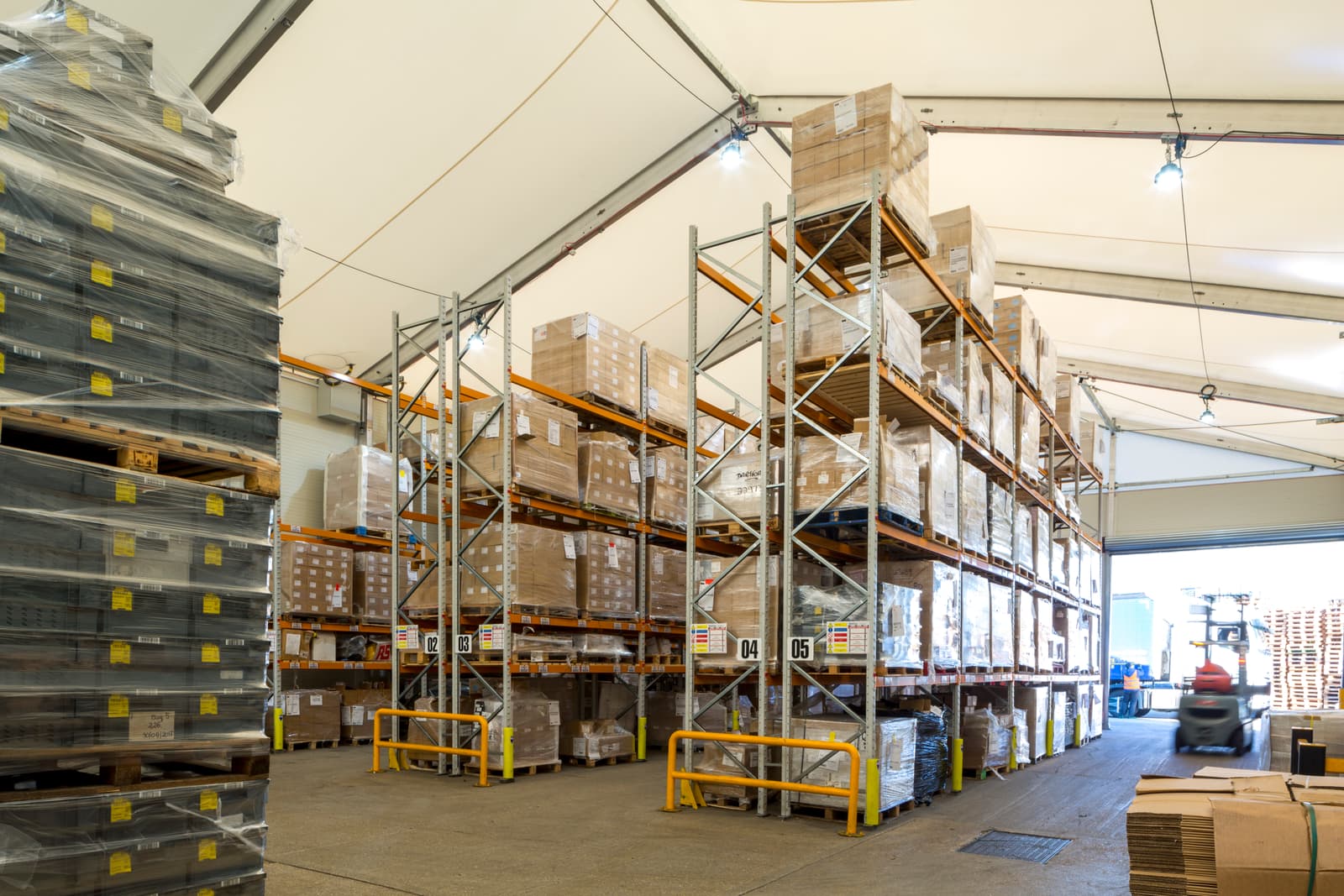
With a mobile maintenance building for plant maintenance, you provide a safe working environment in which all repair, maintenance, conversion and cleaning of trains can be carried out. The aim of a well-planned maintenance building is to optimise all operational processes. This includes not only repairs, overhauls, maintenance and conversions, but also warehouse management.
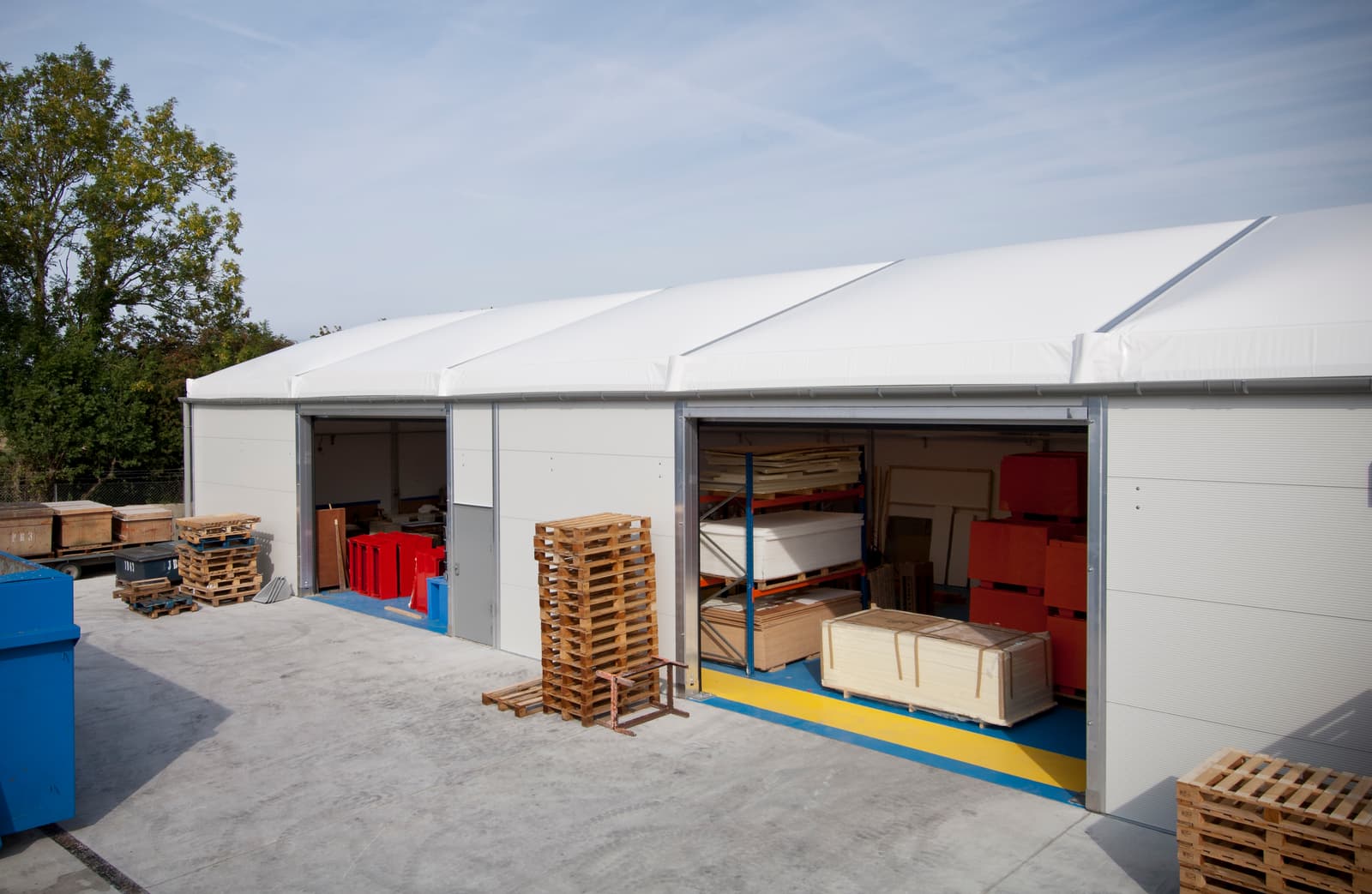
Temporary buildings are the ideal solution for train maintenance. The maintenance building can not only be erected in a short time, but also quickly dismantled again and rebuilt at another location. This flexible use makes it possible to continue work at a different site after maintenance work has been completed in one location, without having to invest in another maintenance building. As trains require more frequent maintenance in winter than in the warmer months, a mobile maintenance area provides full year-round flexibility.
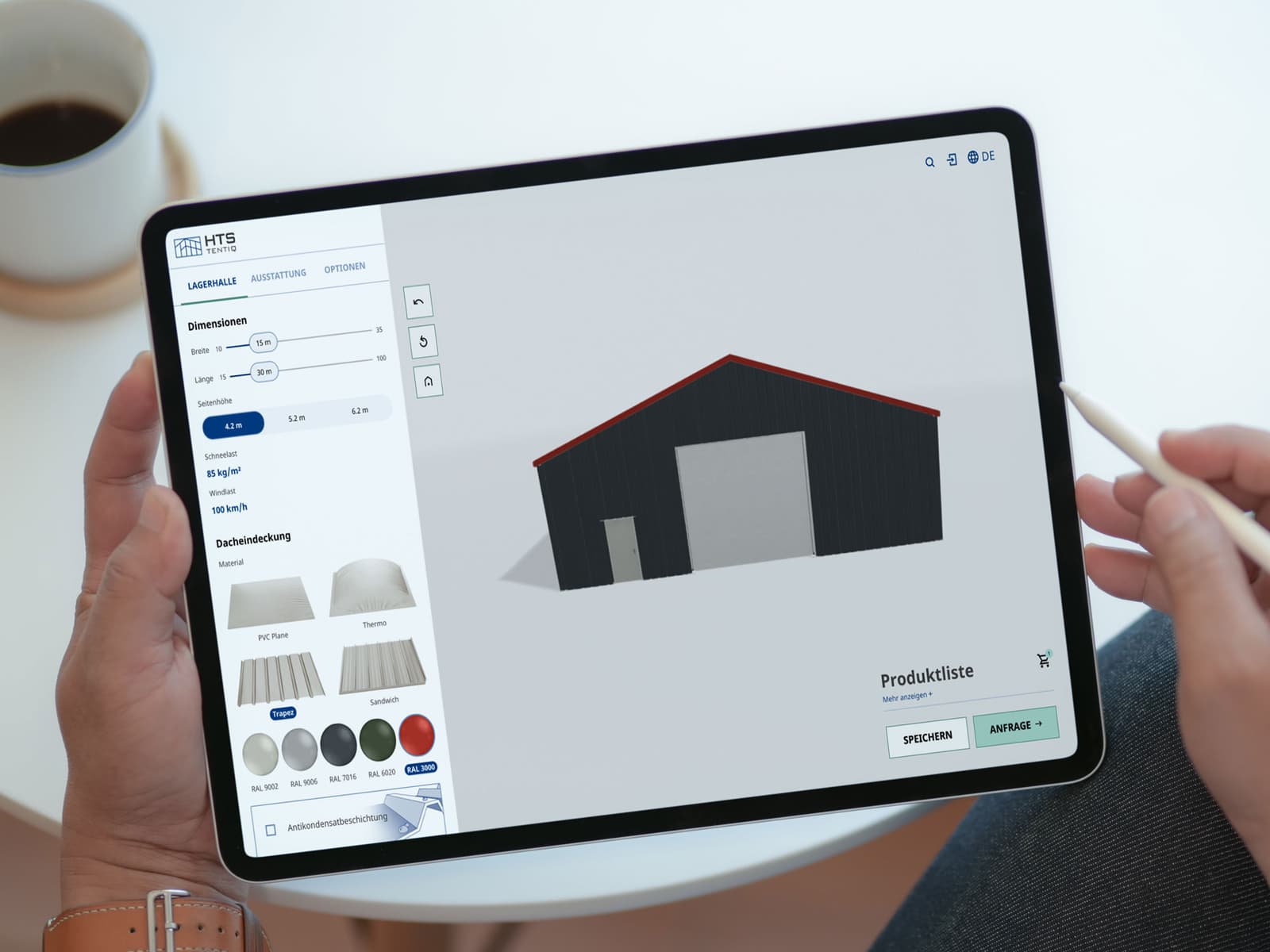
Thanks to the flexible modular system, the size of a maintenance building in lightweight construction can be precisely adapted to local conditions. As the lightweight buildings from HTS TENTIQ can be extended infinitely in length in 5 m increments, even very long trains can be accommodated. You also have considerable flexibility in width, as our lightweight buildings are standardly between 5.00 m and 30.00 m wide. When determining the ideal size, any storage space required for wear parts and spare parts is also taken into account.
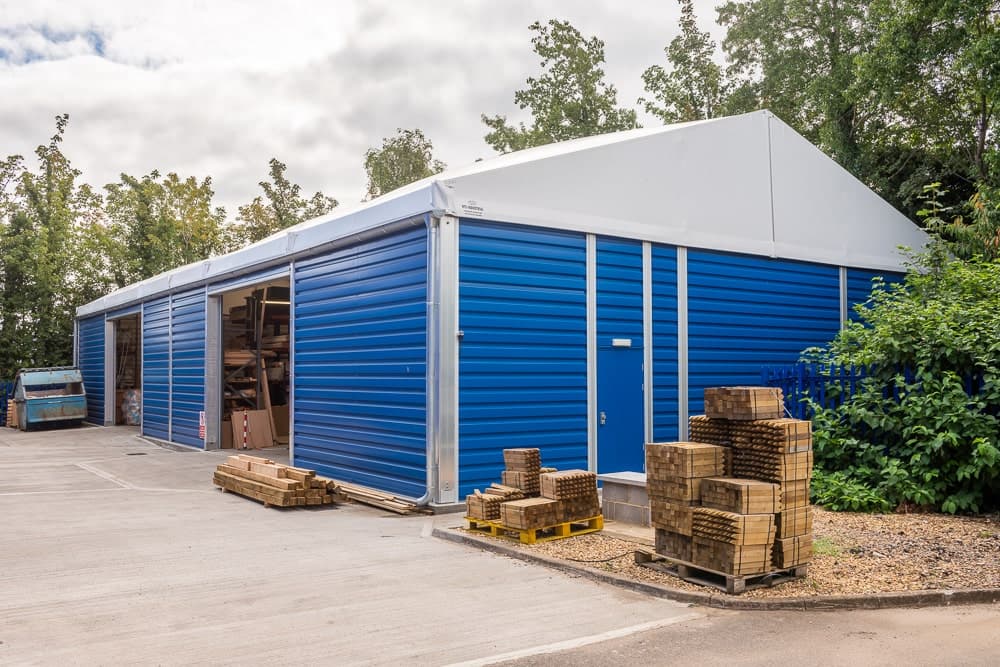
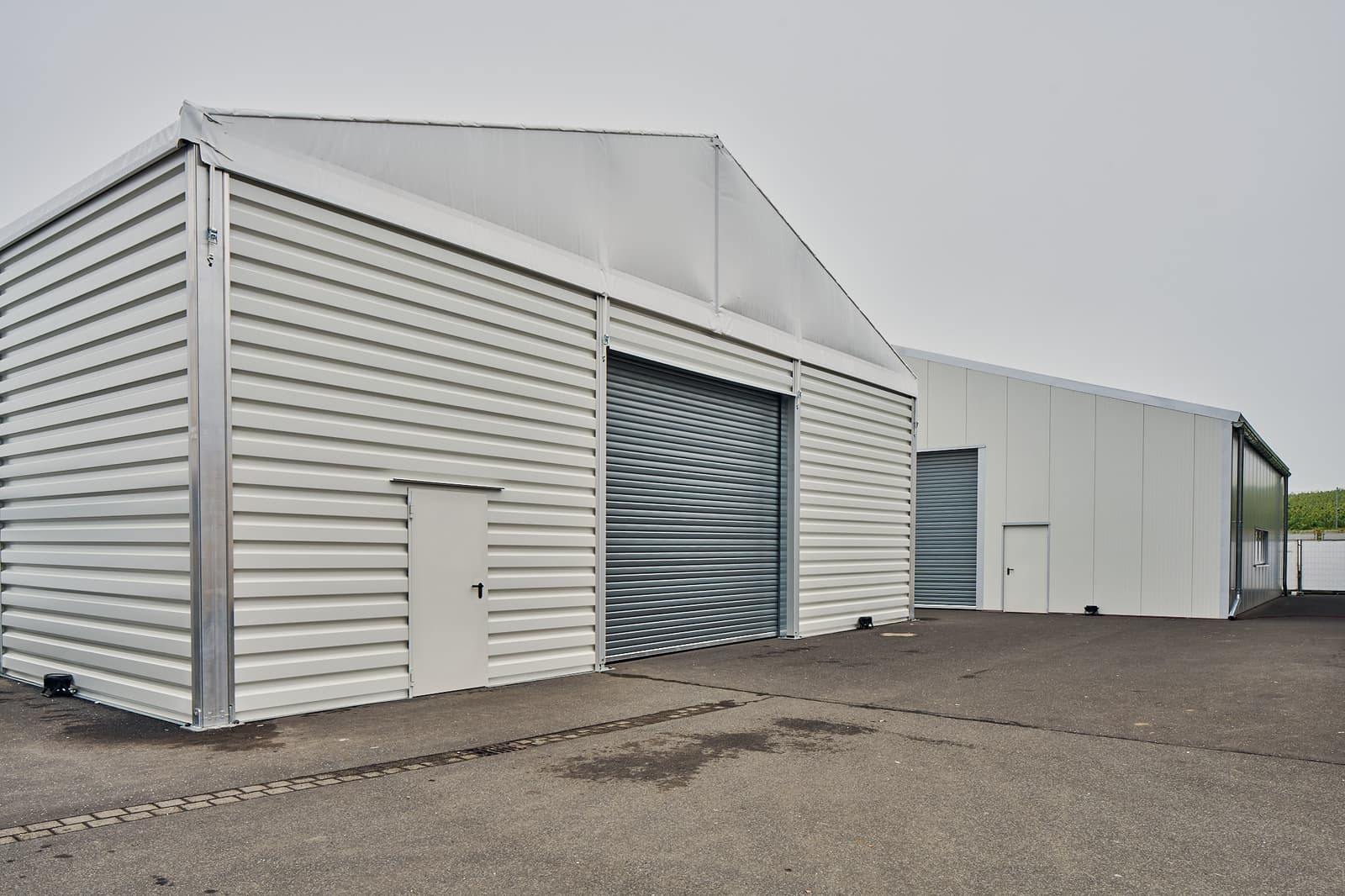
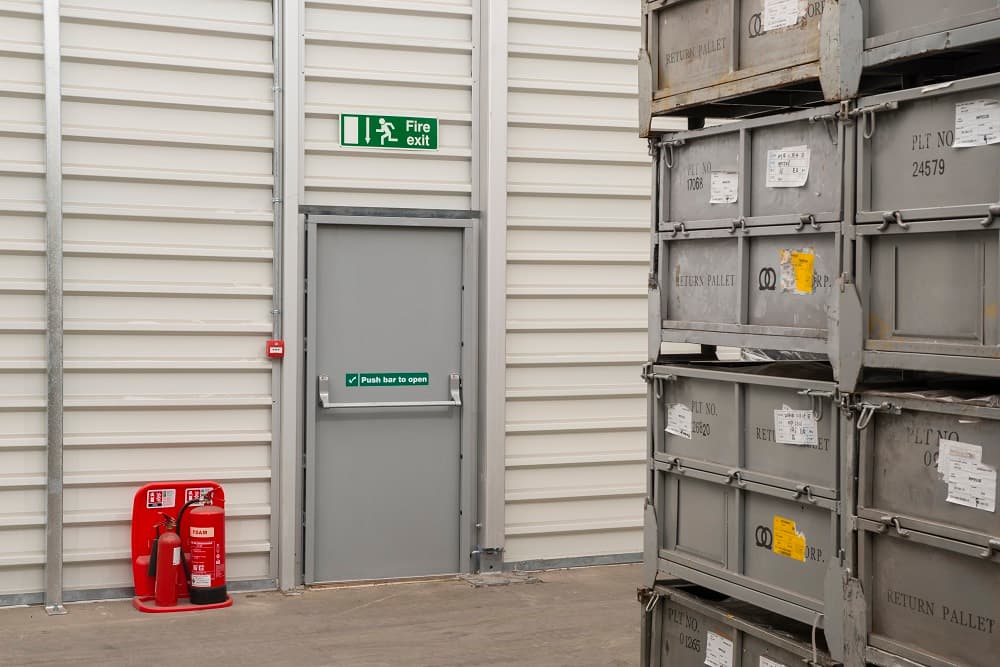
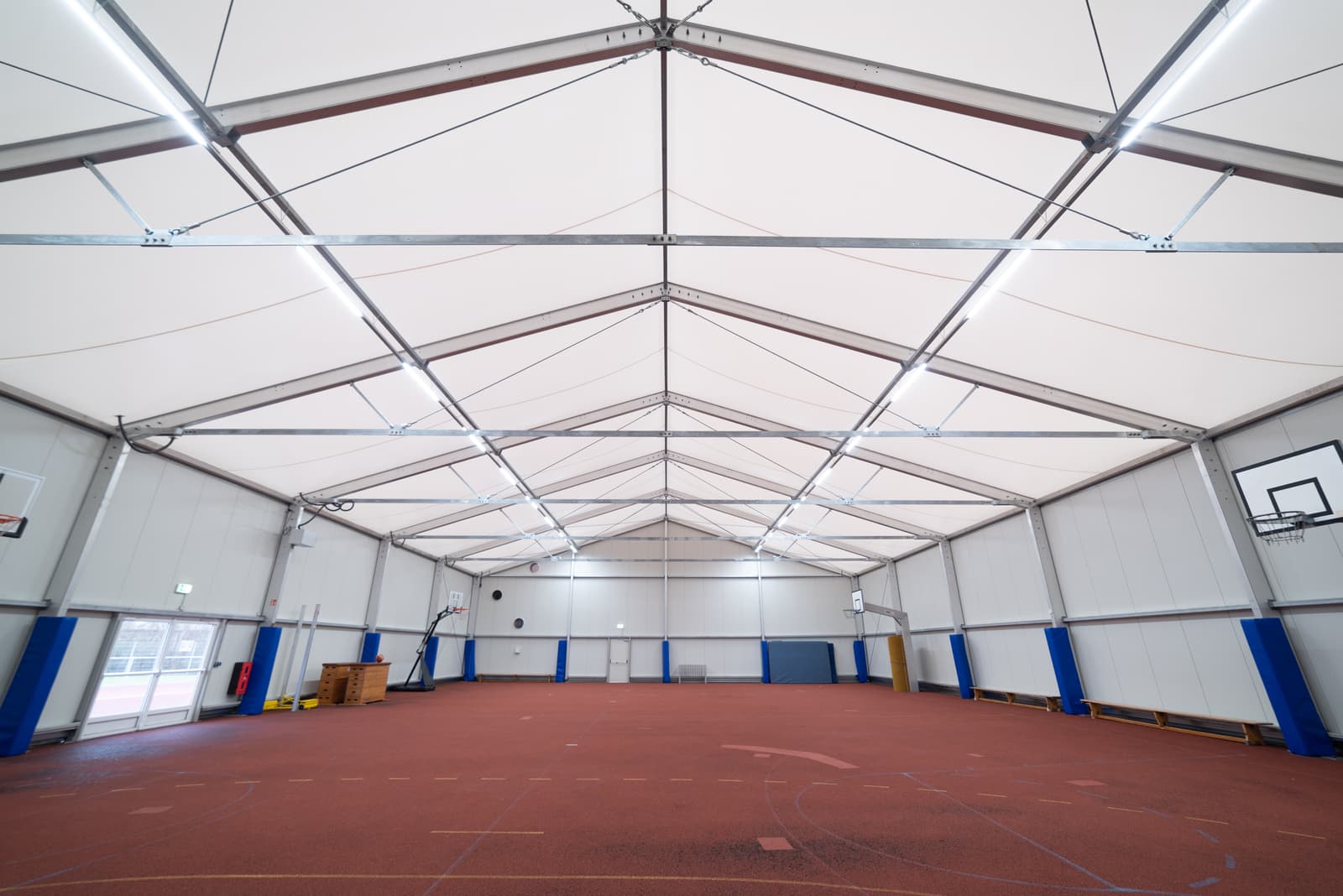
The construction of mobile buildings is a decisive factor in creating durable, efficient spatial solutions for train and rail maintenance. Our maintenance buildings consist of a high-quality and robust aluminium frame, which, due to its low weight and high strength, is ideally suited for installation above railway tracks and fixed installations. Our structures are so light that anchoring to existing ground is possible and no concrete foundations are required. Despite their low weight, our aluminium constructions for mobile maintenance buildings can, in most cases, be statically adapted to regional snow and wind load requirements. Temporary buildings also comply with all other general building regulations such as fire protection, thermal insulation and sound insulation.
Whether a building permit is required for the construction of a mobile temporary building for plant or train maintenance depends primarily on the duration of use and the size of the maintenance building. For temporary use of up to three months, a mobile maintenance building can often be erected as a temporary structure in accordance with EN 13782. However, the floor area must not exceed 75 m², although some federal states allow a larger floor area of 100 m².
The assembly process: How are mobile maintenance buildings in lightweight construction erected?
For train maintenance, our lightweight buildings are installed directly above the tracks and on existing ground. This means that no additional groundwork is required for the surface.
The aluminium frame of our maintenance buildings is erected on base plates. These ground or anchor plates are secured using ground anchors. This straightforward fastening method is not only cost-effective but also time-saving. To ensure that the maintenance building can withstand the required snow and wind loads and complies with structural calculations, a lifting test is carried out after the ground anchors have been fixed.
Afterwards, all frame components are fastened and brought into the correct position. Once the entire frame structure has been assembled, roofing, side cladding, doors and gates are installed as required. In addition, both external and internal lighting are configured in line with operational processes in order to create an optimal working environment for staff and to minimise error rates as far as possible.
Case studies: examples of currently used maintenance buildings
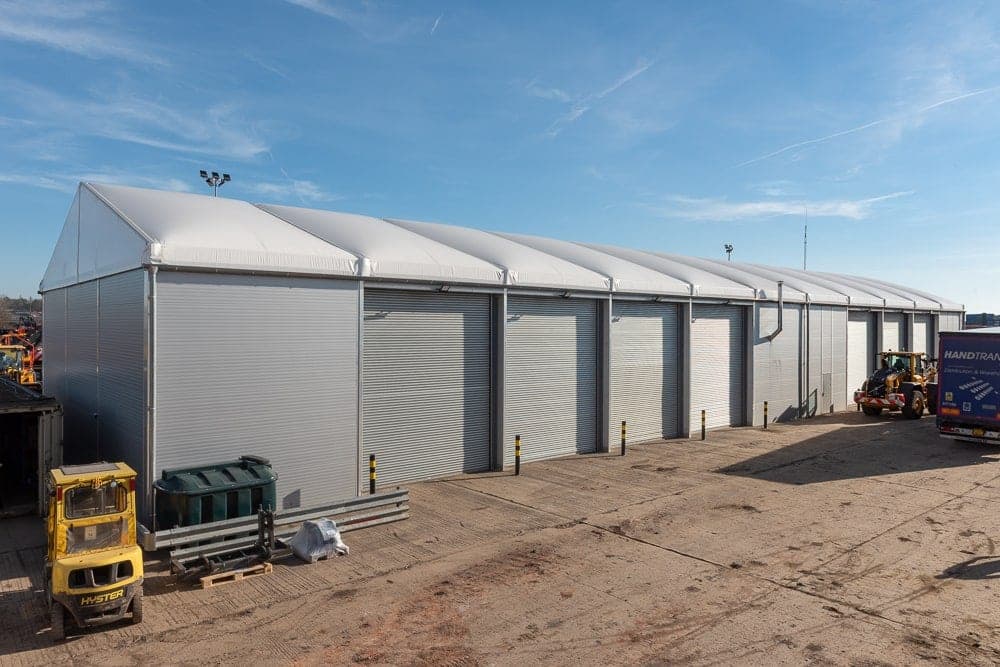
HTS TENTIQ has already implemented many temporary lightweight buildings for train and plant maintenance across Europe. We show you examples from our daily practice of how our mobile lightweight buildings can be used:
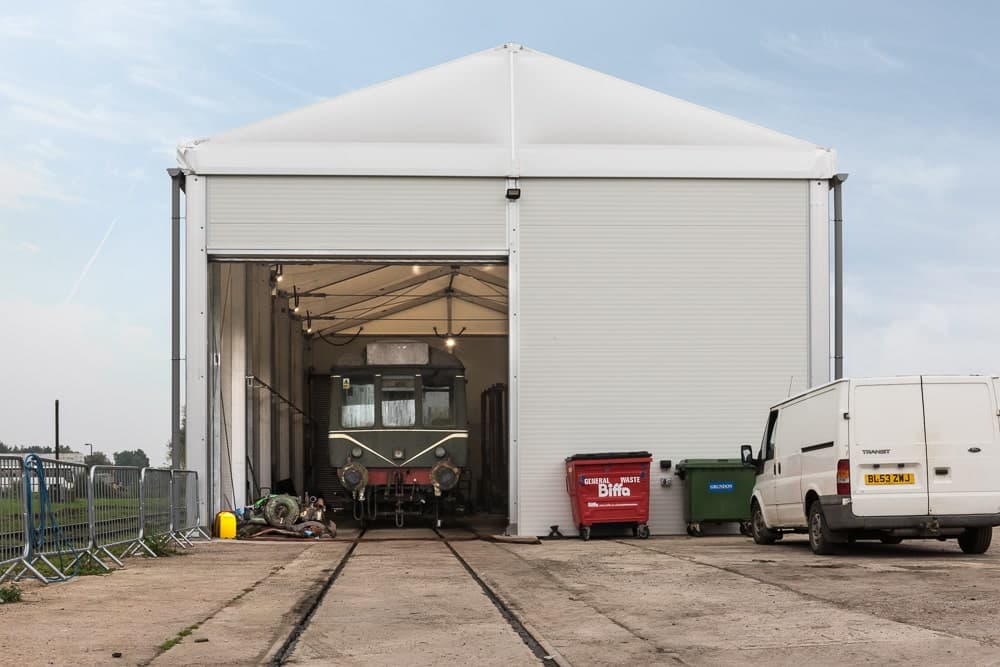
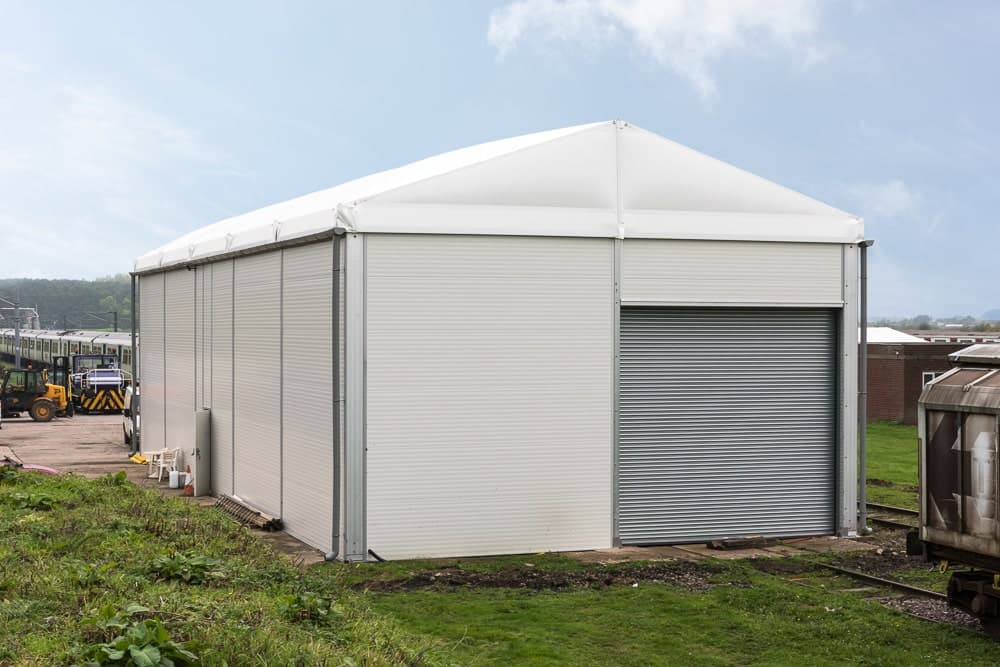
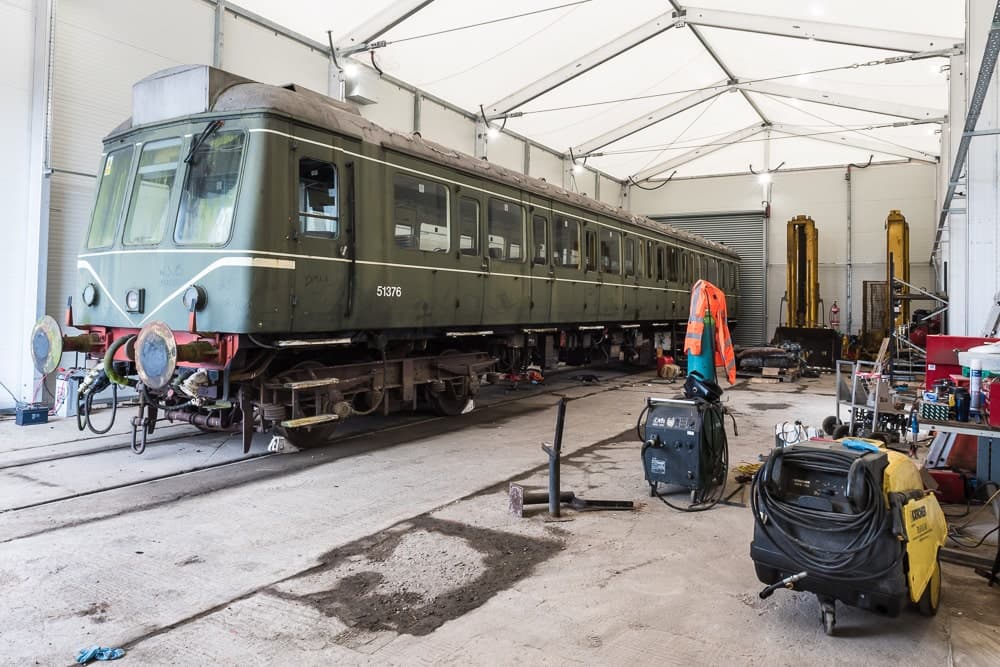
Examples of mobile maintenance buildings for train maintenance
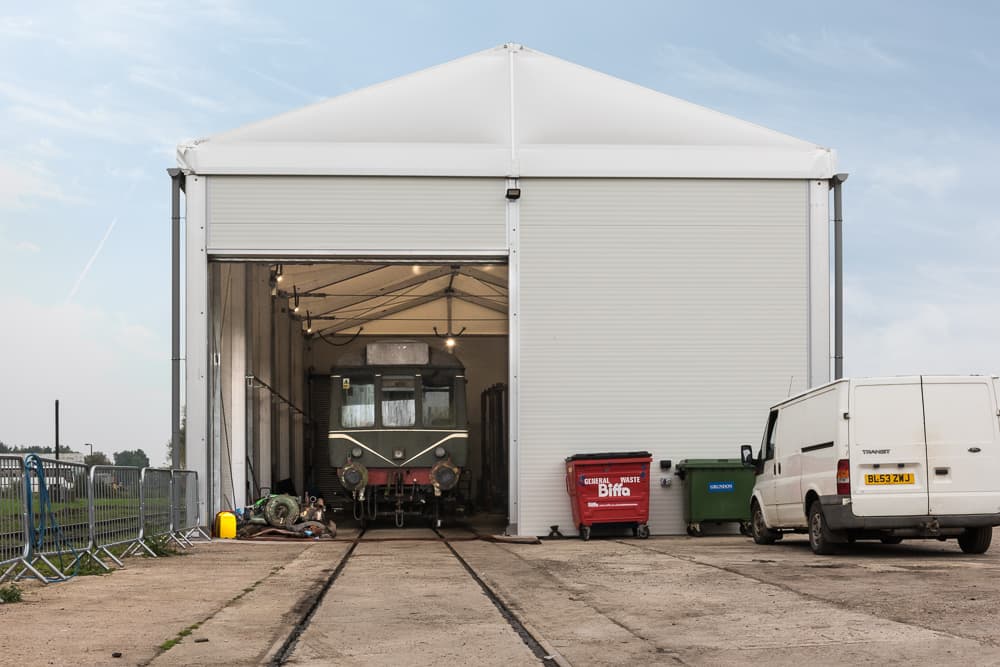
A rail vehicle manufacturer required a rapid and efficient maintenance area after the expiry of its lease contract, in order to carry out all necessary maintenance work on trains in weather-protected conditions. The solution also had to ensure that trains could be moved into and out of the building quickly and easily. HTS TENTIQ erected a mobile building that could be used as a maintenance hangar for trains. The temporary maintenance building was constructed over the tracks. Roller doors were installed on both sides of the building so that trains could enter at one end and, after completion of maintenance, exit again at the other end. The size of the maintenance building was precisely adapted to the customer’s requirements and local conditions.
An example from the United Kingdom shows that our lightweight buildings represent the ideal solution for mobile maintenance buildings. After a leading provider of transport solutions in the UK had already commissioned HTS TENTIQ to install a new demonstration facility as a marketing suite for the railway sector, a temporary building for train maintenance then needed to be erected. A key requirement of the client was the ability for rapid and straightforward assembly and disassembly, so that the mobile building could be reused at a different location when required.
Together with the company, we designed an insulated temporary building as a maintenance area for trains with a width of 10.00 m and a length of 25.00 m. The walls were fitted with 40.00 mm insulated sandwich panels. Two manual, non-insulated doors were installed on the two gable ends to allow entry and exit at the front and rear. In addition, we equipped the maintenance building with two personnel doors.
Example of mobile maintenance buildings for plant maintenance
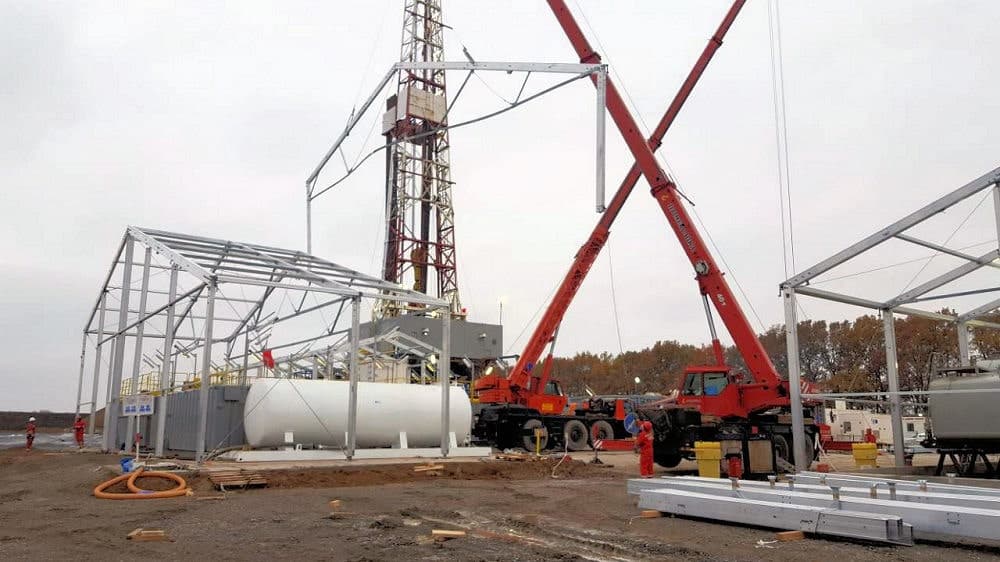
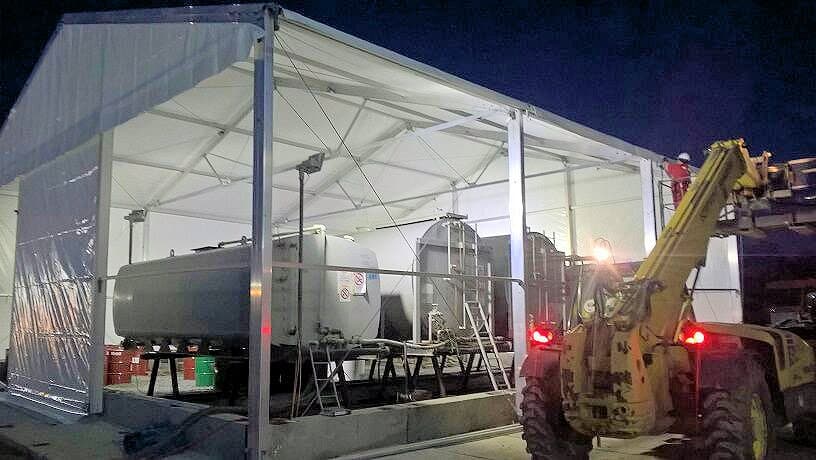
A mobile building is also the ideal solution for carrying out maintenance work on immobile installations such as a drilling rig used on oil platforms. These machines are often exposed to extreme weather conditions due to onshore and offshore use, which can lead to significant stress and damage to drilling equipment. As a solution, we designed a temporary maintenance building that could be installed around the fixed machines and installations and that could also withstand the extreme weather conditions on offshore platforms. For this application, individually manufactured sizes were required that provided precisely the necessary protection while not taking up too much working space on the oil platform.
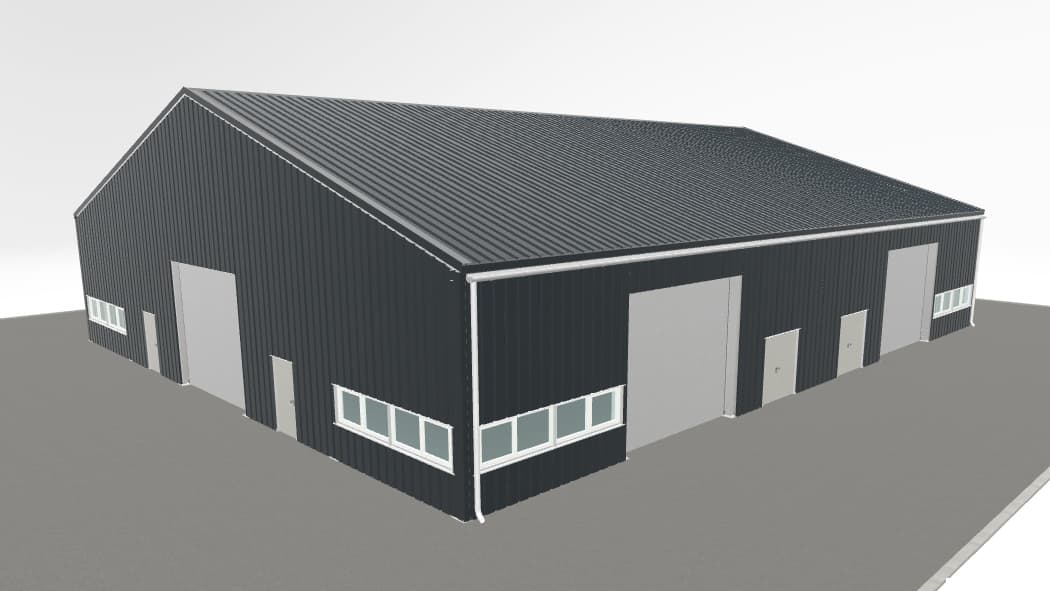
Further examples of mobile maintenance buildings
Mobile buildings are suitable for a very wide range of applications. In addition to providing a safe working environment as maintenance buildings for rail transport and other installations and machines, temporary buildings are also widely used in the sports and leisure sector. The covering of sports fields, swimming pools, riding arenas and ice-skating facilities is common practice. Through the customised design of side walls, roofing and equipment, lightweight buildings can create not only functional but also visually appealing spatial solutions. They are also a popular way to ensure year-round use of outdoor facilities and to extend operating hours throughout the entire year.
Conclusion: Mobile temporary buildings are ideally suited as maintenance buildings for trains and fixed installations
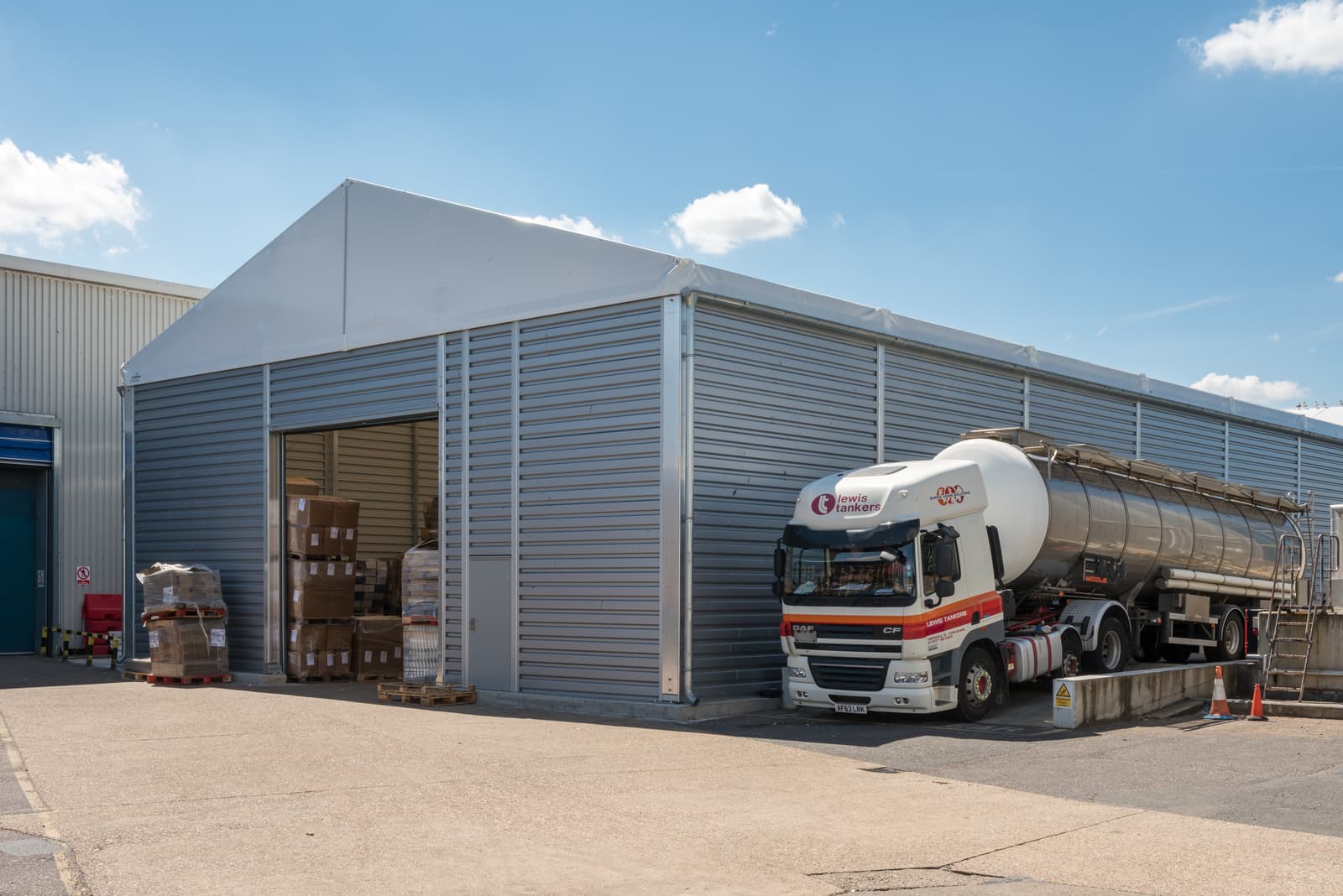
Lightweight buildings are perfectly suited as workshop buildings for fixed installations and machines, for several reasons: they can be installed directly over the installations and are therefore also suitable for immobile systems and machines such as tracks or drilling rigs. Lightweight buildings also offer very short delivery and assembly times. This means that a mobile workshop building can be realised and put into operation quickly.
However, our lightweight buildings also excel in terms of quality: thanks to the robust aluminium frame, HTS TENTIQ provides a durable and resistant solution for the maintenance of your machines and installations. The wall cladding and roofing are precisely tailored to your requirements, and any necessary insulation can also be included in the design. For mobile maintenance buildings, we also always ensure optimal lighting in order to create a suitable working environment. At the same time, we keep economic efficiency in mind during planning and work with you to realise cost-effective and efficient spatial solutions.