Mobile buildings: storage buildings for maximum flexibility
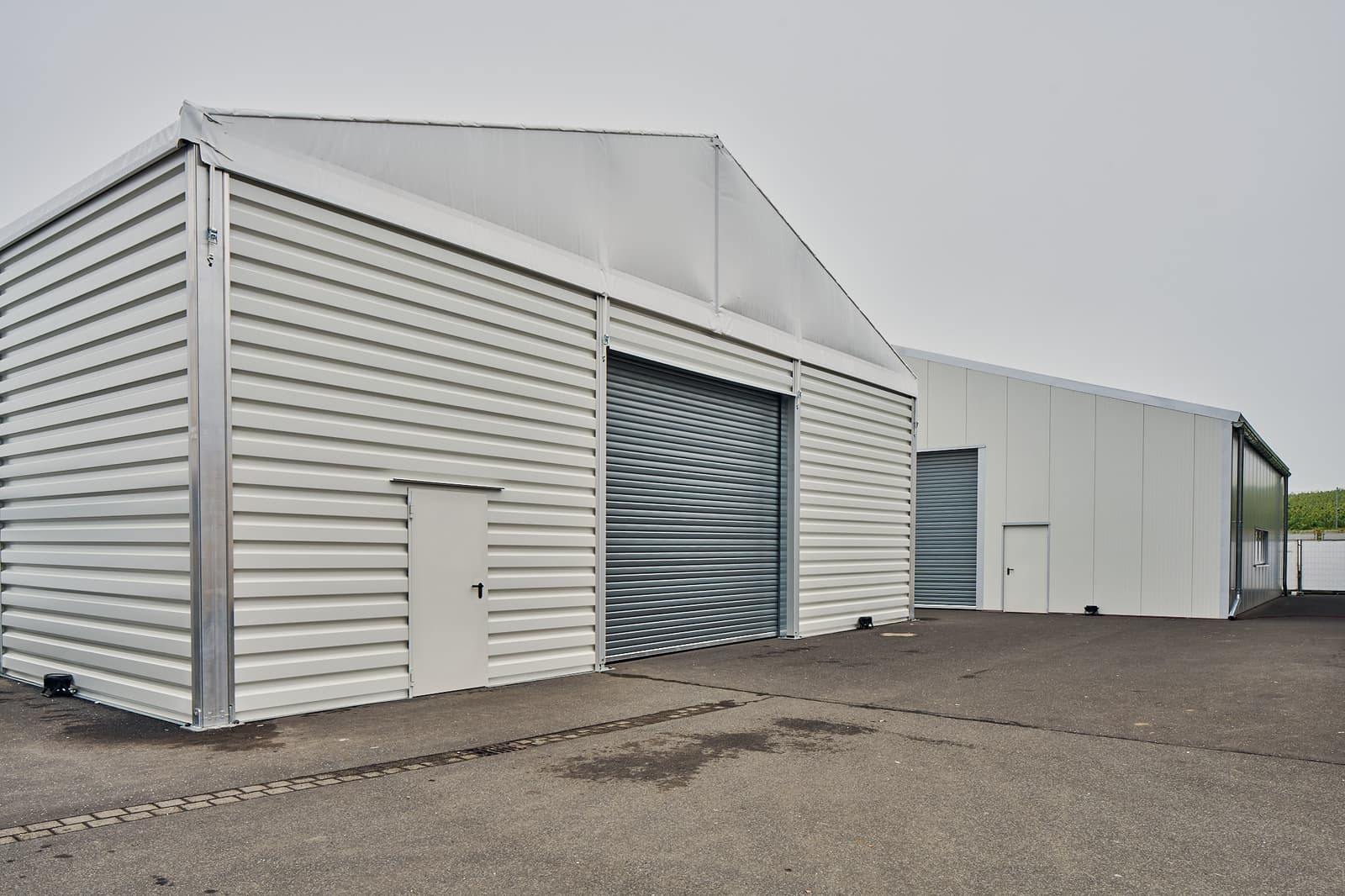
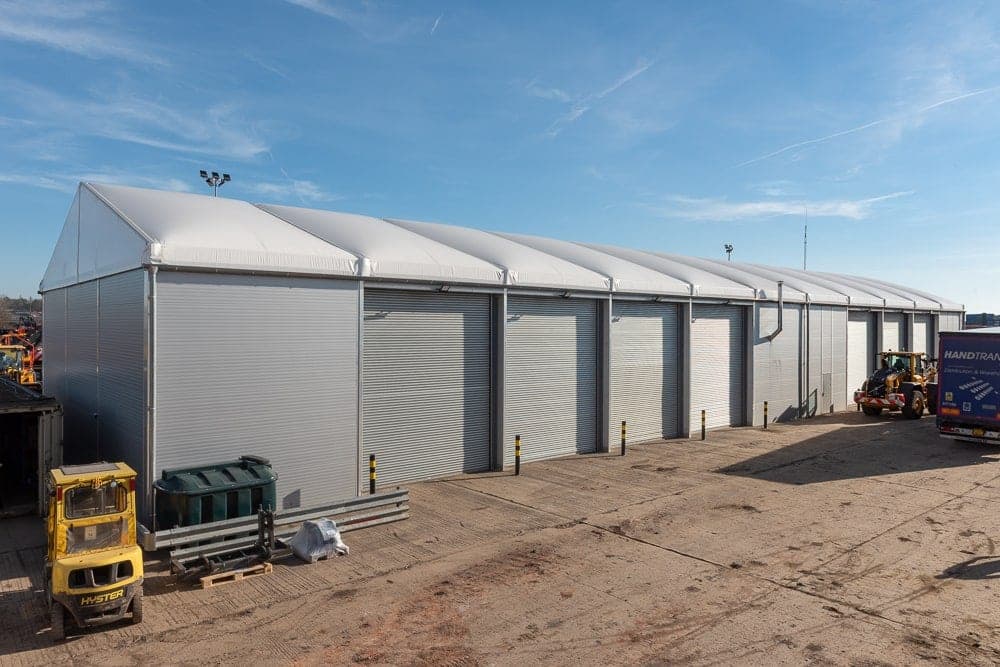
For short-term and temporary space requirements, mobile buildings are in many cases the perfect solution. Mobile storage buildings are prefabricated storage facilities that, depending on size and equipment, can usually be erected on site in less than a week.
Whether a simple canopy, an uninsulated or insulated building: with a high-quality temporary building, almost any storage requirement can be met at comparatively low prices.
Mobile building systems: all advantages at a glance
You have a short-term storage requirement and are looking for a quick and straightforward solution? Our mobile building systems are ideally suited for this, as they offer many advantages:
- Fast processing
- Very short delivery times
- Simple and quick assembly
- Dismantling and reassembly possible at a different location
- Flexible in size thanks to a modular system
- Expandable retrospectively
- Customisable equipment
- For temporary use, under certain conditions, realisable without planning permission
- Very good price-performance ratio
- Rental option available
The many uses of mobile buildings
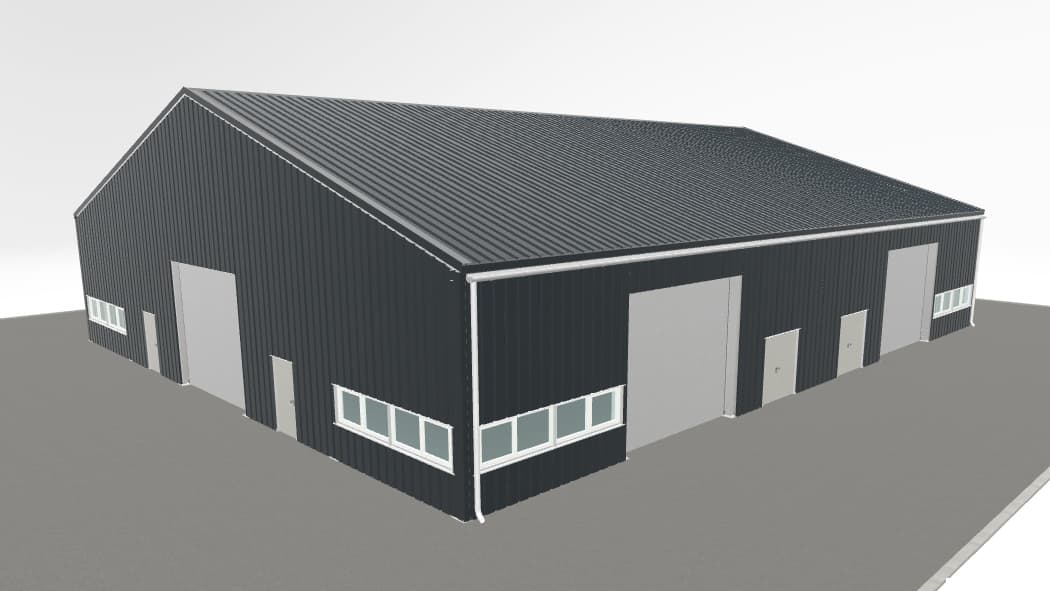
There are almost countless possible uses for mobile buildings, even though the requirements for size, purpose and equipment vary greatly from business to business and from industry to industry.
Mobile temporary buildings are used, among other things, as:
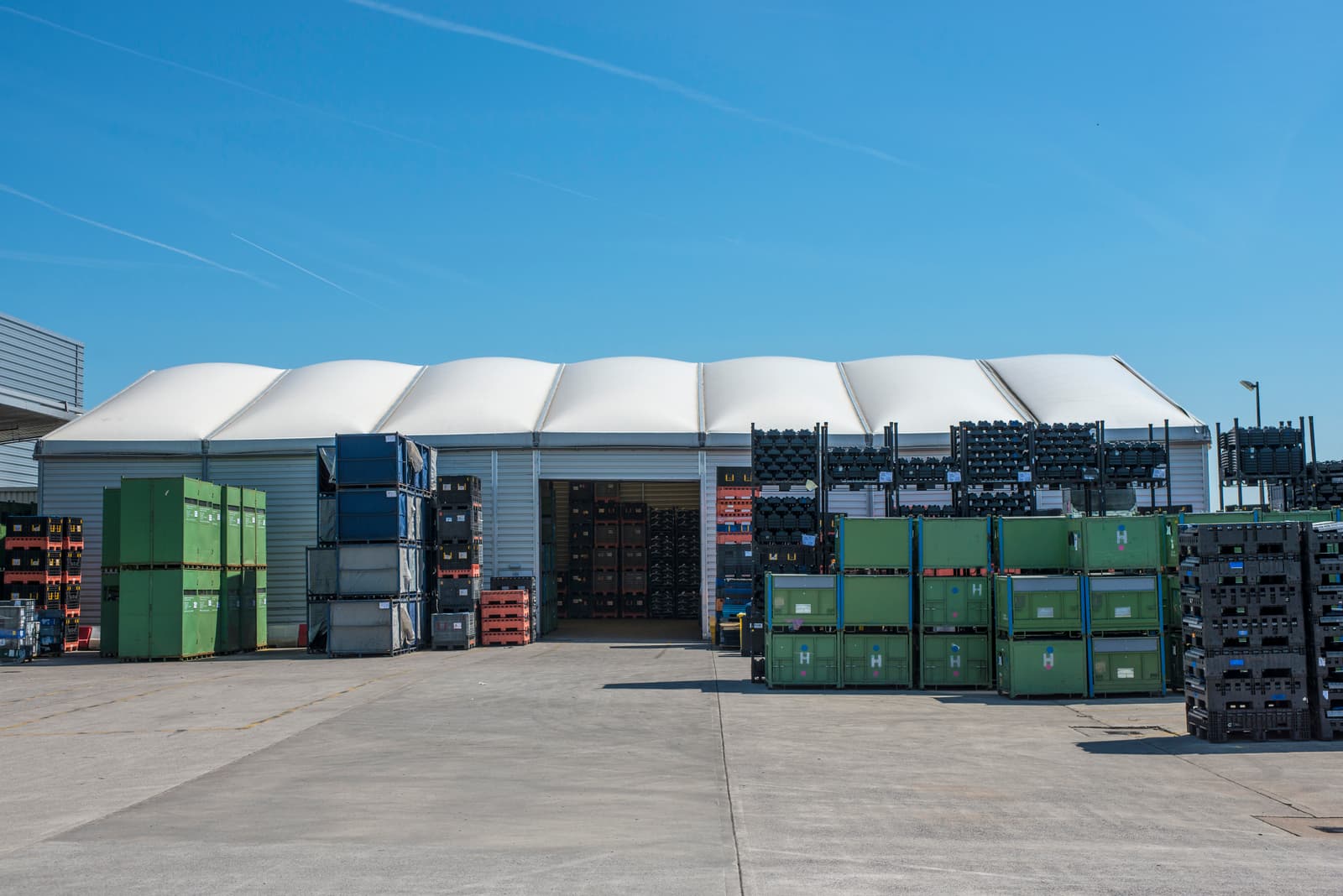
- Storage building
- Exhibition building
- Sales building
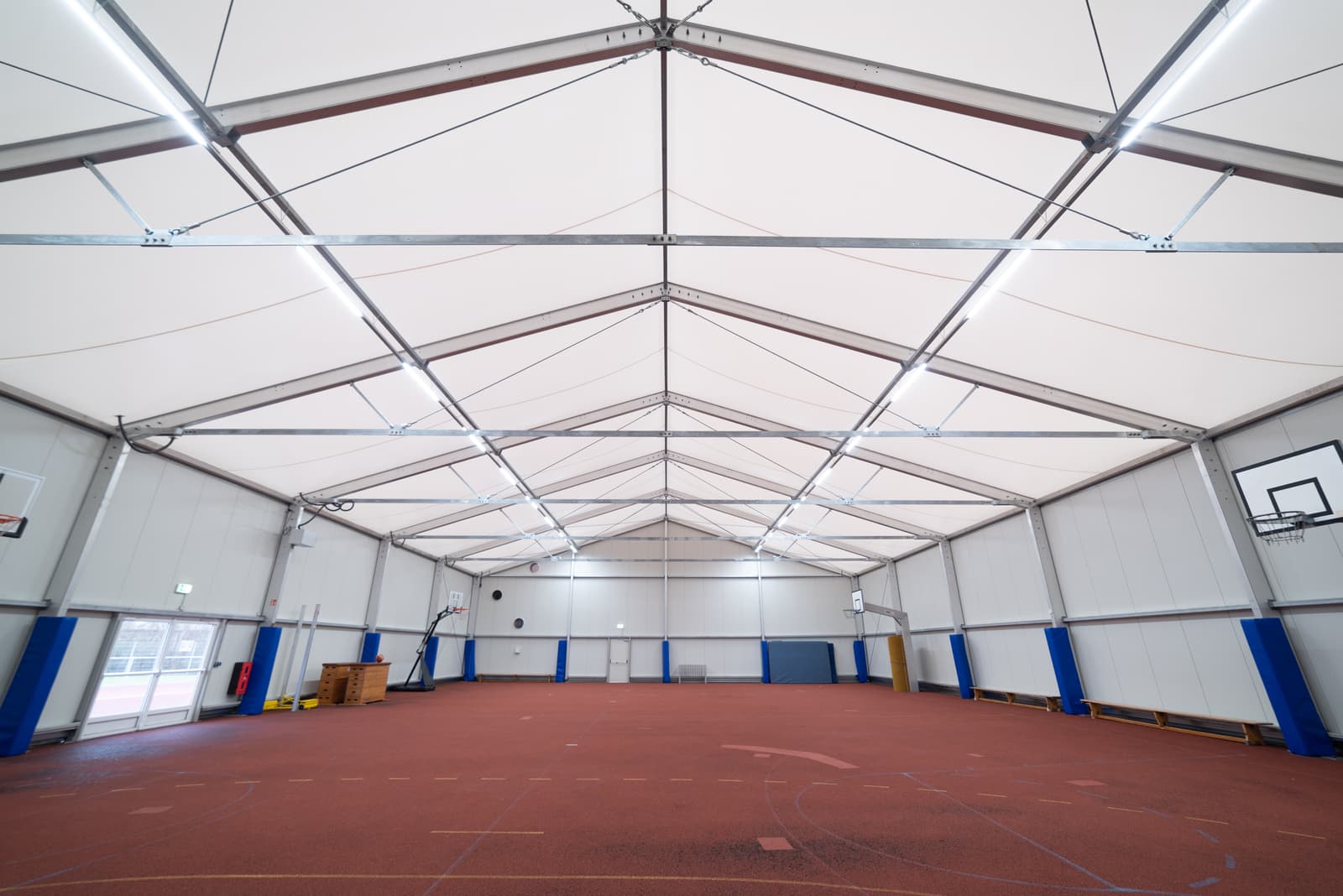
- Temporary classrooms
- Sports halls
- Packaging building
- Production building
- Assembly hall
- Repair workshop
- Processing plant
- Transitional structure
- Weather protection or winter storage
Mobile temporary buildings: what types of buildings are there?
For short-term space requirements, there are various solutions. The appropriate choice depends on how the building is to be used and how much space is available.
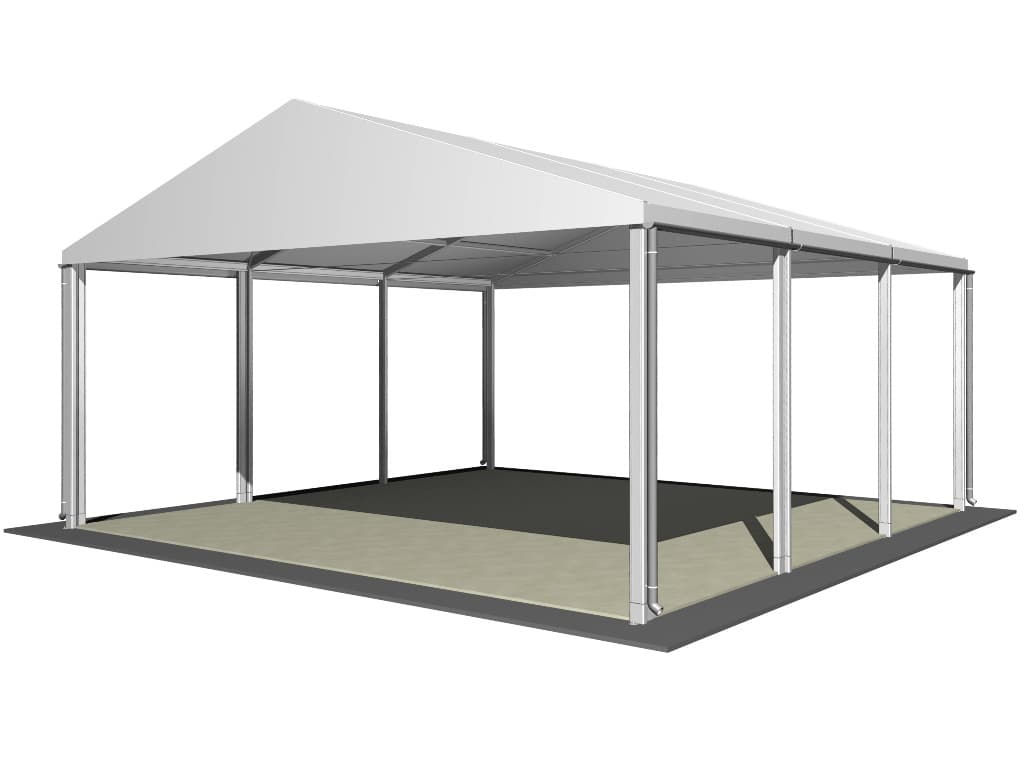
A roofed structure provides direct protection against weather conditions and is the simplest and most cost-effective form. Roofed structures are ideal for loading and unloading operations, for protecting machinery, as well as for covering insensitive goods and materials.
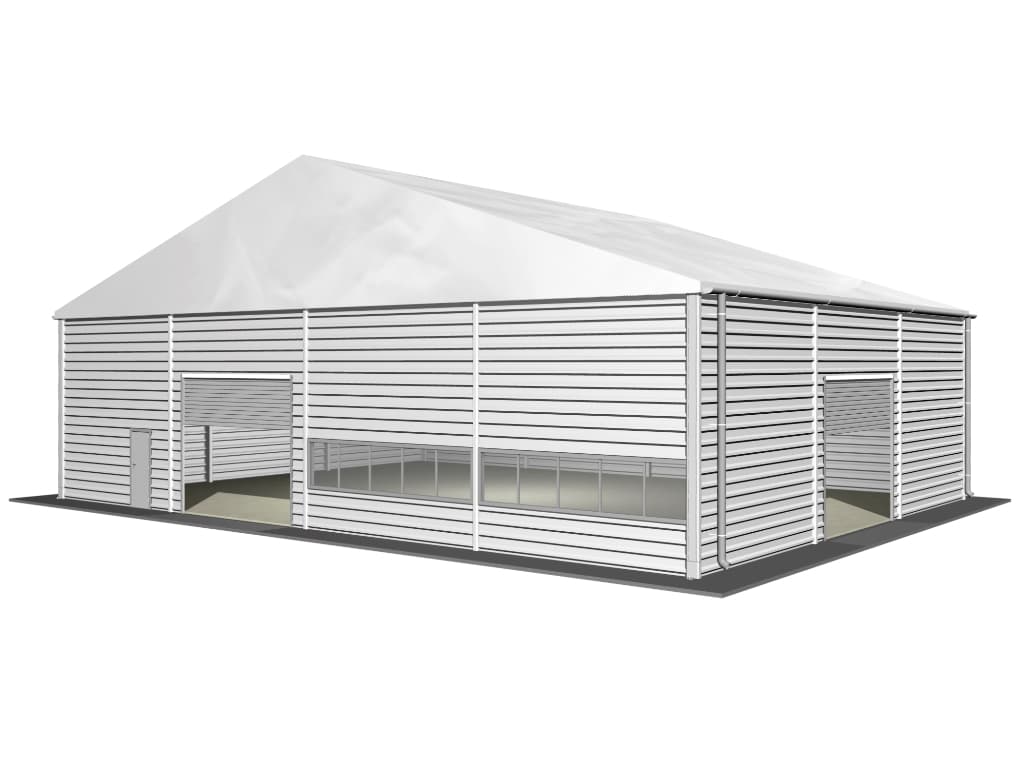
Non-insulated temporary building
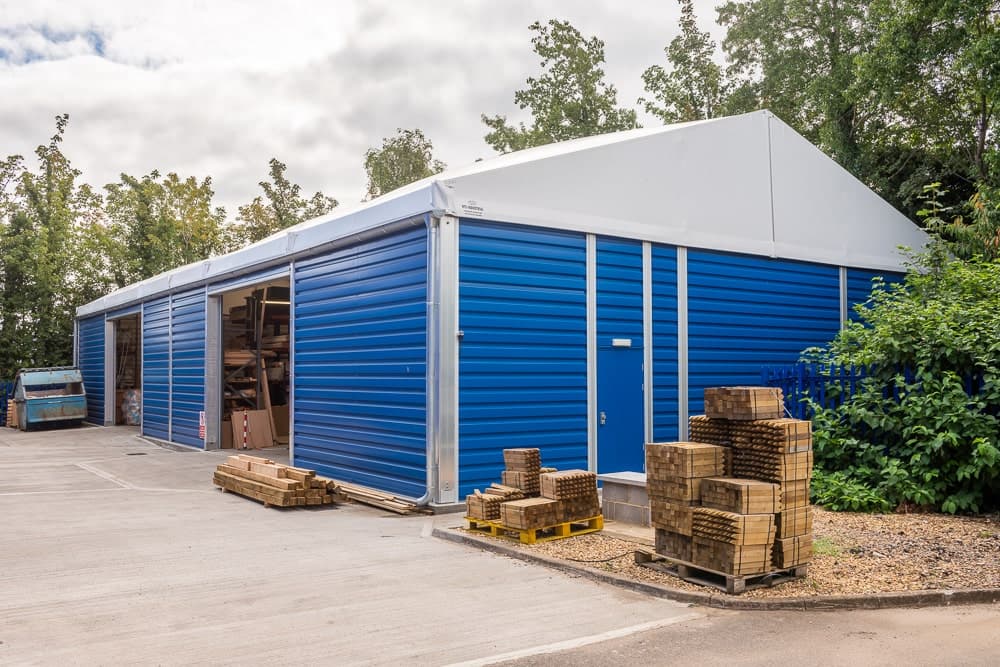
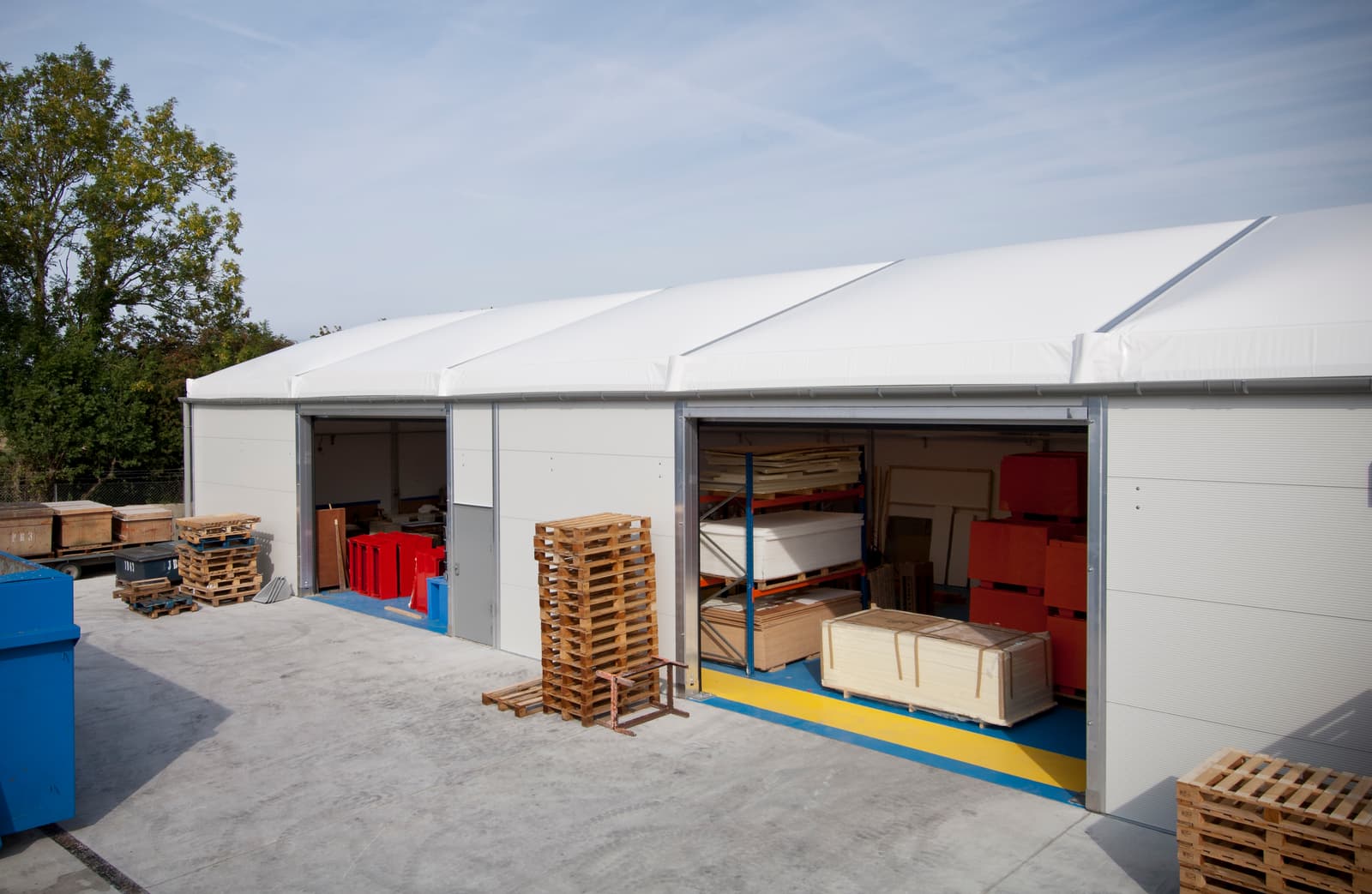
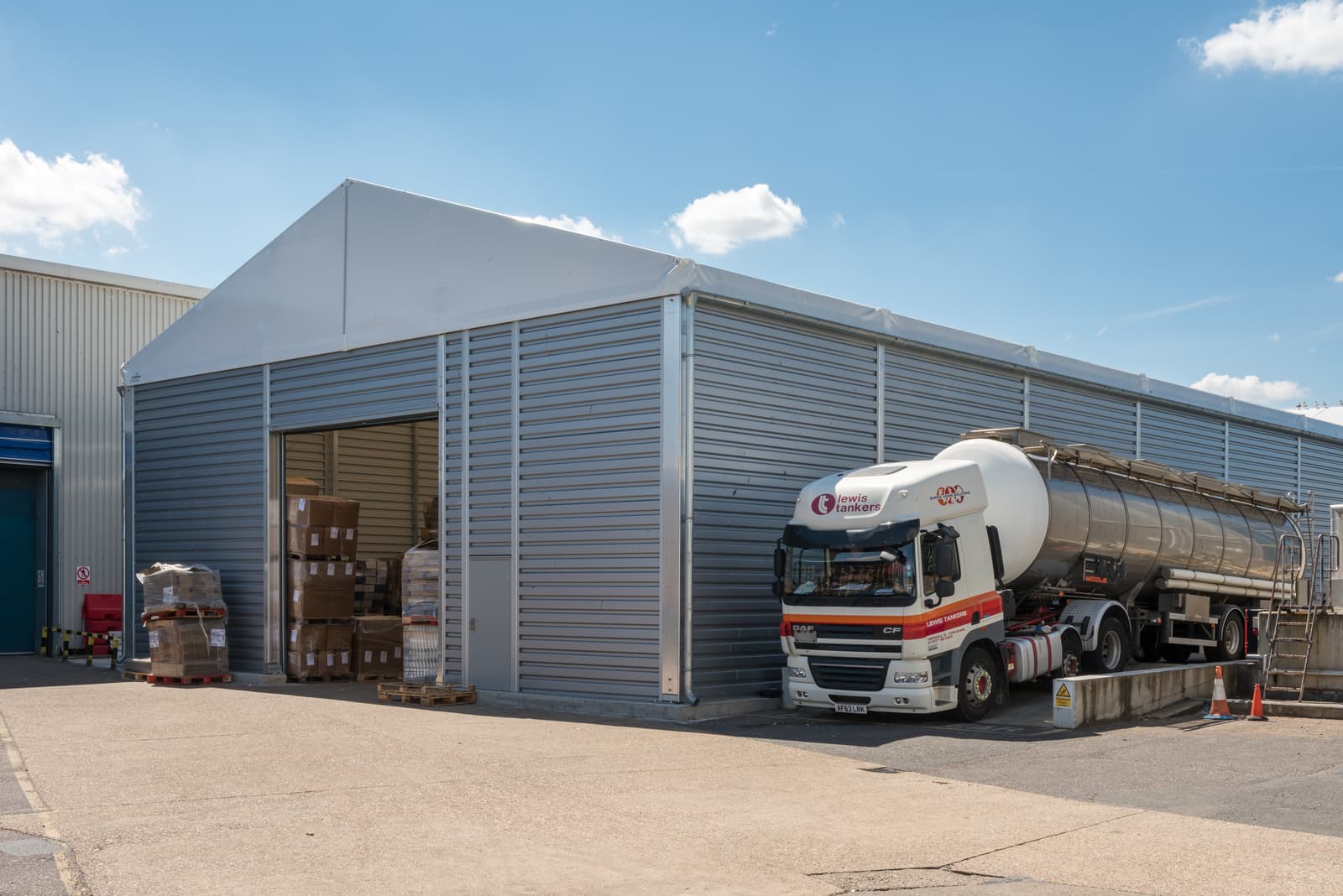
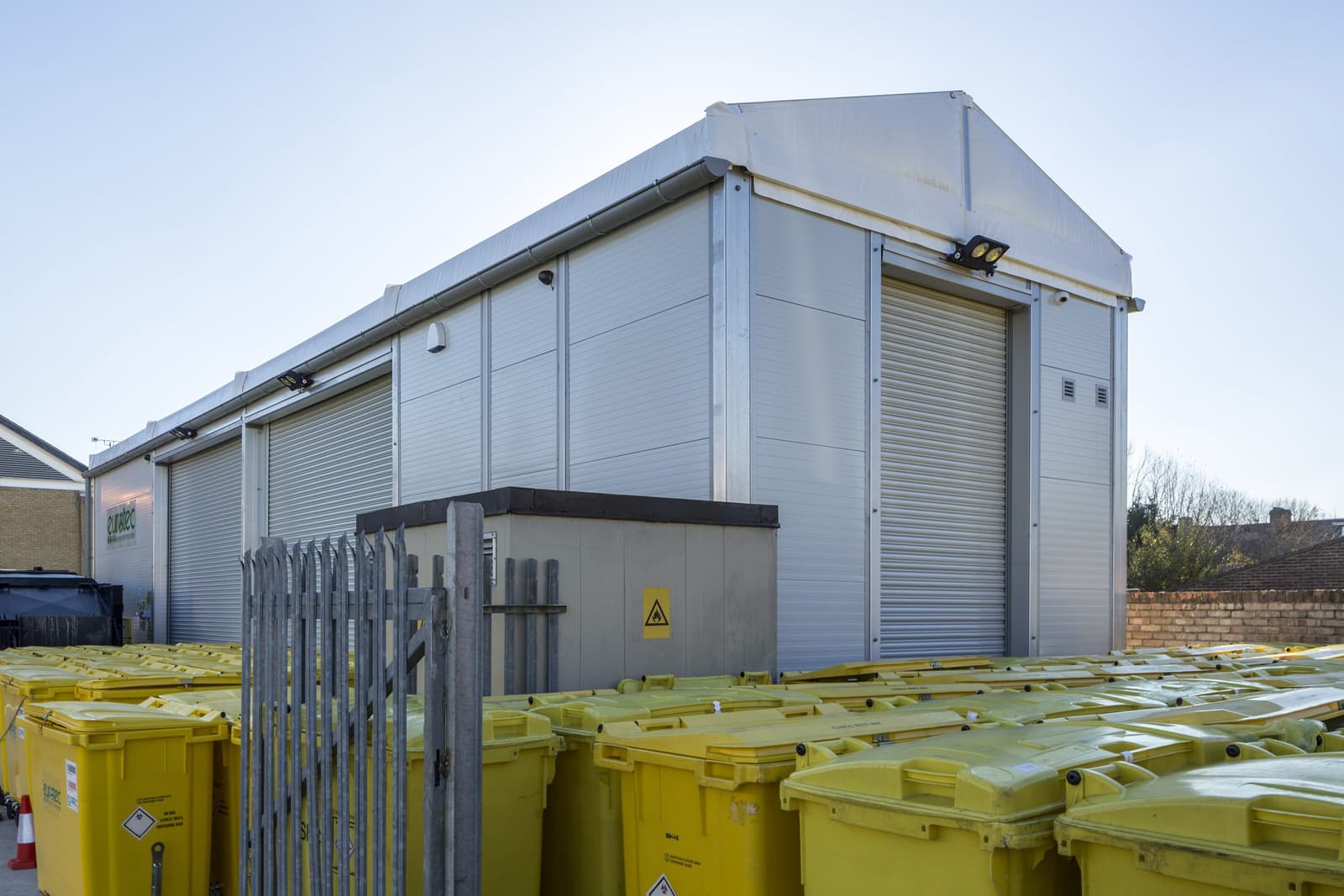
Cold buildings provide optimal all-round protection for temperature-insensitive goods and products. An uninsulated building can be used as a storage building, but also as a logistics building or industrial building.
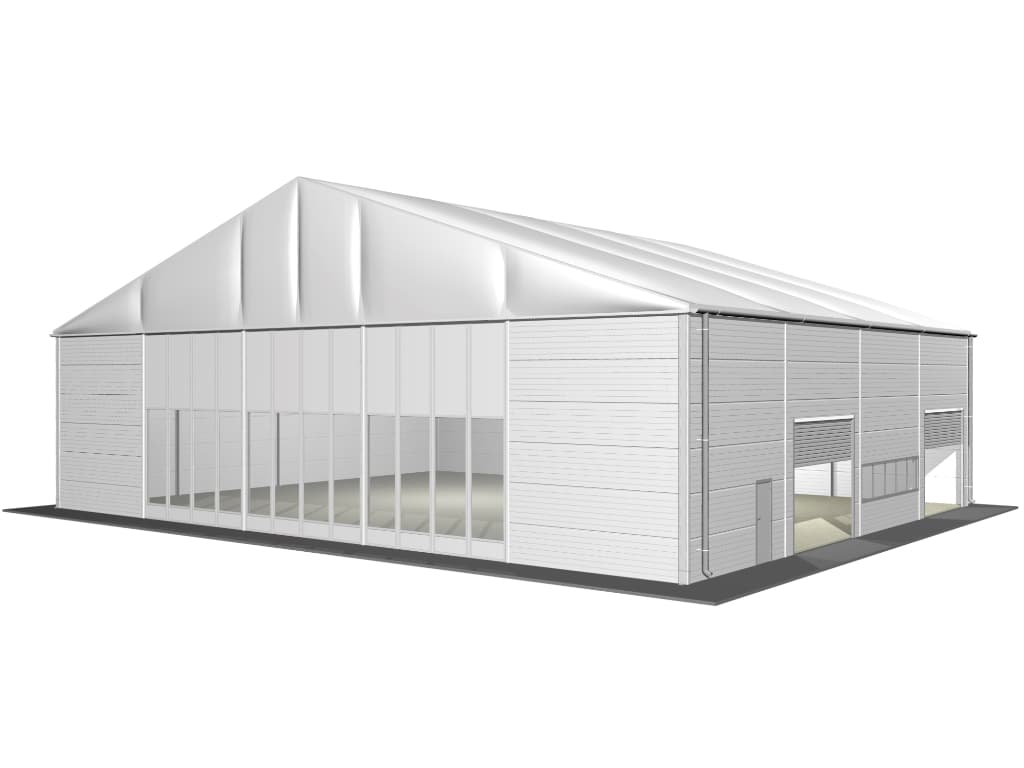
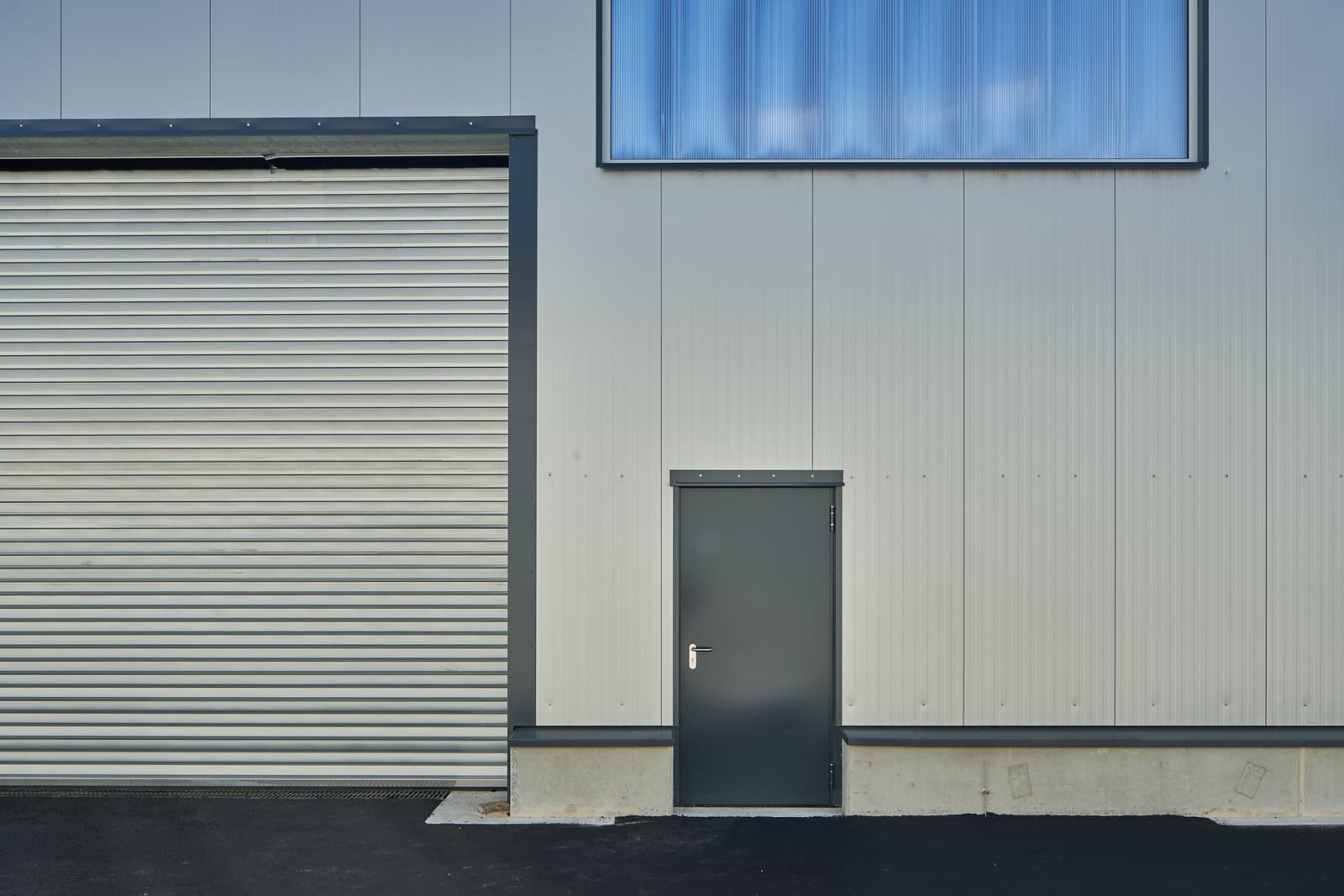
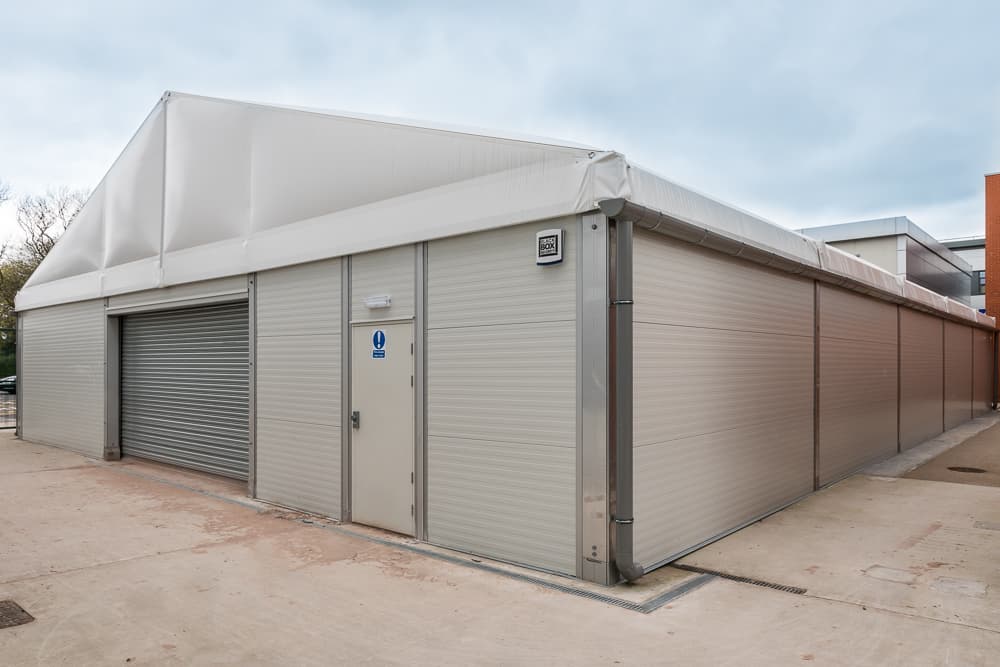
Thermally insulated wall panels give your building a well-designed and refined exterior. Even temperature-sensitive goods, products and activities find optimal protection in insulated buildings.
How large are mobile storage buildings?
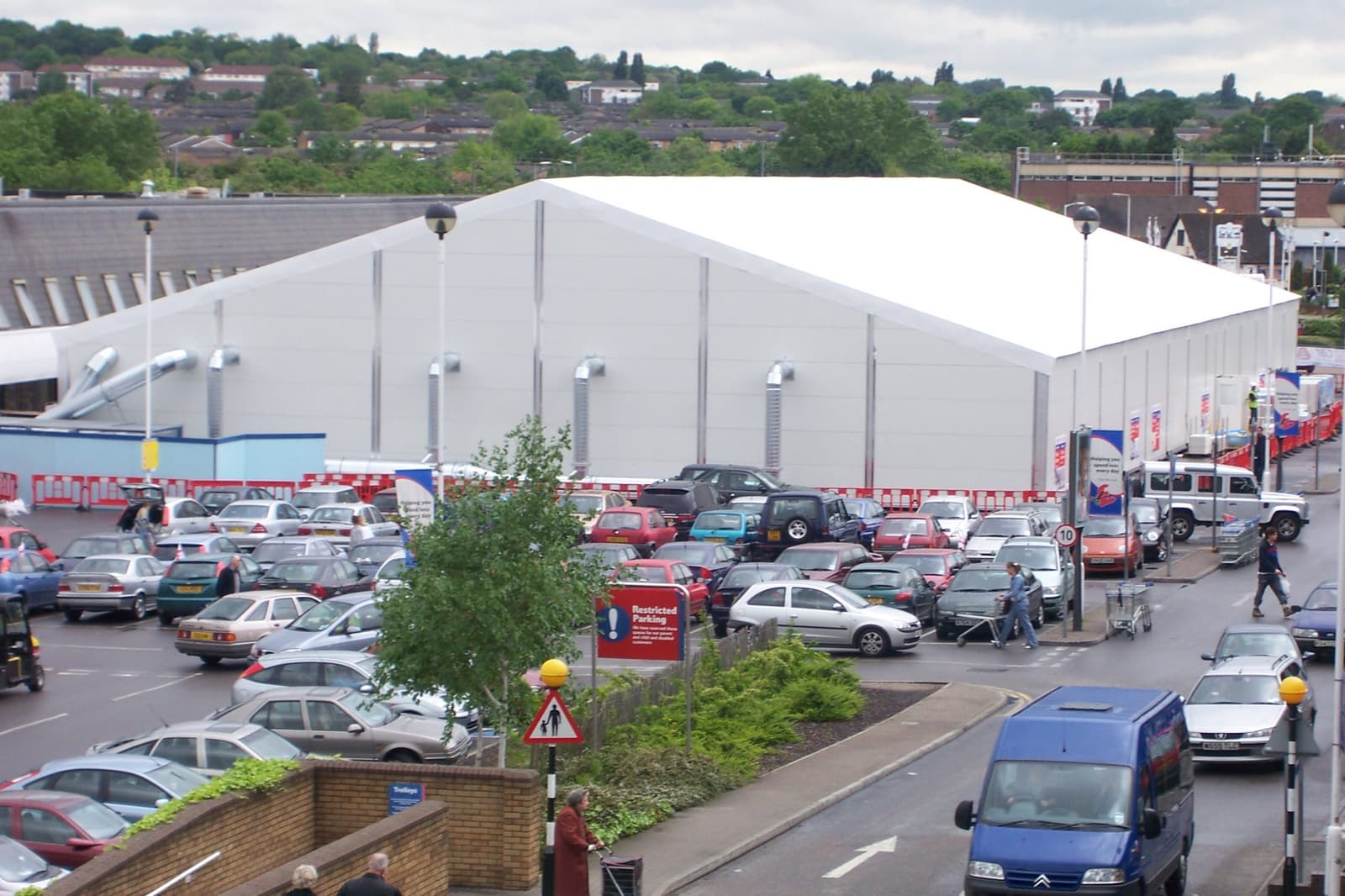
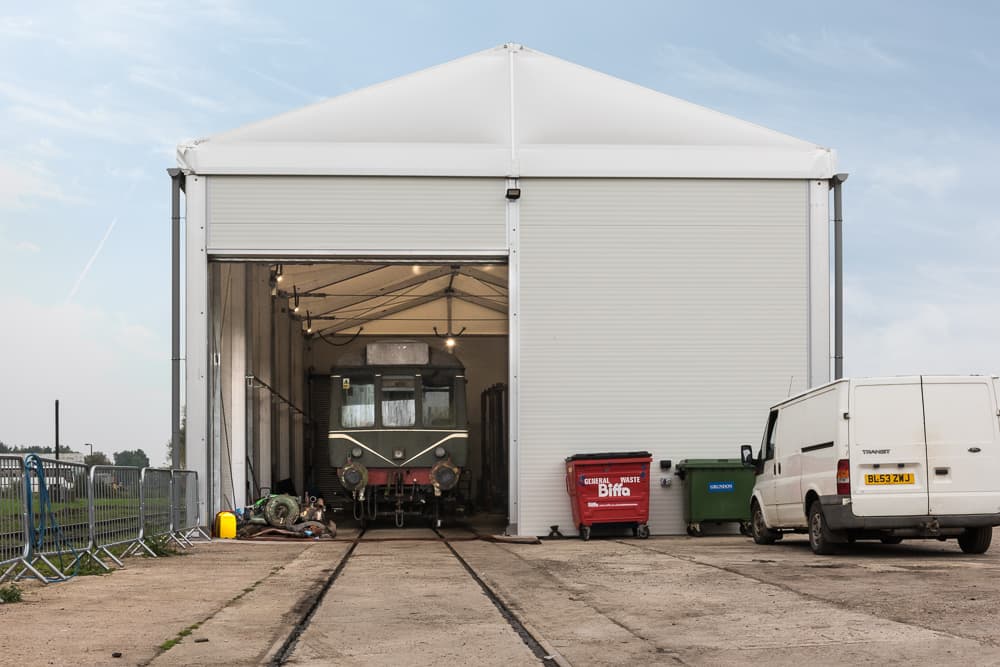
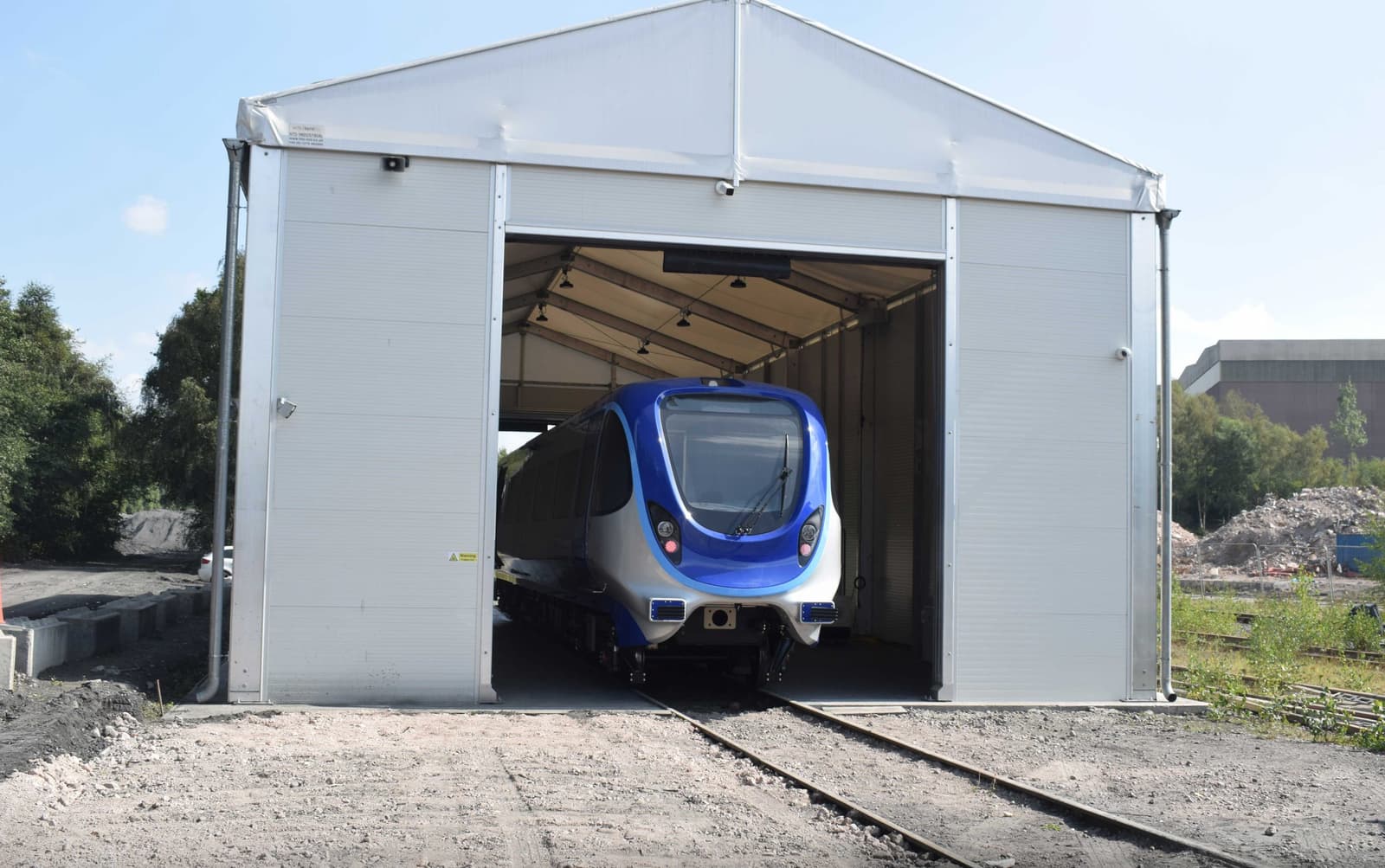
Mobile building systems offer highly flexible, configurable dimensions. This means you can easily accommodate everything under one roof. Even entire trains can fit inside the interim buildings from HTS TENTIQ.
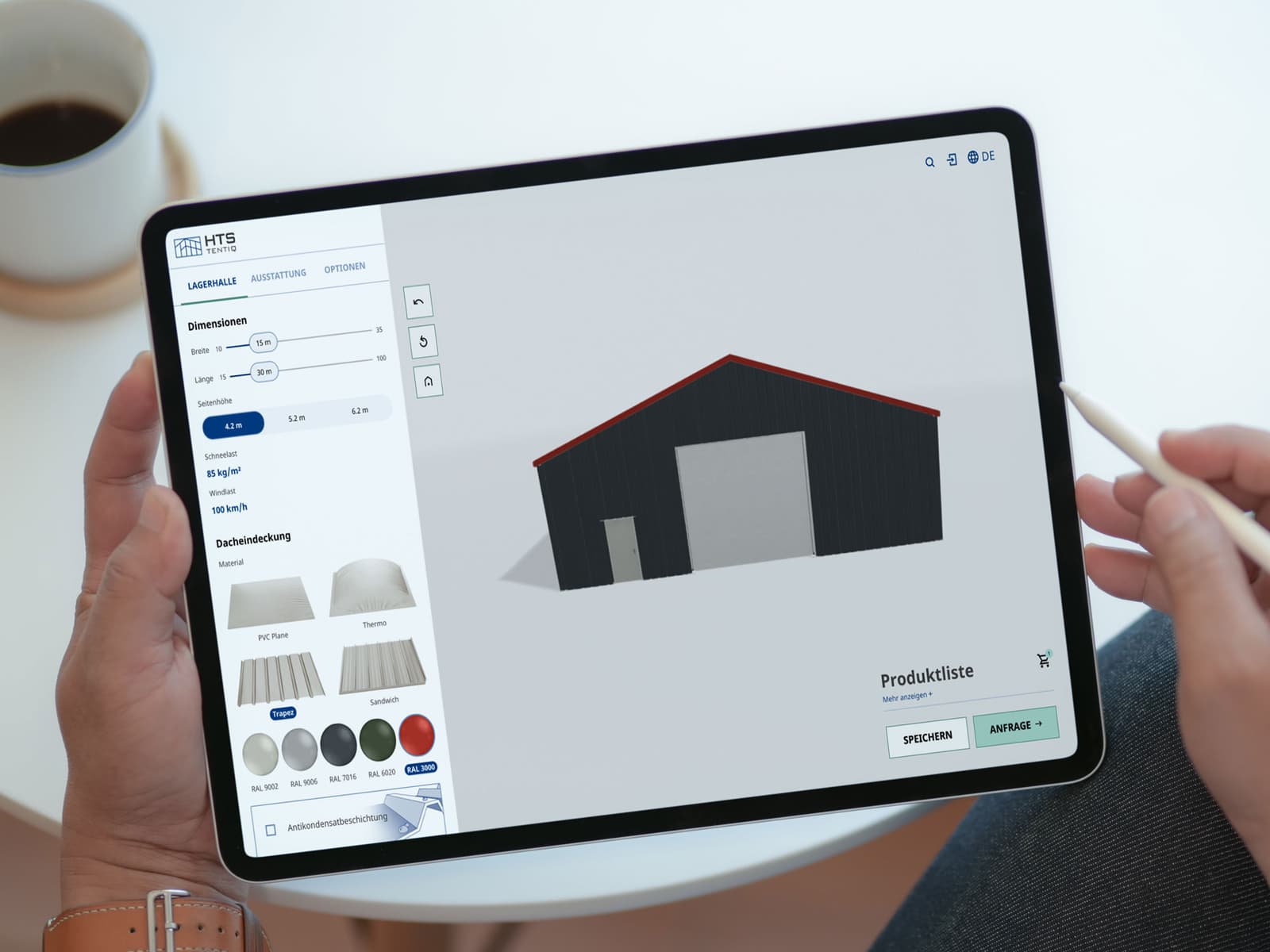
The width can be freely selected between 5 m and 30 m and, depending on customer-specific projects, may in some cases be even wider. There are no limits to the length, as buildings can be extended indefinitely. For the side height, you can choose between 4.20 m and 6.20 m; special heights are also available on request. This high level of flexibility in dimensions allows a mobile building to be fully adapted to a company’s needs.
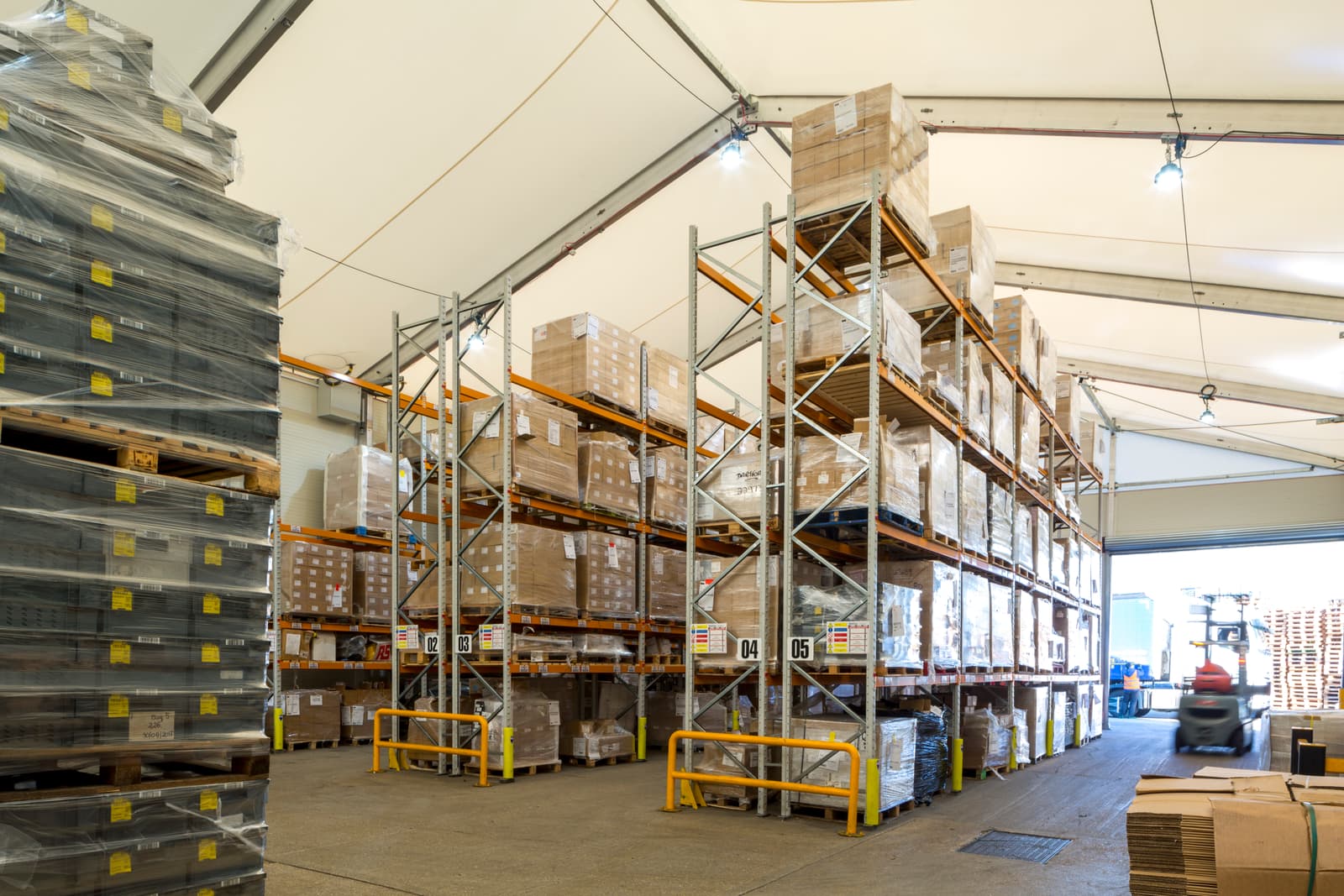
Insulation options are also available as choices for wall and roof cladding. With these features, they are ideally suited to most storage requirements, whether large or small, for temperature-sensitive goods as well as bulk materials and palletised goods stored on shelving.
What kind of ground do mobile storage buildings require?
The framework of mobile storage buildings is both lightweight and stable. This results in the major advantage of installation without a foundation or excavation work. This saves time and is also highly cost-effective. The lightweight aluminium framework can usually be installed on a level, solid surface. Suitable ground surfaces include gravel, asphalt or paving stones. The building is simply secured to the ground using ground anchors. If the building is to be dismantled again, the area can be easily returned to its previous use or repurposed.
Case studies on mobile storage buildings
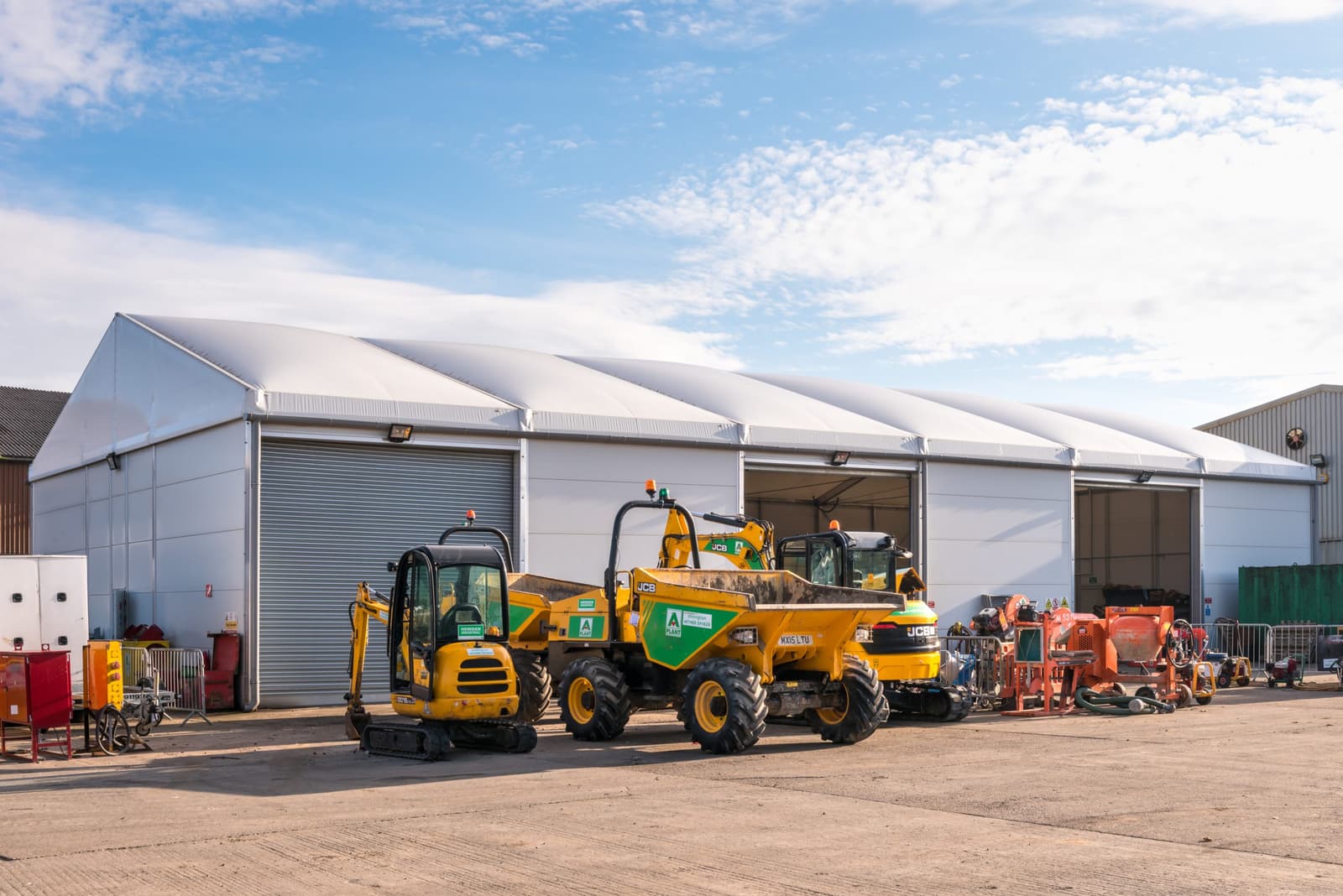
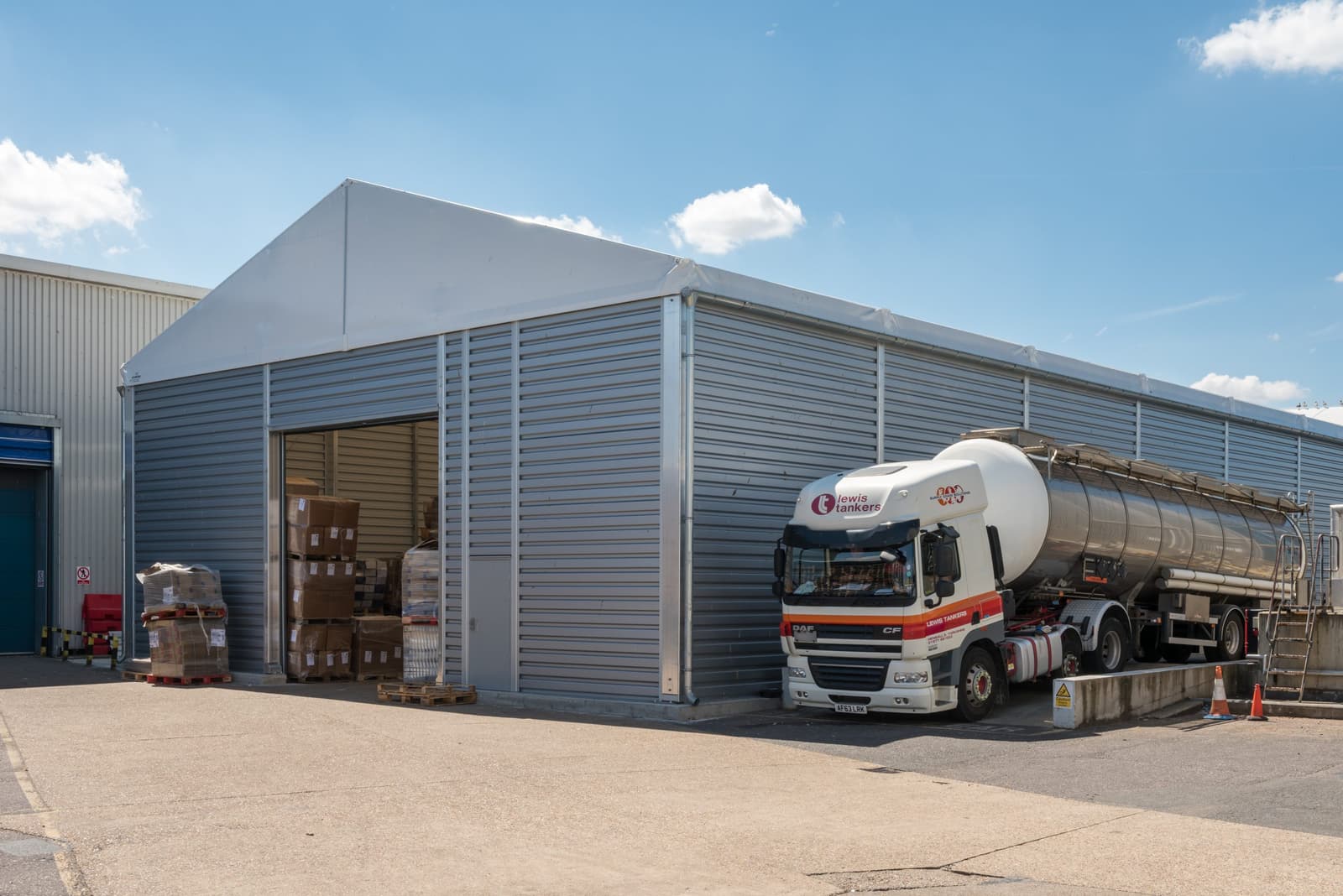
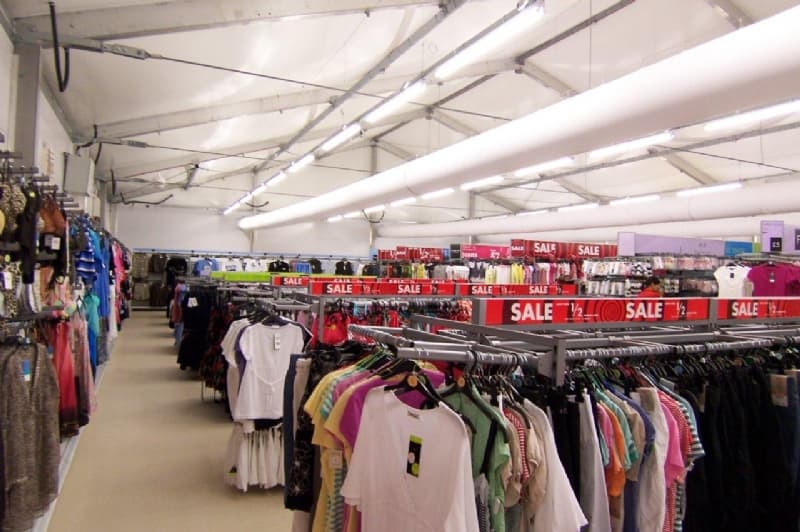
Our case studies take you into the world of the many different applications of mobile building systems.
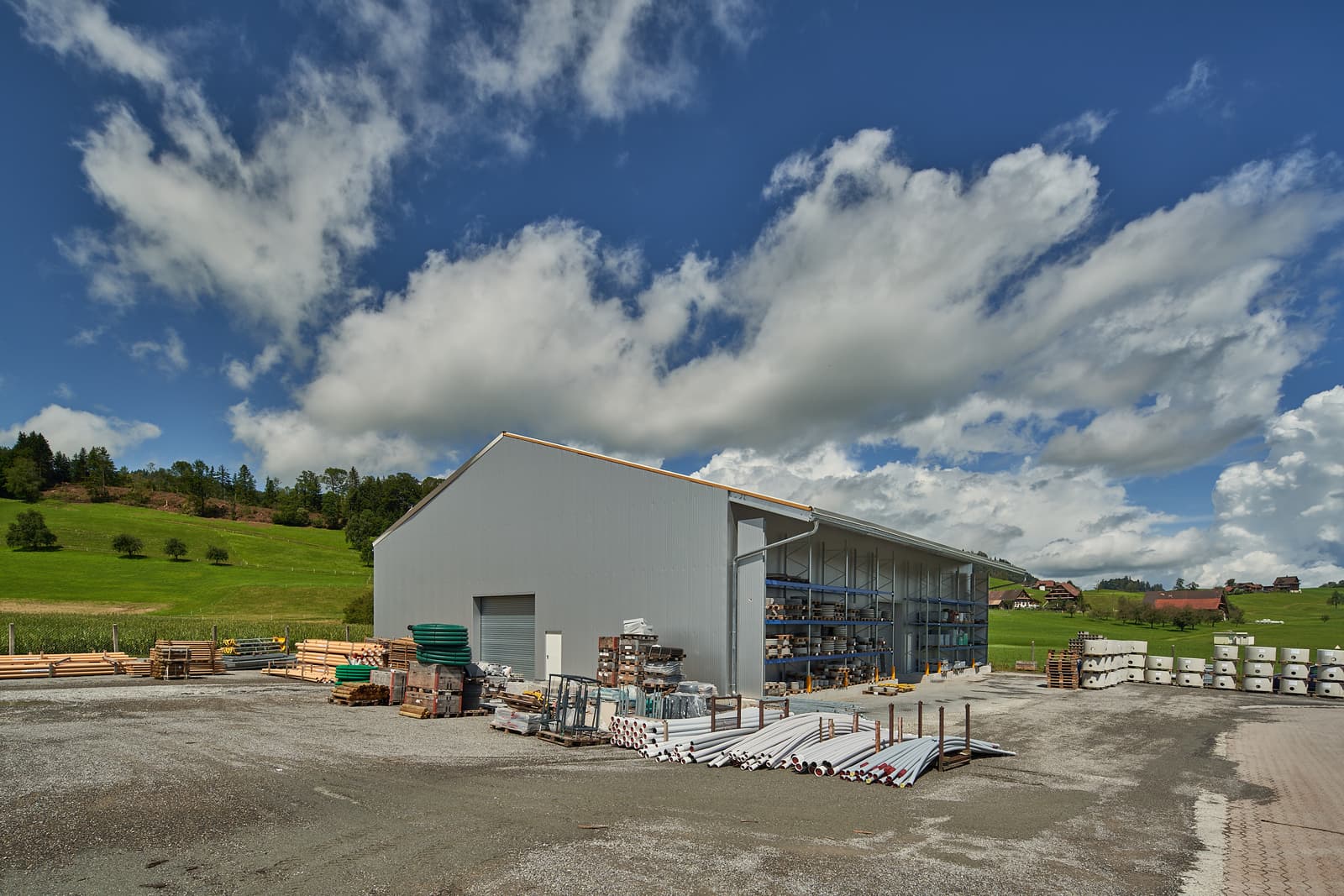
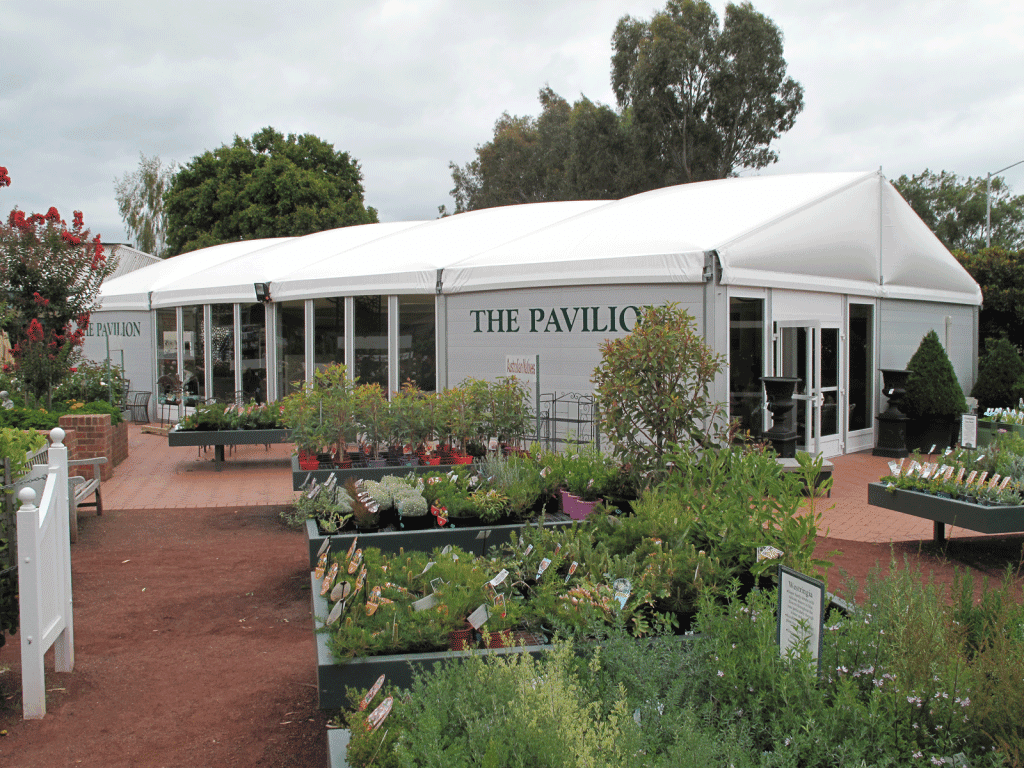
Using mobile storage buildings without planning permission: how it works
If no planning permission is required for the construction of a storage building, this saves time and money. The construction of a mobile storage building without planning permission therefore brings many advantages. A mobile building without planning permission can be assembled if it is used exclusively on a temporary basis. Legally speaking, in this case it is considered a “temporary structure”. The maximum permitted duration for temporary structures is three months, although in exceptional cases it may also be longer, depending on the federal state or building authority. If a building is erected as a temporary structure, it only needs to be notified to the building authority; planning permission is not required. For permanent use of the building, planning permission with structural calculations in accordance with DIN EN 1991 is essential.
In addition, the size of the building is a decisive factor for a simplified approval procedure. In many federal states, a storage building of up to 100 m² can be constructed without planning permission. Some federal states stipulate a smaller maximum footprint of 75 m².
As building regulations vary from federal state to federal state, early coordination with the responsible building authority is recommended. We at HTS TENTIQ are happy to support you in liaising with the building authority.
Would you like to learn more about planning permissions for buildings? Then read our corresponding expertise article on the topic of planning permissions for temporary buildings and storage tents.
Alternatives to temporary buildings: marquees
Temporary storage buildings are the larger counterparts of modern, free-spanning marquees. Some companies choose this option due to lower costs.
For simple weather protection, a marquee may be sufficient. However, there is a risk that local authorities may order its removal. Unlike temporary storage buildings, a conventional marquee is not stable enough to remain in place for longer periods, particularly during the winter months when wind and snow loads are at their highest. Since a marquee cannot withstand snow loads, it must either be cleared of snow during extended use or heated so that the snow melts.
Although the frames are visually very similar to those of temporary storage buildings and are also made of aluminium, they are lighter and smaller and are not designed to meet structural safety standards.
The good news is that there is a range of storage solutions available that are suitable for most requirements and business objectives. Knowing which option suits your company and is quickly available can give you a competitive advantage.
Conclusion: mobile buildings are perfectly suited as a storage solution
Quickly available, assembled and dismantled in a short time and, in some cases, entirely without planning permission, mobile temporary buildings are the perfect solution for short-term space requirements. At HTS TENTIQ, you not only receive a high-quality temporary building at short notice, but also comprehensive expertise and support throughout the entire project. Together with you, we configure your building entirely according to your requirements. Thanks to the flexible modular system and the wide range of equipment options, we can tailor your mobile building to your individual needs.
In addition, you benefit from the cost-effective rental option for our mobile temporary buildings from a rental period of 12 months. Mobile storage buildings offer all the advantages of renting – flexibility and no long-term capital commitment – combined with the ability to keep the entire storage operation and storage under one roof.